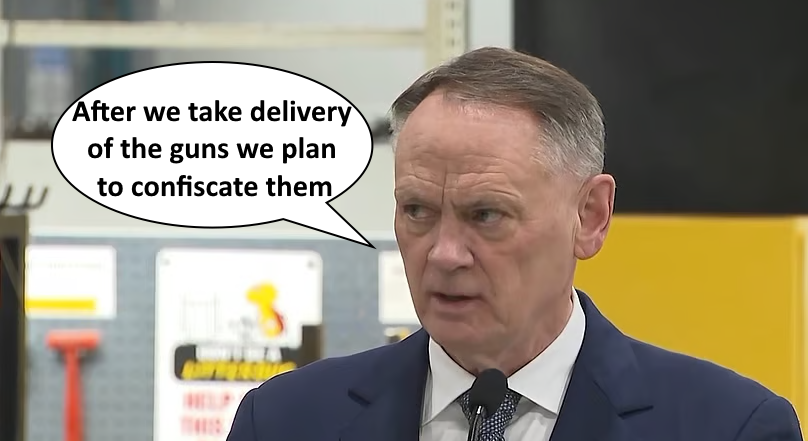

Can the U.S. finally just shut up about Canada’s defence spending?

Our trailblazing Prime Minister was at the podium in Montreal. “Over the last few decades,” Mark Carney said, “Canada has neither spent enough on our defence nor invested enough in our defence industries.”

That has to change, he added, setting out plans for far more domestic spending on military hardware because “the assumptions that defined decades of Canadian defence and foreign policy have been turned upside-down.”

Share

What It Takes to Make the ‘Buy Canadian’ Defence Industrial Strategy Work

Canada is finally having the defence conversation it has deferred for a generation. Prime Minister Mark Carney’s new $6.6 billion Buy Canadian defence plan promises to prioritize domestic production, expand small- and medium-sized firms into the sector, and create up to 125,000 jobs over the next decade.

At the same time, Canada has pledged to raise core defence spending to 3.5 percent of GDP within 10 years, alongside an additional 1.5 percent for dual use security infrastructure. By 2035, that implies annual defence-related spending approaching $160 billion.

Share

Ottawa shakes up immigration system to bring in military recruits

The federal government is shaking up its main economic immigration program to facilitate the entry of high-skilled military recruits for the Canadian Armed Forces, part of Ottawa’s renewed focus and spending push on the defence sector.

On Wednesday, Immigration, Refugees and Citizenship Canada announced new categories for selecting immigrants via Express Entry, a points-based system that is the main entryway for skilled workers seeking permanent residency.

Share

Build it here or buy it there? Canada’s defence plan meets Trump’s new arms agenda

The Canadian government’s long-awaited defence industrial strategy formally landed on Tuesday and arrives in the shadow of a push by the Trump administration to further make the United States the arms-maker of choice among allies.

The new strategy has been in the works for more than a year and promises to use defence investment to leverage the Canadian economy and jobs.

It sets out a series of important, high benchmarks for the country to achieve over the next decade, including buying and maintaining most of the military’s equipment domestically.

Share

Boosted defence spending ‘nowhere near what we need,’ former top DND official says

OTTAWA — Days after she retired in January, the former top bureaucrat at the Department of National Defence warned that the billions in additional defence spending promised by the Carney government is “nowhere near what we need” and is only serving to “plug in the holes in the wrong way”.

Stefanie Beck, the deputy minister at DND until her retirement on Jan. 23, shared a surprisingly blunt assessment of Prime Minister Mark Carney’s record defence investments during a conference on Feb. 2.

Share

Tasha Kheiriddin: Carney’s defence strategy is a plan to bloat the bureaucracy

Canada’s defence industry got a $6.6 billion boost Tuesday, as Prime Minister Mark Carney formally unveiled Ottawa’s new Defence Industrial Strategy. The plan promises to create 125,000 new jobs over 10 years and award 70 per cent of defence contracts to Canadian companies, through a “Build-Partner-Buy” framework that prioritizes domestic industry. It is part of the government’s plan to increase Canadian military spending to five per cent of GDP by 2035, in line with NATO targets.

Share

‘It’s a dependency’: Carney touts diversifying defence procurement beyond the U.S. in new strategy

OTTAWA — Prime Minister Mark Carney unveiled his government’s defence industrial strategy on Tuesday, promising to build up Canada’s defence industries and seek out partnerships beyond the United States.

“Let me start by acknowledging that there are many strengths to this partnership that we have with the United States,” said Carney during a press conference in Montreal. “But it is a dependency, and it’s a dependency we want to change in a positive way by building up our defence capacities here and our other partnerships abroad.”

Share

Canada Gives U.S. Arms Makers the Cold Shoulder on Military Spending

Canada Recycles to save on military expenditures – The Sherman Air Superiority Ground Attack Tank Thingy

The Canadian government, faced with increasing hostility from the Trump administration, plans to divert billions of dollars in military spending it long gave to U.S. defense companies and direct it instead to domestic manufacturers.

Prime Minister Mark Carney’s wholesale expansion of Canadian military spending was prompted by pressure from President Trump, but with relations between the longstanding allies deteriorating, American companies will no longer reap the benefit.

Share

Canada bets on ‘Build at Home’ defence strategy to reclaim sovereignty — and revive readiness

Canada’s new defence industrial strategy sets out a series of important, extraordinarily high benchmarks for the country to achieve over the next decade, including buying and maintaining most of the military’s equipment domestically.

The long-awaited plan, which was developed more as a response to NATO’s call for industrial clarity among allies than to annexation threats by the Trump administration, sets a goal of awarding 70 per cent of federal defence contracts to Canadian firms within a decade.

Share

HANNAFORD: Can Canada be defended at all?

Tonight we take a hard look at Prime Minister Mark Carney’s ambitions for Canada’s national defence. Over the past several months, the Prime Minister has spoken forcefully about living in a world of predatory great powers, about rebuilding the Canadian Armed Forces, strengthening NATO commitments, and dramatically increasing defence spending — even doubling it by 2030.

Share

Former Canadian defence chief says we can no longer afford to just claim the Arctic

Unless you have spent long hours flying over Canada’s Arctic, it is difficult to grasp its scale, its harshness, or its emptiness. And yet this forbidding territory is becoming one of the most strategically important parts of our country’s future.

Why does it matter? Who else is interested in it? And what must Canada do to protect its sovereignty?

The supply flight from the air base in Trenton, Ont. to Canadian Forces Station Alert, the northernmost station on Ellesmere Island, takes roughly the same time as to fly from Trenton to Ireland. And from about an hour north of Trenton onward, there are almost no settlements to see; only rock, ice, water, and wilderness.

Share

Canadians are clamouring for a stronger military

Canada is witnessing a once-in-a-generation shift in opinion on matters of national defence. In the absence of a traditional war, a wartime mentality is emerging: Canadians have an appetite for more defence spending as they see significant global threats.

A study commissioned by the University of Calgary and completed by Nanos Research in late 2025 points to a series of historic shifts that will influence both Canada’s defence posture and strategy. U.S. President Donald Trump’s musings about Canada becoming the 51st state and strained trade discussion have shaken Canadians.


I wonder if the same concern holds true in the diverse communities our pols find it necessary to pander to?

Share

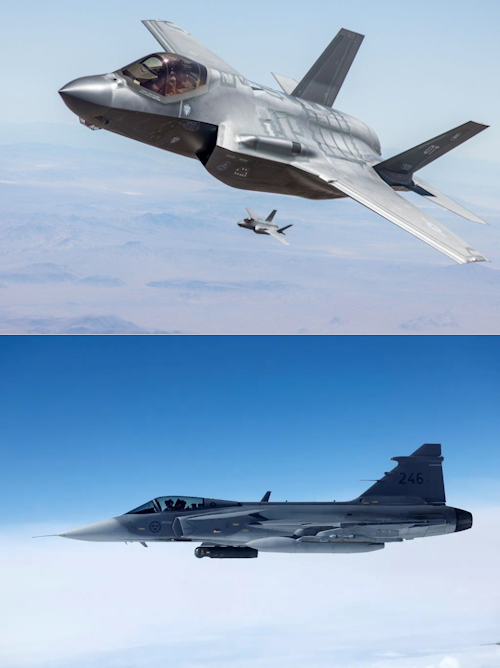
Don’t tell the Elbow People! … Canada discreetly puts money down on 14 additional F-35s

Ottawa has started to make payments for key components for 14 additional U.S.-built F-35s, even as the Carney government has been reviewing future fighter-jet purchases in the context of trade tensions with Washington, sources have told CBC News.

The money for these 14 aircraft is in addition to the contract for a first order of 16 F-35s, which will start being delivered to the Canadian Armed Forces at the end of the year.

According to sources, the new expenses are related to the purchase of so-called “long-lead items,” which are parts that must be ordered well in advance of the delivery of a fully assembled aircraft.

Share

Canada delays destroying WW2 pistols while Ukraine figures out if it wants them

The Canadian military has destroyed 2,000 Second World War pistols but is still waiting to hear from Ukraine on whether it wants the rest of the guns for its arsenal.

The latest update from the Department of National Defence on the fate of the Browning Hi-Power pistols reveals a topsy-turvy strategy for the aging handguns.

In October 2022, the Canadian Forces decided that it would destroy the almost 11,000 sidearms since a new handgun was being purchased.

Share