The Justice Centre for Constitutional Freedoms is calling on Parliament to reverse what it describes as Canada’s growing “surveillance state,” releasing a new report that recommends eight legislative reforms aimed at restoring privacy protections for Canadians.
“Surveillance Society”
The Left Is Using Kids As A Trojan Horse For Total Online Surveillance
t is the oldest trick in the authoritarian playbook. Anytime a Democrat politician looks into a television camera and declares a new policy is “for the kids,” history tells us it is time to do three things: grab your Bill of Rights, lock your wallet, and check your firearms.
The political left has mastered the art of semantic camouflage. Because leftists’ true intentions—total state control and the systematic dismantling of individual liberty—are entirely unpalatable to the average citizen, they must cloak their radical agendas in the warm blanket of public safety.
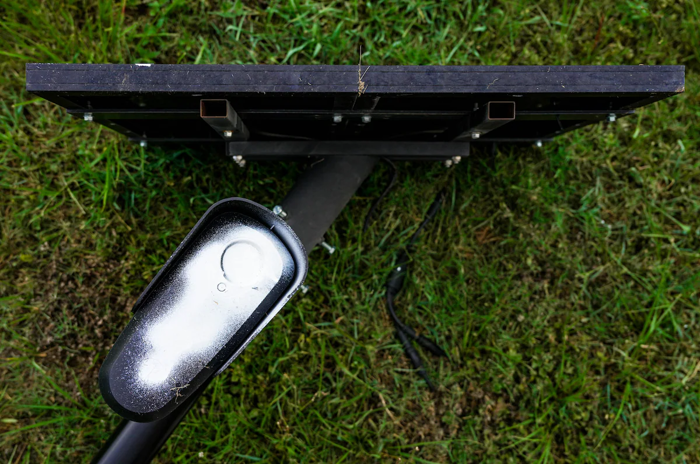
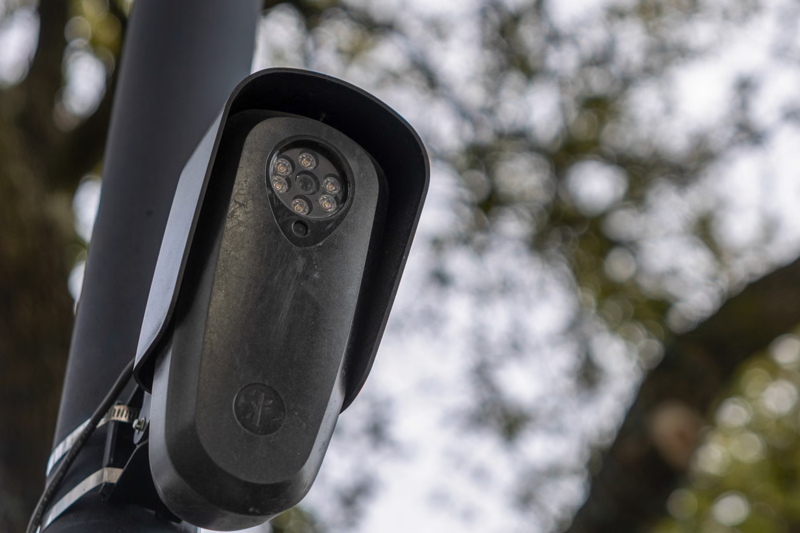
Inside the growing vigilante movement to knock out Flock surveillance cameras
The first time that “NoMark” tried to knock out a Flock camera feed, he waited an hour for the perfect moment – pacing in and out of bushes that towered over him, a few feet behind a pole holding up the device.
“I was just so nervous,” he said.
NoMark, as he’s known on Instagram, had already gained an online following of hundreds of thousands for posting videos of himself wearing a black mask and taking on small-time vigilante missions: breaking up fights outside a bar and breaking into a refinery he believed was “polluting the city real bad”. The Minnesota Star Tribune dubbed him “Minneapolis’ Batman”. He spoke to the Guardian under condition of anonymity to discuss potentially illegal acts.
John Carpay: The Quiet Expansion of State Power Over Canadians’ Digital Lives
Canadians are being asked to accept a quiet but profound transformation in the relationship between citizen and state. Under the banners of cyber security, fighting crime, and protecting children from social media harms, Ottawa is assembling new legal powers that expand government reach into private communications, financial records, location data, and online identities.
Meta Now Wants a Video Selfie of Your Face
Meta is rolling out a badge on Facebook that requires users to record a video of their own face.
The feature, massively accelerating the normalization of face scanning and biometric data collection, is called Facebook Verified, and asks a user to record a short video selfie, which the company checks against the photos already on their profile to confirm a match.
The process is free and takes a few minutes.
France Targets Online Anonymity Under the Guise of Child Protection
On July 21st, Parliament gave final approval to the bill introducing a minimum age for accessing social media in France. The legislation establishes the principle of a ban on social media for those under the age of 15. Platforms will now be required to verify the age of their users before they open or maintain an account, using a ‘double anonymity’ verification system. Users will have to prove their age to a trusted third party, which will issue a cryptographic token certifying only that they are of legal age in relation to the set threshold, without disclosing their identity to the platform. The implementation schedule is phased: from September 2026 for new accounts, then from January 2027 for existing accounts.
Why I’m Writing This Anonymously and What That Says About Free Speech in Britain Today
I have wanted to write for the Daily Sceptic for a long time. It should be a straightforward ambition to fulfil. I have opinions, I support free speech and scepticism, and here is a publication built for exactly that. Instead, my first contribution arrives unsigned. I think the reason why is, in itself, the article.
Ann Widdecombe’s murder has reopened a question that surfaces from time to time: should politicians with ‘unfashionable’ views get extra protection? The investigation continues, so I won’t comment on that, but the fact that the question is even being asked in response to a 78 year-old woman being killed in her own home tells you something regardless of how the investigation concludes. We have been here before. Jo Cox in 2016. David Amess in 2021. A pattern is forming, whatever the final facts of this particular case turn out to be.
Coming soon to a Canada near you!
Rubio urged to Fight Canada’s Bill C-22 Surveillance Law
Ron Wyden wants the Trump administration to treat one of America’s allies as a counterintelligence threat.
The Oregon senator wrote to acting Attorney General Todd Blanche and Secretary of State Marco Rubio, who is doubling as acting national security adviser, on July 16.
His warning centers on an invasive surveillance bill moving through Canada’s Parliament that could turn American technology companies into tools for spying on Americans.
Ottawa quietly testing digital ID apps despite long-standing concerns over national ID
The federal government has quietly launched pilot projects testing digital identification apps, while insisting the technology will remain voluntary and does not represent the creation of a national digital ID system.
Blacklock’s Reporter says according to a Jan. 14 briefing note prepared by the Department of Employment, the government is testing three digital credential tools — GC Issue and Verify, GC Wallet Beta and GC Verify Beta — with a limited group of participants before any broader rollout.
Germany Plans Secret Home Raids and Teenage Informants
Germany’s domestic intelligence agency could soon be authorised to secretly alter digital data, hack into private computers and mobile phones, enter homes without occupants’ knowledge, recruit 16- and 17-year-olds as informants, and never inform citizens that they had been subjected to surveillance.
The draft law, prepared by Interior Minister Alexander Dobrindt, would dramatically expand the powers of the Federal Office for the Protection of the Constitution (Bundesamt für Verfassungsschutz, BfV), Germany’s domestic intelligence agency.
“Financial Surveillance”: EU Parliament Approves Creation of Digital Euro
Europe has just taken a major step toward creating the digital euro, a project that could soon open the door to leaving Europeans’ financial freedom at the mercy of Brussels.
On Thursday, July 9th, the European Parliament’s plenary adopted a text on the creation of the EU’s own CBDC (central bank digital currency), sending the file to the final stage of interinstitutional negotiations before the digital euro’s planned issuance from January 2029.
How can we de-programme the police?
I’m not sure why I started following the photographer Alastair Hilton on X. He’s right-ish politically, so perhaps the algorithm just blew him my way. But through the rising tide of online bilge, I still seek out and enjoy Hilton’s posts, mostly because he talks about pubs and posts pictures of cold pints on hot days.
Hilton has a narrowboat on the Thames in Chiswick and seems to half live in the bars along the river, so he was extremely cross about a recent proposal to remove the tables and chairs from the riverside, especially from his local pub, the Bell and Crown. Last week he posted a video in which he said that the word on the Chiswick street is that getting rid of the outdoor seating was the sneaky pet project of a local Green party councillor, Rick Rowe, who lives Thames-side with his boyfriend and dislikes the noise – though you’d have thought a local councillor would support a struggling pub.
Surveillance Disguised as Safety: Cars Sold in EU To Spy on Drivers 24/7
As of Tuesday, July 7th, all new cars sold within the European Union are required by law to include an extra spy gadget, whether you want it or not.
The so-called driver monitoring camera, switched on at all times while the car is running above 20 km/h, and capable of precisely tracking the driver’s eye movements, is part of the now mandatory Advanced Driver Distraction Warning system, or ADDW.
The Carney government’s expanding power to identify Canadians online, access their data—and punish them
The federal government is assembling more legal tools to identify who Canadians are online, track what they do there, and, in some cases, punish them for what they say than at any point in the country’s history.
That is the picture emerging from a cluster of bills advanced this spring, capped by Bill C-22, the Lawful Access Act, 2026, which the Liberals pushed through third reading June 18 after invoking a programming motion that curtailed committee study and shut down debate while amendments were forced through without debate—the motion barred any amendment not already submitted by a retroactive Monday deadline. The bill heads to the Senate when Parliament returns Sept. 21, but the manner of its passage has alarmed lawyers, civil liberties groups, technologists, and opposition MPs who say Parliament approved sweeping surveillance powers it never fully examined.
Six Bills Could Drive Canada Closer to a Surveillance State
Bill C-34, the Safe Social Media Act, is the latest building block to be added to the foundation of Canada’s forthcoming surveillance state.
If Bill C-34 is passed into law, it’s only a matter of time before the federal government knows the location, monitors the movement, and tracks the communications of every Canadian. Bill C-34, together with other federal laws, will provide the government with intimate knowledge of how and when we use social media, AI, and the internet generally.