

The Republican Party was founded in Wisconsin, a free state, in 1854, as an abolitionist party.
That’s right, the party was incepted with the idea of abolishing slavery and emancipating slaves.
Freedom is in its DNA.
The Republican Party was founded in Wisconsin, a free state, in 1854, as an abolitionist party.
That’s right, the party was incepted with the idea of abolishing slavery and emancipating slaves.
Freedom is in its DNA.
Britain has lost a key battle over reparations as Commonwealth leaders used the group’s summit in Samoa to demand talks on compensation.
The call for “discussions” was included in the gathering’s final communique despite a 48-hour rearguard from UK negotiators.
This comes as a major blow to Sir Keir Starmer, who immediately ruled out paying any kind of cash compensation for Britain’s role in the slave trade.
The communique, signed by all 56 Commonwealth nations, noted “calls for discussions on reparatory justice with regard to the trans-Atlantic trade in enslaved Africans and chattel enslavement”.
That means Canada has endorsed reparations because of course Trudeau would.
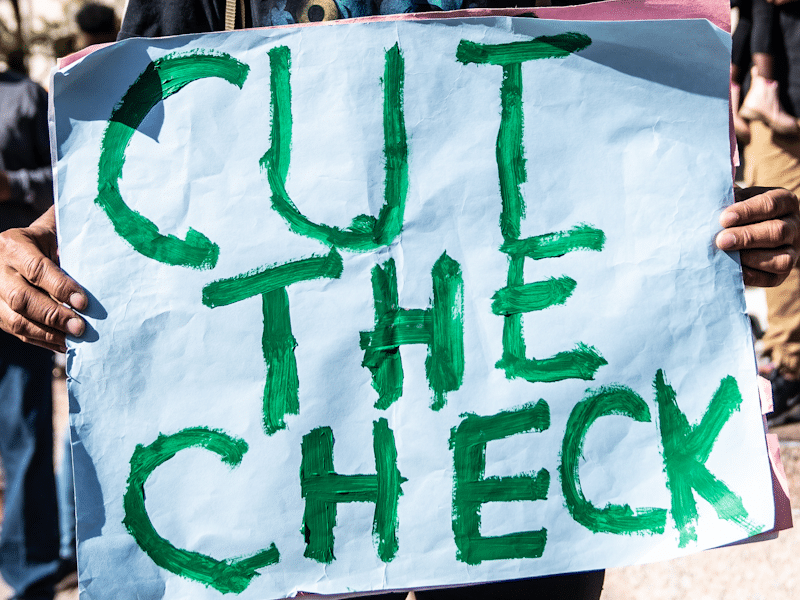
New York City recently took a small step forward in correcting historical wrongs—at least, that’s what lawmakers would have you believe. The city council has passed a legislative package that would “fully examine the present-day impacts of injustices inflicted on Black New Yorkers and communities” and “advance necessary efforts to consider potential remedies that can lead to healing and reconciliation.” These bills, now bound for the desk of Mayor Eric Adams for his signature, include the establishment of “a Truth, Healing and Reconciliation process on slavery within New York City” and a “reparations study” to determine how much money is owed to black New Yorkers because of slavery, abolished statewide in 1827.
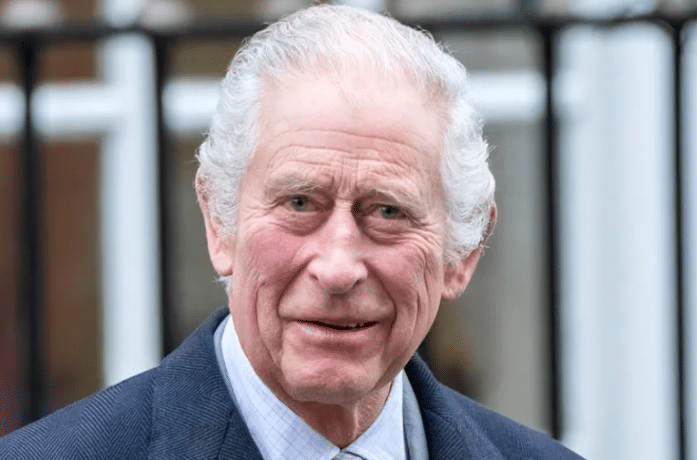 The upcoming Commonwealth Heads of Government Meeting in Samoa has sparked discussions about a sensitive topic: reparations for historical wrongs committed during the colonial era.
As King Charles III prepares to address Commonwealth countries, many are wondering if he will broach this important issue that has long been a source of tension between former colonial powers and their former colonies.
Ooops … Samoan chief who enslaved villagers sentenced to 11 years in New Zealand
Blackbirding – Australia’s history of luring, tricking and kidnapping Pacific Islanders
The fate of the country’s first taxpayer-funded reparations program is hanging in the air after the city in question, Evanston, Illinois, defended its program and asked a judge to dismiss a lawsuit that argues the race-based payments are unconstitutional.
At issue is whether Evanston’s first-of-its-kind reparations effort — for which the city allocated $20 million for a program to provide $25,000 payments to Black people who lived at Evanston between 1919 and 1969 and their descendants — violates the Equal Protection Clause. Judicial Watch filed the lawsuit earlier this year, claiming that its six plaintiffs would be eligible for the reparations payments except for the fact that they weren’t Black.
The fraught debate about reparations for slavery and colonialism is likely to dominate the King’s first meeting with Commonwealth leaders since he ascended the throne.
The organisation, which has 56 members, has long resisted tackling the legacy of slavery in a public forum but a reckoning with its roots in the British Empire seems unavoidable next month with the election of a new secretary-general.
All three candidates running to succeed Baroness Scotland of Asthal have backed the idea of making amends for slavery and colonialism.
Nearly 200 years after slavery was outlawed in New York, proponents of a New York City reparations package tell The New York Sun they’re expecting the sweeping measures to pass in a City Council vote Thursday, in a move that could one day lead to monetary payments and public apologies.
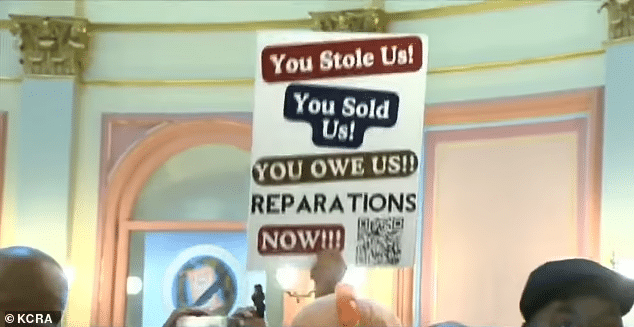
Protests have erupted at the California state capitol after two stalled reparations proposals for black residents were seemingly killed.
The development came during the final day of the legislative session in Sacramento Saturday, following hours of fierce lobbying.
Some two dozen protesters were seen inside and outside the building that day, airing shouts for the bills to move forward and chants for reparations ‘now’.
The following are essential components of a racially fair Canada according to a pair of federally appointed brainstormers: dedicated Black courts and federal departments, racial “decarceration” targets … and, possibly, reparations for slavery.
These measures, numbering 114 in total, were recommended to the federal government by a steering group at the end of June to shape the Liberal government’s forthcoming Black Justice Strategy. It’s an initiative that will be sure to promote disorder and advance the well-being of a select few, if the guiding material is any indication.

Why slavery is not America’s original sin
Modern histories tend to rely heavily on the new ideological pieties of left-wing activists. First among these is the belief that we live in a totally corrupt and oppressive society – in fact, in the world’s most oppressive and corrupt society. Feeding this belief is the widely accepted claim – at least, within the modern Western world – that slavery is the United States’ ‘original sin’, and alleged to be uniquely evil as practised within the US.
One major American textbook, Traditions and Encounters, appears to describe the Western-dominated slave trade as the largest and most brutal in history, calling even the full sweep of Arab / Islamic slavery ‘smaller than the Atlantic slave trade of modern times’. Elsewhere, the 1619 Project’s Nikole Hannah-Jones argues bluntly: ‘America’s brutal system of slavery [was] unlike anything that had existed in the world before. Enslaved people were… property that could be mortgaged, traded, bought, sold, used as collateral, given as a gift and disposed of violently.’
As cities and states charge ahead with reparations efforts, questions are swirling about whether the programs are constitutional and how eligibility would be determined, with one observer saying the government trying to prove whether Black people are actually Black highlights “the insanity” of the programs.
California’s recent allocation of $12 million in its budget towards reparations could leave the Golden State vulnerable to a slew of legal challenges.
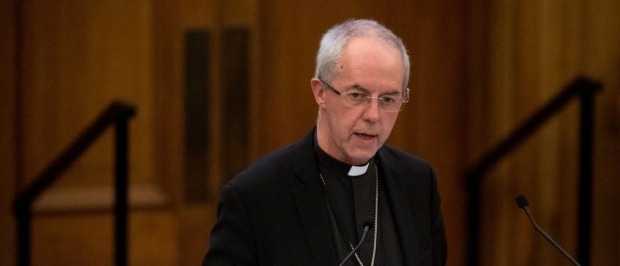
Leaders of the Church of England have been scrambling to assure the faithful that their proposed £1 billion fund for slavery reparations will not come from donations to parishes.
Last year the Church of England announced it was establishing a £100 million fund for slavery reparations but later acknowledged there were plans afoot for the far larger target of £1 billion.
It’s full steam ahead for Sankofa Square.
Toronto city councillors on Thursday voted 17-6 in favour of proceeding with a plan to rename and rebrand Yonge-Dundas Square.
No good radical-left public policy proposal can gain any traction with radical-left lawmakers without a radical-left academic study to back it up.
Harvard professors Linda J. Bilmes and Cornell William Brooks have published a study in the “Russell Sage Foundation Journal of the Social Sciences” titled “Normalizing Reparations: U.S. Precedent, Norms, and Models for Compensating Harms and Implications for Reparations to Black Americans.” That the radical-left professors say it is necessary to “normalize” reparations suggests that reparations are not “normal” and shouldn’t be attempted. This is especially true when you consider that the very word “normal” doesn’t exist in the usual academic lexicon.
