‘Ghana was the crime scene’: The country leading the demand for slavery reparations

‘Ghana was the crime scene’: The country leading the demand for slavery reparations

This year has seen a dramatic change in tone in the global conversation about the transatlantic slave trade.

The demand for formal apologies, debt relief and financial compensation from nations and institutions that benefited from slavery has become increasingly forceful.

In March, a resolution was passed at the United Nations recognising slavery as “the greatest crime against humanity” – though the United States voted against the resolution and every European nation abstained from the vote.


Hmmm …

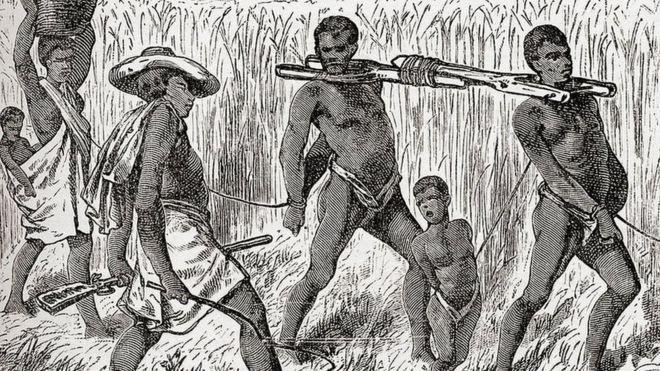
In short, Ghana’s territory was both a primary origin point for captives and a critical coastal hub where African suppliers and European traders interacted to sustain a large share of the Atlantic trade for over two centuries.

Share

Archbishop of Canterbury vows to support £100m pledge helping communities affected by enslavement

Archbishop of Canterbury vows to support £100m pledge helping communities affected by enslavement

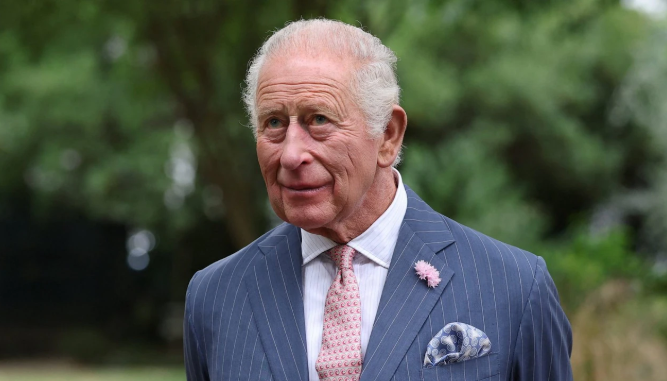
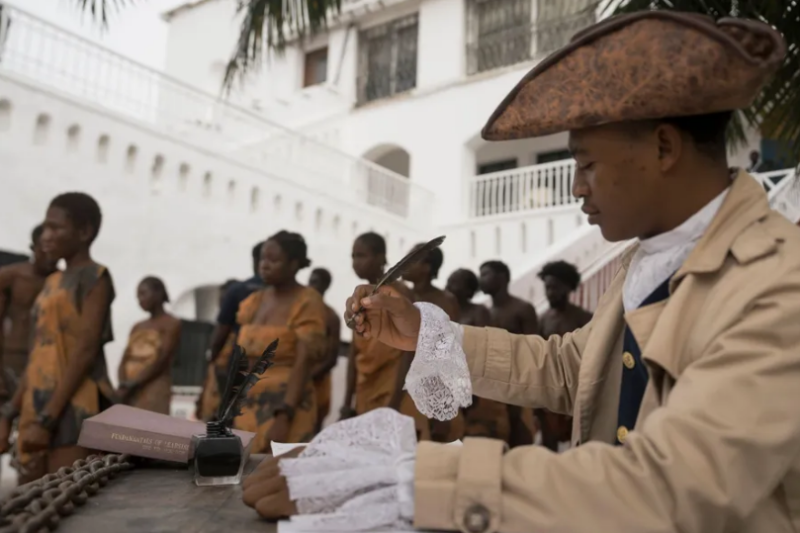
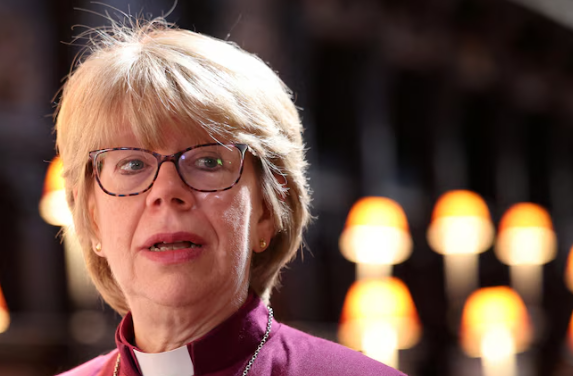
At a former British castle where thousands of enslaved Africans were held before being shipped across the Atlantic, the archbishop of Canterbury expressed “lament” for the Church of England’s involvement in transatlantic chattel slavery and reaffirmed her commitment to a controversial £100m fund for affected communities.

Dame Sarah Mullally made the comments on Thursday during a visit to the Cape Coast castle, a 17th-century fortress that was built by Swedish traders, but occupied by the Danish and the Dutch, before the British seized it in 1664.

SAY WHAT? Ghana’s parliament passes anti-LGBTQ+ bill

Share

Woke activist group says State of New York must offer reparations to ALL black people living there

Woke activist group says State of New York must offer reparations to ALL black people living there

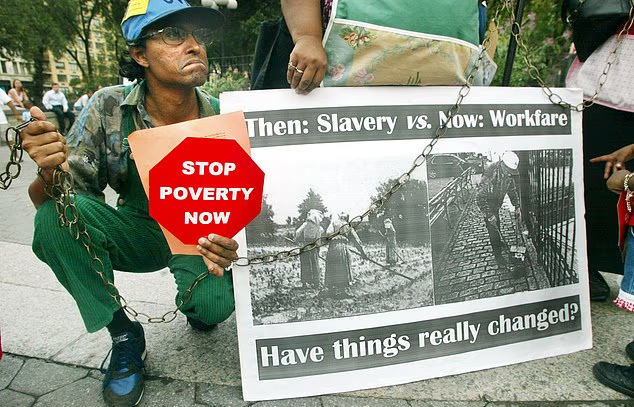
Civil rights groups in New York have released a report demanding reparations for black residents, arguing that decades of deliberate racial inequality must be amended.

The New York Civil Liberties Union (NYCLU), the local chapter of the American Civil Liberties Union, and the Legal Defense Fund (LDF) released a report last week titled, The Other New York: The Legacy of Slavery and the Case for Reparations Now.

‘This report lays out a clear and undeniable truth: racial inequality in New York is not accidental,’ the introduction states.

Share

Bombshell reparations plan for black residents passes in Alameda County — despite budget blackhole

Bombshell reparations plan for black residents passes in Alameda County — despite budget blackhole

A California county that faced a $91 million budget gap this year has approved a sweeping reparations plan for black residents, the first of its kind in the Golden State, that calls for major changes to housing, education, healthcare and criminal justice — while leaving the door open to cash payments.

The Alameda County Board of Supervisors voted 5-0 on June 30 to accept the comprehensive plan following more than two years of research and community engagement.

Share

Caribbean demands Britain give up territories as reparation for slavery

Caribbean demands Britain give up territories as reparation for slavery

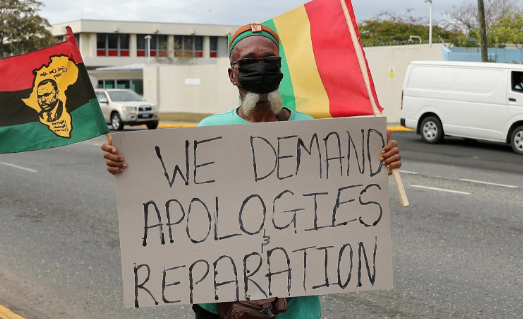
Caribbean nations have called on Britain to give up its overseas territories as part of slavery reparations.

A delegation representing 15 Caribbean countries has been sent to London to advocate an expanded set of proposals to address the effects of “extractive colonialism”.

The detailed manifesto from the Caribbean Community (Caricom), which is being put to MPs, says that former colonial powers should not only offer financial compensation but also give up their territories in the region.

Share

The UN, Slavery, and History’s Selective Amnesia

The UN, Slavery, and History’s Selective Amnesia

On March 25th, the United Nations General Assembly adopted a resolution describing the transatlantic slave trade and the enslavement of Africans as “the gravest crime against humanity.” The text was adopted by 123 votes to 3, with 52 states abstaining, including France, Portugal, Spain, the United Kingdom, and most European countries. The United States, Israel, and Argentina voted against.

The symbolic significance of this resolution is considerable. No one would dispute that the transatlantic slave trade constitutes one of the greatest tragedies in human history. For several centuries, millions of Africans were deported to the Americas under appalling conditions, reduced to the status of commodities, and integrated into an economic system based on their dehumanisation. The memory of this crime deserves to be acknowledged and passed on.

Share

The Myth of Slavery as an Engine of Growth

The Myth of Slavery as an Engine of Growth

Over the past two decades, the New History of Capitalism has transformed debates about Western development by restoring slavery to the center of the story of modern economic growth. A burgeoning literature now contends that slavery was not simply a moral atrocity intertwined with capitalism but the essential engine that powered the rise of the Atlantic economy itself. According to this interpretation, slave labor generated the capital accumulation, commodity production, and financial sophistication that made the modern West rich. When British politician Kemi Badenoch publicly opposed this argument, critics accused her of minimizing slavery’s economic significance. Yet the central empirical difficulty with the enrichment thesis remains unresolved: if slavery is such a powerful generator of prosperity, why did societies organized around slavery remain poor for most of human history, despite slavery existing across nearly every major civilization?

Share

Reparations: Who Pays Whom?

Reparations: Who Pays Whom?

Reparations, its proponents insist, are payments white Americans owe black Americans for enslaving them, a practice that ended 163 years ago. These advocates would have us believe that seven or eight generations after the fact, the limitations and inequalities of slavery still hold slavery’s descendants back and deny them their chance at the American dream. And somebody has to pay.

Setting aside the logic of that claim for the moment — while noting its similarity to the familiar liberal mantra: “Vote for us, and we’ll give you stuff!” — let us consider the practical question: Who exactly should pay whom?

Share

Scamming the West: What’s really behind the UN’s ahistorical transatlantic slavery resolution

Scamming the West: What’s really behind the UN’s ahistorical transatlantic slavery resolution

The United Nations General Assembly, led by Ghana, recently passed a resolution by a 123-3 vote declaring that the “transatlantic” slave trade was the “gravest crime” ever committed against humanity. The resolution demands “reparatory justice” for “Africans and people of African descent” due to its “scale, duration, systemic nature, and brutality.”

Why focus just on the transatlantic slave trade? Because the United Nations is engaged in a long-running con to extract reparations from the West by accusing it, and specifically the United States, of perpetrating the most nefarious crime in history.

Share

Geoff Russ: Sorry, progressives, Canada wasn’t ‘built on slavery’ like the U.S.

Geoff Russ: Sorry, progressives, Canada wasn’t ‘built on slavery’ like the U.S.

Spurred on by the so-called reckonings over racism in the United States and its legacy of slavery, many Canadian activists have attempted to import America’s divisive racial politics into Canada. However, examining slavery in Canada on its own terms and in good faith does not result in an identical discourse.

A report released Wednesday by the Aristotle Foundation for Public Policy — titled, “Slavery in Canada: The Facts Rarely Told” — is a fascinating and grim study into the country’s dark history of trafficking in human beings.


Share