Navy ponders concept of Canadian-built amphibious landing ship for Arctic operations

Arctic Helicopter Patrol Barge – Almost on time and only a billion over budget

The commander of the Royal Canadian Navy is floating the idea of an ice-capable amphibious landing ship to move troops and equipment around the country’s Arctic — and perhaps elsewhere.

But Vice-Admiral Angus Topshee is quick not to get his hopes up — and has even, occasionally, taken pains to downplay it.

Share

JOHNSON: US-Canada national security breakdown — why Americans are walking away

The seventeenth annual Halifax International Security Forum (HISF) took place from November 21 to 23, 2025. It was co-hosted by the Canadian Minister of National Defence, David McGuinty, and the forum’s theme was, perhaps ironically, on “democracy.” The choice in theme isn’t a generic catchphrase; it’s meant as a direct sidelining of the USA. There was not much discussion, however, about whether the fanatical Liberal Party of Canada’s “elbows up” hysteria could get Canadians or our allies killed in World War 3.

Why Canada Built a Billion $ Warship That Can’t Fight

Uhm OK. (Incognito)

Share

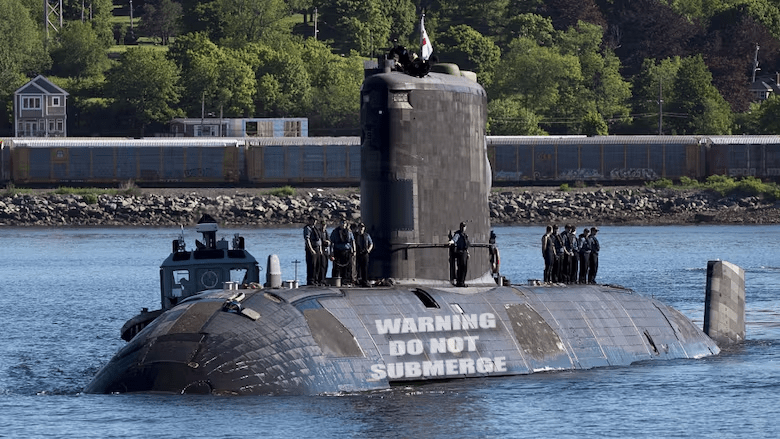
Canada’s instructions to submarine contract bidders highlight ability to float, submerge at least once

Canada’s instructions to submarine contract bidders highlight sustainment, economic benefits

Canada has formally issued firm bidding instructions to the two companies vying to build the navy’s new submarines, CBC News has learned.

The document went out to ThyssenKrupp Marine Systems (TKMS) of Germany and Hanwha Ocean Co. Ltd. of South Korea last week.

James Rourke, an official in the newly established federal Defence Investment Agency, acknowledged the document, which specifically outlines the federal government’s expectations and how the decision will be weighted, was delivered to both qualified bidders.


If they go with the South Korea bid it’s got to include BBQ, and the German bid, lots of strudel and beer.

Share

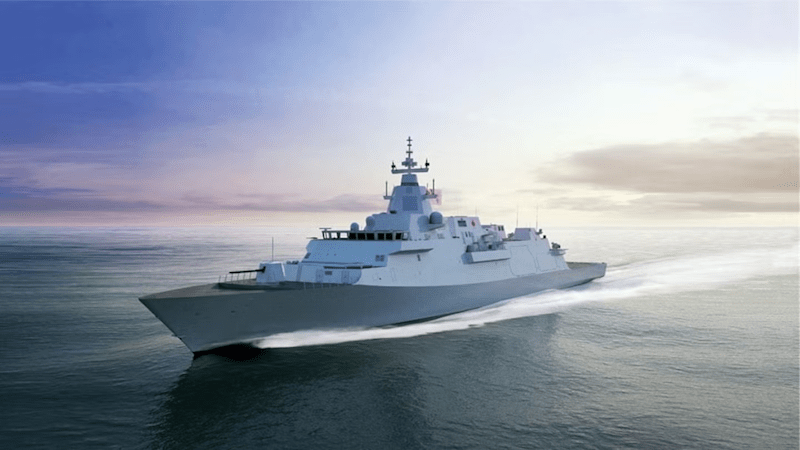
Canada’s new warships could be obsolete by delivery time

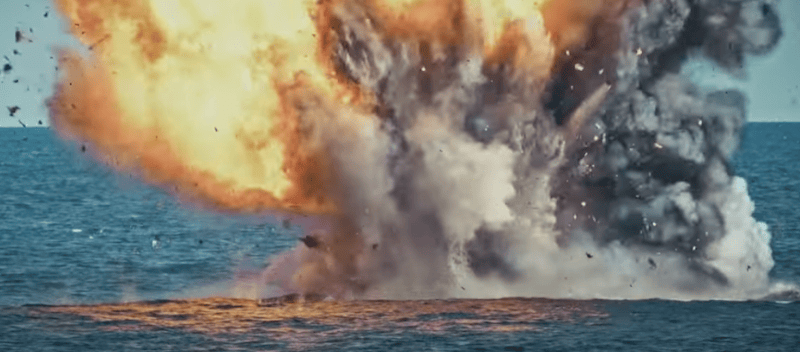
Two small motorboats collided off the west coast of Vancouver Island this past summer, causing a large explosion. The crash was just a demonstration, conducted by the Royal Canadian Navy with equipment from a British defence contractor. But the technology on display has serious implications for Canada’s procurement of 15 large warships known as River-class destroyers.

The small motorboats used in the demo, called hammerheads, are designed for hunting and eliminating large naval vessels. Instead of having a crew, they are remotely controlled over a satellite link.

Share

Navy commander says Canada could end up with subs from two different suppliers

OTTAWA – Vice-Admiral Angus Topshee says the Royal Canadian Navy could end up with submarines supplied by both companies vying for Ottawa’s lucrative sub procurement contract — and there could be advantages to diversifying the fleet.

Topshee also says the simplest solution would be to operate 12 submarines from just one supplier, which would ensure all the parts and weapons systems are the same.

Topshee did not express a preference either way in a recent interview with The Canadian Press, saying it’s ultimately up to the federal government to decide.


12 subs? I’ll believe it when I see it.

UPDATE – Canada won’t split its submarine contract between suppliers: Carney

Share

Canada’s submarine choice could break tradition, embrace South Korea in Indo-Pacific shift

Baking Powder Submarine

A South Korean company has made the short list to supply this country with a fleet of submarines, and if Ottawa ultimately picks Seoul-based Hanwha it would be the first time Canada has purchased a major weapons platform from a non-Western supplier.

It would represent a significant pivot from American and European contractors and forge a new relationship with an Asian country that faces major security challenges of its own, including a heavily-militarized Korean Peninsula and an increasingly aggressive People’s Republic of China.


Fearless Prediction: The Sub program will never come to fruition.

Share

German or South Korean subs? Ottawa’s pick will hinge on economic windfall

Ottawa will favour the pitch that creates the most Canadian jobs when it decides whether to award a contract for a dozen new submarines to a German or a South Korean consortium, the government’s point person for military procurement says.

The comments from Liberal MP Stephen Fuhr highlight the Carney government’s attempts to build up the Canadian industrial base while ramping up defence spending to levels unprecedented in recent history.

Share

David Oliver: Mark Carney’s European submarine hunt

Mark Carney’s visit Tuesday to the shipyard of ThyseenKrupp Marine Systems (TKMS) in Kiel Germany, confirmed it and South Korea’s Hanwha Ocean Co. as the two leading bidders to fulfil the requirement of 12 submarines under Canada’s Canadian Patrol Submarine Project (CPSP).

Carney’s visit to Ukraine, Poland and Germany comes as Canada seeks to signal its intent to rebuild an atrophied set or defence assets and defence industrial base. It also signals Canada’s desire for strategic autonomy from the U.S. as it builds hard and soft power links with other western allies.

Share

Canada narrows choices for new submarines to German and South Korean bidders

As he delivered the hard sell pitch last spring for Canada to buy his submarines, Oliver Burkhard, the CEO of Germany’s ThyssenKrupp Marine Systems (TKMS), used the phrase “strategic partnership” half a dozen times.

Canada would be part of “a family,” he said.

We will — perhaps — soon get a better sense whether that approach is music to the ears of Prime Minister Mark Carney and key members of his cabinet.


Gotta admit the Germans have practical experience.

Share

Canada deploys explosive drone boat in first proof of ‘new operational concept’ for navy

The Royal Canadian Navy is experimenting with explosive-packed drone boats, turning lessons learned from Ukraine’s war with Russia into a “new operational concept” for Canada’s maritime forces.

The first test of the concept came during a multinational naval exercise that concluded earlier this month off the west coast of Vancouver Island, where one explosive-laden vessel was driven into another uncrewed boat and detonated.

The drone boats, known officially as Hammerhead uncrewed surface vessels, are typically used by the navy as remote-controlled targets to mimic small speedboat attacks on larger ships.

Share

REMPEL: Carney’s defence plan signals a shift, but real capability is years away

Mark Carney recently announced his government’s intention to increase defence spending by more than $9 billion in order to “rebuild, rearm and reinvest” in the Canadian Armed Forces (CAF.) The government declared that this positions Canada to meet the target of spending two percent of GDP on defence this year. The prime minister further promised that: “We will rapidly procure new equipment and technology… Canada will seize this opportunity with urgency and determination.”

Share

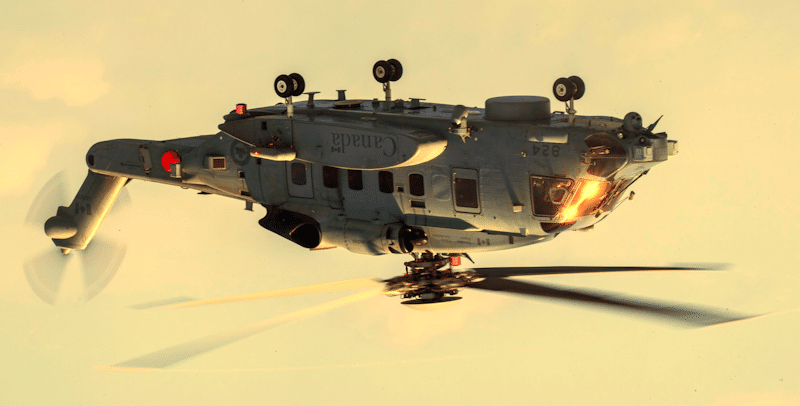
Lack of working Cyclones frustrates Canada’s top sailor: ‘The helicopter has been letting us down’

Canada’s top sailor is so fed up with the dearth of Cyclone helicopters available to fly off this country’s warships, he’ll replace them with drones if he must.

The fleet of 26 CH-148 helicopters was grounded for most of last month due to spare parts problems. And, as of Thursday, only three of the choppers were available to fly off the country’s warships as the problems persist.

3 are working? That’s a record isn’t it?

Share

German, Norwegian officials urge Canada to join ‘familiar family’ in buying new submarines

Senior German and Norwegian defence officials say they’re confident Canada will sign on to the ReArm Europe plan in the coming weeks and such a move will make it easier for the Liberal government to buy new submarines from allies.

Jasper Wieck, the political director of the German Ministry of Defence, and Norway’s program director of submarines, Capt. (N) Oystein Storebo, spoke with CBC News recently about the pitch for Canada to join their existing partnership, in which the two nations are constructing cutting-edge boats that will begin to enter service in 2028.

No mention by Carney of NATO’s upcoming demand for a 3.5% members spend: Nato will force Britain to spend 3.5pc on defence

Share

Why Canadian military’s Cyclone helicopters were grounded for 27 days in May

The Canadian military’s Cyclone helicopters weren’t flying for 27 days in May due to a lack of spare parts, and only one of them is now able to take to the skies.

Canada has 26 of the ship-borne maritime helicopters, with a final one slated for delivery this year. The $5.8-billion fleet is normally used to provide air support for the Royal Canadian Navy. Their missions include surface and subsurface surveillance, search and rescue, and anti-submarine warfare.

Share

Mould found in only half of the Royal Canadian Navy’s frigates

RCN Frigate “Mouldy”

Mould has been discovered in nearly half of the Royal Canadian Navy’s 12 frigates.

Cheryl Forrest, who speaks for National Defence, confirmed that mould has been found in five frigates, the most recent on HMCS Vancouver this year.

“Small amounts of mould have been reported in two areas of high humidity on HMCS Vancouver recently and were quickly removed and the areas cleaned,” Forrest said in an email. “This also resulted in enhanced inspections of similar areas of concern on the ship with no other mould areas reported.”

Share