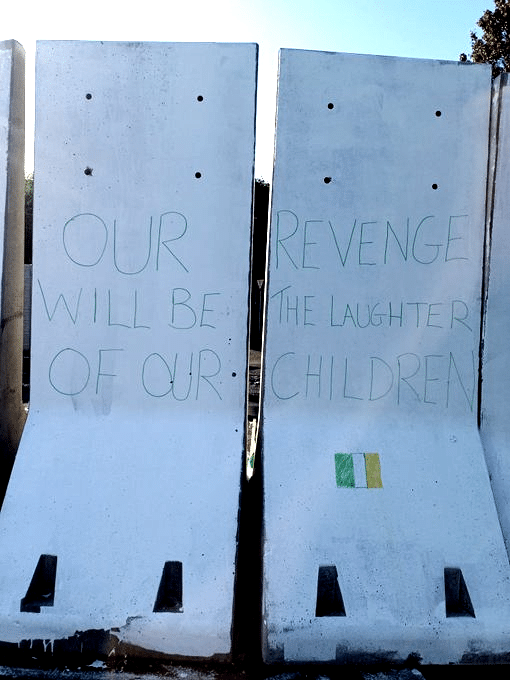
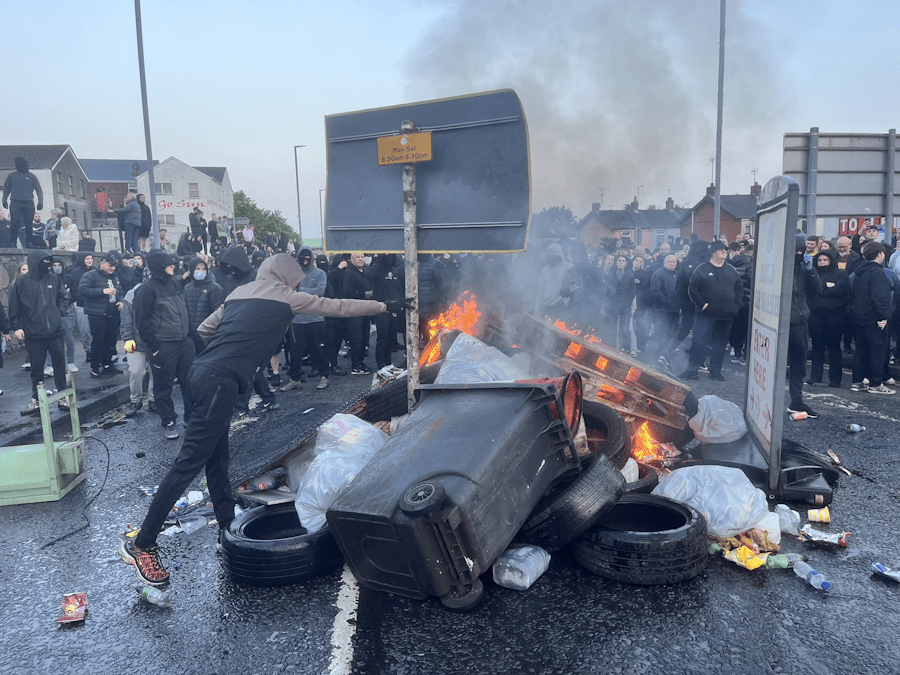
Ballymena riots: hundreds gather on second night of ‘serious disorder’

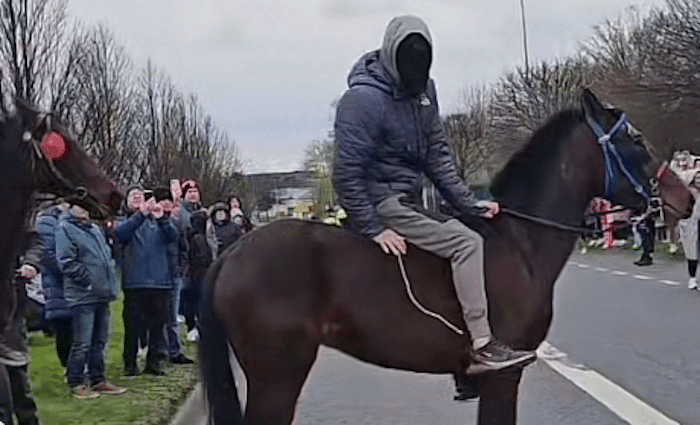
Petrol bombs, fireworks, glass bottles and pieces of metal were thrown at police during a second night of “serious disorder” in Ballymena, Co Antrim.

Hundreds of people gathered and riot police were deployed around the Clonavon Terrace area. A police spokesperson said 17 officers were injured as they came under “sustained attack over a number of hours with multiple petrol bombs, heavy masonry, bricks and fireworks in their direction”.

Police fired less-than-lethal rounds and used a water cannon to disperse the crowd. Five people were arrested on suspicion of riotous behaviour.

Share

Anti-migrant riots erupt in Northern Ireland after alleged sexual assault

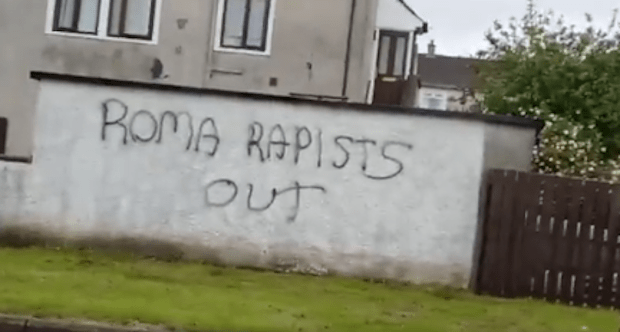
Fifteen police officers were injured and four houses set alight in anti-migrant riots after two teenagers, thought to be Romanian, were charged with the sexual assault of a girl in Northern Ireland.

Two 14-year-old boys appeared at a local court by video link on Monday, charged with attempted rape. The charges were read to them by a Romanian interpreter.

Violence erupted in Ballymena, County Antrim, on Monday night after a peaceful vigil by hundreds of people had been held in the town centre.

Share

Ireland’s asylum backlash

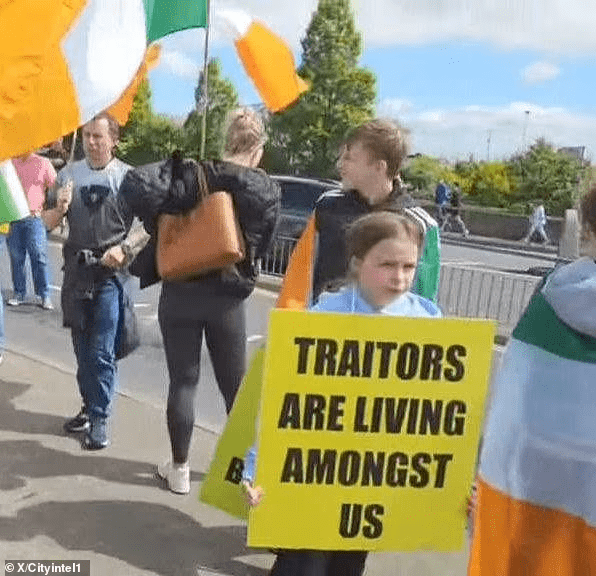
Huge crowds have staged anti-migrant protests in Ireland amid growing anger at the government over an increase in arrivals and asylum claims.

Over 1,000 are believed to have joined a march in County Donegal’s Letterkenny over the weekend, with several hundred having organised a counter-protest.

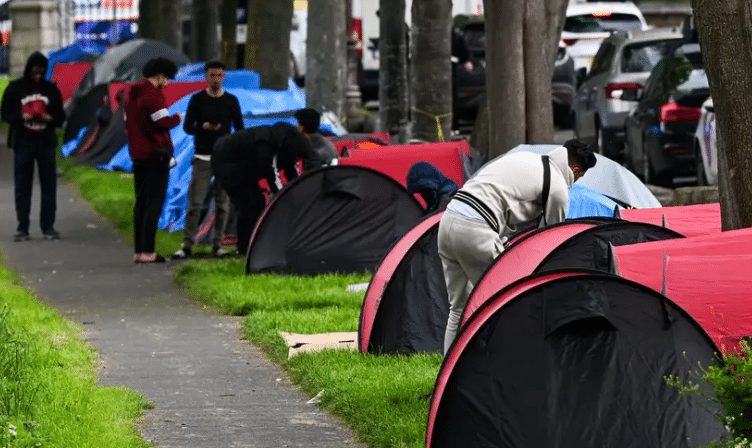
Ireland has seen anti-migrant anger growing in recent months, over the sheer number of asylum seekers being housed across the nation. Many of them are unable to get accommodation, forcing them to sleep in tents which has further incited anger.

Share

Ireland’s anti-immigration movement is coming for Dublin

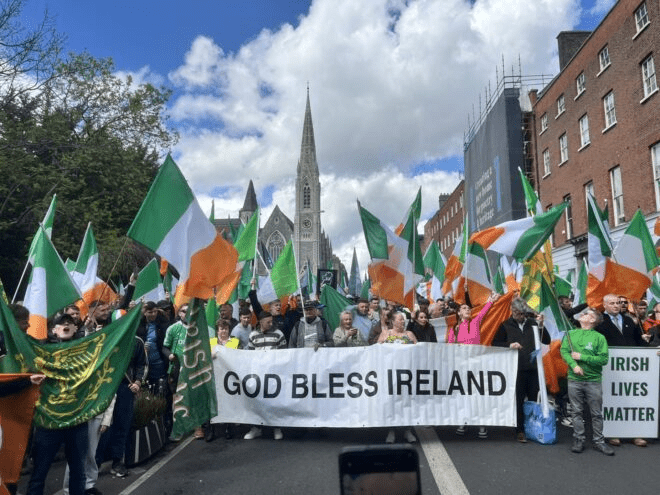
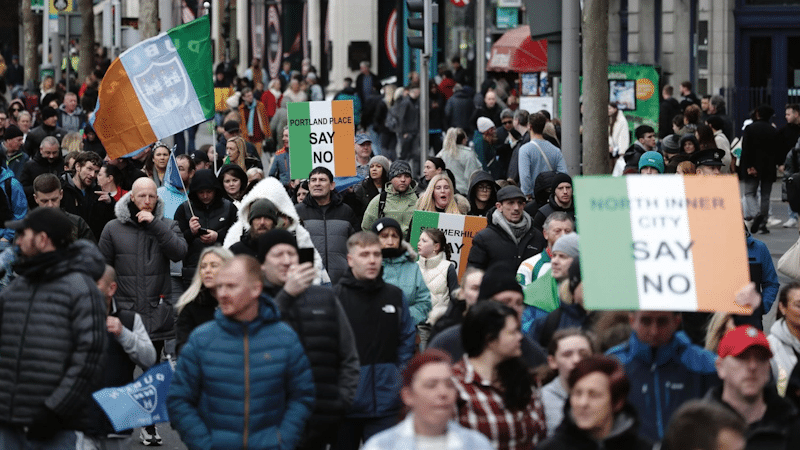
It is a tradition within Irish Republicanism for Easter Week to be marked by parades and marches to commemorate the 1916 Rising against British rule. Yesterday, Ireland’s growing if electorally marginal anti-immigration movement adopted the tradition. Outside Dublin’s Gardens of Remembrance, a woman was doing brisk business selling the Irish Republic flag of the Rising, as well as tricolours adorned with “You’ll Never Beat The Irish”, as tens of thousands of anti-immigration marchers gathered for their largest protest yet.

“They need to be dragged out by their balls,” said one older woman, carrying a commemorative wreath, of the Irish government. She transpired to be the wife of the movement’s emerging leader, the veteran Republican activist and newly-elected inner city Dublin councillor Malachy Steenson. The day was to be a reassertion of nationalist credibility after the politically damaging presence of Southern anti-immigration protestors alongside Ulster Loyalists during last summer’s Belfast riots.

Share

‘We’re being taken for fools’: How soaring migration came back to bite Ireland’s political elite

With finite housing and overstretched public services, the government’s ‘cack-handed’ border policies have triggered a wave of public anger

Driving through Dublin in his taxi, Gavin Pepper gestures down a stretch of pavement. “You wouldn’t go there at night,” he says. “There’s gangs of foreign men hanging around all over the city. You don’t see many Irish people walking there any more.”

It’s the sort of forthright remark that tends to stay in a cabbie’s front seat. But Pepper no longer speaks only as a taxi driver. He’s now a councillor for Finglas, a working-class district of north Dublin, elected on a wave of public anger over migration.

He says his election was driven by a migration policy handed down from on high – imposed, as he puts it, by Ireland’s political elite on poorer communities with no say in the matter. “You’re punching a wall that won’t break,” he says. “They have all the money, all the power, all the NGOs.”

We have the same evil pricks in Canada.

Share

How the Sons of St. Patrick Preserved the West

From the fall of Rome to the apex of the medieval ages, it was the ‘Sons of St. Patrick’ who reintroduced Western civilization to the West.

When rattling off the names of those who have played a pivotal role in shaping Western civilization, figures such as Alexander the Great, Julius Caesar, Charlemagne, William the Conqueror, Henry V, Christopher Columbus, William Shakespeare, the American Founding Fathers, Napoleon Bonaparte, and a handful of others — popes, princes, saints, and soldiers — spring readily to mind. One name which is often left out of the catalogue of greats, but without whom Western civilization may not exist, is that of St. Patrick.

Share

Ireland, U.K. becoming ‘dangerous’ for people with disabilities

“Many doctors in Ireland, and groups representing disabled people and older people, are not in favour of assisted dying legislation. They have deep concerns about what happened in Belgium, the Netherlands and Canada which have seen expansion upon expansion of the grounds for assisted suicide and euthanasia. Diminishing services prolong and increase older, disabled and sick people’s suffering to the extent that many now feel they can no longer live a valuable and productive life.”

She referred to it as “euthanasia by stealth.”

Share

Ireland’s political establishment avoids populist revolt

On Saturday following Ireland’s general election, count centres were full of volunteers tallying votes on their clipboards. In Donegal, supporters of venerable candidate Pat “the Cope” Gallagher wore high-vis vests bearing the legends “Vote Cope” and even “Team Cope“. It was a welcome reminder that even in an election where the results seem to have changed so little, someone is always coping and someone seething. So who is who?

Share

Ireland’s migration election History shapes the nation’s populism

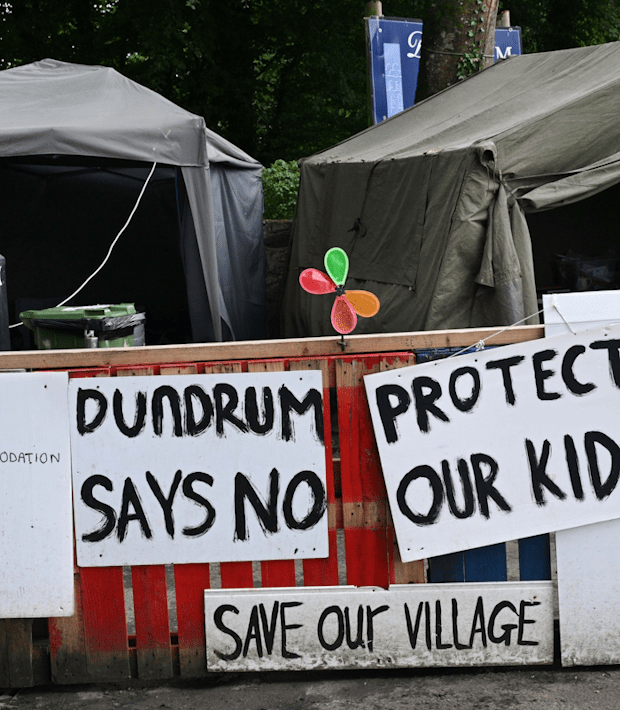
In many ways, Dundrum looks like the average Irish village. There’s a family butcher, a pub called Bertie’s, and rows of squatting slate-grey terraces. Yet walk down the R505, where Dundrum melts into the hedgerows of County Tipperary, and you’ll soon spot something else. There, outside Dundrum House, is an anti-migrant camp. Established back in August, locals are fighting the planned settlement of 277 refugees, with the former hotel set to be converted into an International Protection Accommodation Services (IPAS) centre.

Share

Learning From the Collapse of Catholic Ireland

How did a nation once famous for Saints and Scholars reach such lows? The president of the Irish Freedom Party has some thoughts.

In the sixth century, the monk St. Columba left the Emerald Isle and sailed to Iona to build a new monastery and spread the Christian faith. For centuries afterwards, Ireland held a reputation as a deeply and even fundamentally Catholic nation, responsible for training priests and religious scholars and sending them out across the wide world to preach and teach the Gospel. But today, there is only one seminarian currently studying for the priesthood to serve the entire Archdiocese of Dublin, which comprises over 200 parishes and approximately one million baptized Catholics.

Share

Ireland’s immigration crisis has brought it to boiling point

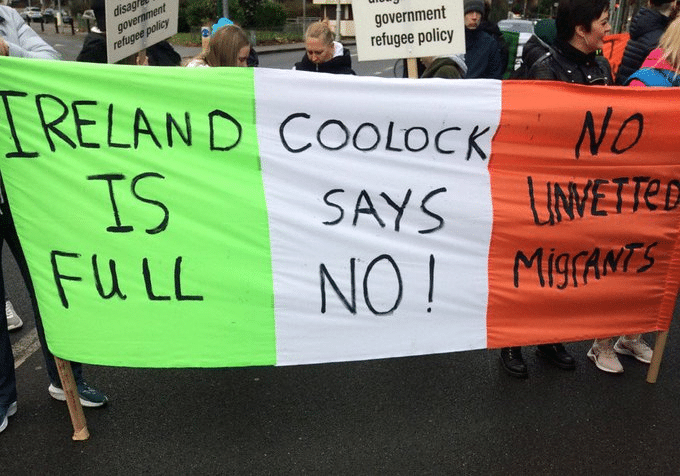
Coolock, north Dublin has become a focal point for the Irish immigration debate. In the past week, there have been five arson attacks in the large suburban area, as well as rallies amassing more than 600 people. Sunday night marked the fourth fire in four days at a site earmarked for asylum seekers.

Share

Former factory in Dublin intended to house asylum seekers is set on fire

A disused factory in Dublin earmarked to house asylum seekers has been set on fire following a protest at the site.

More than 1,000 people were protesting at the former Crown Paints building in Coolock on Friday night, in the north of the Irish capital, and gardaí were on the scene.

A number of speeches were given outside the derelict factory, with protesters seen holding signs that read “Irish Lives Matter” and “The Irish People”.

We need to be Coolock.

Share

Ireland’s anti-immigration protests are turning more violent

It would have been reasonable to assume that the relatively poor showing for anti-immigration candidates in Ireland’s local elections last month, like the unexpectedly strong performance by the governing coalition, marked the beginning of a decline for Ireland’s nascent populist movement. But yesterday’s serious disorder in Coolock, a working-class community in North Dublin, proves that the issue is very far from defused.

Update

Share

Ireland: Tensions over refugee crisis and Dublin tent cities

Dublin – illegal alien invader camp

The center of Dublin glitters with architectural showpieces, the offices of global corporations. But there are increasingly tents at the base of the glass facades. Some of these belong to people excluded from housing, a scarcity across Ireland and simply unaffordable for many people in the booming capital. The housing crisis is the dominant topic in Ireland right now. When he took office as taoiseach, or Ireland’s head of government, in April, Simon Harris promised to provide 250,000 new homes by the end of the decade.

Share

Ireland’s populist insurgency

Dublin’s marchers have to convince a silent majority

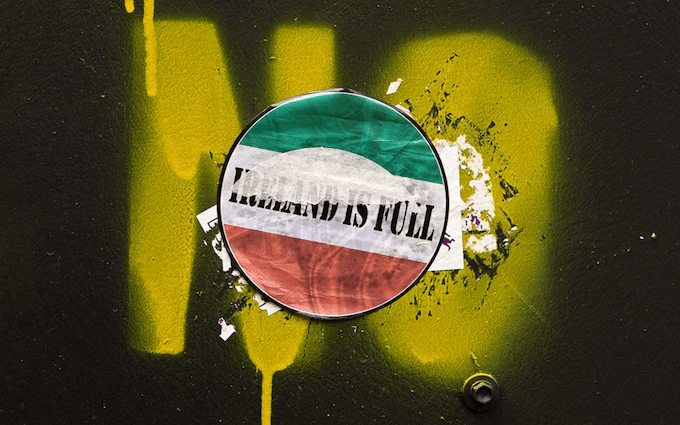
The first thing that strikes you about Dublin is how different the political stickers on lamp posts are: while in Belfast the overriding theme is either pro-Palestine or Irish unity, in Dublin’s central O’Connell Street, it is “Defund The NGO Maggots” and “Mass Deportations Now” that strikes the foreign observer as novel. Beneath a gloomy Irish sky, one anti-immigration protestor scraped antifa stickers off a lamp post while a small boy holding his father’s hand stuck an “Ireland is Full” sticker on another. Others affixed tricolours and green harp flags to fishing rods as Gardaí in their day-glo uniforms looked on.

Share