
Nova Scotia sees spike in military personnel living in tents, couchsurfing amid housing crisis

Active-duty military personnel in Nova Scotia are experiencing an “epidemic” of homelessness and housing vulnerability while others are turning down postings in the province because housing is either unaffordable or unavailable, provincial MLAs heard Tuesday.

Several groups that provide community-level supports and services to members of the Canadian Armed Forces and to veterans were invited to a legislative standing committee Tuesday to provide insight into how the province’s cost-of-living crisis is affecting Forces members and veterans.

Share

Vancouver encampment residents file human rights complaint against city

The B.C. Human Rights Tribunal will hear a complaint from people who camp at CRAB Park and allege the City of Vancouver and its park board discriminate against them by not providing “basic survival services.”

Tribunal member Steve Adamson said in a letter to the group that the tribunal will also fast-track the initial stages of the complaint to give them the chance to resolve the issue through a mediation process.

The group claims discrimination based on Indigenous identity, and physical and mental disabilities, among other allegations. They say there is insufficient electricity, a lack of sanitation, and the park board has not provided washroom facilities.

This is about prolonging the homeless crisis as a viable political wedge issue and fundraising tool.

Share

From Vancouver to Toronto, tent city dwellers carry on despite the constant threat of being swept aside

In Toronto, more than 20 years ago, I lived in a shantytown that was then North America’s largest. Then as now, people with no other place to go are villainized – but increasingly, encampments are treated like the new normal

Two blocks from where I live, in downtown Toronto, is Saint Stephen-in-the-Fields – an old red-brick church, surrounded by thick, gnarled maple trees. Across the street is the fire hall, and halfway down the block used to be a daycare where my son, a decade ago, once spent his days.

Back then, we’d often pass by Saint Stephen’s, and one morning, a heavy, life-size bronze statue appeared – set down in the earth between the corner of the Anglican church and the sidewalk. It was the figure of a cloaked man, sitting on the ground, his hand held out as if asking for change. And if you looked closer, his palm was cut open. Though originally titled Whatsoever You Do by his sculptor, Timothy P. Schmalz, the bronze beggar became known as Panhandler Jesus.

Share

Bannerman Park’s biggest tent city happened 131 years ago in the wake of a stunning fire

Since early fall, a tent city in Bannerman Park has been drawing attention to homelessness and the affordable housing crisis in St. John’s.

Many of the encampment’s occupants have declined emergency shelter placements due to safety and hygiene concerns and are instead using their visible presence in the heart of the capital city to advocate for long-term, accessible housing solutions for all.

But this is only the latest tent city to emerge at Bannerman Park.

Share

Feds Say Immigrants Needed to Build Homes, but Only 1.6 Percent Have the Skills

Only 1.6 percent of newcomers to Canada in 2022 were accepted based on having skills to work in construction, federal data indicates, as the Liberal government defends its immigration levels citing the need for new trade workers to build homes.

Immigration Canada provided the data on Dec. 6 in response to an order paper from Conservative MP Pat Kelly.

Share

Canadian housing starts dive as higher rates bite

Canadian housing starts plunged 22% in November from the previous month and missed estimates by a wide margin as higher borrowing costs hurt groundbreaking on multiple unit and single-family detached urban homes, data from the national housing agency showed on Friday.

The seasonally adjusted annualized rate of housing starts fell to 212,624 units from a downwardly revised 272,264 units in October, the Canadian Mortgage and Housing Corporation (CMHC) said.

… A sharp drop in new building starts will further aggravate a housing crisis in Canada and hurt the popularity of Prime Minister Justin Trudeau. His Liberal government has made housing its top priority and has announced a series of measures, including a plan to convert federal properties into new homes by March and to identify more public buildings for home conversion.

Share

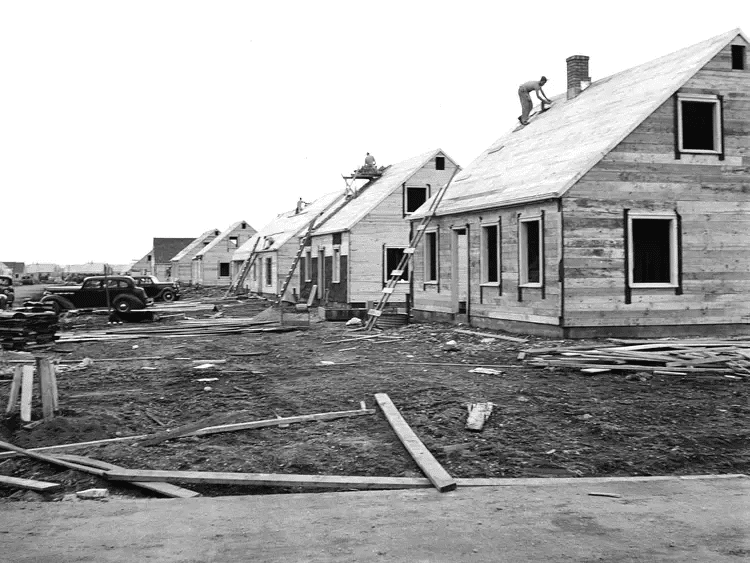
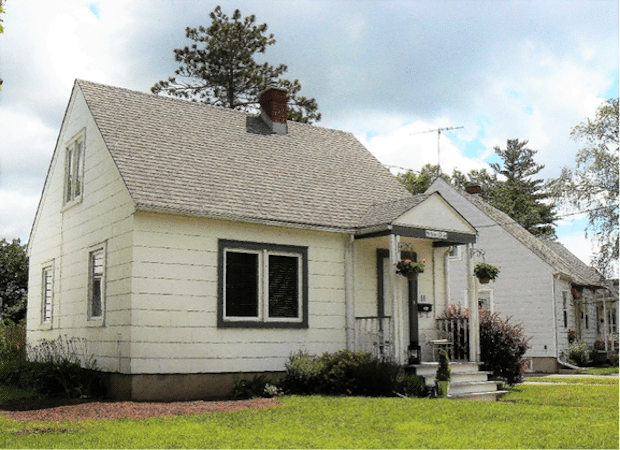
Ottawa’s ‘wartime housing’ is a start, but we’re still a long way from declaring victory

Growing up part of the Canadian generation born to baby boomers, I heard the phrase “wartime housing” spoken of both mythically and practically. Mythically, because it evoked a time when an incredible amount of housing seemed to be created almost overnight. Practically, because such housing could be found in cities across Canada, providing good shelter for people and families — then and for multiple generations since.

More than 30,000 homes were built in Canada, a large impact when the population was much smaller. This kind of housing was, and still is, an integral part of the urban fabric.

Share

Deaths put spotlight on growing US homeless population

A series of deadly attacks on unhoused people in the US has coincided with a spike in American homelessness.

US officials released a report on Friday showing that homeless numbers have risen about 12% since 2022.

The new survey comes after the recent arrest of a suspected serial killer in Los Angeles who targeted the homeless.

Separately, a California man attended court on Friday for manslaughter after allegedly filming himself shooting a sleeping homeless man.

Share

There are no solutions to Canada’s housing crisis – only trade-offs

American economist Thomas Sowell once said that “there are no solutions, only trade-offs.” That is, dealing with a problem entails making a choice, and doing so entails forgoing the alternatives.

For example, damming a river to protect a town from seasonal flooding means accepting that a reservoir will form on other side of the dam. The reservoir – and all it may entail for its natural surroundings – is deemed preferable to the potential damage that yearly flooding would do to the town.

Share

Canadian cities report rise in homelessness and in tent fires as winter sets in

HALIFAX – Cities across Canada are reporting a rise in fires, sometimes deadly, in tents and other shelters used by unhoused people — a situation advocates say is a tragic consequence of the country’s homelessness crisis.

As the number of homeless people continues to rise — and the frigid weather sets in — it’s inevitable there will be more accidental fires, Tim Richter, president and CEO of the Canadian Alliance to End Homelessness, said in an interview Wednesday.

“If all you can get your hands on is a propane tank or a camp stove, you’ll use that to survive because the alternative is freezing to death,” said Richter, whose group estimates there are between 260,000 and 300,000 unhoused people across the country.

Share

Ottawa turning to ‘history books’ with war-time housing plan revival

Ottawa will revamp a Second World War-era housing plan to speed up the pace of home building in Canada, Housing Minister Sean Fraser says.

Fraser on Tuesday confirmed Global News’ report from Monday that the federal government was dusting off a program nearly 80 years ago run by what was at the time known as Wartime Housing Limited to provide standardized housing blueprints to builders.


All the LPC’s projects are defeated before the first shovel is picked up.

Unless they turn off the mass immigration spigot not one will have an appreciable impact.

Share

Pierre Poilievre’s housing movie: What it gets right and wrong, and what was left unsaid

… Which brings me back to the elephant in the room, which Housing hell never mentions: immigration.

In the long run, over decades and centuries, Canada can match housing supply to housing demand, regardless of whether the national population is 40 million or 400 million. But in the here and now, a surge in new arrivals, particularly since the pandemic – with one million new residents in 2022, and likely more this year – has introduced housing demand at a far faster pace than supply can be built.

It’s simple math. There’s no getting around it. And both the Prime Minister and the man after his job would rather not talk about it.

Finally.

Share

How tiny shelters in Ontario are looking to fill the gap for those in need of housing

Rows of tiny cabins across a Kitchener, Ont., neighbourhood have been catching the eye of several communities across the province that’ve begun duplicating the model, hoping to bridge the gap between homelessness and permanent housing.

A Better Tent City (ABTC) co-founder and chair Jeff Wilmer says compassion from the community, support from city politicians and the local public school board made their small community possible, and it’s inspiring copies across the province.

Share

Anthony Furey: Poilievre Housing Video Shows Substance, Respect for the Voter

Before Justin Trudeau became Prime Minister of Canada, he released a lengthy video on his “sunny ways” philosophy. While those two words quickly became Trudeau’s trademark, the video detailed how the phrase actually came from Wilfird Laurier, who had served as Liberal PM of Canada a century earlier.

It was a whimsical video full of cartoon images that told a narrative about the history of the country and Trudeau’s vision for it. The video—and the announcement of the “sunny ways” agenda—received a great deal of attention at the time.

Share