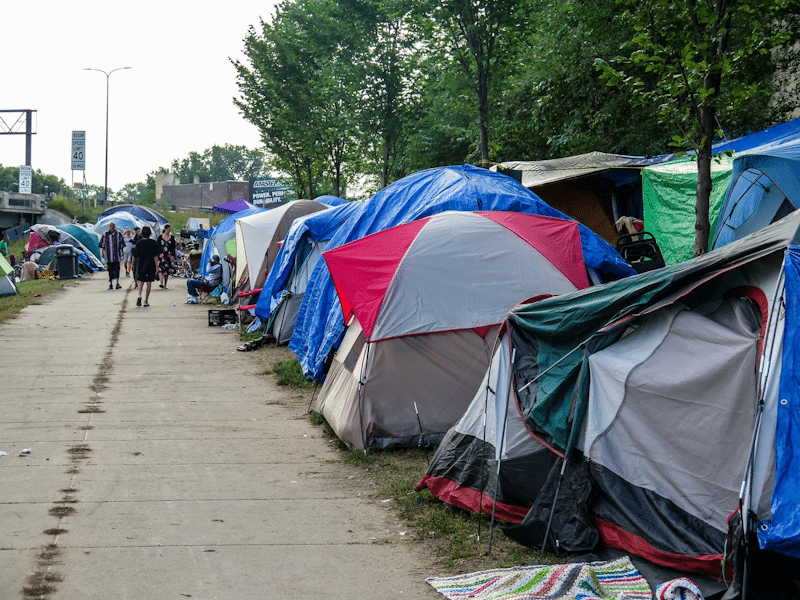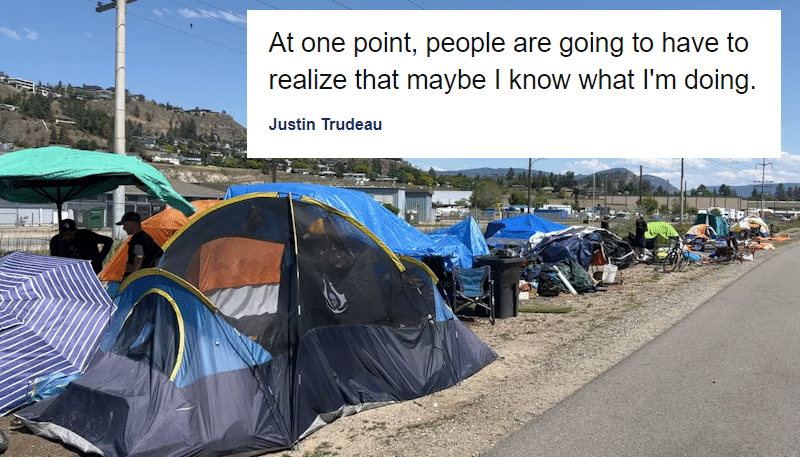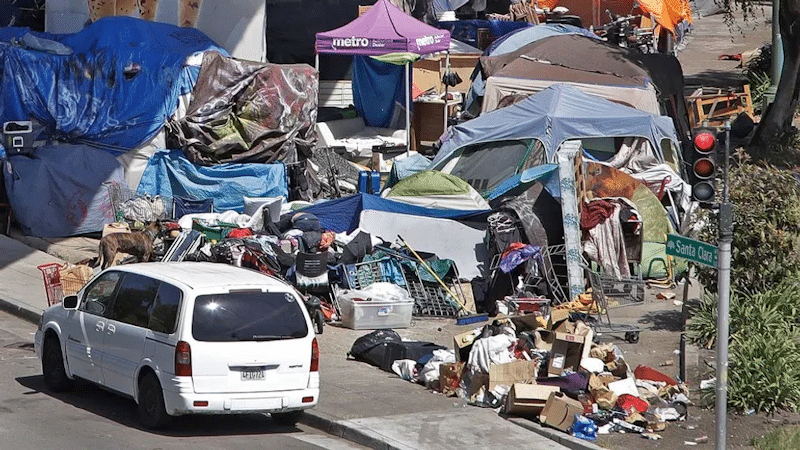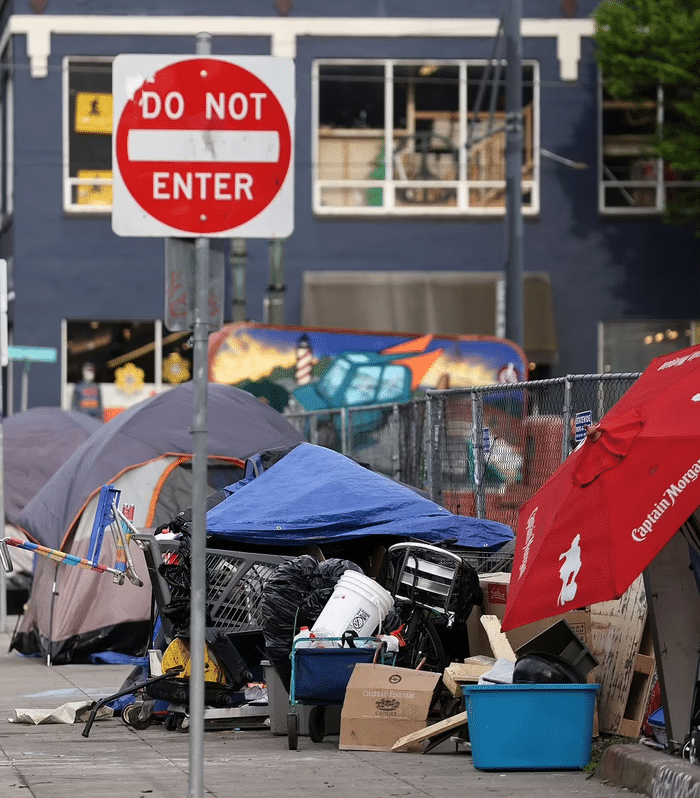
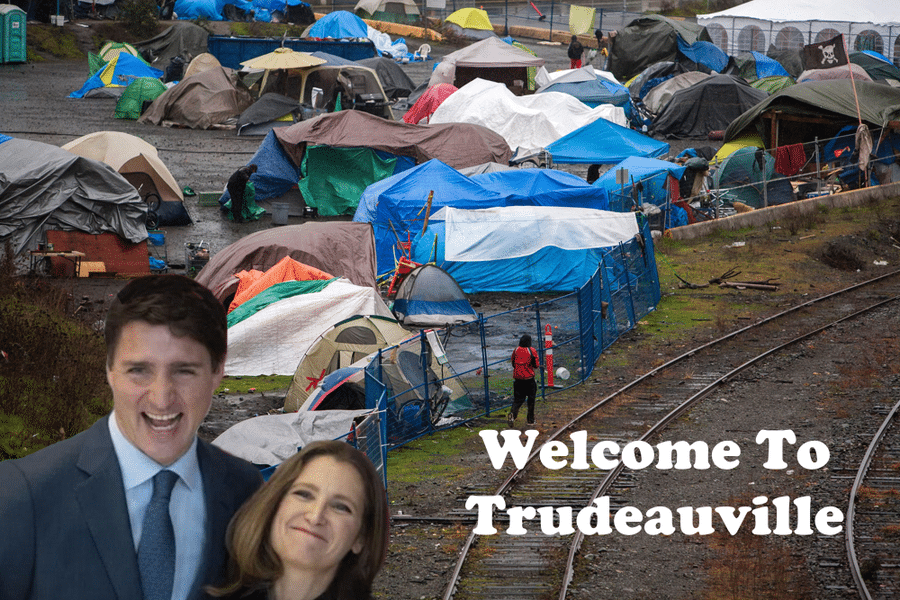
It’s the bane of modern city living. Thousands of homeless people are setting up makeshift tent cities or sleeping in public parks. It’s not only unsightly; it’s dangerous both for residents and the homeless.

It’s the bane of modern city living. Thousands of homeless people are setting up makeshift tent cities or sleeping in public parks. It’s not only unsightly; it’s dangerous both for residents and the homeless.

Finance Minister Chrystia Freeland made a stop Thursday in Toronto’s Canary Landing, a new rental community just east of the city’s downtown, to discuss the government’s new housing plans. But a question about recent warnings concerning immigration levels and housing supply elicited a less than satisfactory response.
Filthy liar.
Chrystia Freeland is asked why the Trudeau government didn’t lower immigration levels when it had been warned that housing levels could not keep up with immigration growth. pic.twitter.com/Itiz93CvRs
— True North (@TrueNorthCentre) January 11, 2024

Housing was a hot topic long before federal Conservative Leader Pierre Poilievre released his recent mini-documentary on the subject. Housing Hell has now been viewed by millions of Canadians, discussed by pundits, applauded as a master-class in political communications and derided as inaccurate and ignorant of how COVID-19 affected our economy.
But regardless of your position on Mr. Poilievre’s video, it nonetheless continues down the same problematic path such discussions always take. Specifically, it leaves out the people who build the vast majority of houses for Canadians: the private sector.

A Wall Street-backed corporate landlord snapped up hundreds of homes in Las Vegas in a mammoth one-off residential sale last summer.
Dallas-based Invitation Homes shelled out $98 million to buy 264 homes in Clark County, property records show.
The deal forms part of a $650 million swap of a portfolio of close to 1,900 single-family rental homes between billionaire Barry Sternlicht’s private equity fund Starwood Capital and Invitation Homes.

It was a combination of career burnout, watching their friends leave Toronto in droves, and knowing they’d never be able to afford a house that led Slawko Waschuk, 49, and Pedro José-Marcellino, 45, to move to Portugal.
Despite affordable rent at their Little Italy apartment – about $2,200 – they found themselves dreaming of home ownership while watching TikTok videos from MillennialMoron, an account that compares prices of run-down Toronto houses with literal European castles.

It has never been so unaffordable to own a home in Canada.
Rising ownership costs, including high mortgage rates and home prices, pushed RBC’s national aggregate housing affordability measure up 2.8% in Q3, to 62.5%.
The increase, which is outlined in a new report from Robert Hogue, Assistant Chief Economist at RBC, follows two consecutive quarters of decline, and has propelled the measure above the previous all-time high of 61.2% that was reached in Q3 2022.
WARMINGTON: Tent city in same neighbourhood as million dollar condos
No rent, no mortgage, no property taxes, no rules in Clarence Square Park homeless encampment
A walk through Clarence Square Park on Spadina — but a warning, it isn’t pretty. pic.twitter.com/ozBR6z3i51
— Joe Warmington (@joe_warmington) December 28, 2023

It is a staggeringly ambitious plan. Given the situation, it had to be.
When the economy started slumping in 2015, office vacancies in downtown Calgary began to climb. By 2020, the vacancy rate was sitting at over 30 per cent — about 14 million square feet of office space sat empty.
The value of office buildings in the city’s core had plummeted by more than two-thirds over that period, gutting the city’s property tax base and creating a revenue crisis at city hall.

Kris Wallace and Andy Ali of Vancouver say their search for a larger condo to give their family more room has been frustrating. Real estate and rental costs in the city are so high that their 26-year-old daughter is still living with them and they’re all feeling the squeeze.
A year ago, the federal government instituted a foreign buyer ban after passing the Prohibition on the Purchase of Residential Property by Non-Canadians Act in 2022. The two-year ban, which came into effect on Jan. 1, barred non-citizens, non-permanent residents and foreign controlled companies from buying up Canadian property as an investment.
But Wallace says that ban didn’t do much for her family.
I bet these people voted for Trudeau.

No ‘silver bullet’ to fix housing as population rapidly grows: Trudeau
Prime Minister Justin Trudeau says he knows young people are frustrated with him, and chief among those frustrations is the high cost of housing, which has left many young people feeling home ownership is out of reach.
However, Trudeau denies critics who suggest the federal government only began taking the housing file seriously in the last few months.
What a shitheel.

Even though the Trudeau government has made no secret of dialling up immigration to historic highs, the latest Statistics Canada figures on population growth are still jaw-dropping. In just three months (from July 1 to Oct. 1), Canada added an extra 430,635 people – only four per cent of which could be attributed to births. For just the first nine months of 2023, Statistics Canada noted that the country had seen a higher level of population growth than “any other full-year period since Confederation in 1867.”

Port Coquitlam Mayor Brad West is speaking out on the latest population growth numbers in B.C. and across the country.
“My message to the federal government is they’ve got to come back to reality,” said West.
B.C. has seen a record-setting net international migration of more than 150,000 people so far in 2023. It’s part of a larger national trend(opens in a new tab), with Canada surpassing the 40 million population mark.
“The number is overwhelming,” West told CTV News. “You cannot build enough to keep up with the number of people who are seeking housing.”

A greater share of Canadians are barred from home ownership as affordability hits near-worst levels for most markets amid soaring prices and interest rates, according to a recent RBC report.
The significant loss of affordability during the pandemic has shrunk the pool of homebuyers in Canada, said Robert Hogue, RBC economist and report author. In 2019, close to 60 per cent of all households could afford to own at least a condo apartment based on their income. That share has plummeted to 45 per cent in 2023. And just 26 per cent can afford a single-family home, down from 40 per cent four years ago.

The federal government recently announced that it will accelerate housing construction by launching a “wartime” catalogue of pre-approved architectural designs for residential builders. However, industry experts have criticized the plan and argued that its impact will be negligible.

Toronto will be given nearly half a billion dollars over the next four years to speed up new housing development, with a formal announcement to take place on Thursday, two sources with knowledge of the deal say.
The money — $471 million, beginning with an immediate payout of $117.75 million with further annual payments made based on the city’s progress toward housing goals, according to one source — comes out of the feds’ four-billion Housing Accelerator Fund pool, announced in March and to be divided between local governments and Indigenous communities who can satisfy national officials about their progress on housing and density.
Everything the Liberals are trying to sell is a lie. Until the Mass Immigration spigot is turned off Canada will never have enough homes.
Canada’s Immigration Plan Is Not Viable In Any Version of Reality: BMO
Canada printed yet another massive, immigration-driven quarter of population growth. What housing crisis, the country just needs to build homes faster, right? BMO Capital Markets crunched the numbers to show just how comically distorted and unviable growth has become. It’s starting to become clear the plan isn’t to diversify the country, but stimulate home prices and validate a real estate bubble.
… Kavcic puts the current plan into perspective to show the type of scale required. “For additional context, at 2.5 people per household, we’d need more than 170k new units every three months at this rate of population growth, even before accounting for domestic household formation,” he explains.
The industry is currently pushed to the max trying to churn out 220k homes per year. That’s a significantly higher number than previous years, but still roughly a quarter of the amount that would be needed to accommodate the supply-side plan.
h/t Mauser

Rent increases slowing in Canada. Here’s where price hikes are cooling most
A report says the average asking price for a rental unit in Canada was $2,174 in November, relatively flat from the previous month but an 8.4 per cent increase year-over-year.
The data released Friday by Rentals.ca and Urbanation, which analyzes monthly listings from the former’s network, showed the annual rate of rent growth in Canada continues to slow, following increases of 9.9 per cent in October and 11.1 per cent in September.