‘My home is worth millions – but my own kids are priced out of this city’

Before Donald Trump imposed tariffs on Canada and threatened its sovereignty, the Canadian psyche was consumed with another major issue: housing affordability. With an election on the horizon, voters are wondering if any party has a plan to fix what has become a generational problem.

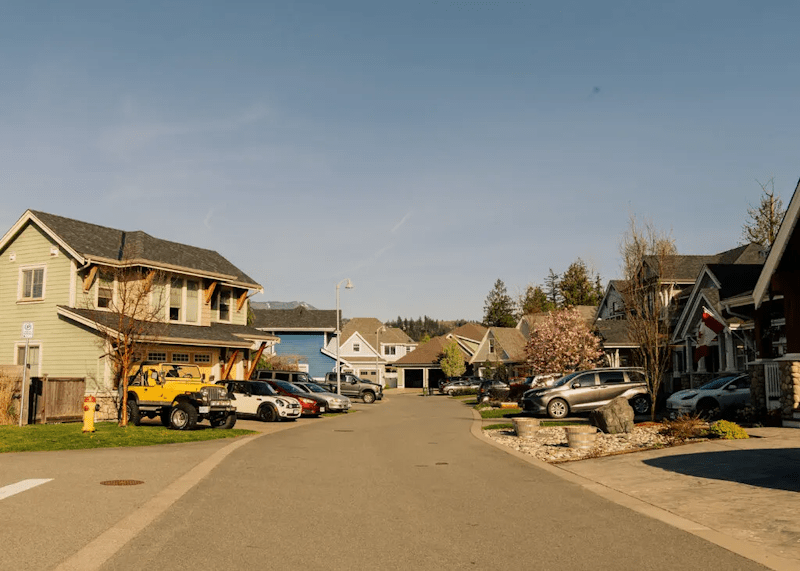
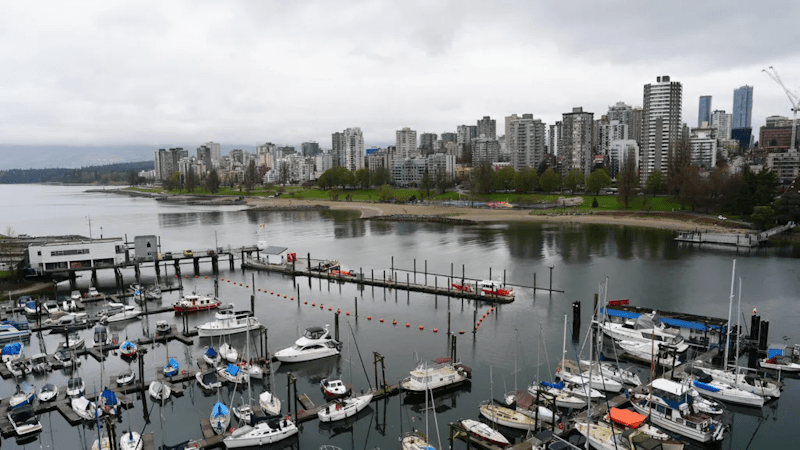
Willow Yamauchi says she was just a “regular” person when she and her husband bought their family home in Vancouver 25 years ago for a modest sum of C$275,000 – around C$435,000 ($312,000; £236,400) in today’s dollars.

That same property is now worth several million.

In the city in Canada’s pacific northwest, Ms Yamauchi’s story is as common as the rainy weather. The average price of a detached home in Vancouver in 2000 was around C$350,000. Now, it is more than C$2m.

Share

Liberal government’s high immigration policy created housing crisis: report

The federal Liberal government is belatedly trying to fix a housing affordability crisis it created though immigration policies which caused population growth to far exceed Canada’s capacity to build new homes to accommodate it, according to a new Fraser Institute study.

“Despite unprecedented levels of immigration-driven population growth following the COVID-19 pandemic, Canada has failed to ramp up homebuilding sufficiently to meet housing demand,” said Steven Globerman, co-author of the study, “The Crisis in Housing Affordability: Population Growth and Housing Starts 1972-2024.”

Share

Growth in Canadian food banks under Liberal gov’t prompts calls for it to be a top federal election issue

Demand for the services of local food banks has never been higher, and Carolyn McLeod-McCarthy of the Guelph Food Bank says she’s worried about the impact U.S. tariffs will have on the local economy and workers.

“We’re quite nervous about what that’s going to mean for being able to provide food to people in need,” McLeod-McCarthy told CBC News.

She said the southern Ontario food bank is seeing more people needing help than ever before.

Share

Toronto’s tent encampments are up 20% — expanding into areas they’ve never been found in before

You never used to find tents in Scarborough’s Collingwood Park.

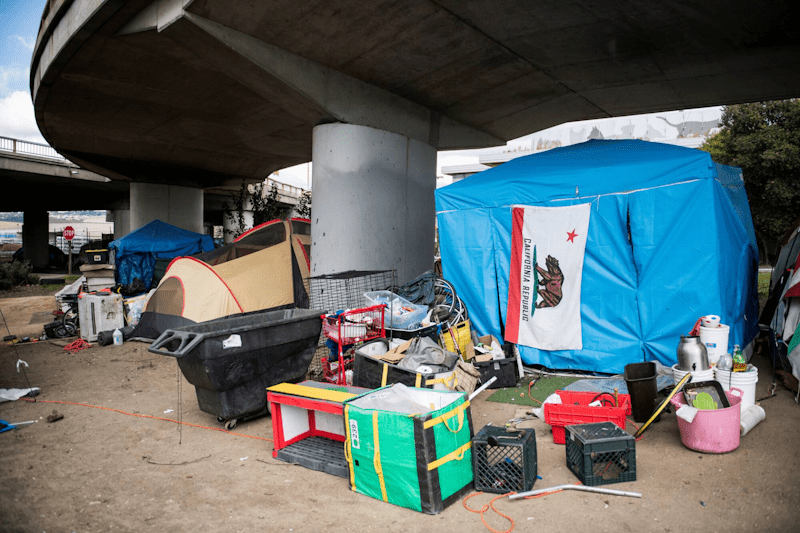
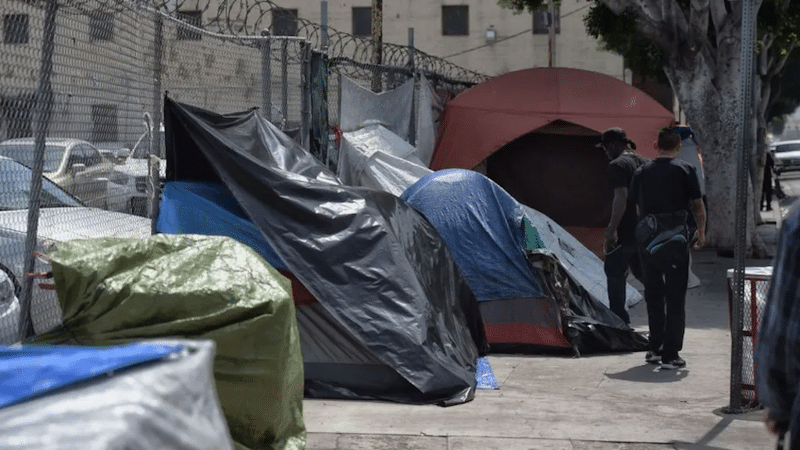
The tiny oasis of greenspace tucked near Sheppard Avenue East and Kennedy Road is usually home to little more than grassy expanses, winding paths, a narrow creek and play equipment. But this spring, as outdoor homelessness has continued to surge across Toronto, 11 campsites were set up throughout the park.

Last spring, there was only one; in the three springs before, none at all.

Share

What election promises on housing would mean for Toronto and the GTA

The soaring cost of home ownership is a challenge facing people across Canada, arguably nowhere more so than in big cities like Toronto.

From the 1980s through the late 2000s, the price of the average home in Toronto and the surrounding Greater Toronto Area stayed within three to five times the average annual household income.

But since 2010, that ratio has shifted dramatically. The average home now costs nearly 10 times the yearly income of the average household, based on data from the Toronto Region Real Estate Board (TRREB) and Statistics Canada.

Combine that with the fact that Toronto and the GTA account for one in six seats up for grabs nationally in the federal election and it’s little wonder the main parties are trying to woo voters with promises to make housing more affordable.


Only the CBC could produce propaganda like this.

At no point is the Liberal Party’s scandalous mass-immigration policy mentioned as a cause of Canada’s horrific housing shortage.

Share

Jesse Kline: Mark Carney’s five-year plan for Soviet-style housing

If we look past all the name-calling, scandals and competing tax cuts, this election fundamentally comes down to one question: do Canadians trust the Liberals to do now what they have failed to do over the past decade? Judging by the party’s newly released housing plan, the answer should be a resounding “no.”

Share

Can Young Adults Afford Independence? The Challenge of Canada’s Housing Costs

Modern apartment living.

Canada’s escalating rents and a shortage of housing have not only created challenges for young adults seeking their own homes; they are also reshaping the fundamental structure of family living arrangements, new research suggests.

The increased cost of apartments and homes in cities like Toronto and Vancouver in recent years has forced many young adults to live with family or roommates to manage costs, according to a study from the University of British Columbia.

Share

In Canada, ‘housing nationalism’ shouldn’t be an epithet

Douglas Todd: Healthy attempts to reduce foreign money’s distortion of the housing market shouldn’t be demonized as xenophobic, new study says.

Nationalism is fashionable again in Canada now that the federal election is underway and the tariff wars of U.S. President Donald Trump pose a threat to our economic well-being.

But there was a time, very recently, when behaving nationalistically about Canadian housing was condemned as dangerous and defenders of those left out of the housing market were dismissed as xenophobic and reactionary.

Share

The cost of living alone in Toronto: How residents are coping in light of a proposed rental boom

Tom Dunn makes an annual salary of $62,000 as a graphic designer and rents a basement apartment in Toronto’s Annex neighbourhood but he fears that he may never be able to afford a larger unit above ground and may one day have to leave the city for a more affordable home.

Dunn, 29, has lived in his apartment for about three years, paying about $1,300 a month. A full-time graphic designer and part-time freelancer he explains that the city’s cost of living has taken a significant toll.

Link Fixed.

Share

My son and I live with the constant threat of being homeless. Housing is my election priority

Last summer, as I lay awake awaiting a forecasted storm, I left my windows open to feel the warm breeze.

As the first lightning strike lit up the night sky, I heard the boom of thunder. Then, like an echo, I heard screams from the homeless encampment on the river bank — the terror of those without shelter who were exposed to the storm and its potential dangers.

That terror hit me close to my heart, aching with the memory of how close my eight-year-old child and I had been to living on the streets ourselves.

Share

Why Canada’s housing crunch isn’t going away

In the past year, multiple federal and provincial politicians finally recognized one important reason why Canada’s housing shortage in the last decade became severe, rents soared, and home prices stayed at nosebleed levels: unsustainably high immigration rates, which recent minor reductions have barely begun to address.

In other words, the politicians finally figured out what any first-year economics student could have told them: markets have two sides — supply and demand.

Share

Why this North Vancouver RV encampment has neighbours worried: ‘This is a safety issue’

A group living in RVs on a tiny patch of land off Highway 1 in North Vancouver has neighbours concerned about road safety and sanitation.

Known as Bowser Island, the enclave was once home to pleasant, suburban houses — a beautiful fieldstone wall and spired gate testify to that — but the buildings were long ago torn down to their foundations and the sewer line decommissioned when the Upper Levels Highway was widened.

As Bowser’s name suggests, it’s very much like an island, surrounded by a moat of asphalt lanes.

Share

Report: Mortgage delinquency rates rise across Canada except in Alberta

Mortgage delinquencies are rising in Canada, with overall debt levels increasing, according to the Equifax Canada Q4 2024 Market Pulse Consumer Credit Trends report, released February 25.

“Total consumer debt in Canada reached $2.56 trillion at the end of 2024, a 4.6% increase over 2023,” says Rebecca Oakes, vice-president of Advanced Analytics at Equifax Canada, in the report.

Share

CMHC says housing crisis relief could take 30 years

Wartime Houses

Canada’s housing affordability crisis may persist until 2055 due to lengthy planning and approval processes, according to a new report from the Canada Mortgage and Housing Corporation (CMHC).

Blacklock’s Reporter says the federal insurer’s research found that obtaining municipal permits and completing planning takes twice as long as the actual construction of apartment buildings and townhouse developments.

Share