
What can Toronto’s real estate industry do to solve the city’s big problem of small condos?

In Toronto, towers upon towers of small condo units fill block after block downtown. Condo sales across the board are slumping in Canada’s biggest cities as supply soars and demand shrinks. And the hardest units to sell are often the tiniest.

Bachelor and one bedroom units in the Toronto area made up 20 per cent of condo sales in the last quarter of 2024, according to the Toronto Regional Real Estate Board. Bigger units, such as one bedroom plus den, two bedrooms and two bedrooms plus den, collectively made up 72 per cent of sales.

One bedrooms are also fetching less on the rental market — the average rent for a one-bedroom apartment in Toronto has dropped 5.8 per cent year-over-year, according to data from rental unit listing site Rentals.ca, while that decline is even steeper in some other Canadian cities.

Share

No loans, no homes — Canada’s construction pipeline is collapsing

A longtime Manitoba construction business owner is sounding the alarm about a growing financial crisis that could eliminate small and mid-sized builders across Canada. The warning comes after more than 30 discussions with banks, credit unions, and private investors, all of whom have significantly reduced their construction lending. Despite strong demand for housing and infrastructure, industry insiders state that most builders can no longer access credit to keep projects moving.

Share

Why Ontario’s 1.5M new homes target looks increasingly out of reach

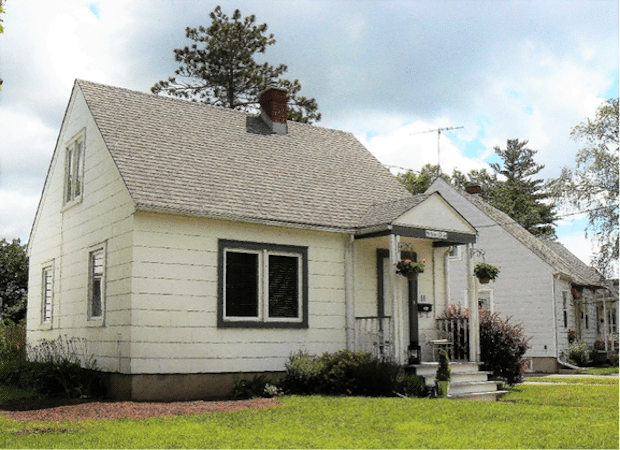
Wartime Houses

The new Ontario budget foresees a slow pace for housing construction over the next three years, making it increasingly unlikely that Premier Doug Ford’s government will achieve its target of 1.5 million new homes by 2031.

The budget forecasts 71,800 housing starts in 2025, followed by 74,800 next year and 82,500 in 2027.

There have been 260,000 actual housing starts in the three years since the target was set. So if you add in the projections for 2025 and 2026, the province would only be about one-quarter of the way toward its goal at the end of next year, the halfway point of the target timeline.


JD Vance on migrants and housing …

Share

Canada needs more homes. Prefabricated houses could fill the void

Terra Page’s new house was the talk of her Toronto neighbourhood. That makes sense, since it was delivered on a truck.

“It was like watching a really cool giant Lego box being assembled,” Page told Cost of Living.

When Page found tree roots growing in the pipes of their 100-year-old house, Page and her family decided their best move would be to demolish the house and build anew. That’s when their contractor suggested a “prefab” house — one that would be built off-site, then shipped to the lot.

Brookfield owns a Prefab housing concern, just a happy coincidence I’m sure.

Share

Looks like Poop Fairies just aren’t enough …

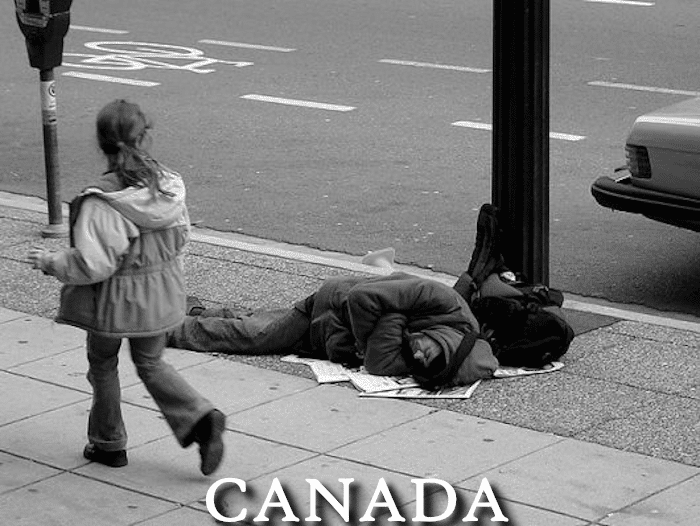
When it comes to homelessness, my heart is in danger of bleeding dry

I’m a bleeding-heart liberal, voting green or orange, or strategically red. I’m also fortunate: I make a good living and am happy to be taxed to help improve the lives around me. Most of my family and friends share my sociopolitical views, which is comfortable and reaffirming.

Lately, however, I’ve sensed a subtle shifting of the plates in my social-justice core, relating to a specific quadrant of lefty groupthink: the dual crisis of addiction and homelessness.

Liberal gets mugged by reality story ahead.

Share

New housing minister Cletus says increase supply, don’t reduce costs, to fix Canada’s real estate crisis

New federal Housing Minister Gregor Robertson said the way out of the real estate crisis that has consumed housing markets in Canada is to increase supply, not reduce costs.

“I think that we need to deliver more supply, make sure the market is stable,” he said to journalists as he headed into his first cabinet meeting on Wednesday. “It’s a huge part of our economy, but we need to be able to deliver more affordable housing.”

Robertson was Vancouver’s mayor between 2008 and 2018. During that time, data from the Canada Mortgage Housing Corporation shows the average price of single-family and semi-detached homes rose 179 per cent across the broader Metro Vancouver area.

Share

LILLEY: To fix Toronto’s shelter problem, fix the asylum system

The main sense you get from reading the latest city report on homelessness is that this is an industry. As with any industry, the last thing it wants to do is go out of business which is why the “solutions” offered up are about perpetuating the problem, not solving it.

It’s probably appropriate since the report is actually a “Stakeholder Engagement Report” titled, “What We Heard: 2025-2030 Strategic Plan to Address Homelessness.”

Share

Berkeley Finally Learns the Truth About the Homeless Crisis… Almost

“It has reached the point now where it is an actual humanitarian crisis,” Greg Gurnick, a Berkeley property owner, told the San Francisco Chronicle this week. He’s talking about Ohlone Park, where tents, needles, and human waste now crowd out the dog walkers. The crisis is real — but it isn’t just in the tents. It’s in the nonprofits and agencies that are supposed to help.

Share

Canada’s housing market is ‘cracking’ under Trump’s trade war: report

Canada’s housing market is “cracking” under the weight of U.S. President Donald Trump’s trade war, with housing resales down in markets across the country, a new report said.

The Royal Bank of Canada report looked at the data from the MLS Home Price Index, which is essentially the median price of a house in a market.

The sharpest pullback in people getting into the housing markets has been in southern Ontario and British Columbia, RBC economist Robert Hogue said.


Not to worry they’ll just open the mass immigration floodgates wider to juice the housing shortage.

Share

Sex Offenders Make Up Large Share of Homeless Population, New Report Shows

Most Americans understand the link between homelessness and crime. But activists and academics reject the connection, insisting that the homeless pose no elevated crime threat. A new report from the Cicero Institute complicates their argument, revealing that a large share of the nation’s homeless population is composed of registered sex offenders.

The report, covering 41 states, compared counts of sex offenders listed as “homeless” or “address unknown” on state registries with the federal Point-in-Time Count database to determine what proportion of a state’s homeless population appears on its sex-offender registry.

Share

Poilievre says he would give police more power to dismantle tent cities

HAMILTON — Conservative Leader Pierre Poilievre said Wednesday he would give police more power to dismantle tent cities, which he claims are making public spaces unsafe.

During a policy announcement in Hamilton, Ont., Poilievre said Liberal policies, including the funding of safer supply programs, are responsible for the increase in homeless encampments across Canada.

“For those trapped in these camps, our brothers, our sisters, our friends, our neighbours, they are left to suffer in the cold, to overdose, and sometimes to die alone,” he said. “Letting these tent cities spread is not compassion. It is chaos.”

Share

Canada’s Million-Dollar Real Estate Crisis

Soaring housing costs, with many homes nearing $1 million, have sparked an exodus from cities like Vancouver, and Canadians want their next prime minister to do something about it.

Janet Robertson had few choices after being evicted from her apartment of two decades in Vancouver, Canada’s most expensive city.

Even listings in nearby suburbs were out of reach after years of paying 900 Canadian dollars, or $650, monthly for her studio apartment. She kept going until she could find something she could afford and ended up renting in a town about 60 miles east of Vancouver.

“I really didn’t have any other options but to come to Chilliwack,” Ms. Robertson said.

Share

SNELL: ‘But the people are retarded…’ Carney’s election would force millions more into poverty

Indian spiritual teacher Osho once said, “Democracy basically means government by the people, of the people, for the people — but the people are retarded.”

His words resonate as millions of Canadians — like Matt Janes, pictured above — prepare to vote for Liberal Leader Mark Carney, who recently unveiled a $130-billion spending plan. The plan echoed Justin Trudeau’s mission to spend Canada into prosperity and offset what he calls “the biggest crisis of our lifetimes.”

Share

KLEIN: Beware: The next Liberal tax may be on the roof over your head

There’s a hard truth that Canadians need to wake up to, especially homeowners: The government is broke.

The numbers don’t lie. Federal debt has more than doubled since 2015, climbing past $1.2 trillion. Interest payments on that debt are now larger than what Ottawa spends on health care transfers to the provinces. They’ve run out of room to borrow without consequences. They’ve run out of excuses, and now, they’re running out of people to tax — except you.

If you own a home, particularly if it’s paid off, congratulations. You’re about to become the government’s next target.


Interesting that the people most likely to vote for Carney are home owners hoping to protect their equity by continuing the housing shortage caused by Liberal party mass immigration policy.

And now they find that their hard won gains may be stolen by their savior Carney.

As they say: Be careful what you wish for.

Share

Young people should not consider voting for the party that killed their dreams of home ownership

This is what Carney and his predator pal Mark Wiseman have in store for young people. People are just cord wood to them.

Which party leader will help young Canadians? Old and young disagree, Nanos poll finds

… Broken down by age, those in the 18 to 34 category were by far the most likely to trust Poilievre and the Conservatives to help young Canadians over Carney and the Liberals, at 38 per cent and 26.4 per cent, respectively.

Respondents who were age 55 or older had the opposite view, with 41.4 per cent naming Carney as the most trustworthy on that issue and 25.8 per cent favouring Poilievre.

Those in the 35 to 54 category were more evenly split between the two leaders and their parties, leaning towards Poilievre and the Conservatives by just 1.8 percentage points.


Mass immigration caused the housing shortage.

It was a thoughtlessly cruel policy decision by the Liberal government that has visited great harm to Canadians.

Share