Urban Anarchy

A San Francisco nonprofit’s rise illustrates the unaccountable growth of homeless services.

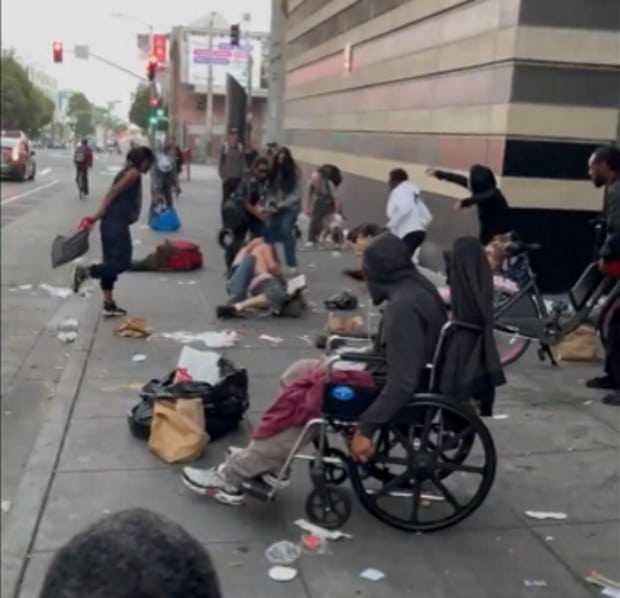
Urban Alchemy, a San Francisco–based homeless-services nonprofit, is an organization of many slogans. Those include, among others: No fuckery (“Fuckery is lying. Fuckery is injustice. Fuckery is letting ego override empathy”); Don’t look, see it through your third eye (“The third eye represents the part of us that cannot be cheated, manipulated, or deceived”); and Once you see us, you can’t unsee us (“We are game changers, impact makers and community healers”).

Share

Ontario mortgage delinquency rate jumps 50% amid growing signs of high-rate renewal shock

The mortgage renewal shock many experts have been predicting appears to have arrived.

Mortgage delinquencies in Ontario have skyrocketed 50 per cent higher than pre-pandemic levels, and more than 11,000 mortgages in the province missed at least one payment in the fourth quarter of 2024, nearly three times the number seen in 2022, Equifax Canada said in its quarterly credit report.

Share

An affordability crisis has Ontario in its grip and ‘people are still feeling the pain’

Your paycheque — if you’ve got one — probably doesn’t go quite as far as it used to.

Since June 2022, the price of groceries in Ontario has gone up more than 11 per cent. Vegetables, in particular, have shot up by almost 20 per cent. Meat? 9.2 per cent. Dairy and eggs? 10.6.

Shelter? That other big thing the United Nations counts as a universal human right? That hasn’t been easy, either. Between October 2022 and October 2024, the price of an average two-bedroom rental in Ontario has gone up 12.8 per cent, according to the Canada Housing and Mortgage Corporation.

Share

Ottawa’s Affordable Housing Plan Has ‘Unrealistic’ Price Tag of More Than $1 Trillion: Fraser Institute

The federal government’s plan to achieve affordable housing levels through additional building is “completely unrealistic” and comes with a price tag of over $1 trillion, according to a new report.

The Fraser Institute report “Canada Needs to Save Much More to Finance an Ambitious Investment Agenda” looks at what Canada needs to do to improve housing affordability and attract more business investment.

Share

America’s post-apocalyptic cities

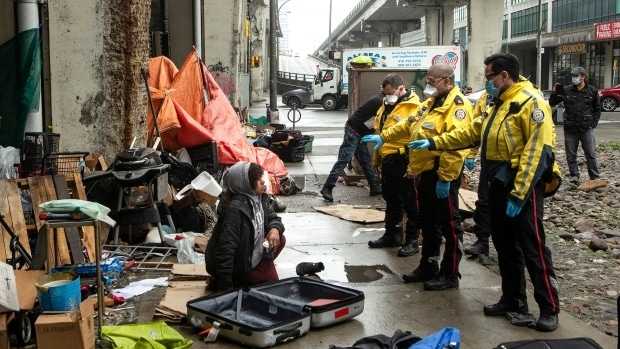
Squalid encampments are becoming the norm

It’s a toy store called Treasure Trove, but the first thing you see when you enter is no child’s play. Boxes of Narcan, a medication used to treat emergency drug overdoses, sit on the front counter near the cash register, accompanied by a handwritten sign that says “Free”.

Treasure Trove opened a year ago in Harrisburg, Pennsylvania, as a satellite store of their toy and second-hand goods shop in nearby Newberrytown. But this second location, within spitting distance of the Pennsylvania State Capitol, has evolved into something like a mission for the chronically homeless that also sells Funko Pops figurines. The owners, a pleasantly nerdy couple named Jason Crocenzi and Jennifer Draisey-Crocenzi, say it was impossible to operate a standard retail business in a downtown where hundreds of deprived homeless people wander the streets and often outnumber regular pedestrians.

Share

In 2005, There Were 41 Communities Where a Middle-Class Family Could Afford to Buy a Home. Today, There’s Only Nine

A couple of weeks ago, we introduced our Weekly Housing Affordability Metric (WHAM) and showed how housing affordability has changed over time in Winnipeg, Edmonton, and London, Ontario. Naturally, readers wanted to know what the situation looked like in their city, so let’s take a look.

A WHAM score measures the number of weeks of pre-tax income needed to save for a 20% downpayment for a home and the first five years of mortgage payments, taking into account 5-year fixed mortgage rates, the median weekly wage in a province for 25-to-54-year-olds, and home prices.

Share

‘Perfect storm of bad news’: Homelessness has soared in Ontario since the last provincial election

The cold winter wind snaps at the outer shell of a sleeping bag on the sidewalk, a tent in a grassy park, a campsite deep in a ravine. It’s a grim scene you’ll find today not only in Toronto’s urban downtown but in far corners of the city, the suburbs down the highway, even increasingly in rural Ontario.

Homelessness, once considered an urban problem, is now a crisis spread across the provincial map — and one that has picked up momentum at a dizzying speed since Ontario’s last election. A landmark report released in January by the Association of Municipalities of Ontario showed that between 2022 and 2024, the province’s known homeless population shot up by 25 per cent to a whopping 81,515 people. That pressure has been obvious in Toronto, where the known homeless population has shot up by more than 1,700 people since early 2022, and hundreds more tents and makeshift camps have arisen.

Share

The secret shelter next door: What city officials aren’t telling you

Across Canada, the push for homeless shelters means keeping neighbours who live with them in the dark. Now they are pushing back

In theory, Toronto city staff were supposed to execute the purchase of a large, vacant commercial building in the eastern suburb of Scarborough in late October without anyone finding out about it. For a city bureaucracy not exactly known for its ability to keep secrets, it was a tall order. Before the sale had been completed, a television reporter named Alan Carter was standing in front of the building in question with a story so juicy it ran as an exclusive on Toronto’s CityNews.

Share

Ontario reaches ‘tipping point’ with more than 81K people experiencing homelessness

Ontario’s homelessness crisis is “at a tipping point,” the group representing most of the province’s municipalities is warning, as the recorded number of homeless people ticks towards 100,000.

A new report released by the Association of Municipalities of Ontario points to massive growth in the number of people experiencing homelessness, particularly in the southern parts of the province, and demands action from the Ford government.

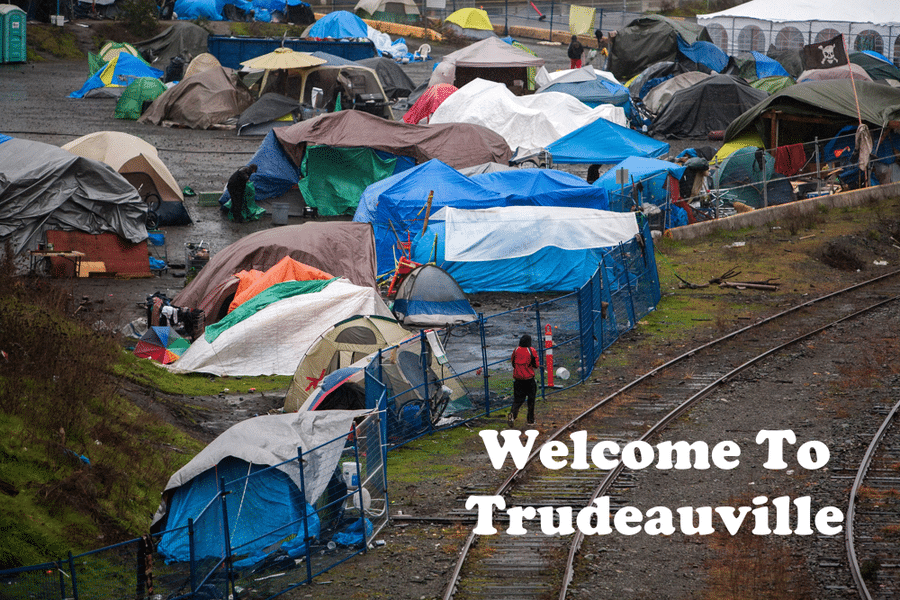
Ford and Trudeau are to blame.

Share

Colby Cosh: We can’t have nice downtowns with so many aggressive vagrants milling about

This week we bid farewell to Edmonton’s downtown Italian Bakery, which has turned out to be one of those nice things we can’t have anymore. The bakery’s been in the same location in the city’s Chinatown since 1960 — our Chinatown has some Vietnam, Italian and Portuguese seasoning. In 2020, with social conditions in the neighbourhood in free fall, the building fell victim to arson, but after a prolonged renovation it reopened 13 months ago.

Share

If the woman on the sidewalk refuses help, do we just let her freeze?

I had a beautiful Christmas, full of laughter and light. But through it all, I kept wondering about the woman on the sidewalk.

She is camped out on a busy street just a few blocks from my house in west-end Toronto. She sits on one of those folding camp chairs with her back to a small tree. Her feet rest on a second chair. Layers of blankets and sleeping bags cover her from head to foot.

She has been there – or spots nearby – for months. Day after day, night after night, in all weathers, she sits silent and unmoving in the same place. She wears a big hood and a vest that covers her neck and mouth, so only her eyes are visible – wary, watching. If it rains or snows, she raises an umbrella and holds it on her lap.

Share

Migrants and End of Covid Restrictions Fuel Jump in U.S. Homelessness

Homelessness soared to the highest level on record this year, driven by forces that included a surge in migrants seeking asylum, a national housing crisis and the end of pandemic-era measures to protect the needy, the federal government reported on Friday.

The number of people experiencing homelessness topped 770,000, an increase of more than 18 percent over last year and the largest annual increase since the count began in 2007. Nearly every category of unhoused people grew, with the rise especially steep among children and people in families.

The report, released by the Department of Housing and Urban Development, showed that homelessness had risen by a third in the past two years, after years of only modest fluctuations. The agency blamed factors such as “our worsening national affordable-housing crisis,” inflation and the end of certain aid programs from the pandemic.

Share

WHAT A DUMP: Canadians living in shipping containers while migrants housed in hotels with catering and security

Non-profit Transition Québec in Gatineau has opened a shipping container village that was built to manage a 268% increase in homelessness since 2018.

Meanwhile, many migrants who recently came to Canada have been housed in hotels with catering and security.

Share

‘I may end up in tears telling my story’: How a former MPP and Toronto city councillor found himself living in a homeless shelter

Twenty-six years ago, Lorenzo Berardinetti was a leader at the dawn of a new civic era, the head of the Scarborough delegation in the first Toronto megacity council.

Six years ago, he was at Queen’s Park, helping steer the province from the helm of its justice policy standing committee after winning four elections as a Liberal MPP.

Tonight, he will have his bag searched. He will take his shoes off and have them inspected for weapons and drugs. He will sleep in a room with 23 other people.

Share

Adam Zivo: Drug addicts don’t have a right to fill parks with needles and faeces

An Ontario Superior Court judge issued a ruling Monday that the City of Hamilton did not infringe upon the Charter rights of 14 homeless people who were evicted from local park encampments between 2021 and 2023. As Canadian jurisprudence on this issue seems tinged with judicial activism, and has often protected violent encampments at the public’s expense, this decision is an unexpected victory for common sense.

Share