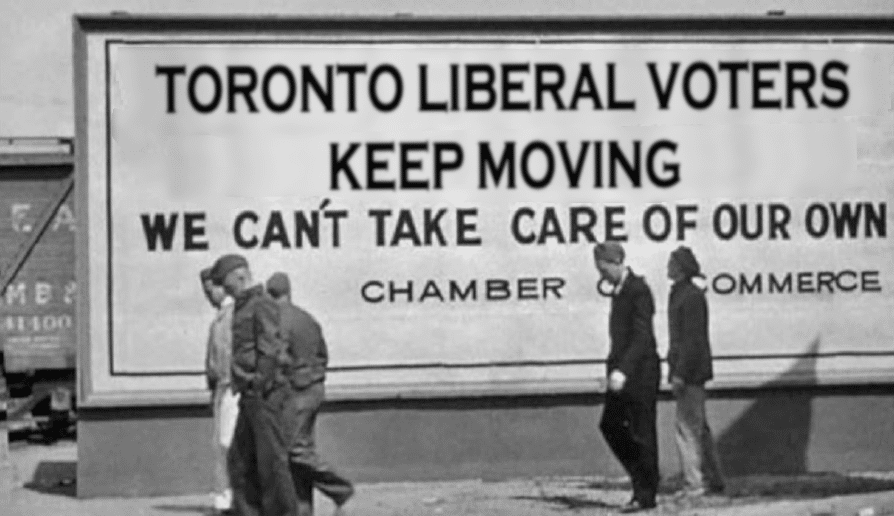

How Canada’s boomers stole the future

For a country that looks so big on the map, it’s awfully hard to get houses built in Canada these days. But this is all by design: in “Canada’s Million-Dollar Housing Crisis, homes are treated as an investment vehicle rather than a place to live. Dealing with one of the worst shortages in the developed world, Canada’s voters in the recent election were not concerned just about Trump but about who could save the middle-class dream.

As Canadians greeted the announcement of Mark Carney’s cabinet, the expectation was that of far-reaching change. But a day after being sworn in, Canada’s new housing minister, Gregor Robertson, put an end to those hopes. Robertson, the ex-mayor of Vancouver — which saw one of the most severe localised housing crises — said home prices should not go down. Has his boss’s campaign pledge already been turned to dust?

Share

Ottawa has to allow home prices to fall to make housing more affordable, experts say

OTTAWA – Housing experts are pushing back against a federal cabinet minister’s recent claim that home prices don’t need to go down in order to restore housing affordability.

Gregor Robertson, the former mayor of Vancouver who was elected to the House of Commons in April, sparked the debate after he was sworn in as housing minister earlier this, when a reporter asked him whether he thinks home prices need to fall.

“No, I think that we need to deliver more supply, make sure the market is stable. It’s a huge part of our economy,” he said.


People holding “underwater mortgages” are increasing and are typically found in urban centres like those that voted for Carney.

Share

Geoff Russ: Canada’s populist movement will have its day

Unless Carney addresses issues such as affordability and immigration, grassroots anger will eventually bring his government down

Canada’s populist moment did not come to pass — at least not yet.

Having deluded themselves into believing that the status quo is tenable, many on the left celebrated the result of the recent federal election as proof that Canada could withstand the wave of anti-establishment politics that has swept the West in recent years.

Share

Is Canada trying to lower home prices or not? Mark Carney should give Canadians his answer to this yes/ no question

Canada’s new federal housing minister, Gregor Robertson, says he wants to make housing more affordable — just not by lowering prices. In a recent interview, Robertson argued that home prices don’t need to fall for affordability to improve. He’s not alone: Prime Minister Mark Carney recently restated that this is “not a yes-no question,” and that it depends on “different time horizons.”

But this kind of linguistic loopty-loop isn’t harmless. It’s a political strategy — one that dodges a simple but essential question: Is the goal of Canadian housing policy to lower home prices or not?

It is, in fact, a yes-or-no question. And the answer matters.

Share

‘Financial landlords’ driving up rent prices in Toronto faster than other types of landlords: study

A group known as “financial landlords” are driving up the cost of rental housing in the city, worsening affordability, according to a new study by researchers at the University of Waterloo.

Financial firms, including private equity, asset managers, and real estate investment trusts (REITs), have been snapping up rental housing stock in Toronto for decades and according to the study, these groups charge monthly rents that are 44 per cent higher than the average neighbourhood price in Canada’s largest city. This represents about $670 more on average per month, according to the researchers.

Until the Feds shut the immigration floodgates this will only get worse. And worse is what they want.

Share

Adam Zivo: Housing minister says unaffordable homes are the answer

Canada’s new housing minister Gregor Robertson says that the prices of existing homes shouldn’t go down, lest this negatively impact current homeowners, and that affordable housing should be provided through massive government subsidies instead. His position is economically illiterate and raises concerns about his fitness to lead this portfolio.

Anyone with a cursory understanding of economics knows that, in a regular market, the price of any given commodity will be roughly the same for both the buyer and seller. If you want people to have the option of purchasing $3 coffee, for example, you need cafes that are willing to sell coffee for $3 as well. While these dynamics are sometimes distorted — i.e. through taxes and subsidies — this is, for the most part, how transactions work.

Share

What can Toronto’s real estate industry do to solve the city’s big problem of small condos?

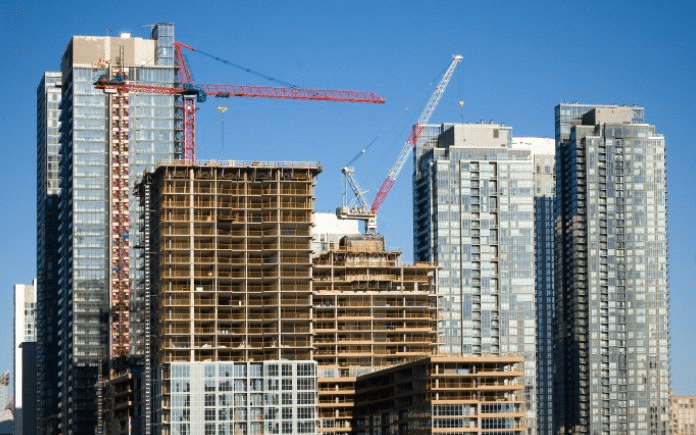
In Toronto, towers upon towers of small condo units fill block after block downtown. Condo sales across the board are slumping in Canada’s biggest cities as supply soars and demand shrinks. And the hardest units to sell are often the tiniest.

Bachelor and one bedroom units in the Toronto area made up 20 per cent of condo sales in the last quarter of 2024, according to the Toronto Regional Real Estate Board. Bigger units, such as one bedroom plus den, two bedrooms and two bedrooms plus den, collectively made up 72 per cent of sales.

One bedrooms are also fetching less on the rental market — the average rent for a one-bedroom apartment in Toronto has dropped 5.8 per cent year-over-year, according to data from rental unit listing site Rentals.ca, while that decline is even steeper in some other Canadian cities.

Share

No loans, no homes — Canada’s construction pipeline is collapsing

A longtime Manitoba construction business owner is sounding the alarm about a growing financial crisis that could eliminate small and mid-sized builders across Canada. The warning comes after more than 30 discussions with banks, credit unions, and private investors, all of whom have significantly reduced their construction lending. Despite strong demand for housing and infrastructure, industry insiders state that most builders can no longer access credit to keep projects moving.

Share

Why Ontario’s 1.5M new homes target looks increasingly out of reach

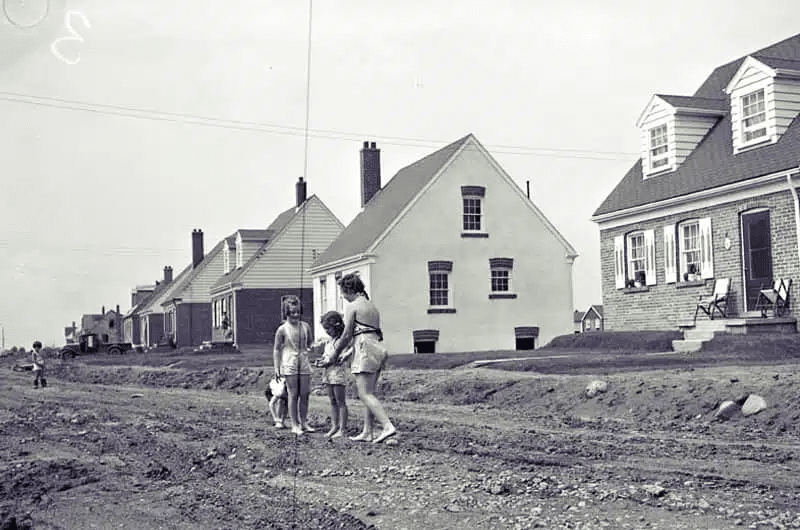
Wartime Houses

The new Ontario budget foresees a slow pace for housing construction over the next three years, making it increasingly unlikely that Premier Doug Ford’s government will achieve its target of 1.5 million new homes by 2031.

The budget forecasts 71,800 housing starts in 2025, followed by 74,800 next year and 82,500 in 2027.

There have been 260,000 actual housing starts in the three years since the target was set. So if you add in the projections for 2025 and 2026, the province would only be about one-quarter of the way toward its goal at the end of next year, the halfway point of the target timeline.


JD Vance on migrants and housing …

Share

Canada needs more homes. Prefabricated houses could fill the void

Terra Page’s new house was the talk of her Toronto neighbourhood. That makes sense, since it was delivered on a truck.

“It was like watching a really cool giant Lego box being assembled,” Page told Cost of Living.

When Page found tree roots growing in the pipes of their 100-year-old house, Page and her family decided their best move would be to demolish the house and build anew. That’s when their contractor suggested a “prefab” house — one that would be built off-site, then shipped to the lot.

Brookfield owns a Prefab housing concern, just a happy coincidence I’m sure.

Share

Looks like Poop Fairies just aren’t enough …

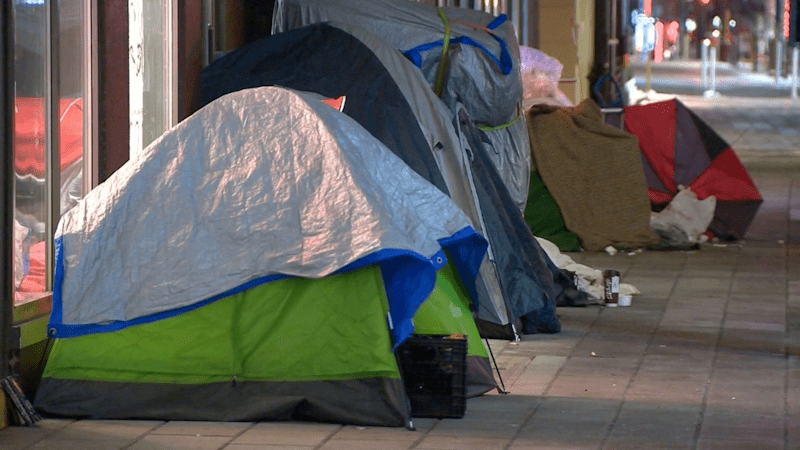
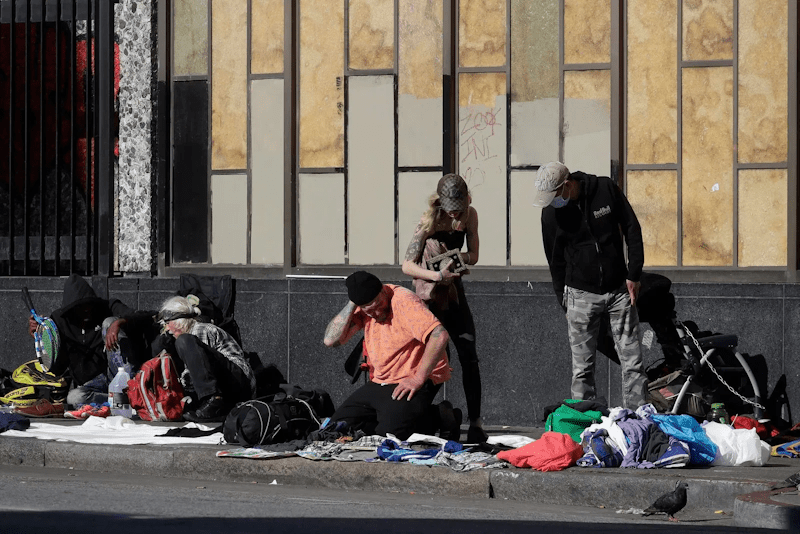
When it comes to homelessness, my heart is in danger of bleeding dry

I’m a bleeding-heart liberal, voting green or orange, or strategically red. I’m also fortunate: I make a good living and am happy to be taxed to help improve the lives around me. Most of my family and friends share my sociopolitical views, which is comfortable and reaffirming.

Lately, however, I’ve sensed a subtle shifting of the plates in my social-justice core, relating to a specific quadrant of lefty groupthink: the dual crisis of addiction and homelessness.

Liberal gets mugged by reality story ahead.

Share

New housing minister Cletus says increase supply, don’t reduce costs, to fix Canada’s real estate crisis

New federal Housing Minister Gregor Robertson said the way out of the real estate crisis that has consumed housing markets in Canada is to increase supply, not reduce costs.

“I think that we need to deliver more supply, make sure the market is stable,” he said to journalists as he headed into his first cabinet meeting on Wednesday. “It’s a huge part of our economy, but we need to be able to deliver more affordable housing.”

Robertson was Vancouver’s mayor between 2008 and 2018. During that time, data from the Canada Mortgage Housing Corporation shows the average price of single-family and semi-detached homes rose 179 per cent across the broader Metro Vancouver area.

Share

LILLEY: To fix Toronto’s shelter problem, fix the asylum system

The main sense you get from reading the latest city report on homelessness is that this is an industry. As with any industry, the last thing it wants to do is go out of business which is why the “solutions” offered up are about perpetuating the problem, not solving it.

It’s probably appropriate since the report is actually a “Stakeholder Engagement Report” titled, “What We Heard: 2025-2030 Strategic Plan to Address Homelessness.”

Share

Berkeley Finally Learns the Truth About the Homeless Crisis… Almost

“It has reached the point now where it is an actual humanitarian crisis,” Greg Gurnick, a Berkeley property owner, told the San Francisco Chronicle this week. He’s talking about Ohlone Park, where tents, needles, and human waste now crowd out the dog walkers. The crisis is real — but it isn’t just in the tents. It’s in the nonprofits and agencies that are supposed to help.

Share

Canada’s housing market is ‘cracking’ under Trump’s trade war: report

Canada’s housing market is “cracking” under the weight of U.S. President Donald Trump’s trade war, with housing resales down in markets across the country, a new report said.

The Royal Bank of Canada report looked at the data from the MLS Home Price Index, which is essentially the median price of a house in a market.

The sharpest pullback in people getting into the housing markets has been in southern Ontario and British Columbia, RBC economist Robert Hogue said.


Not to worry they’ll just open the mass immigration floodgates wider to juice the housing shortage.

Share