
AfD Challenges “Right-Wing Extremist” Designation in Court

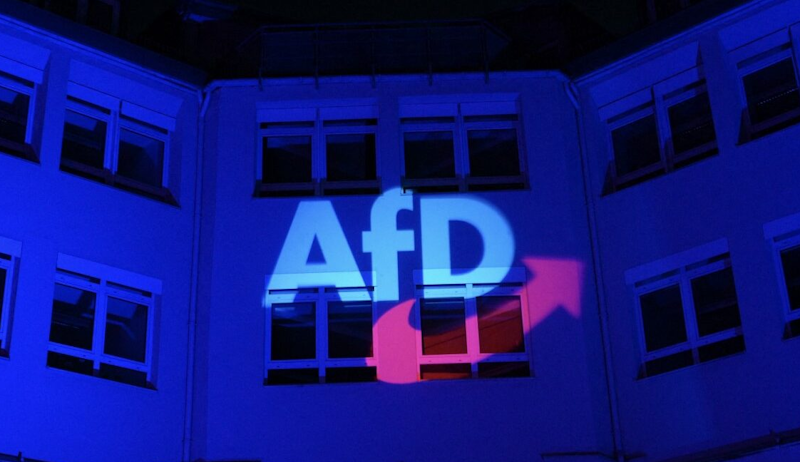
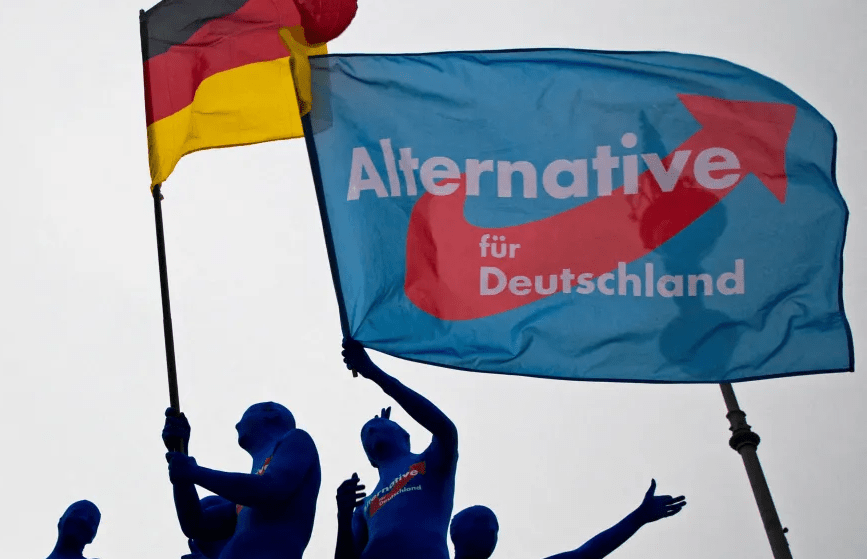
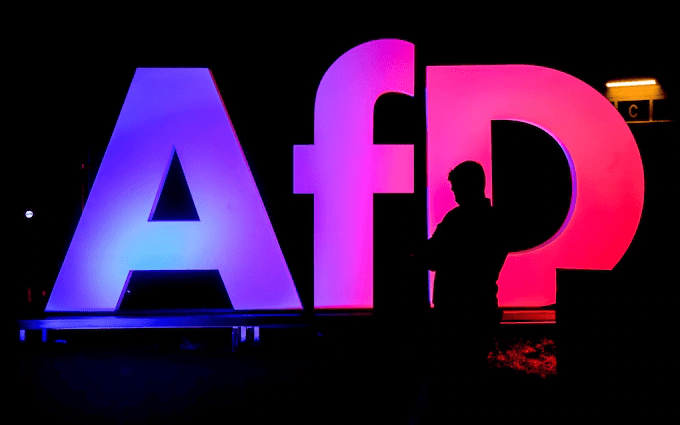
The right-wing populists Alternative für Deutschland (AfD) is suing Germany’s domestic intelligence agency, BfV, after it designated the party as a “right-wing extremist” organization, opening the door for constant police surveillance or even banning.

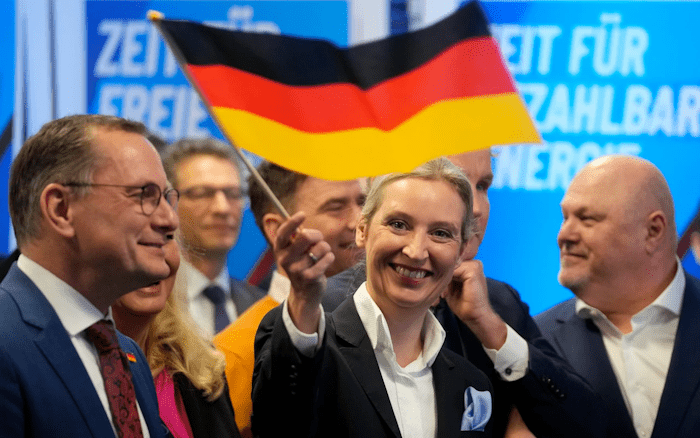
Suspiciously issued just after AfD took over the ruling CDU in the polls and became Germany’s most popular party, BfV’s decision was clearly “politically motivated” and represents a “severe blow to German democracy,” AfD co-presidents Alice Weidel and Tino Chrupalla said in a statement last Friday. They promised to keep fighting for the freedom of expression and challenge the ruling with all legal tools available.

Share

Should the AfD be banned? Germany’s dilemma after spy agency ruling

Friedrich Merz’s expected confirmation as Germany’s next leader this week will take place in the shadow of a row about whether to ban the rival far-right Alternative for Germany (AfD) party after it was formally classified as “extremist” by the country’s intelligence services.

Merz, 69, a multimillionaire former corporate lawyer, is set to be elected as chancellor by parliament on Tuesday after his centre-right Christian Democrat Union (CDU) agreed on a “grand coalition” with the Social Democrats following weeks of detailed negotiations.

The Nazis are in charge.

Share

Not Bombed Enough

Germany defends AfD extremist classification after Rubio slams ‘tyranny in disguise’

Germany’s Foreign Office has defended a decision to classify the Alternative für Deutschland (AfD) party as right-wing extremist, after sharp criticism from the White House.

US Vice-President JD Vance accused “bureaucrats” of rebuilding the Berlin Wall, and Secretary of State Marco Rubio slammed the designation as “tyranny in disguise”.

In an unusual move, the foreign office directly replied to Rubio on X, writing: “We have learnt from our history that right-wing extremism needs to be stopped.”

The intelligence agency that made the classification found AfD’s “prevailing understanding of people based on ethnicity and descent” goes against Germany’s “free democratic order”.

Share

AfD classified as extreme-right by German intelligence

Germany’s Alternative für Deutschland (AfD) party has been designated as right-wing extremist by the country’s federal office for the protection of the constitution.

“The ethnicity- and ancestry-based understanding of the people prevailing within the party is incompatible with the free democratic order,” the domestic intelligence agency said in a statement.

The AfD came second in federal elections in February, winning a record 152 seats in the 630-seat parliament with 20.8% of the vote.

Germany is fecked.

Share

Germany: Priest calls altar boy a ‘Nazi’ and fires him after he takes photo with AfD politician

An altar boy who served in a Bavarian church for nine years was slammed as a “Nazi” by the parish priest and dismissed from his position after the boy took a photo with Alternative for Germany (AfD) politician Maximilian Krah.

The family says they are shocked by the conduct of the Bavarian priest.

Share

German Governments Ban Police From Joining AfD

Nice job you have there. It would be a shame if you were to lose it for being disloyal to the ruling clique.

Of course, the powers that be in Germany don’t call their threats to fire supporters of AfD an assurance that the people they hand guns to are committed to enforcing the speech codes of the German elites’ choosing; they couch their order in the much nicer sounding assurance that everybody has the same loyalty to the Constitution as the ruling clique.

Share

German Ruling Parties Want to Ban AfD “As Soon As Possible”

The economy is in crisis and the constant influx of migrants is threatening to destabilise society—yet the German mainstream parties’ main concern is their right-wing opposition Alternative für Deutschland (AfD).

According to media reports, the left-wing Greens are intent on pushing through a motion in parliament to ban the AfD “as soon as possible”, and it seems that they have the support of all the other parties.

Share

Musk Calls to Congratulate Leader of German “Hard-Right” Party

The hard-right Alternative for Germany might not have done as well in Sunday’s election as its leaders had hoped, but its groundbreaking performance was enough for a congratulatory phone call from Elon Musk.

Alice Weidel, the chancellor candidate for the party, known by its German initials, AfD, told journalists on Monday morning that she had slept through a call from Mr. Musk, the world’s richest man and a top adviser to President Trump. When she looked at her phone on the morning after her party won 20.8 percent of the vote, she said, she had a missed call from the United States, which turned out to be from Mr. Musk, who, she said, “congratulated me personally.”

THE HORROR!

Share

The AfD aren’t ‘far-Right’, and they aren’t going away

A downcast mood hung over Germany ahead of the snap elections. The week before 83 per cent of voters admitted in a survey to having a pessimistic outlook on the situation the country is in. But turnouts were remarkably high: 84 per cent of voters went out to cast their vote, up from 36.5 per cent in 2021. One thing all voters can agree on is the desperate need for change.

The CDU, the centre-Right party of Germany, has been given another chance at power. At 28.5 per cent, the party has won back some voters, compared to the 24.1 per cent they got in 2021 after 16 years under Chancellor Merkel. However, that is still underperforming when you consider how hated the prior left-wing coalition government was.


Related … Germany’s next chancellor warns Nato could soon be dead

Friedrich Merz, who is poised to become Germany’s next chancellor, has warned Nato could be finished and Europe must prepare to build an alliance “independent” from the US.

In stark comments, Mr Merz, 69, leader of the centre-Right Christian Democratic Union (CDU), suggested the continent may have to “quickly” establish an “independent European defence capability”.

After exit-polls predicted Mr Merz would win the election, Donald Trump hailed the result as a “great day for Germany and for the United States of America”.

Share

Conservatives projected to win German election – as AfD surge into second

The centre-Right Christian Democrat Union party has won the German election according to an exit poll released on Sunday evening.

Friedrich Merz, the CDU leader, is projected to win 29 per cent of the vote, after a campaign dominated by economic stagnation, migration pressures and growing uncertainty over how best to secure the future of Ukraine.

The far-Right Alternative for Germany party, which had high-profile backers including Elon Musk, has come second place with 19.5 per cent. It marks the strongest result for a far-Right party since the Second World War.

Share

Germany at a Crossroads: Why Voters Are Looking for an Alternative

Germany is preparing for the general elections this Sunday, February 23, with the possible consolidation of Alternative for Germany (AfD) as the country’s second-largest force in a surge that challenges the traditional political balance. It deeply worries the socialist-conservative establishment within Germany—and at the European level.

Share

Why Germany is ripe for revolt – The German elites were wrong about everything.

As Germany’s federal elections approach this weekend, chancellor Olaf Scholz and his Social Democrats (SPD) are bracing for their worst results since 1887. The SPD is battling with its equally unpopular coalition partner, the Green Party, for a humiliating third place, behind the conservative Christian Democrats (CDU) and the right-populist Alternative for Germany (AfD).

Share

A train through Germany: is Europe’s powerhouse going off the rails?

In the run-up to Sunday’s crucial election, the Guardian took a long journey through Europe’s heartland to talk to voters

Creaking, overcrowded, neglected, Germany’s railways, once a source of national pride, have taken a battering to their image in recent years. Amid wider concerns about the health of Europe’s stagnating largest economy, the state of its trains has become something of a metaphor for a more general sense of malaise.

On Sunday Germans will go to the polls in one of the most important elections in recent times, with an emboldened far right hoping to more than double its share of votes. In the run-up, the Guardian travelled more than 850 miles on trains across Germany to hear what its citizens have to say about the state of their nation.

The Guardian is beside itself with anxiety over the Afd.

Share