‘Trailblazing’ electric van start-up Arrival runs out of road

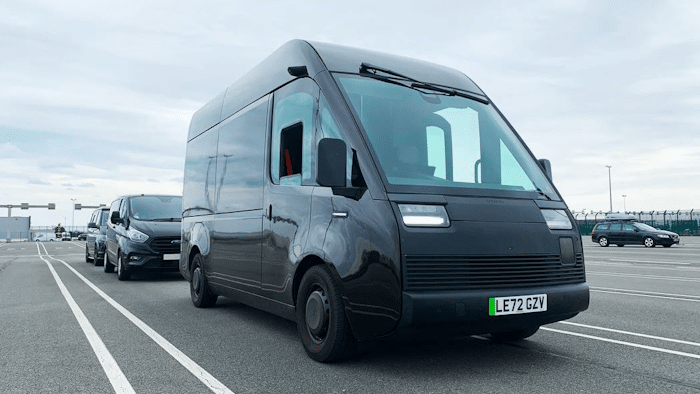
Arrival UK, an electric van start-up, has fallen into administration less than three years after a $13 billion float, in a fresh blow to Britain’s green energy ambitions.

EY has been appointed to explore options for the break-up and sale of the group’s operations. Arrival, based in Banbury, Oxfordshire, has two factories in the county. Its parent company, listed in America, employs about 400 people worldwide.

Share

Pushing electric vehicles is virtue-signalling and fighting the free market

The problem with government mandates aimed at manipulating free markets is they are typically based in political expediency, not commercial reality.

As more potholes appear on the road to electric-vehicle nirvana, edicts by lawmakers in Canada and states such as California and New York to require all new-car sales be EVs by 2035 are proving the point: Politically motivated virtue signals rarely withstand pressure testing from real-world market forces.

Share

Early testing shows EVs smash through guardrails like bulldozers

Last Saturday I took my boys to the local museum of natural science, and although we live close enough to walk, it was pouring rain, so we drove. Without thinking I parked, but my oldest pointed out that the car next to us looked like an E.V. and suggested I find another spot, so I did—I may or may not have instilled in my kids a healthy and rational skepticism of the E.V. movement, and a concern that these cars are exceptional fire hazards (but definitely did).

Share

The West’s humiliating electric car climbdown has begun

France’s President Macron had a plan to make millions of electric vehicles a year. Chancellor Scholz planned to put 15 million on Germany’s roads by 2030. President Biden trumped the lot with a $174bn (£138bn) plan to make the US the world leader. Even Boris Johnson – remember him – had a £1bn plan to beef up our charging network.

Rewind only a couple of years, and almost every president or prime minister was making electric vehicles the cornerstone of an industrial strategy. And yet, this week we have learned that Renault is abandoning plans to separately list its electric vehicle (EV) and software business, while Volvo is winding down its Polestar electric sports car subsidiary.

Share

Canada’s huge bet on the EV battery industry demands a jolt of reality

When it comes to the green transition, let no one say the Trudeau government is unwilling to put other people’s money where its mouth is. Why, in just one sector, a sector of a sector really – making batteries for electric vehicles – the government has put $44-billion at risk: one of the “big bets” on Canada’s industrial future of which it likes to boast.

Share

Volvo, An Early Electric Car Adopter, Cuts Off Funding For Its EV Affiliate

STOCKHOLM—Volvo Car said it won’t provide further funding to Polestar, the electric-car maker it created with Volvo’s Chinese owner Geely—the latest EV retrenchment by the global auto industry.

The auto industry’s pivot to electric vehicles has been rocked by setbacks this year, just as a flood of new battery-powered models is hitting showrooms.

Earlier this week, French automaker Renault said it has decided to cancel the initial public offering of its electric-car unit Ampere. Ford, meanwhile, has slashed production of its electric F-150 Lightning, a pickup truck that has generated major buzz since its launch. Rental-car firm Hertz has said it was dumping about one-third of its EV rental car fleet, replacing the cars with gas-engine vehicles.

h/t Mauser

Share

Tapping the Brakes on Electric Vehicles

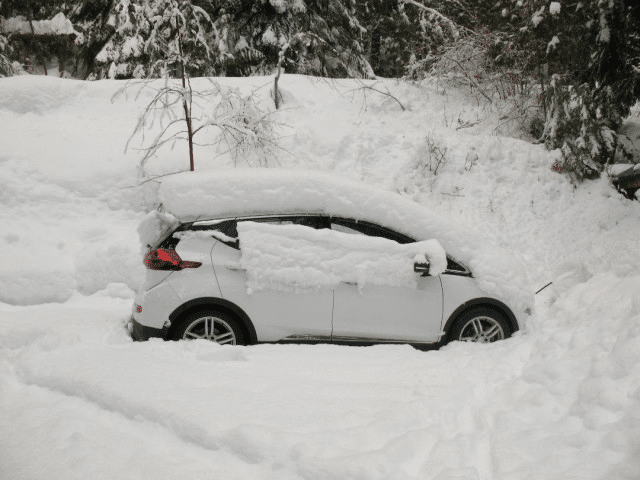
It’s been a rough few months for electric vehicle fans. During the January cold snap, social media sites were filled with sarcasm and pictures of Teslas stranded by freezing temperatures. Lots of “dead robots out there,” one wag put it.

In mid-January, the rental car company Hertz, previously an eager early adopter of fleet electrification, announced a big sell-off of EVs that it had only recently purchased, mainly because they proved far more expensive to maintain than advertised. The same week, Ford slashed EV production, having earlier pulled back on planned battery factories. Both Ford and GM now face higher labor costs, having negotiated epic United Auto Workers pay hikes that now include previously excluded battery factories. Adding to the woes, unsold EVs are piling up on dealer lots, spurring aggressive discounting. The big sales benefit buyers but deepen the already-massive losses of manufacturers.

Share

Can All of D.C.’s Money Keep the EV Humpty-Dumpty Together?

Electric vehicles, the Goldilocks cars — they work only if not too cold or not too wet.

We may have hit Peak EV (Electric Vehicle).

Deloitte’s Global Automotive Consumer Study has just found a “rise in U.S. consumer interest in internal combustion engine (ICE) vehicles and a decline in hybrid and battery electric vehicle (BEV) purchase intent.” Interest in buying fossil-fuel cars rose nine points, to 67 percent, while interest in hybrids fell to 21 percent and in EV’s to 6 percent.

Share

Jack Mintz: Canada’s EV strategy has cost $4 million a job

With Canadian GDP per capita dropping like a stone, what would you expect our minister of finance, Chrystia Freeland, to say last week at the elite Davos confab? “Come to Canada! We have $135 billion to give you!” is what she did say. Given our poor investment performance, it seems the only way to attract capital is to offer billions of tax dollars to foreign multinationals.

Share

After 6 Years and $76 Million, Still ‘Too Early’ to Evaluate EVs: Ottawa

A recent report from Canada’s Department of Natural Resources says it is still “too early” to fully evaluate the reliability of electric vehicles (EVs) in Canadian winters despite comprehensive research spanning six years at an investment of $76.1 million.

“It is too early to fully evaluate the intermediate and ultimate outcomes,” said the report titled “Evaluation Of The Electric Vehicle Infrastructure Demonstration Program,” which was first covered by Blacklock’s Reporter.

Share

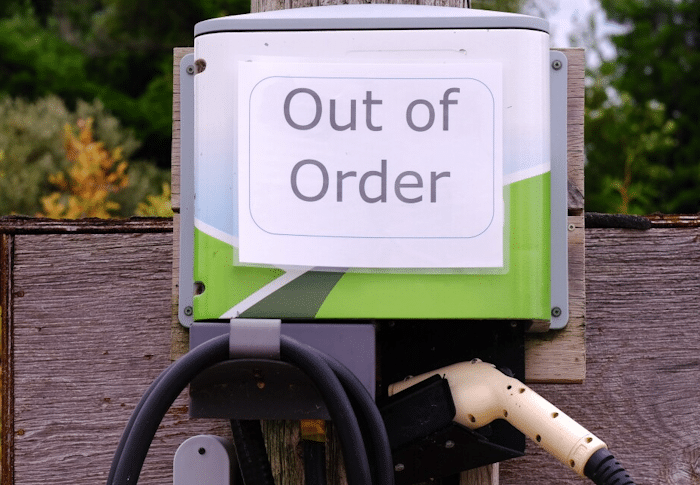
Same car, same charge, different prices? EV drivers face inconsistent, unreliable charging network

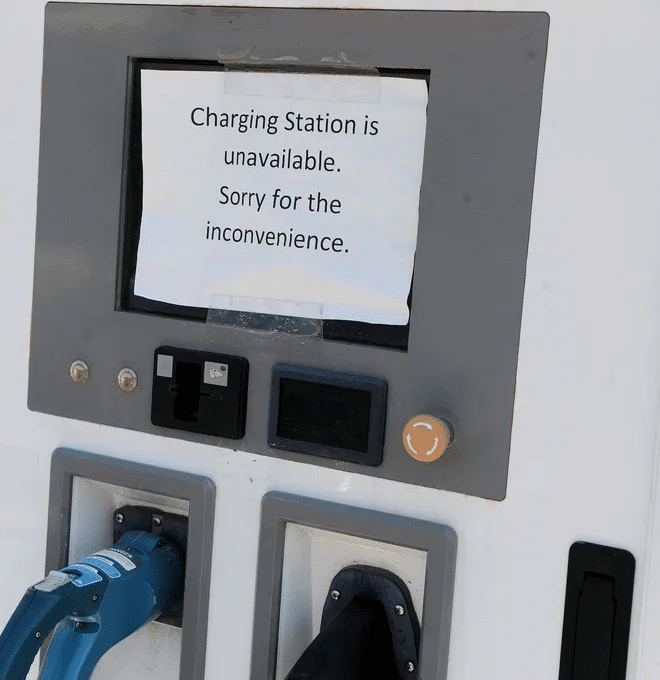
The federal government has said expanding the electric vehicle charging network is key to meeting the country’s climate goals, but an investigation by CBC’s Marketplace has exposed a wide range in pricing as well as inconsistencies in performance and reliability at public charging stations.

Marketplace tested the pricing and reliability at some of Canada’s most popular charging providers, travelling to Ivy, Flo, ChargePoint and Petro-Canada charging stations located across Ontario.

Share

Electric cars will never dominate market, says Toyota

Electric cars will never account for more than a third of the market and consumers should not be forced to buy them, the boss of Toyota has said.

Akio Toyoda, chairman of the world’s biggest carmaker by sales, said that electric vehicles (EVs) should not be developed to the exclusion of other technologies such as the hybrid and hydrogen-powered cars that his company has focused on.

Speaking to employees in a question and answer session, Mr Toyoda called for a “multi-pathway approach”, adding: “The enemy is CO2.”

Share

State-backed plans to bring about an EV revolution are backfiring

Why big fleet buyers are going into reverse on electric cars

Three years ago, London’s biggest taxi company reached a fork in the road.

Regulations announced by Transport for London meant all private hire vehicles registered in the capital would have to meet tougher green emission standards by 2023.

For Addison Lee chief executive Liam Griffin, it meant a choice: invest in plug-in hybrid cars, or “go full electric” and stump up millions for a new fleet of electric cars.

5 Year plans didn’t work well in the Soviet Union either.

Share

Ottawa is putting all our eggs in an EV battery basket

Ever since the federal government signalled an open bar for subsidies for the electric vehicle industry, the list of companies wanting to set up shop in this country in exchange for taxpayer cash just keeps growing. We learned recently that both Honda and Toyota have added their names to it. If the past is any guide, there’s a good chance Ottawa will give each of them a wad of Canadian taxpayers’ money.

Share