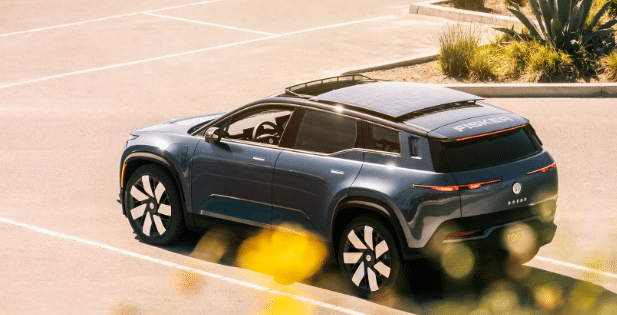
‘No Further Production’ Of Fisker Ocean EV Planned By Magna International

At a time when troubled electric vehicle startup Fisker is looking for a life raft to stay afloat in 2024, the company hired to build its Ocean crossover doesn’t seem terribly optimistic about its prospects.

Magna International, the contract auto manufacturer that builds the Fisker Ocean, doesn’t expect to build the electric crossover anymore this year. During a recent earnings call, CEO Swami Kotagiri revealed that Magna had to adjust its outlook for 2024 after “assuming no additional Fisker Ocean production and lower sales on program delays and mix.”

h/t Mauser

Share

‘Homemade bombs’ found at construction site for Northvolt EV battery plant in Quebec

MONTREAL – The company building a major plant for electric vehicle batteries in Quebec says “homemade bombs” were found this morning at the construction site east of Montreal.

Paolo Cerruti, co-founder of Swedish manufacturer Northvolt, says company employees discovered bombs had been placed over the weekend under machinery “with clear intent to harm our workers.”

He says the triggering devices did not work and the company contacted police.

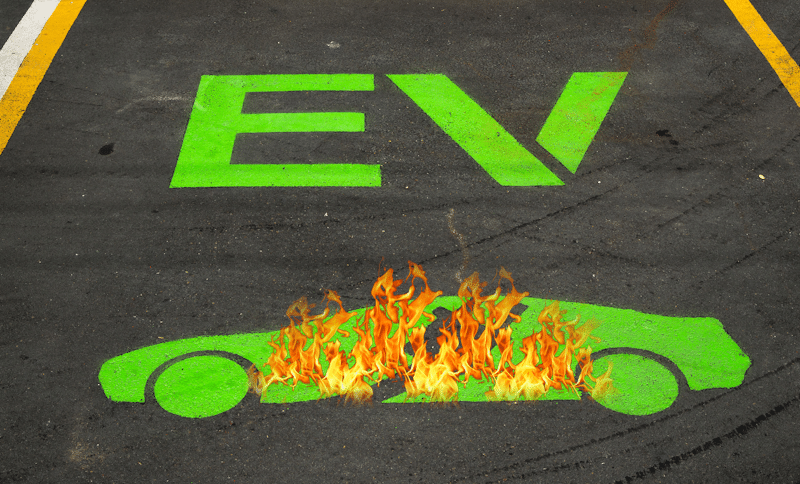
ICE Fans or Eco Nutters who know EV’s are not environmentally friendly?

Share

EVs are the most expensive vehicles to operate over 1,000 miles, according to iSeeCars

It’s no secret that charging an electric vehicle is often less expensive than fueling a gas car, but many don’t think about the higher purchase prices. A recent iSeeCars study showed that people tend to drive EVs much less, making their cost per mile much higher than that of internal combustion vehicles.

h/t Mauser

Share

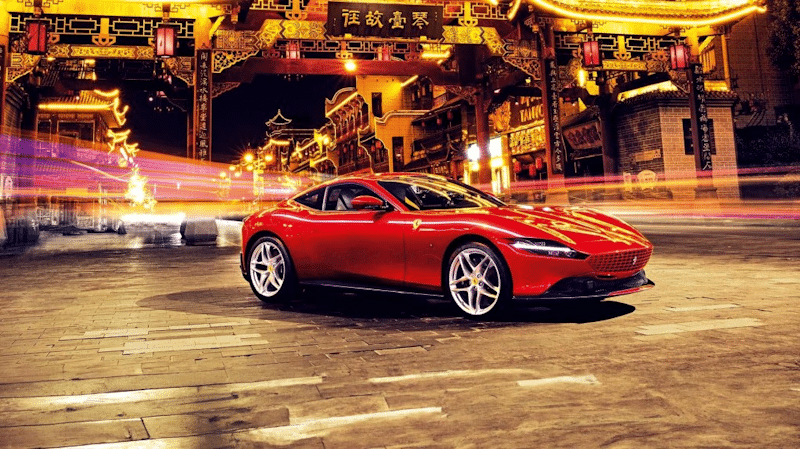
Ferrari hometown fights China’s electric car invasion

It is the spiritual home of Italy’s motor industry, a land of fast cars where Ferrari and Maserati produce their most sought after models.

Now, as President Xi arrives in Europe to face down claims Beijing is seeking to corner the market on electric vehicles, the town of Modena has declared war on China over alleged plans by one company to misappropriate its hallowed name.

The row centres on the SU7, the debut electric car from the Chinese smartphone maker Xiaomi that has made waves since its launch in March, gaining 50,000 orders in China in the first 27 minutes of sales.

Share

Trudeau and Ford should attach personal fortunes to EV corporate welfare

Last week, with their latest tranche of corporate welfare for the electric vehicle (EV) sector, the Trudeau and Ford governments announced a $5.0 billion subsidy for Honda to help build an EV battery plant and ultimately manufacture EVs in Ontario. Here’s a challenge: if politicians in both governments truly believe these measures are in the public interest, they should tie their personal fortunes with the outcomes of these subsidies (a.k.a. corporate welfare).

Share

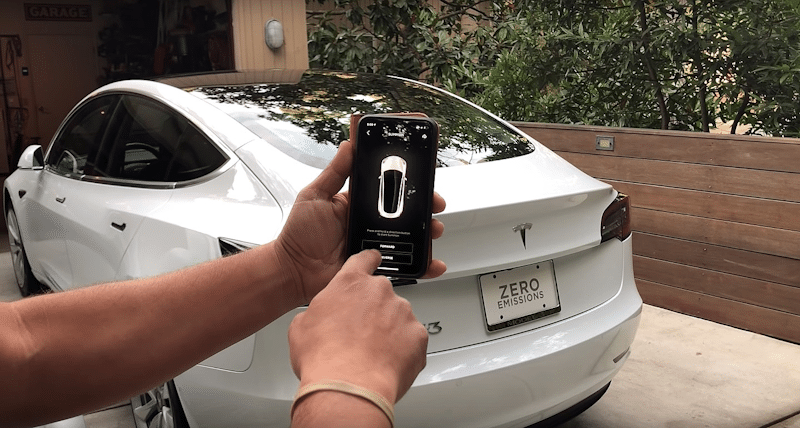
Montreal man on the hook for thousands of dollars after a feature on his Tesla caused an accident

George Ghazzoul is warning other drivers about the new Smart Summon feature on Tesla vehicles after his self-driving vehicle side-swiped another in a parking lot.

When Ghazzoul bought a Tesla two years ago, he admitted it wasn’t just the car’s style that drove him; it was his love of technology.

“Really, the selling point for me is the fact you get software updates and you always get new features on the car,” he said.

WTF!

Share

Have the wheels come off for Tesla?

There was a time when it seemed Tesla could do no wrong.

In little more than a decade, it went from technology upstart to mass-market carmaker, invested billions in its clean energy business, and saw its value rocket.

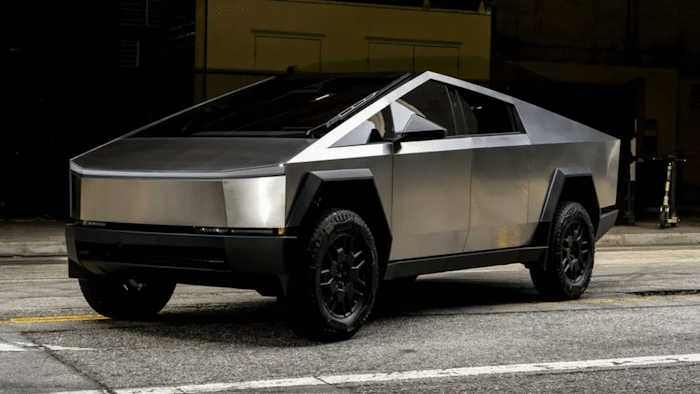
But now the company is struggling with falling car sales and intense competition from Chinese brands, as well as problems with its much-hyped Cybertruck.

Lower sales have hit its revenues, and hurt its profits. Its share price has fallen by more than a quarter since the start of the year.


Mandated EV adoption has proven both boon and bane for Tesla.

Communist style Five Year Plans like that favoured by Wacko Trudeau distorted the market attracting rent seekers rather than competitors responding to consumer demand.

Share

Trudeau confronted with unions’ concerns about sidelining of Canadian workers at Windsor EV plant

Prime Minister Justin Trudeau was told Monday by a top union leader that grave concerns remain about the hiring of foreign workers at a flagship EV battery plant in Windsor, Ont., when skilled Canadians are available to do the jobs.

In a keynote discussion with the Prime Minister at the annual conference of Canada’s Building Trades Unions in Gatineau, union leader Sean Strickland told Mr. Trudeau that the concerns that emerged last year about the hiring of hundreds of Korean and Japanese workers at the EV factory have yet to be resolved.

Share

Electric cars could sink Tesla – not even Elon can stop it

There is a long-running debate about whether Tesla is a car or a technology company. For a while this was largely an academic question related to future potential and therefore valuation. But now Elon Musk’s baby has reached a crunch point and the search for an answer has become existential.

There are no prizes for guessing which side Musk comes down on. “If you value Tesla just as an auto company, you fundamentally have the wrong framework,” he said last week. “If someone doesn’t believe Tesla is going to solve autonomy, they should not be an investor in the company.”

Share

Tesla Running Low on Charge

It will be satisfying to witness Tesla — perhaps the greatest grift ever — go the way of WorldCom and Enron.
Elon’s big grift is in trouble.

His electric vehicle (EV) operation — which allowed car manufacturers to “offset” their carbon footprints by purchasing “credits” from Elon in lieu of making EVs themselves — had been priced with the expectation that the government would make a “market” for battery powered vehicles. But Tesla’s stock just lost about 40 percent of its value.

The reason why is both ironic and  delicious.

Share

Federal, provincial politicians leave door open to foreign workers’ involvement in Honda deal

Parties to the massive Honda EV investment deal reached this week have tacitly acknowledged that foreign workers will be involved in setting up the proposed auto plants, while attempting to downplay an issue already seized upon by the federal Conservatives.

In response to questions throughout the week, federal officials, their provincial counterparts and executives for the automaker have talked about “optimizing” or “maximizing” the number of Canadian jobs — leaving the door open for foreign workers to work on facilities resulting from the historic $15-billion deal.

Share

Trudeau and Ford double down on wasteful corporate welfare with yet another EV deal

The saga of Bombardier, once a symbol of Canadian pride, is a sobering one. Joseph-Armand Bombardier, who founded the company in 1942, was a great Canadian inventor and entrepreneur. But over time, the company that bears his name morphed into the poster child for corporate welfare in Canada, becoming utterly dependent on using its outsized political clout to browbeat successive governments into funneling them perpetual taxpayer largesse. The results have cost Canadians more than $4 billion in direct costs alone; distorted and disfigured our economy at the expense of other sectors not so favoured; and sowed unhelpful regional divisions to boot.

Share

Taxpayers are the big loser in Honda plant deal

On Thursday, the federal and Ontario governments announced that they will be doling out an estimated $5 billion in corporate welfare to Honda, so the auto giant can build an electric vehicle (EV) battery plant and manufacture EVs in Ontario.

This is the third such deal in Ontario, following similar corporate welfare handouts to Volkswagen ($13 billion) and Stellantis ($15 billion). Like the previous two deals, the Honda deal comes at a significant cost to taxpayers and will almost certainly fail to create widespread economic benefits for Ontarians.

Share

EV sales have slowed. Do massive ̷s̷u̷b̷s̷i̷d̷i̷e̷s̷ corporate welfare payouts still make sense?

Enormous investments in EV technology shook the automotive industry in both Canada and the U.S. this week. Honda promised to spend $15 billion in Ontario on Thursday morning. Toyota unveiled new investments in Indiana that afternoon, bringing its total spending on EVs in that state to $8 billion US.

“In Canada, our target is that 100 per cent of all light duty cars and passenger truck sales be zero emission by 2035,” said Prime Minister Justin Trudeau at the Honda announcement in Alliston, Ont. “As a great Canadian once said, that is where the puck is going and that is where we’re going to be.”

But the surge in investment comes as the underlying EV industry remains at a crossroads. Growth forecasts have plateaued, charging infrastructure has not kept pace and electric vehicle prices have pushed the cars out of reach of many consumers.

This is a CBC PROPAGANDA piece for the Liberals.

Share