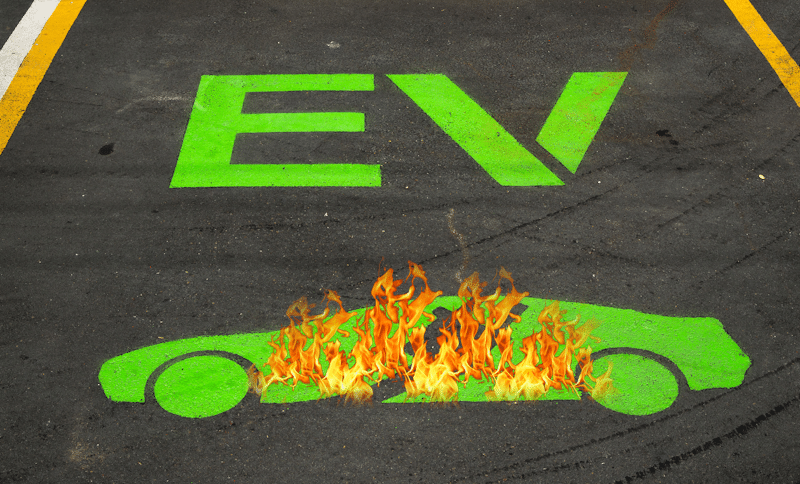
Canada’s electric vehicle strategy has failed, and there are lessons to learn

We must face an uncomfortable truth: Canada’s automotive and EV manufacturing strategy, touted as a generational opportunity to drive economic growth, jobs and environmental leadership, has failed quickly and dramatically.

The federal and Quebec governments made a bad $4.6-billion dollar bet on Northvolt, a Swedish EV battery manufacturer, which has entered bankruptcy less than two years since a $7-billion investment announcement. The $270-million invested by Quebec in Northvolt’s parent company in Sweden is now “lost,” confirmed the provincial government in March.

Share

Keep Chinese Cars Off American Roads

President Trump wants China’s automakers to build cars in the U.S., but modern vehicle technology makes that a national security risk.

President Donald Trump marked the first 100 days of his second term with a speech touting the accomplishments of his administration. Delivering the address from Michigan, the heart of the American auto industry, the president drew special attention to the challenge of foreign competition and its place in his trade agenda.

Implicitly invoking Ronald Reagan’s successful efforts to induce Japanese automakers to build cars in the U.S., Trump told the crowd at Macomb Community College that he wants foreign automakers to invest in U.S. production again. While the friendly audience mostly applauded this message, one line surely left them confused: Trump’s statement that not only Japanese but Chinese automakers should build cars here.

Share

St. Thomas VW plant facing EV sector ‘headwinds,’ delays possible: Analysts

The bankruptcy of a Volkswagen partner in electric vehicle battery production will not threaten the automaker’s St. Thomas investment, industry experts say.

The development does, however, demonstrate increasing volatility in the EV sector during this high-tariff automotive environment, and the $7-billion PowerCo EV battery plant in Southwestern Ontario may face future delays, they said.

h/t Mauser

Share

Honda to postpone plans for EV plant in Canada for at least 2 years

Japan’s Honda Motor Co. forecast a 59 per cent profit decrease in the current financial year and said it would put on hold a plan to build an EV supply chain in Canada, amid the uncertainty stemming from U.S. President Donald Trump’s tariffs.

Honda’s forecast is the latest signal of the difficulty car makers are having navigating Trump’s tariffs on foreign-made automobiles at the same time the industry is being hit by the rise of Chinese EV producers.

Share

EV Bus Maker Lion Electric likely to be liquidated, court-appointed monitor says

The court-appointed monitor for Lion Electric says the vehicle maker is very likely to be liquidated after the Quebec government refused to invest more public funds in the company.

Jean-Francois Nadon, a representative of Deloitte, said in a court hearing this morning that government aid would have been a condition of any sale of the struggling company.

Nadon says Deloitte sought offers over the weekend from companies interested in liquidating Lion Electric, and is hoping to finalize a transaction by next Monday.

Share

Federal report raises doubts over electric bus viability in Canadian winters

Electric transit buses may not be ready for prime time in Canada’s harsh climate, according to new findings from the National Research Council, which reveal that many vehicles need diesel heaters just to maintain performance during winter.

Blacklock’s Reporter says the study, released four years after then-Infrastructure Minister Catherine McKenna announced a $2.8 billion plan to spend on zero-emission transit, questions whether electric buses can reliably replace diesel ones in daily Canadian operations.

Share

What a $15,000 Electric SUV Says About U.S.-China Car Rivalry

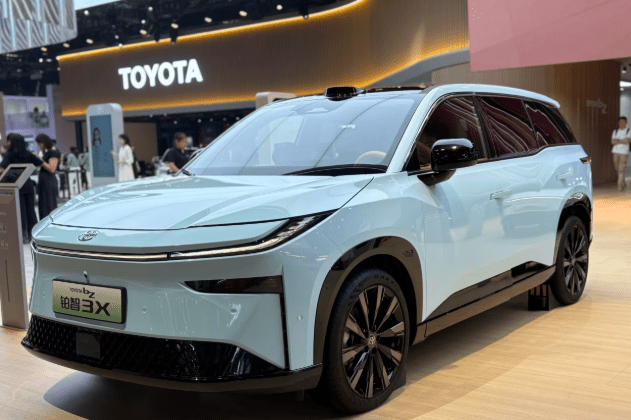
SHANGHAI—The offer sounds like a scam—a new Toyota electric-powered sport-utility vehicle for about $15,000, complete with sunroof and cup holders.

But the Toyota bZ3X is real, and it is actually on sale starting at that price. There is a catch: To buy one, you have to be in China.

Auto executives once dreamed of a world car that could be designed once and sold everywhere. That world has fractured, and nowhere more so than in the two biggest markets, China and the U.S., which together account fornearly half of global vehicle sales.


The comments are worth reading pointing out the many omissions made by the article.

Share

GREEN: Carney should pull the plug on Canada’s EV revolution

During his election victory speech, Prime Minister Mark Carney repeated one of his favourite campaign slogans and vowed to make Canada a “clean energy superpower.” So, Canadians can expect Ottawa to “invest” more taxpayer money in “clean energy” projects, including electric vehicles (EVs) — the revolutionary transportation technology that’s been ready to replace internal combustion since 1901, yet still requires subsidies.

Share

House votes to block California banning sales of gas cars by 2035

The House voted Thursday to block California from enforcing a rule that would ban sales of new gasoline-powered cars in the state by 2035.

Lawmakers voted 246-164 to pass a resolution targeting the rule, which ranks as one of the nation’s most ambitious policies aimed at combating climate change and promoting electric vehicles. However, it is unclear whether the Senate will follow suit and send the measure to President Donald Trump’s desk.

In forging ahead with the vote, House Republicans sidestepped legal opinions from two nonpartisan watchdogs. The Senate parliamentarian and the Government Accountability Office have concluded that Congress lacks the legal authority to prevent states from enforcing such climate rules.

Share

Trump’s Electric Vehicle Rollback Helps Consumers, Won’t Hurt Climate

Before we let Democratic legislators get on their high horses about the Trump administration’s obliteration of California’s climate goals via its elimination of the federal electric vehicle mandate, let’s look at one statistic that should put matters in perspective.

Between 2003 and 2019, California reduced its greenhouse gas emissions by 13 percent thanks to billions of dollars in spending and myriad mandates designed to shift energy use to electric generation. Yet 2020’s wildfires “caused twice the amount of greenhouse gas emissions” that were saved over those sixteen years, according to a University of Chicago report. Fires are obliterating any savings from our state’s high-profile move away from fossil fuels.

Share

Dyspro-what? Why an Obscure Element Has the EV Industry in a Panic

Caught in the middle of the U.S.-China trade war is a Chiclet-size magnet that is vital to every new electric vehicle on the road.

The magnet is made with dysprosium. Atomic number 66. A rare-earth mineral with a silver metallic luster. More than 90% of refined dysprosium comes from China, and it is used in magnets that power everything from medical equipment to EV motors.

Share

America’s electric car crash is over. Europe has finally noticed

American electric vehicle sales have continued to inch up, from 7 per cent of new cars sold last year to 7.5 per cent this year. But no one now expects that they will reach the more than 50 per cent mandated by the Biden administration by 2032. President Donald Trump has upended the EV landscape – sending shockwaves through the industry that are reverberating not just in the United States, but globally.

Canada remains on a collision course with reality however.

Share

Poilievre pledges to scrap electric vehicle sales mandates if elected

HALIFAX — Conservative Leader Pierre Poilievre says if his party is elected, it will scrap Canada’s electric vehicle sales mandates.

Canada has mandated that 20 per cent of all new vehicles sold must be electric by 2026 and 100 per cent by 2035.

Electric vehicles made up just shy of 12 per cent of the Canadian sales in 2023, but government rebate programs meant to encourage people to buy EVs came to an end in January.

Winner!

Share

Here’s the Status of Major EV Battery Plants and Projects in Canada

Electric vehicles were considered the way of the future just five short years ago. Today, the demand for electric vehicles (EVs) and EV battery plants is waning both in Canada and globally due to a wide range of factors.

Some of the issues cited in consumer surveys on purchasing EVs include the substantial cost disparity between EVs and gas-powered vehicles, worries about their driving range, reliability in cold weather, and the availability of charging facilities. Along with the repercussions of increased interest rates and inflation, all these factors have played a role in shaping consumer behaviour since 2020.

Share

RoRo! EV Fire At Port!

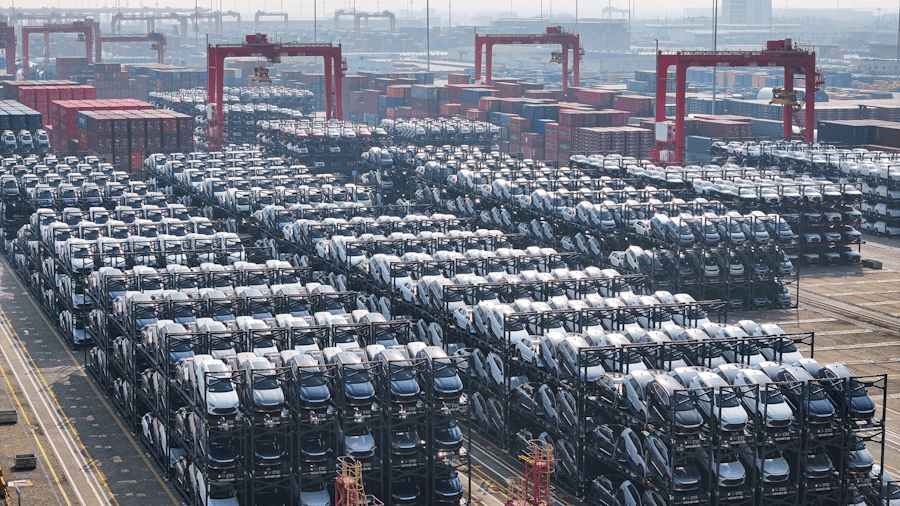
Major EV Fire Breaks Out Aboard Ro/Ro at Zeebrugge

On Wednesday, a fire broke out aboard a ro/ro cargo ship at the port of Zeebrugge, Belgium, prompting an immediate – and successful – emergency response.

Ro/ro fires are a serious issue, and the growing popularity of electric cars has made the potential consequences more severe. Fires can spread rapidly within enclosed ro/ro decks, and EV fires are even harder to put out. New industry guidance calls for operators to respond with evacuation, ventilation shutdown and initiation of CO2 flooding very early in the firefighting process – before the fire can spread or injure anyone.

Got Lucky. h/t Simus

Share