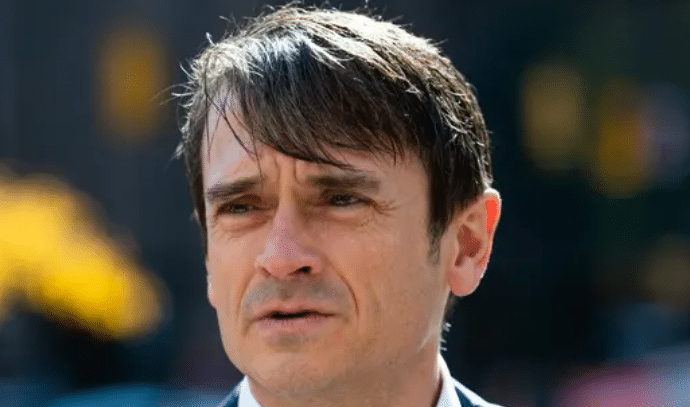
CSIS Director Highlights How China Threat Differs From Russia’s

The foreign interference threats coming from China differ significantly from those from Russia or other countries, says the boss of Canada’s spy agency.

Canadian Security Intelligence Service (CSIS) Director David Vigneault testified before the Commons Procedure and House Affairs Committee on June 13 and answered questions from MPs about the nature of the China threat.

Share

Mystery of Lake Maggiore spy boat sinking gets ever murkier

Why were 21 Italian and Israeli intelligence on the Gooduria when it sank in a freak storm and left four people dead? Almost two weeks on, ‘crazy’ speculation is rife

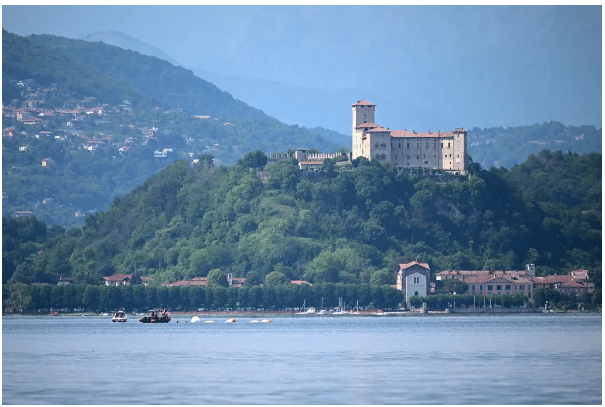
A metal bracket poking out of the water of Lake Maggiore near the “OK” campsite is now the only visible sign of the sunken pleasure boat that took four passengers to their graves and sparked an international spy mystery.

Watching from outside his tent while grilling sausages, Marco, a call centre operator from Germany, said: “My children have been watching people trying and failing to raise that boat for days.”

It was the ignominious end to a saga involving a skipper caught out by a freak storm on an Italian lake and suggestions that the Italian and Israeli spies on board his boat were on a mission to stop Iran building nuclear missiles.

Share

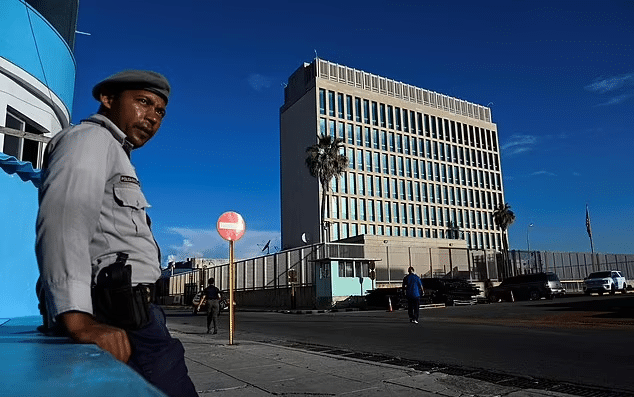
Beijing is building an electronic eavesdropping facility on Cuba just 100 miles from the Florida coast

Beijing is set to build an electronic eavesdropping facility on Cuba, just 100 miles from the coast of Florida, that will be able to gather US military secrets.

Citing officials ‘with highly classified intelligence’, The Wall Street Journal said China and Cuba have reached a secret agreement to establish the base.

The newspaper reported its sources as saying Beijing had agreed to pay cash-strapped Havana several billions of dollars to allow it to build the facility, and that at this stage an agreement had been reached ‘in principle’.

Share

Canada set to name foreign labs, universities that pose risk to national security

The government of Canada is in “advanced stages” of drafting a list of entities that pose a risk to national security, and top universities are prepared to avoid working with these entities despite what could be a loss of $100 million or more in annual research funding from foreign partners.

The list will include foreign-state-connected universities, research institutes and laboratories that are believed to be at “higher risk” of engaging in theft, unwanted knowledge transfers and interference in research, according to government documents reviewed by the Star.

Share

Spy Games: Why Private Companies Now Dominate Domestic Espionage

“The best way to predict the future is to create it.” That rhetorical gem, credited to various scientists and political leaders, shows up on mouse pads and posters and wherever else suitable inspiration is found wanting. It is also a remarkably accurate mission statement for two professions: financial investors and spies. In both occupations, a person is rewarded for either (1) collecting and processing enough available information to predict future events or (2) creating a set of preconditions that will make future events all but certain.
Share

Iranian Insider and British Spy: How a Double Life Ended on the Gallows

In January, Iran executed a former senior official who provided Britain with valuable intelligence on Iranian nuclear and military programs over a decade, according to Western intelligence officials.

In April 2008, a senior British intelligence official flew to Tel Aviv to deliver an explosive revelation to his Israeli counterparts: Britain had a mole in Iran with high-level access to the country’s nuclear and defense secrets.

The spy had provided valuable information — and would continue to do so for years — intelligence that would prove critical in eliminating any doubt in Western capitals that Iran was pursuing nuclear weapons and in persuading the world to impose sweeping sanctions against Tehran, according to intelligence officials.

Share

Russian NGO that built ties with Canadian academics, professionals took direction from Moscow’s spies, FBI alleges

A Russia-based outreach organization that has cultivated relationships with rising American, European and Canadian policy professionals and academics has secretly received financing and direction from Moscow’s spy service, U.S. prosecutors allege.

In court documents filed in Washington, U.S. authorities say that an organization known as Public Initiative Creative Diplomacy, or PICREADI, was being used by Russian intelligence to glean information about influential foreigners.

Share

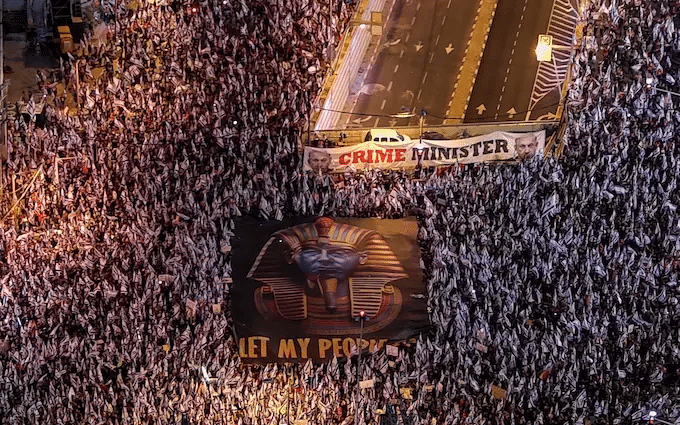
Mossad deny involvement in Israel’s anti-government protests after Pentagon leak

Leaked US intelligence suggests spy agency opposed judicial reforms, though officials insist documents are ‘photoshopped fakes’

… Another leaked US intelligence document, which claimed Mossad supported major anti-government protests in Israel, was “false and absurd”, the spy agency said as the fallout from the massive leak of Pentagon papers reverberated among Washington’s allies.

According to the documents, classified as top secret, the Israeli agency “advocated for Mossad officials and Israeli citizens to protest the new Israeli government’s proposed judicial reforms, including several explicit calls to action that decried the Israeli government, according to signals intelligence.”

Share

How the West rolled up a network of Russian ‘sleeper spies’

When a young Brazilian named Victor Muller Ferreira, with a master’s degree from a top American university, landed at Amsterdam’s Schiphol airport in April last year to take up an internship at the International Criminal Court in the Hague, things did not go quite according to his plan.

The Dutch authorities had been tipped off by the FBI that he was not who he claimed to be. He had been identified as Sergey Cherkasov, an officer in the GRU, Russia’s military intelligence service. They promptly put him on a flight back to Sao Paulo, where two months later he was jailed for 15 years for identity fraud.

Share

3 Public Servants’ Security Clearances Revoked Due to Spying or Acting as Foreign Agents: Federal Records

Federal departments and agencies have revoked the security clearances of three employees for spying or acting as foreign agents, records show, though their identities and the governments they served were not disclosed.

The details were provided in response to an Inquiry of Ministry. Conservative MP John Barlow, who submitted the inquiry on Feb. 9, wanted to know how many public servants have had their security clearances revoked for cause since 2016, and how many were due to individual spying or otherwise acting on behalf of a foreign government.

Share

The ‘ordinary’ family at No 35: suspected Russian spies await trial in Slovenia

Maria Mayer and Ludwig Gisch settled in Slovenia’s capital, Ljubljana, in 2017, with their two young children. People who met the couple tended to like them; the new arrivals from Latin America were friendly but never overbearing, inquisitive but never pushy.

Mayer opened an online art gallery, while Gisch ran an IT startup. They told friends that a nagging fear of street crime at home in Argentina had prompted their move to Europe. Peaceful, mountainous Slovenia offered a refreshing change of pace.

In interviews with about a dozen people who knew one or both of the couple, two words kept cropping up: “ordinary” and “nice”. Neighbours insisted the people living at No 35 were a run-of-the-mill family, and said the children could often be heard playing in the garden, shrieking in Spanish.

Share

Who was the Cold War ‘umbrella assassin?’

Ever since Bulgarian journalist Hristo Hristov successfully sued for the release of the intelligence file on Francesco Gullino in 2007, the world has known that Gullino, an Italian-born Danish citizen, began working for the Bulgarian secret service in 1971.

To this day, Gullino is considered the main suspect in the so-called “umbrella assassination” case: the murder of the Bulgarian writer and dissident Georgi Markov in London in 1978.

Markov was poisoned, probably with ricin, after being injected with a poisoned pellet when stabbed in the leg with the tip of a specially adapted umbrella at a bus stop in London.

Share

American spy on secondment to GCHQ was stabbed by alleged terrorist just three miles from its Cheltenham headquarters

An American spy on secondment to GCHQ was stabbed by an alleged terrorist just three miles from its headquarters, it can now be revealed.

Police believe a woman working for US intelligence was targeted by a knifeman in an alleged terrorist attack outside a leisure centre in Cheltenham.

The victim is said to have been sitting in a car when the knifeman lashed out stabbing her in the leisure centre car park, before she managed to stagger out of the vehicle for help.

Share

Diane Francis: We’ve only scratched the surface of foreign interference and espionage

With the spotlight on China’s interference in Canadian elections, the case of Cameron Ortis, the former RCMP spy master who was charged in 2019 with violating the Security of Information Act, is still hidden in the shadows. He was released on bail in December and is set to be tried in October, but the details of the case, likely involving China, have been hidden from the public. They should be disclosed immediately.

Share