A Canadian Company, Secret Data, Tiny Islands and a Quest for Treasure on the Ocean Floor

Mining in parts of the Pacific Ocean was meant to benefit poor countries, but an international agency gave a Canadian company access to prized seabed sites with metals crucial to the green energy revolution.

KINGSTON, Jamaica — As demand grows globally for metals needed to make batteries for electric vehicles, one of the richest untapped sources of the raw materials lies two and a half miles beneath the surface of the Pacific Ocean.

This remote section of the seabed, about 1,500 miles southwest of San Diego, could soon become the world’s first industrial-scale mining site in international waters.

The Metals Company, based in Vancouver, has secured exclusive access to tons of seabed rocks packed with cobalt, copper and nickel — enough, it says, to power 280 million electric vehicles, equivalent to the entire fleet of cars in the United States.

Share

Judge sides with Enbridge in Michigan’s latest bid to shut down pipeline

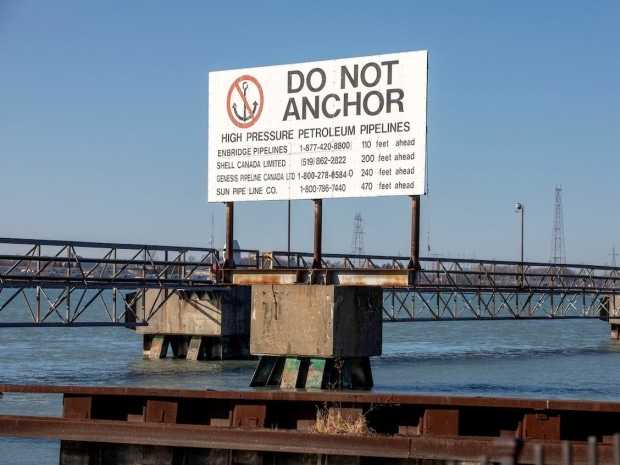
A Michigan judge has ruled in favour of Enbridge Inc. in its long-standing dispute with the state over the Line 5 cross-border pipeline.

In her ruling on Thursday, Judge Janet Neff said the case belongs in federal court — a blow to Michigan Gov. Gretchen Whitmer’s bid to shut down the pipeline.

It’s the second time in nine months that Neff has sided with Enbridge on the question of jurisdiction.

Share

Eco-minded descendants of billionaire oil barons are PAYING hundreds of Eco-thugs $25,000-a-year to protest around the world

Three American oil scions have been bankrolling mobs of eco-zealots who have terrorized the world by slashing tires, blocking traffic and attacking firms.

Aileen Getty, Rebecca Rockefeller Lambert and Peter Gill Case, who are heirs to their families’ huge fortunes, are paying the salaries for thugs through their non-profits in an apparent bid to offset their relatives’ legacies.

Getty, whose grandfather created Getty Oil, has so far splashed out $1million through her California-based Climate Emergency Fund.

Share

Canada should (quickly) learn from Europe’s energy mess

Europe is suffering from an unprecedented energy crisis.

Household gas and electricity bills have soared with some countries now urging limited use of heat and hot water.

While Putin’s war has exacerbated the situation, Europeans can blame government policies for energy shortages and price spikes, which ironically has deepened the continent’s reliance on Russian natural gas and oil imports.

How did this happen?

Share

The West Can’t Afford to Be Dependent on Petrostates

Europe sweats under record-high summer temperatures as it simultaneously braces for the cold months coming. Last week, the Russian gas company Gazprom announced a drastic cut—down to about 20 percent of capacity—in the flow of gas through the pipeline which supplies Germany. This could make for a catastrophic winter. One recent report grimly explored how Germans might revert to heating their homes with wood.

Share

The miserable truth is that our leaders don’t want us to have cheap energy

Politicians, in hoc to eco-extremists, have come to believe that consuming fuel is intrinsically sinful

No, the energy crisis is not some unforeseeable consequence of the Ukrainian war. It is the result of years of wishful thinking, preening and short-termism. We sit on 300 years’ supply of coal. We have rich pockets of gas trapped in rocks beneath Central Scotland, Yorkshire, Lancashire and Sussex. We have as good a claim as any country to have invented civil nuclear power. Yet, incredibly, we face blackouts and energy rationing.

Share

Jesse Kline: Does Freeland actually mean it when she says she wants LNG projects?

It’s hard to worry about keeping warm when it’s 37 C out, but that’s exactly what the Germans are being forced to do as Russia continues to cut gas supplies to Europe, creating the prospect of severe shortages this winter. In Berlin, the lights illuminating 200 monuments and government buildings, including the presidential palace, are being switched off to save electricity. People in Hanover will no longer be able to take hot showers at gyms and pools. Residents and businesses are facing huge increases in their energy bills.

I think Freedoughgolin is staking out her leadership strategy.

Share

Britain’s lights will go off this winter

The dependence on renewable energy is a major problem

As the lights start going off around Europe this summer, there is every chance the same could happen here. Last month parts of London came very close to a blackout. As temperatures soared, electricity demand surged, and the National Grid experienced bottlenecks. The blackout was only avoided by paying a record-breaking £9,724.54 per megawatt hour to persuade Belgium to send more energy via interconnectors. This was 5,000% higher than the typical price paid. While the causes of this particular incident were idiosyncratic, it raises issues that could prove important this coming winter as Europe faces down an energy crisis.

Britain’s reliance on interconnectors — that is, high-voltage cables that connect our energy grid to those of other countries — is the result of the move away from fossil fuels. Fossil fuels, whatever their faults, are extremely reliable. 

Share

Europe has lost the energy war

The livelihoods of millions have already been sacrificed

After a decade of financial austerity, is Europe now on the brink of a new age of energy austerity? The city of Hanover has recently introduced strict energy-saving rules that include cutting off the hot water in public buildings, swimming pools, sports halls and gyms, banning mobile air conditioners, fan heaters or radiators, switching off public fountains, and stopping illuminating major buildings such as the town hall at night.

Share

African nations to UN – FU! We need oil

African nations expected to make case for big rise in fossil fuel output

Leaders of African countries are likely to use the next UN climate summit in November to push for massive new investment in fossil fuels in Africa, according to documents seen by the Guardian.

New exploration for gas, and the exploitation of Africa’s vast reserves of oil, would make it close to impossible for the world to limit global heating to 1.5C above pre-industrial levels.

However, soaring gas prices have made the prospect of African supplies even more attractive, and developed countries, including EU members, have indicated they would support such developments in the current gas shortage.


Meanwhile in Germany … Germany puts coal power plant back on network after gas supply cut

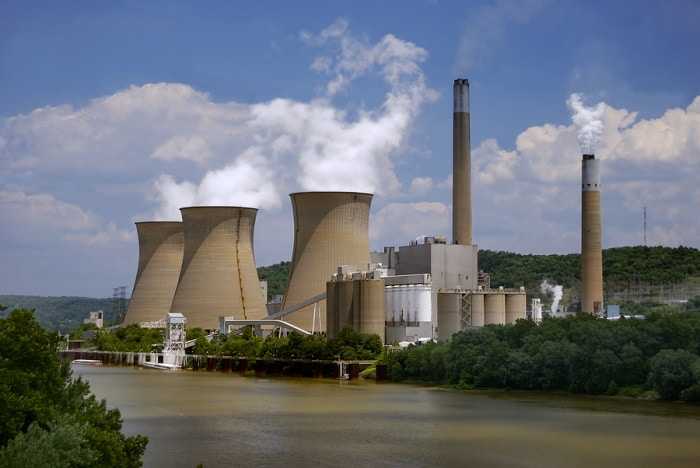
A coal-fired power plant that had been mothballed has become the first of its kind to be put back on to the network in Germany, as debate rages over how Europe’s largest economy will cope without Russian gas.

The facility in Lower Saxony, which is owned by the Czech energy company EGH, has received emergency permission to run until April in an attempt to boost energy production.

Share

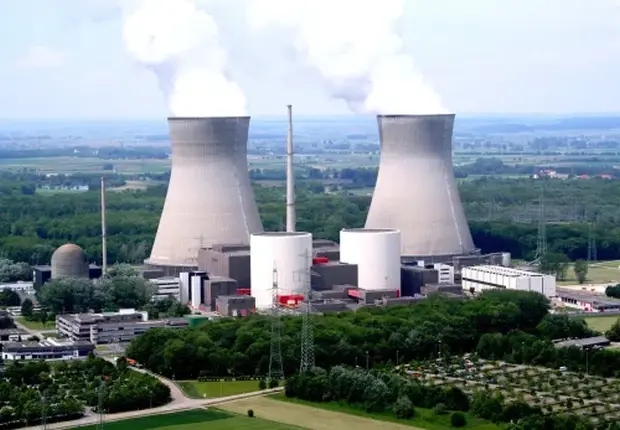
Germany: On second thought, maybe we won’t shut down our remaining nuclear power plants

The energy situation in Germany hasn’t made much sense this year. The country was set to shut down its remaining nuclear power plants this year as part of a long-term push by the Green party to get rid of them. And given that the Green party is currently part of the governing coalition in Germany it seemed nothing would stop that plan.

Share

Maine-Quebec energy: How one hydropower project sparked a $100m ‘hoohah’

A proposal to transport clean hydropower from Canada to the state of Maine has created enough “hoohah” to launch a fierce court battle – possibly signalling trouble for the future of green energy projects across the US.

New England Clean Energy Connect (NECEC) was supposed to be an industry-leading project, transporting 1,200 megawatts of Canadian hydropower to Massachusetts across 145 miles (233 km) of transmission line, and eliminating over three million metric tonnes of carbon emissions every year.

The $1bn (£840m) project, funded by utility company Hydro-Quebec and Central Maine Power (CMP), which is owned by the Spanish energy giant Avangrid, received final approvals, including a Presidential Permit from the US Department of Energy. Construction began in January 2021.

Share