What’s university even for? Schools are broke, and degrees are worth less and less

What’s university even for? Schools are broke, and degrees are worth less and less

Is higher education worth it? Canadians and Americans share a common answer. Abacus Data’s most recent Precarity Mindset report indicates that, in both countries, only 18 per cent of the population say a college or university education is “definitely worth it.”

Just more than 20 per cent think it is “generally worth it.” The public skepticism builds from there. Thirty-seven per cent of Canadians polled say it depends on the “program and school,” 13 per cent indicate “costs now outweigh the benefits,” and nine per cent argue that the “system is broken.”

Share

Increasing Number Of Ivy League Students Can’t Even Read, So Let’s Stop Calling Them ‘Elite’

Increasing Number Of Ivy League Students Can’t Even Read, So Let’s Stop Calling Them ‘Elite’

When a Harvard student needs ChatGPT to help with reading a novel, it’s clear that America’s high schools aren’t teaching students how to read.

A new story from The Atlantic shows the decline in literacy by telling the story of a Harvard student having trouble in class. Assistant Director for Humanities and Social Sciences Support Margaret Rennix said this student came to her and told her about using AI to translate Anthony Burgess’s A Clockwork Orange into easier language. Rennix told The Atlantic that the student was confused by what the student called “Old English” in the 1962 novel.

Share

Our campuses are corrupt — and higher education is due for its comeuppance

Our campuses are corrupt — and higher education is due for its comeuppance

One industry in America pumps out toxic waste day and night, but suffers no penalty for the damage it causes.

It operates at enormous public and private expense, sucking up hundreds of billions of dollars in government money.

Its toxic bilge poisons much of society, but those who complain about it are often dismissed as ignorant or bigoted.

Its product is largely free of state and federal regulation.

Share

As a professor, I’m pressured to give out high grades like candy — and not just by students

As a professor, I’m pressured to give out high grades like candy — and not just by students

Grade inflation is real, and it’s coming for your children.

The good news is your children will have beautiful transcripts. The bad news is those transcripts will have about as much value as a participation trophy. The worse news is this can be true even at the university level. And the worst news: inflated grades are effectively mandated from the top. To fix the problem, you’d have to alter the mindsets of institutional bureaucrats — that is, move immovable objects.


I recall an instructor discussing this very thing in class before he bit his own tongue.

Share

The Degree Divide: Why University Graduates Are Falling Behind in Canada’s Job Market

Young adults graduating with a bachelor’s degree or higher are facing an increasingly bleak job market in Canada, even more so than many other demographics.

There were 493,000 unemployed individuals holding a bachelor’s degree or higher in the third quarter of 2025 but only 80,600 estimated job vacancies to demand such qualifications, according to Statistics Canada.

What are the reasons for this disparity and what actions can be taken to better the prospects for post-secondary degree holders in Canada?

Experts interviewed by the Epoch Times say the difficulty faced by credentialed young adults is primarily due to a mismatch between the kinds of degrees being obtained and the jobs being created, as well as the rise of artificial intelligence (AI), and overall economic decline.

Share

Is the Imminent Closure of 50 Universities Really Such a Bad Thing?

The Guardian reports that, in the next two or three years, 50 “higher education providers” — 24 of them within a year — could (just like the providers of other goods-and-services) close down or, as Sally Weale, its education correspondent puts it, “risk exiting the market”. Sally thinks — that is, takes it for granted — that this a bad and unhappy circumstance, to be spoken of as ‘collapse’, ‘threat’, ‘turmoil’, ‘worry’, ‘disorder’, ‘fear’. And no doubt, from the point of view of the providers themselves, that is just what it is. What provider of goods-and-services — no matter what — wants to be forced to exit its market? It is a poor look-out for all the employees thrown out of work, and can’t be a good look on the managers’ own CVs. And then there are all those job-seekers the provider provided with qualifications. If their provider goes bust and out of existence what does that suggest to potential employers about the worth of the goods they were provided with? From the point of view of everyone whose interest is bound up with the provider’s, its exiting the market is, as Sally suggests, very bad news.

Share

What is lost when fewer men go to university?

Nobody panic – but men are less likely to attend university than their female counterparts. This is borne out by the data, as The Globe and Mail’s Joe Friesen reports – a growing trend that has taken root over generations.

Why? One factor may be a public school system that may be better suited to female students, something referred to by some as the “girlification” of education, a term I came across in my colleague Rachel Giese’s 2018 book Boys: What it Means to Become a Man. Are males as alienated – in the education system, but also in society at large – as the manosphere would have us believe? And is this contributing to the growing number of men skipping university?


Trump is bad, men should be emasculated, traditional male roles are evil, university is wonderful, Trump voters are awful and Trump is bad.

Share

Where the boys aren’t

The gender gap in higher education has been widening for decades. Do universities need to do more to entice men back?

As classes begin for students at Canadian universities this month, one group will stand out for its relative underrepresentation: young men.

Even before enrolment data is available, it’s safe to predict that for every 100 Canadian students on campus this fall, nearly 60 will be women and only about 40 will be men.

This gender gap has existed for more than two decades, and universities are well aware of it – but they haven’t done much to address it. Discussion of the subject is not quite taboo, but it’s uncomfortable.

That’s likely because out in the working world, men are doing just fine. The data show that men still earn more than women. They also tend to hold more positions of power, including at universities.


Everything is great according to the Globe but stupid boys get paid more and still dominate STEM education and until STEM equals WOKE mean stupid boys must die or something.

The Globe may or may not have interviewed a white guy as a subject for this study which says more than they know.

Share

School trustees with TDSB told what they can and can’t do (it’s mostly can’t) after Ford government takes over the board

Trustees with Toronto’s public school board have been given the do’s and the don’ts.

They can forward emails from constituents to the director of education and redirect calls to the board’s main line.

They cannot issue updates to their community; access administrative offices; use their board email account to communicate with constituents; or participate in any events as trustees, which includes engaging with school staff and parent councils.

That’s likely still too much for the racist commie groomers at the TDSB.

Share

The death throes of the university are upon us

The death of the university, first announced many decades ago, has been a slow process. But its death throes quickened this year, as external threats met institutions bereft of purpose.

Perhaps most significantly, the financial crisis in England’s higher-education sector is coming to a head. This is due, in the main, to inflation, tax changes and frozen student fees. But warped spending priorities and bloated bureaucracies have also contributed to the problems facing almost three-quarters of England’s universities. Additionally, the decision 10 years ago to lift the cap on student recruitment has benefitted more esteemed and popular institutions, while leaving many others struggling to recruit fee-paying students. The facts are stark. Forty per cent of higher-education institutions apparently only have enough money to cover a few months’ costs.

Share

The Titanic Is Unsinkable!

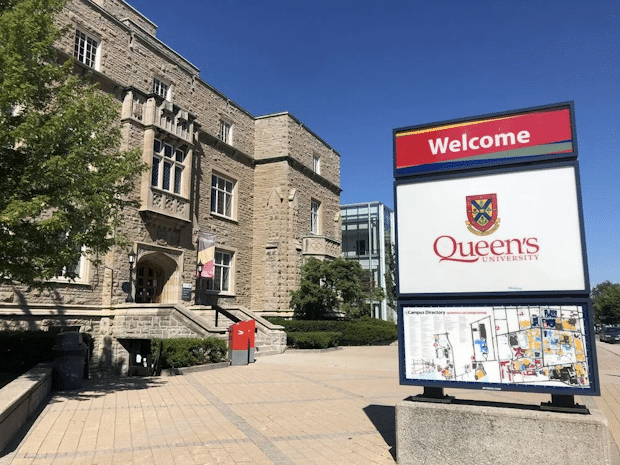
Queen’s principal says ‘no risk’ university will close, but fears remain

After months of anxiety about the future of Queen’s University, a statement from principal Patrick Deane on Friday reassured worried staff and students that the institution is not facing imminent financial collapse.

“Let me be very clear that there is no risk that Queen’s in any foreseeable future will close its doors,” Deane said in the statement.

The principal acknowledged the unusual nature of his statement, but wrote it was necessary to “set the record straight.”

Share

Queen’s University could ‘go under’ without cuts to courses

Queen’s University is in danger of going under if its financial situation is not dramatically improved through spending cuts, according to a senior administrator at the Kingston, Ont., school.

Small undergraduate classes of fewer than ten students have already been earmarked to be eliminated from the Faculty of Arts and Sciences, which is on track to run out of reserve money next year. Graduate classes of fewer than five students are reported to be next on the list.

Share