Skewering Liberalism – an intriguing voice from the past

TRUST in our institutions has plummeted. The supposed unity of ‘the public’ has fractured as loyalty to ‘identity’ groups replaces civic and national allegiance. Genuine opposition (where it exists) is harried, popular demonstrations suppressed, all in the name of ‘the rule of law’. Elites openly scorn the middle and working classes; their activist proxies stoke a degrading climate of self-censorship.

It wasn’t meant to be like this. The Western Liberal tradition was founded on sacred concepts, seeded in 17th-century England before blooming in the Enlightenment. The social contract, the sovereignty of the people, the ‘public good’ – these things ensured its continued hegemony. When the Soviet Union collapsed, we complacently proclaimed the ‘end of history’.

Share

The bizarre transition in the West

There is a bizarre transition in America from suporting liberty, non-violence and justice to submission to evil ideologies.

Over the last twenty years in four books and dozens of essays, I have sought to understand the bizarre transition in the West from supporting the goodness of liberty, non-violence, justice and other Judeo-Christian values to what I now realize is an almost complete submission to evil values and ideologies, including those of the so-called Palestinians.

Share

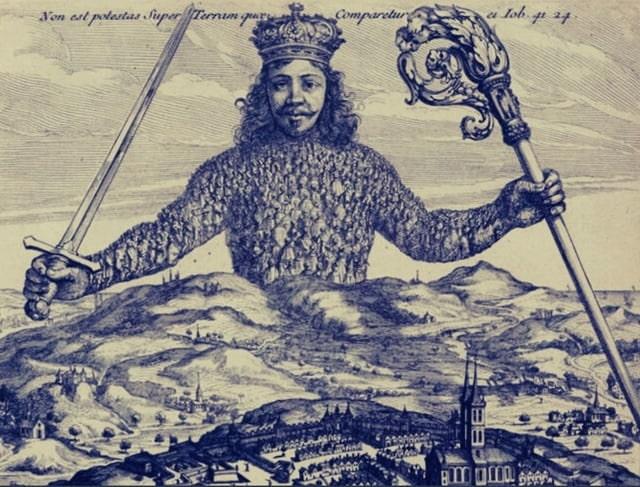
Killing the Leviathan with a Thousand Cuts

While political debate today is focused on the slow but steady disintegration of the so-called world order, the crises affecting the concept of statehood, the foundation of any world order, may not be receiving the attention it merits.

Ever since it appeared in its early and vague contours, statehood as a concept has been challenged by a range of factors — from paganism and its ritual to organized religion, ideology, despotic adventures, private financial power, and, more recently, globalization.

Statehood had to overcome tribalism and adopt the broader concept of “the people” as foundation bloc. It then had to ward off a challenge by organized religion and develop the concept of citizenship. What emerged was a world of nation-states that could coexist, albeit not always in peace, within a world order based on international law.

Share

Among the Broken Columns of the Twilight Kingdom

When one surveys the current culture of the West, one can only conclude that it flows from the broken mind of man, that is, Western man. For we are now, with few exceptions, a broken people, and our culture reflects the fractured symmetry of what we once felt as a reasonably cohesive and unified way of being in the world, a mode of largely unformulated understandings experienced as normal.

The sense of the normal has now become unnatural — destabilized, confused, incoherent, bizarre, even grotesque. This is why our future as a nation and, in a greater supervening perspective, as a civilization has grown increasingly precarious.

Share

How quickly the First World can become the Third!

How quickly the “First World” can become the Third. How fast people can pivot from sanctimonious, virtue-signaling hypocrites into realists trying to survive. How ironic it is that this occurs concurrently with the assault on free-market capitalism and the abundance of wealth, food, comfort, and infrastructure that only it can provide. And the simultaneous abandonment of standards and abasement of history, tradition, and culture that has led to chaos and destruction in too many of our cities.

Share

It’s not just us. Western democracies are fragmenting.

Three major elections on the same Sunday in June — in France, Colombia and Spain — tell the fundamental story of democracy in our era: the continuous disaffection with government, the collapse of traditionally dominant parties and figures, and the constant search for alternatives — which is quickly followed by yet more disaffection and the search for yet other alternatives. This is no longer a narrative of dysfunction distinctive to one country, if it ever was. The Conservative Party in Britain is now scrambling to find a new prime minister; the government in Italy is near collapse. The nature of political authority has fundamentally changed. Political power has become fragmented, as voters abandon traditional parties and turn to upstart, insurgent parties or independent, free agent politicians from across the political spectrum.

Share

Ideology has poisoned the West

We are living through a dictatorship of ineptitude

A century has passed since William Butler Yeats sensed the stirrings of a “rough beast” with a gaze “blank and pitiless as the sun”. That beast’s apocalyptic hour has come around again, its rebirth announced by the galloping horsemen of war and pestilence, with what looks to be famine trailing in the dusty distance. It calls itself Legion, but is today better known as Ideology.

Share

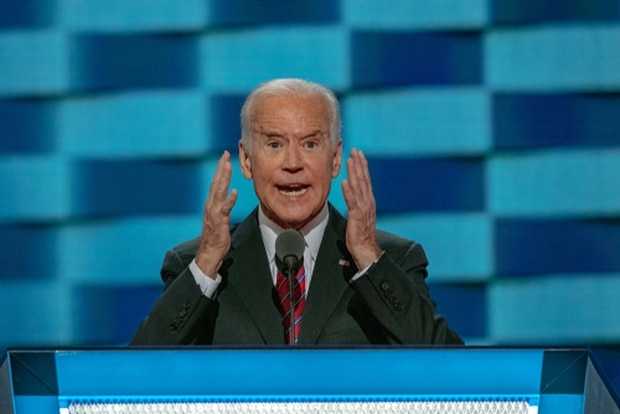
Biden Out to Destroy the US Financial Markets

The reason Biden needs war is very simple. The world monetary system is collapsing. The negative interest rates in Europe since 2014 have wiped out all the pension funds that needed 8% to break even. This is what is being the Guaranteed Basic Income because the politicians have destroyed the future of pensions. Even in the USA, 100% of social security is invested in US government bonds that pay well below 8% and this has undermined the fund going forward. Biden is following the FDR playbook and since COVID failed to produce the Great Depression they were counting on, they are shifting to PHASE 2 which is war.

Share

17 Absurd Lies Biden Told During His State Of The Union Speech

In a desperate bid to console a nation reeling from crises he created, President Joe Biden delivered his first official State of the Union Address on Tuesday.

The Democrat attempted to downplay his plummeting approval by promising to do better in his second year in office but instead offered a speech riddled with falsehoods and contradictions.

While Biden’s address was supposed to breathe new life into his presidency, Americans are meanwhile plagued with rising prices, a southern border crisis, and now an overseas conflict that leaves them feeling like “the State of our union is in crisis because of Joe Biden.” Here are 17 absurd lies Biden told during his State of Confusion speech.

Share

Return to the archaic

Thomas Hobbes is a founder of the modern political philosophy. We can deny his conclusions, like laws of mathematics and physics are denied in some American schools, but this is unlikely to help comprehend the ongoing processes.

The human society, Hobbes argued, in its primitive, natural form is no more than a Brownian movement, where “everyone is at war with everyone.” Such is the nature of man (no matter how disgusting it may be for progressives), striving to satisfy the basic animal aspirations – power, sexual possession, gain. To avoid extermination of all by all, people are forced to agree to a ‘Social contract’: they give up unbridled individual freedom in favor of rigid laws that ensure safety for all. People can choose different forms of state power: monarchy, elite republics, democracy. However, in any case, the state must provide for the basic norms of human society: security and order.

Share

Apocalypse now

I CAN neither sleep at night nor concentrate on my work by day for the sound of right-thinking people stamping their feet and shouting their protests: ‘This has to stop!’ or ‘Something must be done about that!’

But it won’t be.

It’s not as if we live in fear of a revolution. The revolution has happened, and the old order is vanquished; all our institutions are permeated by the neo-Marxist ideology. The new dogmas are set in stone.

Share

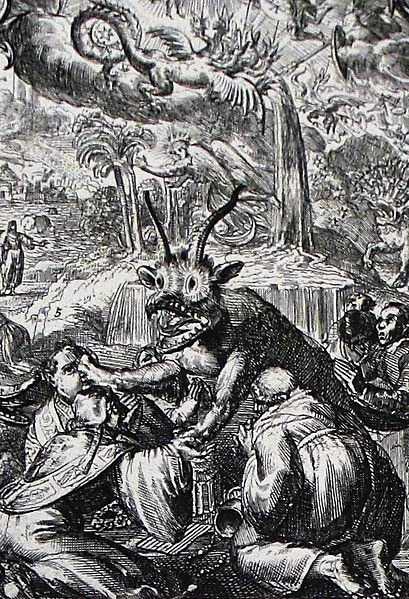
Is the West Becoming Pagan Again?

This year, at the height of what used to be called the Christmas season, a Pew Research Center poll on religion revealed that only slightly more Americans described themselves as Roman Catholics (21 percent) than as believers in “nothing in particular” (20 percent). The millennial generation, which includes most adult Americans under 40, is the first one in which Christians are a minority.

Many Americans have a sense that their country is less religious than it used to be. But is it really? The interplay among institutions, behaviors and beliefs is notoriously hard to chart. Even if we could determine that religious sentiment was in flux, it would be hard to say whether we were talking about this year’s fad or this century’s trend.

Or perhaps we are dealing with an even deeper process. That is the argument of a much-discussed book published in Paris this fall. In it, the French political theorist Chantal Delsol contends that we are living through the end of Christian civilization — a civilization that began (roughly) with the Roman rout of pagan holdouts in the late fourth century and ended (roughly) with Pope John XXIII’s embrace of religious pluralism and the West’s legalization of abortion.

Share