Civilisational Decline Is A Choice

The aphorism attributed to Mark Twain about travel being anathema to “prejudice, bigotry, and narrow mindedness” could not be less true. Having visited various cities in the past year, I find I hunger for home the furthest from it I go—no matter how mismanaged my rainy little archipelago is at the moment. Despite politicians pronouncing themselves democrats, our bureaucratic systems obfuscate accountability. But looking to places like the United States or Japan provides a sobering reminder that everything in politics is a choice. Staying aware of this fact allows us to resist resignation to civilisational decline and allocate blame accordingly.

Share

The Death of Gutenberg

Gutenberg – Inspiration for ZZ Top

Is the rise of digital media causing the fall of literacy?

For a brief period after the near-simultaneous birth of the smartphone and social media, euphoria prevailed. Instant web-enabled communications networks, it was widely believed, were delivering into the hands of the masses the means to fulfill the brightest hopes about globalization that had been raised at the end of the Cold War. Abroad, advocates of democracy would use the new technologies to beat back the forces of tyranny and repression; within the liberal West, the same technologies would rejuvenate democratic culture and civic life. An array of disparate ideological factions—from liberal internationalists to libertarians to anarchists—seized on versions of this narrative. And for a time, it seemed to be borne out, as tech-savvy young people challenged entrenched power and scored some remarkable (if short-lived) victories, notably in the Middle East.

Share

When Western culture goes mad, it attacks Jews

Insanity in the west includes marching against Israel, the country that symbolizes all the lost values of western society.

In Pedro Almodovar’s film, “La mala educación”, there is an amazing phrase from the protagonist, Ignacio: “I don’t believe in anything and therefore I’m not afraid of anything”. Here it is, the new spirit blowing in the West from Columbia University to the Biennale in Venice, one of the world’s most famous artistic festivals which opened this week in Italy.

A progressive, inclusive, anti-colonial Biennale open to the “South of the world”, where sexual gender and geographical origin count more than talent.

Share

Hitler banned smoking

Hitler banned smoking and the Germans obeyed. In the West, it all began in 1995 when liberals got a cause, no smoking, sanctioned by the government. They went on from there.

I’d been reluctant to say this, but now I think it is time…that the ban on smoking is responsible for all this.

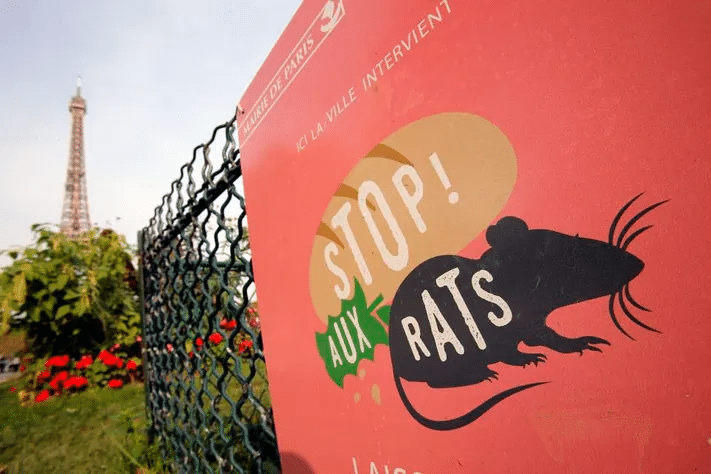
Been downhill ever since. The rats are out in the open. The good people are in hiding. As at Columbia U, where thousands there and elsewhere are staging an American Kristallnacht.

Yes, I know, smoking cigarettes can be hazardous to your health, second-hand smoke included, but back then, before 1995, people had choices. It was live and let live.

Share

The West has a deviancy problem

Our moral confusion is proving suicidal

When and why did American life become so coarse, amoral and ungovernable? In his classic 1993 essay, “Defining Deviancy Down”, the late Senator Daniel Patrick Moynihan offered a semantic explanation. He concluded that, as the amount of deviant behaviour increased beyond the levels the community can “afford to recognise”, we have been redefining deviancy so as to exempt conduct we used to stigmatise, while also quietly raising the “normal” level in categories where behaviour is now abnormal by any earlier standard. The reasons behind this, he said, were altruism, opportunism and denial — but the result was the same: an acceptance of mental pathology, broken families and crime as a fact of life.

Share

It may now be too late for the West, a corpse that cannot be galvanised

Elected governments no longer have the power or will to do what is needed to save our free societies

We are threatened by external and internal dangers. We see and feel them. Politicians, generals and diplomats sound the alarm. Our defences are weak. Our enemies are emboldened. Our streets are disorderly. What follows the stark warnings? Not much. Words do not announce action but cover inaction.

Rishi Sunak appeals for calm and urges the police to do their job: and they arrest an anti-terrorist demonstrator. Is the Prime Minister just a spectator? The Budget ignores national defence, which both parties say is inadequate. Does Jeremy Hunt disagree? Michael Gove seeks a new definition of extremism to enable the Government and the Civil Service to decide who are beyond the pale as partners and recipients of public money. Do they not know?

Share

“Four Pillars of Civilization” Under Attack

A few days ago Tucker Carlson did a video about the elite “anti-human death-cult” that’s using “climate change” to reverse the industrial revolution. Returning us to an age where abject poverty — even famine — was a daily reality, while freedom was a distant memory.

During the 15 minute interview, Michael Shellenberger said something that bears comment, that “The pillars of civilization are cheap energy, meritocracy, Law and Order, and free speech. And all four of those pillars are currently under attack.”

h/t Mauser

Share

Bread and Circuses, Then and Now: America Mimics Rome’s Decline

What does the fall of Rome have to do with modern America?

For decades, I taught a course in European economic history that stressed the Industrial Revolution and its aftermath and spent a couple of lectures talking about the Roman Empire and other ancient civilizations. The Roman Empire lasted over 500 years (by some accounts, even longer) but ultimately declined and fell. Is America and its world leadership (rather than “empire”) undergoing a remarkably similar decline? Is history eerily repeating itself well over a millennium later?

Share

The Decline and Fall of Home: Part Two

When one considers the full extent of the Roman cataclysm leading to the inevitable fall — the plethora of corrupt and self-promoting politicians, the exposure of unwanted infants (open-air abortion) and the consequent decline in the reproductive ratio, the deterioration of road systems and infrastructure, the degrading of a once-mighty military, and the evident degeneration of sexual morality (as the fifth-century Christian historian Salvian declaimed, “Be ashamed of your lives, no cities are free of impurities”) — one cannot help but note the affinities and correlations between the Roman Empire and the American Republic.

Share

France is falling apart at the seams

… The 2008 crash was just the first shock of many to strike the West, each one weakening further its foundations. The overthrow of Colonel Gaddafi in 2011 precipitated the first great migrant crisis, and Angela Merkel provoked the second four years later by opening Europe’s borders to more than a million migrants; Islamic terrorism has left hundreds dead; Covid lockdowns caused irreparable economic, mental and social damage; environmental obsessiveness is reawakening class divisions; progressive radicalism is stoking identitarian tensions and the war in Ukraine has sent energy prices and inflation soaring.

France is at the epicentre of these shockwaves, and a growing number of prominent thinkers and commentators are warning that culturally and economically the country is in grave danger. In a recent interview the economist Agnes Verdier Molinié cautioned that ‘France is on the verge of bankruptcy’ and that the annual cost of its debt will hit €70 billion in 2024. All the while the Republic’s core infrastructure – education, health, judiciary and transport – continue to degrade and, as Molinié said, more and more French are wondering why they are being so taxed so much for so little in return.

Share

Why be surprised that post-Christian Britain is rapidly turning into nowhere?

KONSTANTIN Kisin seems to think Western countries in an advanced state of decadence can recover without returning to their Christian foundations.

The Russian-born co-host of the highly successful YouTube show Triggernometry and author of the 2022 book, An Immigrant’s Love Letter to the West, was interviewed recently by the evangelical Christian writer and broadcaster, Glen Scrivener, on his Speak Life podcast.

In the episode on June 2, ‘Can we have Western values without Christianity?’, Kisin, 40, said: ‘I’m interested in how we make society better now. I recognise that there are a lot of people of my generation in particular who are children of Hitchens [atheist journalist Christopher] and Dawkins [atheist biologist Richard]. You are going to struggle to get a lot of us and particularly younger people to go to church on a Sunday . . .

Share

Skewering Liberalism – an intriguing voice from the past

TRUST in our institutions has plummeted. The supposed unity of ‘the public’ has fractured as loyalty to ‘identity’ groups replaces civic and national allegiance. Genuine opposition (where it exists) is harried, popular demonstrations suppressed, all in the name of ‘the rule of law’. Elites openly scorn the middle and working classes; their activist proxies stoke a degrading climate of self-censorship.

It wasn’t meant to be like this. The Western Liberal tradition was founded on sacred concepts, seeded in 17th-century England before blooming in the Enlightenment. The social contract, the sovereignty of the people, the ‘public good’ – these things ensured its continued hegemony. When the Soviet Union collapsed, we complacently proclaimed the ‘end of history’.

Share

The bizarre transition in the West

There is a bizarre transition in America from suporting liberty, non-violence and justice to submission to evil ideologies.

Over the last twenty years in four books and dozens of essays, I have sought to understand the bizarre transition in the West from supporting the goodness of liberty, non-violence, justice and other Judeo-Christian values to what I now realize is an almost complete submission to evil values and ideologies, including those of the so-called Palestinians.

Share

Killing the Leviathan with a Thousand Cuts

While political debate today is focused on the slow but steady disintegration of the so-called world order, the crises affecting the concept of statehood, the foundation of any world order, may not be receiving the attention it merits.

Ever since it appeared in its early and vague contours, statehood as a concept has been challenged by a range of factors — from paganism and its ritual to organized religion, ideology, despotic adventures, private financial power, and, more recently, globalization.

Statehood had to overcome tribalism and adopt the broader concept of “the people” as foundation bloc. It then had to ward off a challenge by organized religion and develop the concept of citizenship. What emerged was a world of nation-states that could coexist, albeit not always in peace, within a world order based on international law.

Share

Among the Broken Columns of the Twilight Kingdom

When one surveys the current culture of the West, one can only conclude that it flows from the broken mind of man, that is, Western man. For we are now, with few exceptions, a broken people, and our culture reflects the fractured symmetry of what we once felt as a reasonably cohesive and unified way of being in the world, a mode of largely unformulated understandings experienced as normal.

The sense of the normal has now become unnatural — destabilized, confused, incoherent, bizarre, even grotesque. This is why our future as a nation and, in a greater supervening perspective, as a civilization has grown increasingly precarious.

Share