FBI boss Kash Patel launches scathing accusation at ’51st state’ Canada after alarming terrorism finding

FBI Director Kash Patel dropped a major bombshell on Sunday by accusing Canada of allowing drugs and terrorists to flow over the northern border into the U.S.

Patel is turning his attention to Canada and demanding the country do more to stop illegal activity at the border.

He said that Mexico has done more to partner with Washington, D.C. to stop those on the terrorist watch list and other bad actors from getting over the border, and he told Canada to ‘step up’ to the plate.

Share

Inside TikTok town: vast data centre sparks Chinese spying fears

For Finland’s small city of Kouvola, the centre would bring money and jobs. But the social media giant as the tenant poses a political headache for Helsinki

Kouvola needs all the jobs it can get. Young Finns who have not already left a small city so drab it could be stuck in the Soviet Union struggle to find work.

So when an international company called Hyperco announced it would exploit the freezing north’s temperatures and ready access to cold water to build a data centre in the area, there was general acceptance of it being a pretty good thing.

After all, the few million euros paid for a parcel of empty land seemed a good deal for everybody.

Share

FBI Warning—CCP, Iran, and Mex-Cartels Partnering in Canada to Move Fentanyl and Terrorists Into U.S.

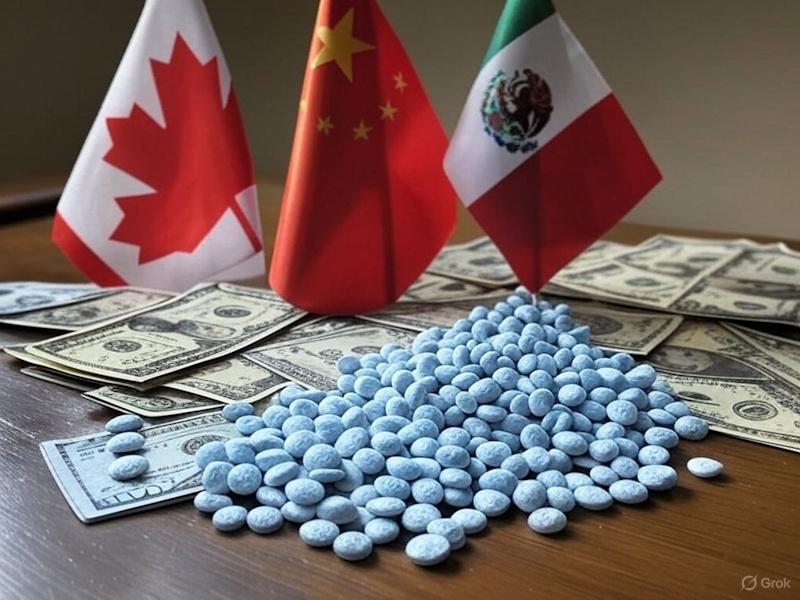
WASHINGTON — In an explosive Sunday interview that will place tremendous pressure on Prime Minister Mark Carney’s new Liberal government, FBI Director Kash Patel alleged that Mexican cartels, Chinese Communist Party operatives, and Iranian threat actors have forged a new axis of criminal cooperation, using Canada’s porous northern border and the Port of Vancouver—not the southern Mexican border—as their preferred entry point to flood fentanyl and terror suspects into the United States.

Share

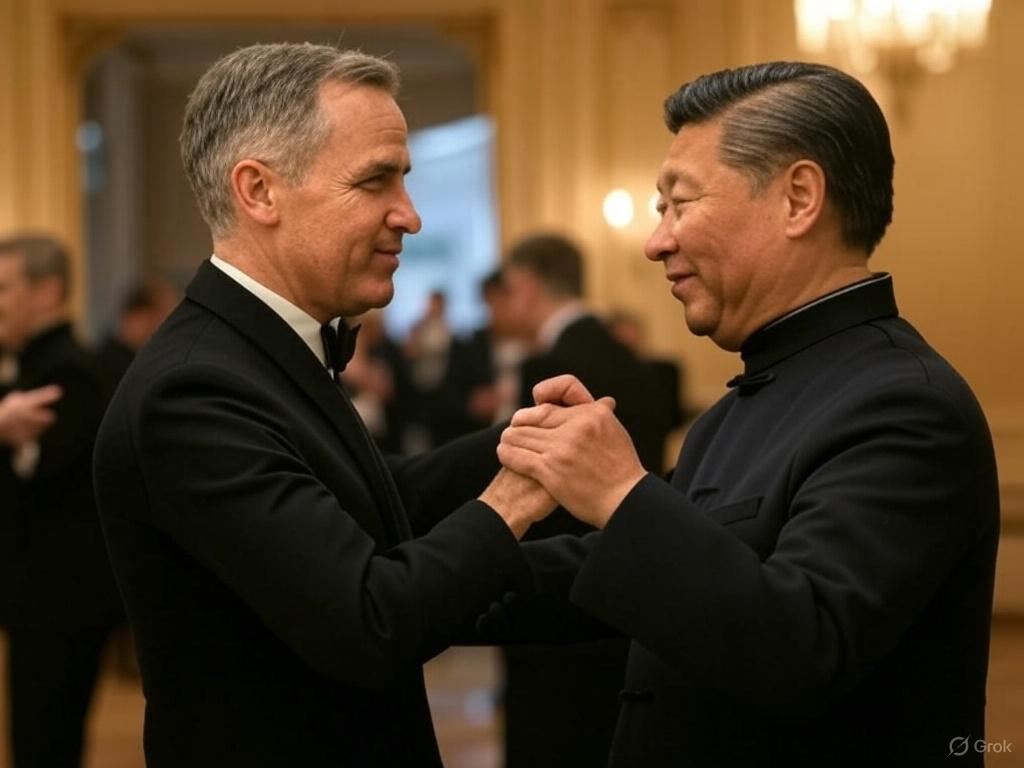
But we get a big piece of the Fentanyl trade in return so there’s that …

China emerging as top customer for Canadian oil shipped via Trans Mountain Pipeline

China has emerged as the top customer for Canadian oil shipped on the expanded Trans Mountain Pipeline, ship tracking data shows, as a U.S. trade war has shifted crude flows in the year since the pipeline started operating.

China’s new interest in Canadian oil comes as U.S. President Donald Trump’s trade war has strained relations between longtime allies Washington and Ottawa. It also reflects the impact of U.S. sanctions on crude from countries like Russia and Venezuela.

Share

Chinese Hide Sabotage Devices in Solar Power Inverters, U.S. Officials Claim

Brussels’ green targets are already damaging enough for consumers, businesses and, of course, farmers. But significant—albeit unsurprising—reports this week highlight that the reliance on Chinese goods in particular to ‘achieve’ these goals could have a far worse impact on its own.

U.S. officials have identified ‘rogue communication devices’ not listed in product documents in some Chinese solar power inverters. They spoke to Reuters on condition of anonymity, and even refused to name the Chinese manufacturers, but did say the devices could skirt firewalls and switch off inverters remotely, or change their settings, which could in turn trigger widespread blackouts.

Share

DEA assessment fingers Canada as major fentanyl source as guns flow freely across Northern border

Blame Canada.

In its latest National Drug Threat Assessment, the US Drug Enforcement Agency is blaming Canada for a blizzard of illicit fentanyl from so-called ‘super labs’ located on this side of the border.

In its latest assesment, Canada was mentioned seven times as a source of drugs and precursor chemicals despite the DEA not mentioning Canada once in its 2024 report.

Share

Trump Lets China Win in Tariff War — First Round, Anyhow

On May 12, President Donald Trump announced a “total reset with China.”

“The best part of the deal,” he said, was that “China agreed to open itself up to American business.” Beijing, Trump proclaimed, will “suspend and remove all of its non-monetary barriers.”

In the meantime, both the U.S. and China agreed to drop tariffs by 115 percentage points. The general American tariff rate on China’s goods is now 30%. The general Chinese rate is 10%. Both reductions will be in effect for 90 days.

Share

Bags of Cash From Drug Cartels Flood Teller Windows at U.S. Banks

Chinese money-launderers allegedly made six-figure deposits at Chase, Bank of America and Citibank branches across Los Angeles County

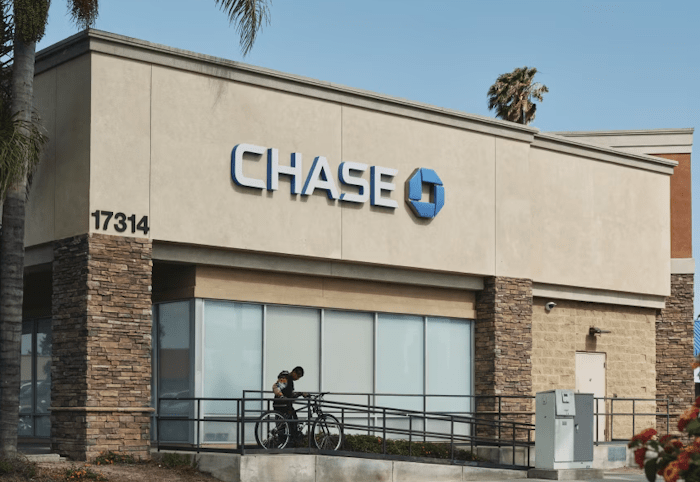
On a hazy Southern California morning, undercover police officers watched Jiayong Yu step out of a Range Rover in a strip-mall parking lot and walk into a Chase bank with a black-leather backpack full of cash.

At the teller window, Yu pulled out stacks of bills and waited while a woman fed them into a cash-counting machine. After Yu left, an officer asked the teller if he had deposited more than $10,000, the threshold requiring banks to flag transactions to federal regulators.

More like $100,000, the teller said. By then, Yu was already on his way to Chase and Bank of America branches in Claremont, Calif., about 35 miles away.

Federal authorities allege that Yu worked for an underground banking network that bought dollars at a discount from Mexico’s Sinaloa drug cartel and sold them at a premium, largely to Chinese nationals in the U.S.

Share

We wagged our finger in vigorous fashion!

Canada Has Raised ‘Strong Concerns’ With Beijing for Targeting of Tory Candidate Joe Tay: Global Affairs

Ottawa says it has reached out to Chinese and Hong Kong authorities to express concerns over the targeting of Conservative candidate and Hong Kong pro-democracy advocate Joe Tay, and that it is monitoring the situation closely after Tay’s relatives were taken in for questioning last week.
Share

Pro-Beijing Diaspora Group That Lobbied to Oust O’Toole Now Calls for Poilievre’s Resignation Amid PRC Interference Probes

MARKHAM — A controversial diaspora pressure group with ties to Chinese consular circles in Toronto is demanding that Pierre Poilievre step down, following an election marked by Beijing’s attacks on Conservative candidates, and renewing the same type of challenge it posed to former leader Erin O’Toole, which first drew national security attention after the 2021 federal contest.

h/t Mauser

Share

Media Focused on South While Cartels Move to the Northern Border

The southern border breakdown was permitted. Will we allow the same forces to break through from the north?

Borders are not abstractions. They are security infrastructure. They are economic lifelines. And when left unguarded, they become the entry points for chaos. While America’s political establishment clings to the southern border narrative, a quieter, more calculated breach is advancing from the north. The U.S.–Canada line — long mythologized as polite and uneventful — is now a preferred corridor for the same criminal cartels that have turned Mexico into a narco-state.

Share

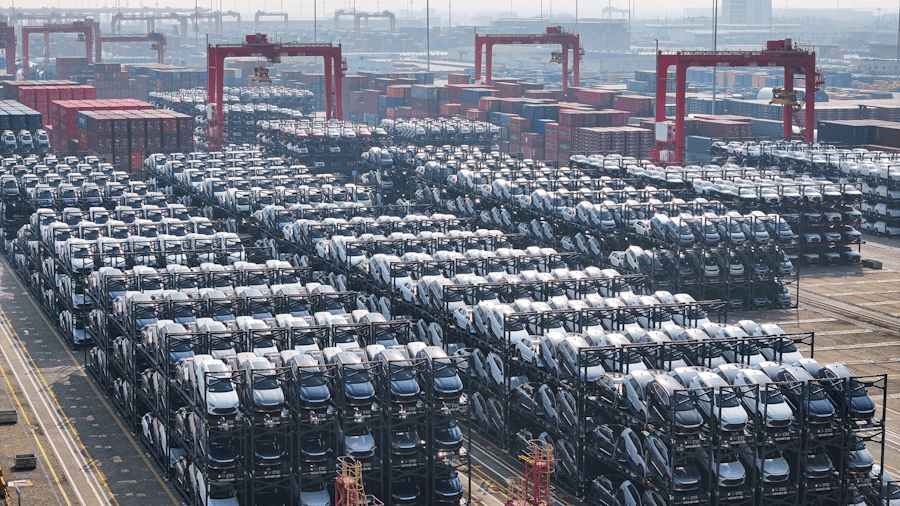
Keep Chinese Cars Off American Roads

President Trump wants China’s automakers to build cars in the U.S., but modern vehicle technology makes that a national security risk.

President Donald Trump marked the first 100 days of his second term with a speech touting the accomplishments of his administration. Delivering the address from Michigan, the heart of the American auto industry, the president drew special attention to the challenge of foreign competition and its place in his trade agenda.

Implicitly invoking Ronald Reagan’s successful efforts to induce Japanese automakers to build cars in the U.S., Trump told the crowd at Macomb Community College that he wants foreign automakers to invest in U.S. production again. While the friendly audience mostly applauded this message, one line surely left them confused: Trump’s statement that not only Japanese but Chinese automakers should build cars here.

Share

The Shifting Conversation Around Canada’s Opioid Crisis

The conversation we’re having about opioids in Canada is starkly different from one year ago.

Where Canadians were once squarely focused on health policies to reduce the high number of opioid deaths — especially last spring, amid British Columbia’s drug decriminalization rollback — our attention has lately shifted, from the people who use drugs to those who sell them.

That’s in large part because of President Trump.

Mr. Trump has said that Canadian criminals send “massive” amounts of illegal fentanyl into the United States, one of the pretexts for his earlier punitive tariff measures.


I am not inclined to believe the habitual liars of the Liberal party on any matter and will trust Sam Cooper’s investigations into Canada’s role in the fentanyl trade.

Share

Chinese ambassador insists China, Canada can move past ‘normal’ differences …

Following years of diplomatic and trade tensions, China’s ambassador to Canada, Wang Di, insists the two countries can move past what he characterizes as “normal” differences.

“For China and Canada to bring our relationship back onto the right track, we need to seek common ground while reserving differences in a constructive way,” Wang said through a translator in an exclusive broadcast interview with CTV’s Question Period, airing Sunday.

“China and Canada have a lot of differences, and this is very, very normal,” he also said.

Share