Canada Naive in the Face of China’s Infiltration and Disinformation Campaigns: Expert

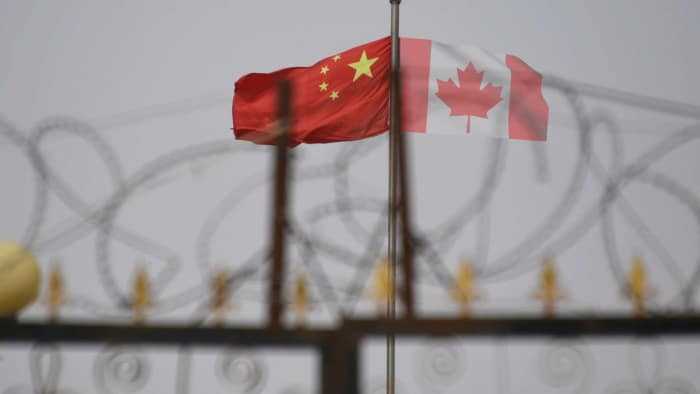
Canada has been naive about communist China its continued espionage and foreign interference campaigns, and as politicians willfully turn a blind eye to the threat, the country is also losing credibility among its democratic allies, an expert said at a panel discussion on June 7.

Naive? Nah. Canada’s China Class knows what it’s doing.

Share

Canada’s China Class At Work: Canadian universities still partnering with murderous Communist Chinese Slave State despite human rights reign of terror & Huawei ban over security

Leading Canadian universities say they intend to continue research and development with Huawei Technologies Co. – which reaps intellectual property from the partnerships – after Ottawa’s decision to ban the Chinese telecommunications giant from 5G wireless networks over national-security concerns.

When the Trudeau government announced on May 19 that it would bar Huawei from selling 5G equipment to Canadian telecommunications companies, it did not take action against Huawei’s extensive dealings with Canadian universities. Huawei spends roughly $25-million annually on university R&D projects aimed at the development of advanced communications technologies including 5G and 6G wireless.

The company participates in research programs, often as a sponsor, at about 20 Canadian postsecondary institutions including the University of Toronto, University of British Columbia, McGill University, Carleton University, University of Calgary and the University of Waterloo.

We need to start taking treason seriously again. This is no different than dealing with Hitler’s Germany. Go Incognito.

h/t DM

Share

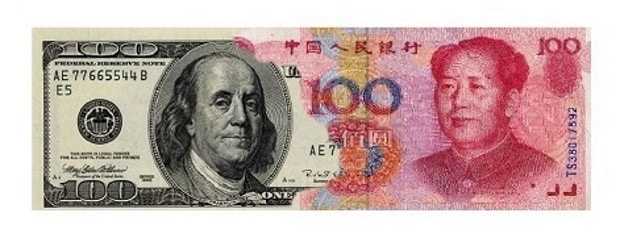
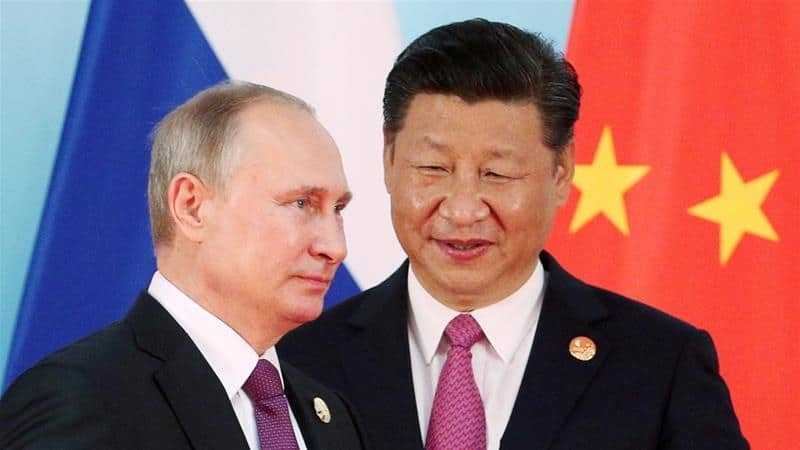
Russia and China’s War on the Dollar Is Just Beginning

If the United States wants to remain at the helm of the rules-based international order, it will need to address the serious efforts underway to undermine its global financial hegemony.

One infallible trend that has persisted throughout history is the correlation between financial and geopolitical power. For a country to build up its military, pursue innovative technologies, and maintain a productive workforce, it must have a robust economic base. While admirals and advisers are increasingly highlighting the closing gap between Chinese and American military capabilities, the U.S. dollar remains dominant. Is this a fact that can be taken for granted, or does a Sino-Russian alliance pose a tangible threat to Washington’s financial hegemony?

The speed and scope of China’s rise has been the subject of fierce debate for many decades, but recent statements by U.S. officials have made it clear that the United States no longer enjoys the unparalleled geopolitical preeminence of the post-World War II years.

Share

Can America Prevent a Chinese Invasion of Taiwan?

During his maiden Asian visit to Japan and South Korea, President Joe Biden reiterated in Tokyo on May 23 that the United States would intervene militarily if China attempted to invade Taiwan by force. His repeated warning appeared to depart from the long-lasting “policy of ambiguity” employed by Washington. In Japan, the U.S. president added that the United States had made a commitment to “support the One China policy” in the past, but Beijing does not have the “jurisdiction to go in and use force to take over Taiwan.” He then compared the Russian invasion of Ukraine to a potential invasion of Taiwan by China and warned “it will dislocate the entire region” and emphasized that China—like Russia—would pay a long-term price for its actions. In essence, Biden’s message is crystal clear: the United States would engage in stronger military action to defend Taiwan against China than it has in Ukraine in its fight against Russia.

Share

How the Free World Can Help Taiwan Avoid Ukraine’s Fate

US President Joe Biden, when, during a May 23 joint press briefing with Japanese Prime Minister Fumio Kishida, was asked by a reporter if ” the US would militarily support Taiwan if China attacked” he answered, “Yes, that is the commitment we made” — a statement that unfortunately the State Department immediately walked back.

While China’s reaction to Biden’s remarks was predictably negative, the Free World, after Russia’s February 24 invasion of Ukraine, must not assume that Chinese Communist Party leader Xi Jinping’s repeated pledge to “restore Taiwan to the Motherland” is mere chest-thumping.

Share

China accuses Australia and Canada of ‘disinformation’ over jet encounters

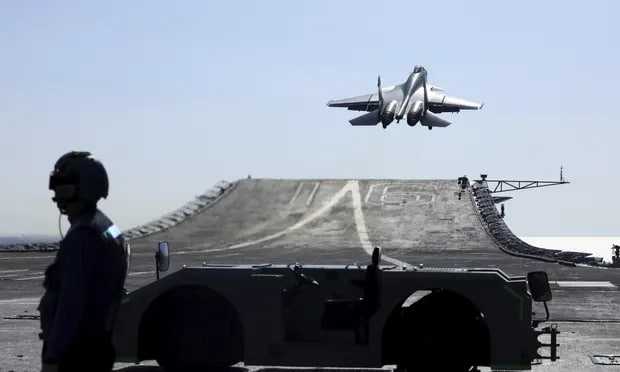
Beijing has accused Australia and Canada of “spreading disinformation” over allegedly dangerous manoeuvres by Chinese military pilots in international airspace.

China also warned Australia to stop “provocations” or face “serious consequences” after the Albanese government said a Chinese jet intercepted an RAAF plane in a dangerous manoeuvre in late May.

A day earlier Justin Trudeau hit out at “irresponsible and provocative” actions by Beijing’s air force after Canadian aircraft deployed in Japan narrowly avoided a collision with Chinese jets late last month.

Share

Trudeau calls China’s actions toward Canadian planes ‘provocative and irresponsible’

Prime Minister Justin Trudeau has called the actions of Chinese pilots toward Canadian planes taking part in a United Nations mission “irresponsible and provocative.”

Speaking at a news conference on Monday, Trudeau condemned the actions of China toward Canadian planes that were taking part in a multilateral UN mission over the Pacific Ocean to enforce sanctions against North Korea.

“China’s actions are irresponsible and provocative and we will continue to register strongly that they are putting people at risk while at the same time not respecting decisions by the UN,” the prime minister said.

Share

SOS: Is The Pentagon Losing the U.S. to China?

Last July, the director of the Central Intelligence Agency, William J. Burns, said that China is “the single biggest geopolitical challenge that the United States faces far out into the 21st century” and that “the main arena for competition and rivalry with China” is technology.

The Pentagon has been facing massive criticism for being unable properly, if at all, to meet that very technological challenge. “The U.S. government is not prepared to defend the United States in the coming artificial intelligence (AI) era,” the National Security Commission on Artificial Intelligence warned in March 2021, while also saying that China was on its way to become the world’s top AI superpower.

Share

Is the U.S. Ready to Escalate Technological Competition with China?

In a major speech last week, Secretary of State Antony Blinken elaborated on the Biden administration’s emerging China policy. During those remarks, Blinken explained how U.S. policy will focus on efforts to “shape the strategic environment around Beijing.” That is, to compete with—rather than directly confront—China across the economic, diplomatic, military, and technological landscape over the next decade.

Share

Should the United States Defend or Ditch Taiwan?

When we discuss whether the United States should defend or ditch Taiwan, what we should really discuss is whether the United States should seek to maintain its supremacy in the Western Pacific and beyond.

President Joe Biden’s recent pledge to defend Taiwan has ignited renewed controversy. When asked if he “was willing to get involved militarily to defend Taiwan” during his visit to Asia on May 23, he answered yes, adding: “That’s the commitment we made.” His remarks are apparently in contradiction with “strategic ambiguity,” the decades-long U.S. policy toward Taiwan that is deliberately ambivalent about the extent of the United States’ commitment to come to the aid of Taiwan. Although the White House, Secretary of Defense Lloyd Austin, and later Biden himself denied that the statement reflects a change in U.S. policy, it is unclear whether this was another gaffe by the president or a deliberate statement aimed at enhancing deterrence against China (adding ambiguity to strategic ambiguity), particularly given that this was not the first time Biden expressed his commitment.

Share

Canada alarmed as Communist Chinese fighter pilots ‘buzz’ Canadian planes over international waters

Senior Canadian government officials are growing increasingly concerned over a dangerous escalation in aggression by Chinese fighter pilots in the skies above the Asia-Pacific region.

Multiple sources in the Canadian Forces and the federal government tell Global News that Chinese jets are repeatedly “buzzing” a Canadian surveillance plane that is part of a United Nations mission over international waters.

Gonna be a lot of deep fried ChiComs one day and many tears from Canada’s China class.

Share

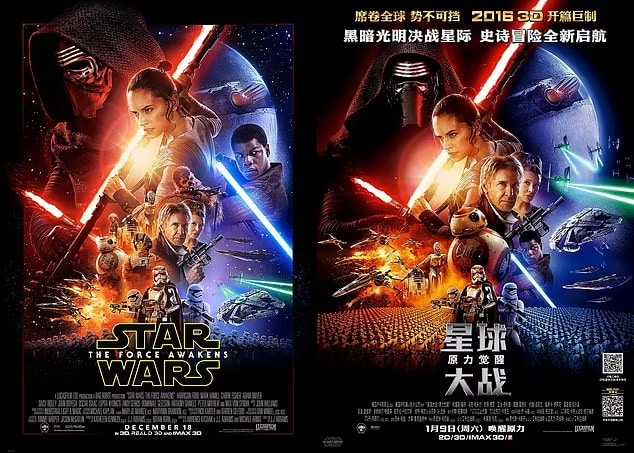
Star Wars is called out for ‘don’t be racist’ tweet after unveiling Moses Ingram despite film franchise SHRINKING John Boyega on poster to please China

Star Wars was slammed over a woke tweet telling critics of its newest show ‘don’t be racist,’ even though the Disney-owned franchise previously shrunk black star John Boyega’s photo on a movie poster to appease Chinese audiences.

The tweet came in response to a slew of Instagram stories Moses Ingram – who plays Reva Sevander, aka the Third Sister, in the franchise’s new miniseries Obi-Wan Kenobi – posted revealing seemingly racist remarks sent to her by Star Wars fans.

The franchise, rushing to her defense, took to Twitter early Tuesday saying: ‘We are proud to welcome Moses Ingram to the Star Wars family and excited for Reva’s story to unfold. If anyone intends to make her feel in any way unwelcome, we have only one thing to say: we resist.’

Share

Germany’s dangerous dependency on China

It is now extremely difficult for Olaf Scholz to pursue an independent foreign policy

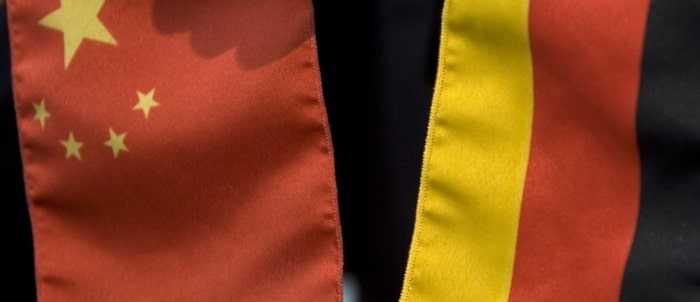
The war in Ukraine has asked a fundamental question of Germany: how far does an aggressor need to go before Berlin rethinks its economic ties to the regime? The answer may be uncomfortable in relation to Russia. But Germany’s reliance on China is even more worrying.

Amidst inflation, war and domestic politics, the Xinjiang Police Files are only the latest cache of evidence about human rights violations in China. Yet, according to one recent survey, 94% of German companies want to maintain their presence in China; 71% want to even increase investment. Volkswagen Group China alone employs 90,000 people including in a factory in Ürümqi, the capital of Xinjiang province.

Our “Elites” are moral monsters. 

Share

Google search results elevate China’s narratives on COVID origins, human rights record: Study

Google search engines’ results are boosting China’s preferred narratives about COVID-19’s origins and human rights abuses, according to a new study from the Brookings Institution and the Alliance for Securing Democracy.

The study found Google News and YouTube were far more likely to spread Chinese state-run media than Google’s main search engine in response to queries about COVID-19 and Xinjiang, a northwestern province in China and the location of alleged human rights abuses against Uyghurs and other ethnic minorities.

Share

Why China Is Miles Ahead in a Pacific Race for Influence

To many observers, the South Pacific today reveals what American decline looks like. Even as Washington tries to step up its game, it is still far behind, mistaking speeches for impact and interest for influence.

SUVA, Fiji — Take a walk through the city where China’s foreign minister met on Monday with the leaders of nearly a dozen Pacific Island nations, and China’s imprint is unmistakable.

On one side of Suva, the capital of Fiji, there’s a bridge rebuilt with Chinese loans and unveiled with the country’s prime minister standing beside China’s ambassador. On the other, down Queen Elizabeth Drive, sits Beijing’s hulking new embassy, where the road out front has been fixed by workers in neon vests bearing the name of a Chinese state-owned enterprise.

Looming over it all is Wanguo Friendship Plaza, a skeletal apartment tower built by a Chinese company and meant to be the South Pacific’s tallest building, until Fiji’s government halted construction over safety concerns.

Eight years after Xi Jinping visited Fiji, offering Pacific Island nations a ride on “China’s express train of development,” Beijing is fully entrenched, its power irrepressible if not always embraced. And that has left the United States playing catch-up in a vital strategic arena.

Share