
 Biden partisans pushed the story hard, claiming that Slow Joe was Maverick from Top Gun, while Trump meekly took it when China did the same thing during his administration.
“China – Communist Slave State”

Balloon Incident Reveals More Than Spying as Competition With China Intensifies
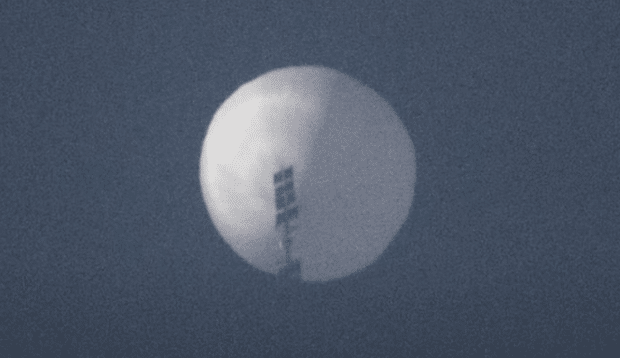
It may be months before American intelligence agencies can compare the audacious flight of a Chinese surveillance balloon across the country to other intrusions on America’s national security systems, to determine how it ranks.
After all, there is plenty of competition.
There was the theft of the designs of the F-35 about 15 years ago, enabling the Chinese air force to develop its own look-alike stealth fighter, with Chinese characteristics.
There was the case of China’s premier hacking team lifting the security clearance files for 22 million Americans from the barely secured computers of the Office of Personnel Management in 2015. That, combined with stolen medical files from Anthem and travel records from Marriott hotels, has presumably helped the Chinese create a detailed blueprint of America’s national security infrastructure.
ChiComs threaten ‘resolute’ action as US warned to brace for ‘further provocations’ after spy balloon was shot down sparking race to salvage secret payload
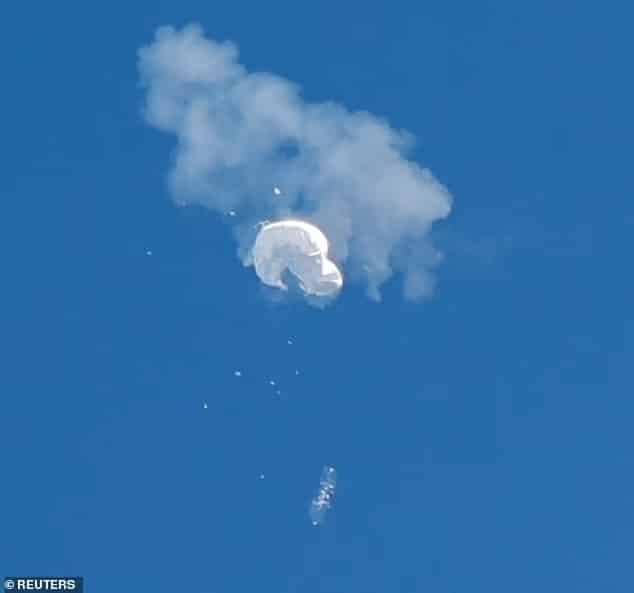
China is threatening to respond with ‘resolute action’ which American defense experts say could result in ‘further provocations’ after the U.S. finally shot down their spy balloon.
Beijing’s Foreign Ministry last night slammed the move as a ‘clear overreaction and a serious violation of international practice.’
An F-22 Raptor fighter jet took down the balloon with a single AIM-9X sidewinder missile at 2.38pm on Saturday, off the coast of South Carolina.
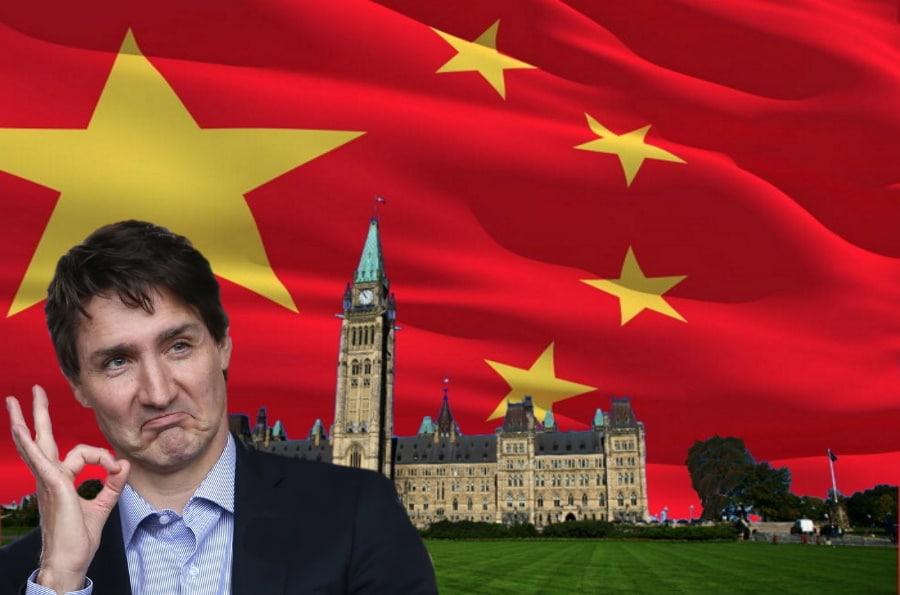
Trudeau must take Chinese spy balloon seriously
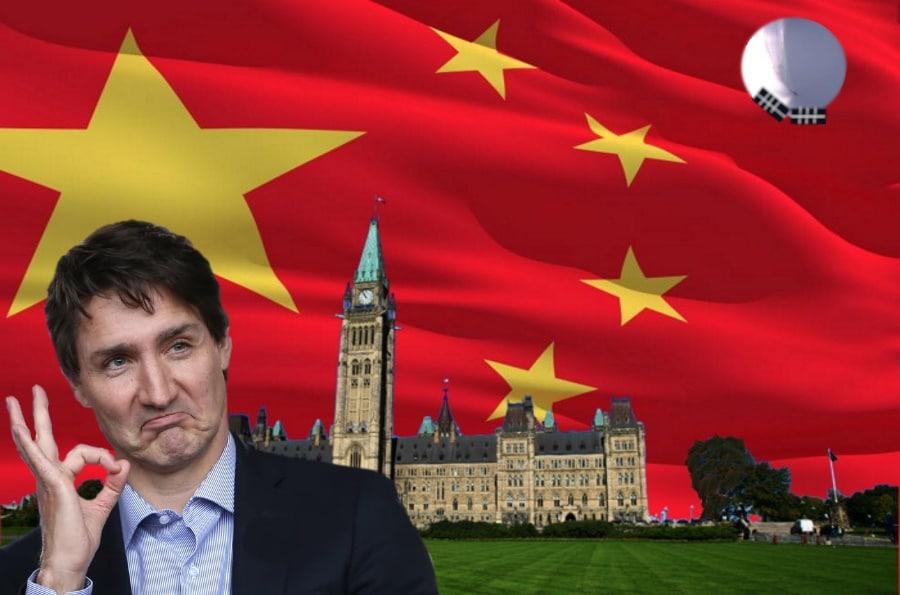
Could this spy balloon be enough for the Trudeau government to truly be alarmed over the threats posed by the Chinese Communist Party?
Biden administration tried to hide Chinese spy balloon from American public for nearly a week
Update: Chinese spy balloon shot down over Atlantic Ocean
President Biden and his administration knew for nearly a week that a Chinese spy balloon was hovering in U.S. airspace — but kept the incursion secret, fearing it would derail Secretary of State Antony Blinken’s planned meeting with Chinese President Xi Jinping in Beijing.
Republicans expressed “outrage” over the president’s refusal to act.
“Communist China’s surveillance balloon violates international law and threatens our homeland,” Rep. Nicole Malliotakis (R-Staten Island) told The Post.
Sure Joe Sure. China balloon: US going to take care of it, says Joe Biden
Classified U.S. Report Highlighted Foreign Power Surveillance With Advanced Technology
WASHINGTON — The Chinese spy balloon floating over the continental United States generated deep concern on Capitol Hill in part because it came on the heels of a classified report to Congress that outlined incidents of American adversaries potentially using advanced technology to spy on the country.
The classified report to Congress last month discussed at least two incidents of a rival power conducting aerial surveillance with what appeared to be unknown cutting-edge technology, according to U.S. officials. While the report did not attribute the incidents to any country, two American officials familiar with the research said the surveillance probably was conducted by China.
Two Executives of Toronto Group Listed as an ‘Overseas Chinese Police Station’ Met With Police in China: Reports
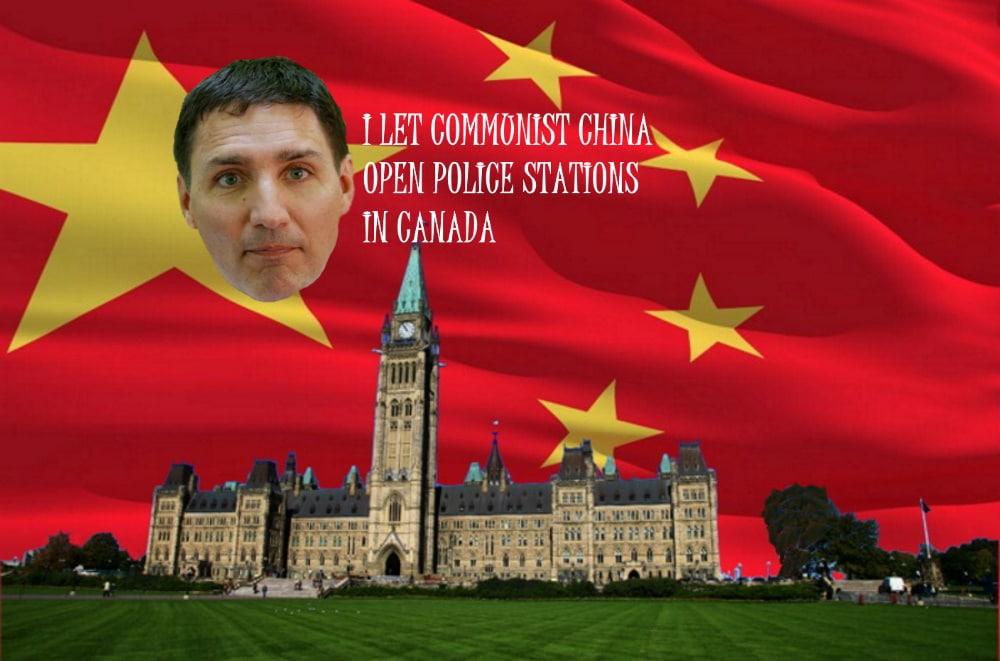
Two executives of a Toronto Chinese business association whose address is on a list of overseas Chinese “police service stations” attended events last year in China with local police and other government officials to discuss providing policing services to overseas Chinese, according to reports and photos posted by multiple local state-run media outlets and on various WeChat channels in China.
Japanese pacifism is dead

The Ukraine war has been a powerful catalyst
Japan is on manoeuvres. The country for so long tethered — or protected, according to your point of view — by the “pacifist” constitution imposed upon it by the occupying Americans after the Second World War may be about to break free of its bonds. Last December, Prime Minister Fumio Kishida announced a doubling of the defence budget over the next five years and the acquisition of counter-strike capability to deal with the perceived threat from China, principally, and North Korea to a lesser extent. It is a policy shift which can only be described as seismic.
China and the strange history of balloon warfare
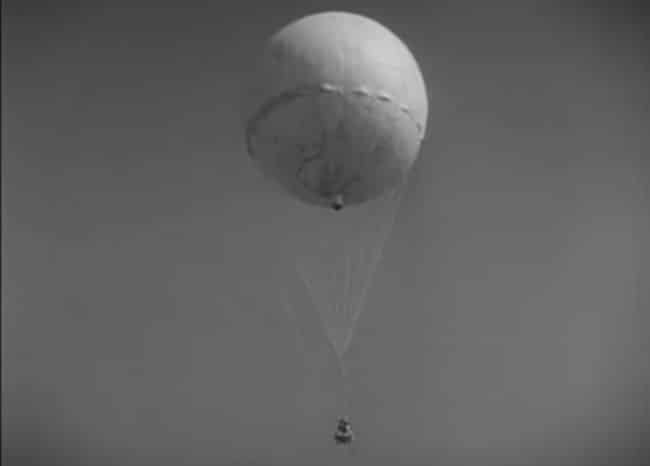
China’s ‘spy’ balloon, (or is it an errant weather balloon?), is currently being tracked across America. Picked up above the Aleutian Islands, it was buzzed by US planes above Montana and is now headed eastwards as it is pushed by the prevailing Jet Stream. The Pentagon has decided not to shoot it down; it does not want debris landing on middle America. China insists the balloon is used for meteorological research and strayed because of bad weather. But the incident has prompted US Secretary of State Antony Blinken to postpone his trip to China that was scheduled for next week.
On a more sinister note … Dry run: Balloons called top ‘delivery platform’ for nuclear EMP attack
High-altitude balloons, such as the one China has floated over mountain state military bases this week, are considered a key “delivery platform” for secret nuclear strikes on America’s electric grid, according to intelligence officials.
Spy balloons, used by Japan to drop bombs during World War II, are now far more sophisticated, can fly at up to 200,000 feet, evade detection, and can carry a small nuclear bomb that, if exploded in the atmosphere, would shut down the grid and wipe out electronics in a many-state-wide area.
China Balloon Go Boom?
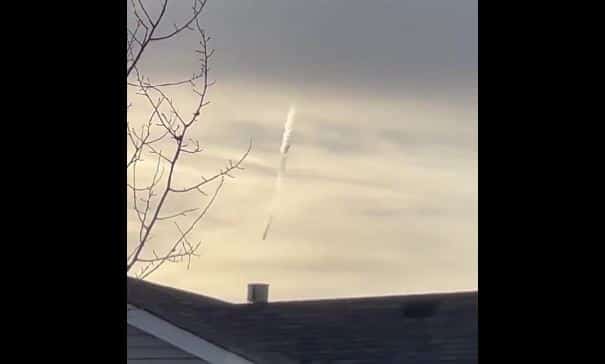
Video from Montana where a military jet just buzzed a neighborhood — then a massive flash in the sky.
A blast can be heard, screen goes white and smoke can be seen.
Chinese Spy Balloon Down? pic.twitter.com/AY4GcG8Ydp
— Benny Johnson (@bennyjohnson) February 4, 2023
Pentagon tracking suspected Chinese spy balloon over the US – entered via Canada
The US is tracking a suspected Chinese high-altitude surveillance balloon over the continental United States, defense officials said on Thursday, a discovery that risks adding further strain to tense US-China relations.
Pentagon spokesman Brig. Gen. Patrick Ryder said the US government has been tracking the balloon for several days as it made its way over the northern United States, adding it was “traveling at an altitude well above commercial air traffic and does not present a military or physical threat to people on the ground.”
Speaking on background, a senior US defense official said senior military officials had advised President Joe Biden not to shoot it down due to fear the debris could pose a safety threat to people on the ground.
This is wild. Alleged Chinese Spy Balloon. Man takes video with 1000mm equiv. lens from his driveway in MT. #ufotwitter #uaptwitter #ufos #uaps #ufosightings pic.twitter.com/XQ6vzOAu87
— Jason Wilde (@JasonWilde108) February 3, 2023
Justin probably sold it an LPC membership.
If China Cracked U.S. Encryption, Why Would It Tell Us?
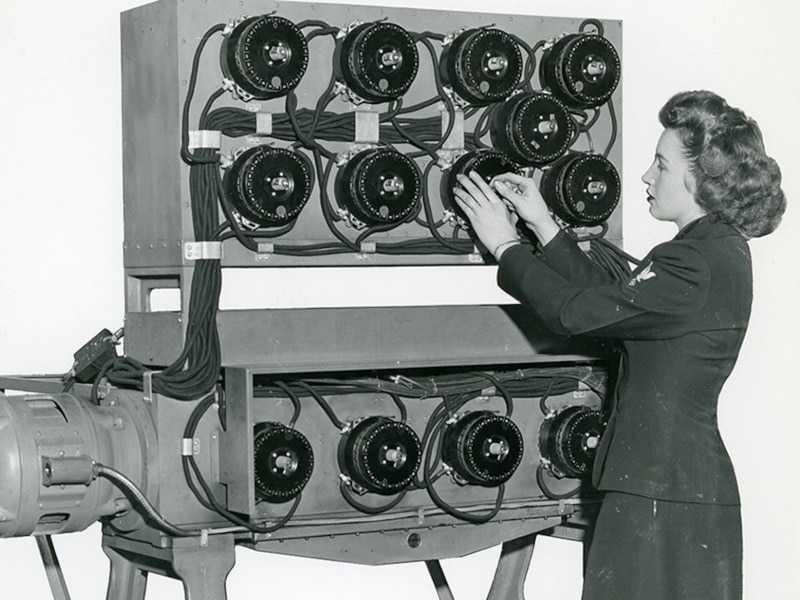
When Alan Turing cracked the Enigma code during the Second World War, neither the United Kingdom nor the United States immediately published a paper announcing the achievement. Instead, they kept it to themselves so they could keep reading Nazi messages encrypted using Engima machines. Last month, in contrast, Chinese academics from government-run laboratories and research organizations published a paper claiming to have developed a new mathematical strategy to break RSA encryption, today’s standard.
If the Chinese government can crack RSA encryption, then they can break into every U.S. government and private sector system, seeing and exfiltrating anything and everything, achieving true information dominance over Washington and its allies and partners.
RCMP says it’s running checks on equipment purchased from company linked to China
A senior RCMP official says the force is in the midst of examining equipment it obtained from a company linked to China’s government to search for any points of vulnerability.
The national police force suspended its contract with Sinclair Technologies for radio frequency (RF) equipment last year following reporting by Radio-Canada that revealed Sinclair’s parent company, Norsat International, has been owned by Chinese telecommunications firm Hytera since 2017.
The Chinese government owns around 10 per cent of Hytera through an investment fund, Radio-Canada reported.
Canadian universities conducting joint research with Chinese military scientists
Canadian universities have for years collaborated with a top Chinese army scientific institution on hundreds of advanced-technology research projects, generating knowledge that can help drive China’s defence sector in cutting-edge, high-tech industries.
Researchers at 50 Canadian universities, including the University of Waterloo, University of Toronto, University of British Columbia and McGill University, have conducted and published joint scientific papers from 2005 to 2022 with scientists connected to China’s military, according to research provided to The Globe and Mail by U.S. strategic intelligence company Strider Technologies Inc.
Crazy Optimism About China’s Economy
China’s propagandists tell us the Chinese economy this year will “accelerate to 4.8%.” Foreign analysts are even more bullish. Goldman Sachs estimates growth of gross domestic product of 5.5%.
China’s National Health Commission announced the end of the Communist Party’s “dynamic zero-Covid” policy on December 7. It did not take long for Wall Street to crank up the optimism machine. Morgan Stanley, on the following day, issued a research note predicting that Chinese equities would outperform emerging markets and global peers.
Since then, financial analysts have been falling over themselves to say how China’s stocks will continue to soar this year.