
Do you believe Mark Carney’s Liberal government will compensate you fairly for your confiscated firearms?
We don’t, because this scheme only pays compensation in narrowly defined circumstances.
(Incognito)

Do you believe Mark Carney’s Liberal government will compensate you fairly for your confiscated firearms?
We don’t, because this scheme only pays compensation in narrowly defined circumstances.
(Incognito)

In November 2025, just a few months ago, Dairy Farmers of Ontario disposed of 4.9 per cent of the province’s milk supply. The figure comes from Milk Producer magazine, an industry publication read largely by dairy farmers themselves. Most Ontarians will never see it, and that is precisely the problem.

Ottawa has started to make payments for key components for 14 additional U.S.-built F-35s, even as the Carney government has been reviewing future fighter-jet purchases in the context of trade tensions with Washington, sources have told CBC News.
The money for these 14 aircraft is in addition to the contract for a first order of 16 F-35s, which will start being delivered to the Canadian Armed Forces at the end of the year.
According to sources, the new expenses are related to the purchase of so-called “long-lead items,” which are parts that must be ordered well in advance of the delivery of a fully assembled aircraft.

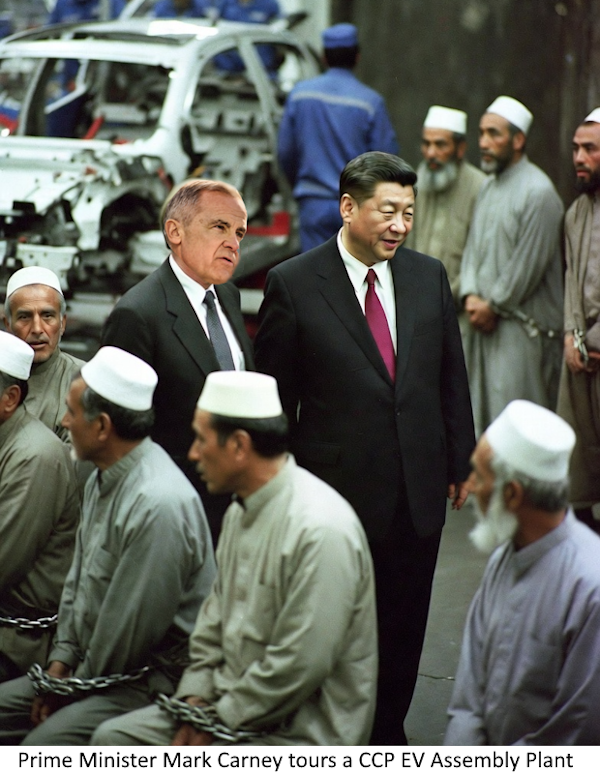
As the iron door of reality slams onto the toe of even the most fervent advocates of climate change action, the Carney government has walked back its electric vehicle (EV) mandate, which would have banned the sale of new conventionally powered vehicles in Canada by 2035.
However, the government will not abandon its push to switch Canadians to EVs. It’s bringing back rebates of $5,000 for EVs under $50,000 (for vehicles made in Canada or in countries where we have free-trade agreements) and plans to offer billions in subsidies to automakers. The continued push for EVs highlights the significant discrepancy between how individual Canadians want to spend their money and how the federal government thinks they ought to spend it.

One of the many ways governments deceive the public on the progress they’re making in implementing their policies is through the setting of so-called “aspirational” targets.
What that really means is that the government is setting a target it knows it can’t achieve when it announces it.
A glaring example of this was evident in the climate policies of the federal government under Justin Trudeau. Even Prime Minister Mark Carney has criticized the practice, describing it as “too much regulation, not enough action.”

Diplomats call it “thought leadership”: the triumphant achievement of being the first to propose a plan of action for an urgent international problem.
And no problem could be more urgent than how we survive in the pitiless world of Donald Trump, Vladimir Putin and Xi Jinping, with raw power politics trampling upon rules and laws.
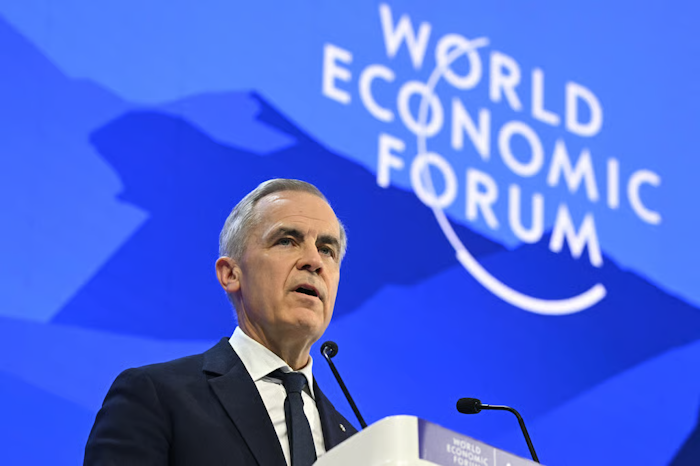
The unlikely “thought leader” on this question turns out to be Mark Carney, the new prime minister of Canada. “The old order is not coming back,” he said, in a highly acclaimed speech at Davos. “We should not mourn it.”

Almost every foreign diplomat you run across lately simply gushes about Prime Minister Mark Carney’s Davos speech, and how his remarks about middle powers banding together went viral in Europe.
As much as the speech represented a wake-up call for Canada and its allies, a new report that sets up the annual Munich Security Conference extends and sharpens Carney’s argument and delivers a series of stark warnings.
One of them is fairly straightforward — if not somewhat uncomfortable — for Canadians.
Where allies are concerned, it’s not enough to just show up. You’ve got to bring something useful.

Prime Minister Mark Carney and Ontario Premier Doug Ford have discussed the possibility of an early federal election in casual conversations about the importance of a majority mandate to deal with uncertain economic times, according to three sources.
The sources said the Progressive Conservative Premier, who has forged a close relationship with the Liberal Leader, offered his opinion that the country needs economic stability.
Hmmmm …
.@ElectionsCan_E places order for 700,000 poll tally sheets and other balloting supplies in anticipation of next national campaign. Cabinet has denied interest in going to the polls for a second time in 2 years.https://t.co/Bogbhrt4ef@stevenmackinnon #cdnpoli pic.twitter.com/pdTH4GRv1W
— Holly Doan (@hollyanndoan) February 9, 2026
h/t Mauser

Ottawa May Be Delaying Taiwan Trade Deal to Avoid Upsetting China, Taipei’s Envoy Says
Taiwan’s ambassador to Canada says Ottawa may be delaying the signing of a trade agreement with the island nation as it’s seeking closer ties with Beijing.
Harry Tseng, head of the Taipei Economic and Cultural Office in Canada, said in an interview with CBC’s French arm Radio-Canada that Taiwan has been left with the impression that Canada is seeking to improve its relations with China at the expense of its relationship with Taiwan.

The federal government’s plan to replace electric vehicle sales quotas with a reduced emissions standard is unrealistic and could saddle Canadians with massive costs, according to the Montreal Economic Institute (MEI).
Prime Minister Mark Carney announced that instead of gradually banning conventional vehicles by 2035, 75% of new vehicles sold in that year would need to meet an electric-equivalent emissions standard.
(Incognito)

A rogue ambassador to the United States, a new office in Washington for the “Commonwealth of Alberta,” another Mark Carney world tour: we’re just over a month into 2026, and already Canadian diplomacy is headed madly off in all directions.
Let’s start with Conservative MP Jamil Jivani, who last week heeded a call that apparently he alone could hear and headed south to liaise with his college chum U.S. Vice-President JD Vance. Acting as consulting diplomat, Jivani seemed certain that if only someone from Ottawa listened to the Trump administration, we could figure out this trade-war business. He later said he’d gleaned invaluable “insights” he couldn’t wait to sharem. He even passed on a message from the president: “Tell the Canadians I love them.”
Someone at the Star is cranky.

Canada finds itself listing in stormy waters, split between several solitudes. We are no longer just divided between French and English. Now we are torn along national identity, media ecosystems, class, and basic beliefs about Canadian values and culture. It is doubtful that Canada will be able to remain a unified country if we continue under an incompetent skipper, Mr. Carney, at the helm.
The heartbreak is that Canada, our beloved Canada, has enormous potential. Tragically, however, we have been governed for years by people who, whether for personal gain or due to ineptitude, failed to do the hard work of nation‑building. Instead, they fueled the destruction of our national identity and values, and the degradation of our economy.
Related …
Are you sick of hearing the phrase: “you can’t be racist to White people”?
Me too. So I took 2 months and put together this video.
This video proves anti-White sentiment IS racism, and dismantles every single lie progressives and anti-White professors use to justify it.
Of… pic.twitter.com/bms2b7BQ73
— Metatron (@pureMetatron) February 8, 2026

Canada is not in crisis because it is under siege from hostile foreign powers. Nor is it a victim of some unavoidable global conspiracy or historical inevitability. Canada’s predicament is far more unsettling as it is largely self‑inflicted. The country is struggling because too many of its leaders — and too many citizens — are trapped in an acute and dangerous form of denialism about the nation’s vulnerabilities, its declining institutional capacity, and the cumulative consequences of decades of misguided political, economic, and social decisions.
(Incognito)

Here’s the truth about the housing crisis in Canada: it is no longer just a policy problem. It is becoming a political identity problem.
A new national survey conducted by Abacus Data in partnership with the Canadian Home Builders’ Association (CHBA) finds that Canadians have not given up on the dream of homeownership. In fact, it remains deeply rooted. Seven in ten non-homeowners (70%) still say they want to own a home someday, including nearly nine in ten young adults aged 18 to 29 (89%) and 80% of those aged 30 to 44.
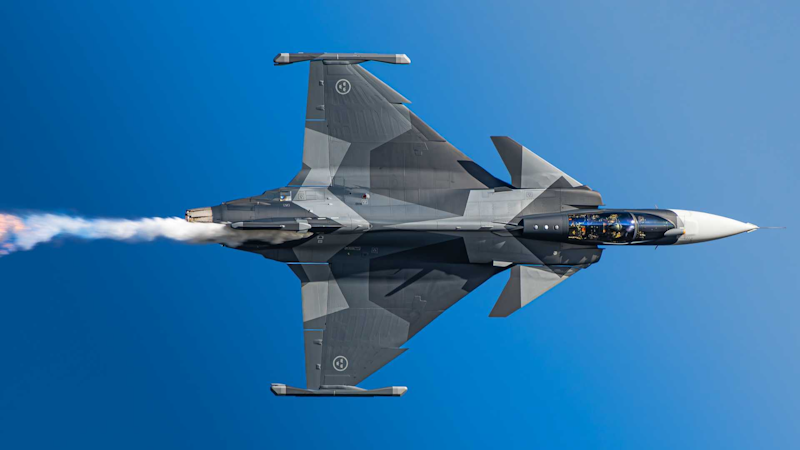
Canadian Prime Minister Mark Carney is inching closer to a possible decision to end Canada’s F-35 procurement plans and accept an offer from Sweden’s Saab, instead, with news this week revealing that the Swedish manufacturer is now providing Ottawa with detailed, technical information on what a JAS 39 Gripen fighter deal would actually look like in practice.
Among the topics currently being discussed in Ottawa are timelines for technology transfers, the speed at which a Canadian production line could be established, and how Canada could participate in future export sales of the aircraft.