OTTAWA—The Trudeau government is in talks with police forces across the country in an 11th-hour-effort to launch its weapons buyback program for gun owners before a potential spring election.
Although the program is underway for retailers, Ottawa’s scramble to kick-start it for individual gun owners has been complicated by a problem: who will collect the guns?
Final written arguments in the constitutional challenge of Prime Minister Justin Trudeau’s prorogation of Parliament are to be submitted to the Federal Court on Wednesday. Canadians must win this case. Our democracy depends on it.
“All I can say is I’m going to try my best to issue this decision before a point in time beyond which it would become moot,” said Federal Court Chief Justice Paul Crampton at the end of the two-day hearing last week, in reference to the March 24 end date of the current prorogation period.
The Liberal Party simply can’t help themselves, they always put their party before our country.
In the middle of a crisis where Canada’s economy is facing the prospect of crushing tariffs, the Liberals have released new ads attacking the American president to try and score political points against Conservative Leader Pierre Poilievre.
OTTAWA — Canadians feel businesses will feel little impact from an industrial carbon tax, new polling suggests.
In a new poll conducted by Leger on behalf of the Canadian Taxpayers Federation (CTF), nearly half of those polled say that businesses will pay little of the cost of an industrial carbon tax and instead largely pass that pain on to consumers.
That’s in addition to the quarter of respondents who say some of the cost of will end up coming out of the pockets of consumers, and just 12% who say businesses will bear most of the cost of a carbon levy.
Prime Minister Justin Trudeau on Wednesday revealed his government’s $3.9 billion, six-year plan to connect Quebec City and Toronto with a high-speed rail line.
“Today I’m announcing the launch of Alto, the largest infrastructure project in Canadian history,” Trudeau said in Montréal. “A reliable, efficient, high-speed rail network will be a game-changer for Canadians.”
Trudeau said the new rail network will run all-electric trains along 1,000 kilometres of track, reaching speeds of up to 300 km/hour, with stops in Toronto, Peterborough, Ottawa, Montréal, Laval, Trois-Rivières and Quebec City.
OTTAWA – A Liberal MP who has long advocated for closer ties with Africa fears her government is on the verge of releasing an Africa strategy with no significant spending attached, years after the government promised a plan.
Ontario MP Arielle Kayabaga has helped the government craft its Africa strategy since it announced a plan was in the works in early 2022.
4 Billion wasn’t enough???
Minister of Foreign Affairs Melanie Joly says Canada sent $4 billion to dictators in Africa and uses it as an opportunity to take a shot at America.
“Contrary to certain countries, we believe that international aid is important”
When Canadian Prime Minister Justin Trudeau took office in 2015, he ushered in a wave of optimism, diversity and inclusivity. His charisma and vision propelled the Liberal Party from third place to a majority government. Trudeau promised a progressive agenda centered on climate action, gender equality and reconciliation with indigenous peoples — a stark departure from the policies of his Conservative predecessor, Stephen Harper.
Nearly a decade later, Trudeau’s popularity has steadily declined. While he did fulfill some campaign promises, he fell short on others, and some backfired, leading to a gradual decline in public trust. Economic challenges, internal party divisions and a series of controversies gradually destabilized both Trudeau and the Liberal Party. His resignation announcement on January 6 marked the culmination of years of dissatisfaction.
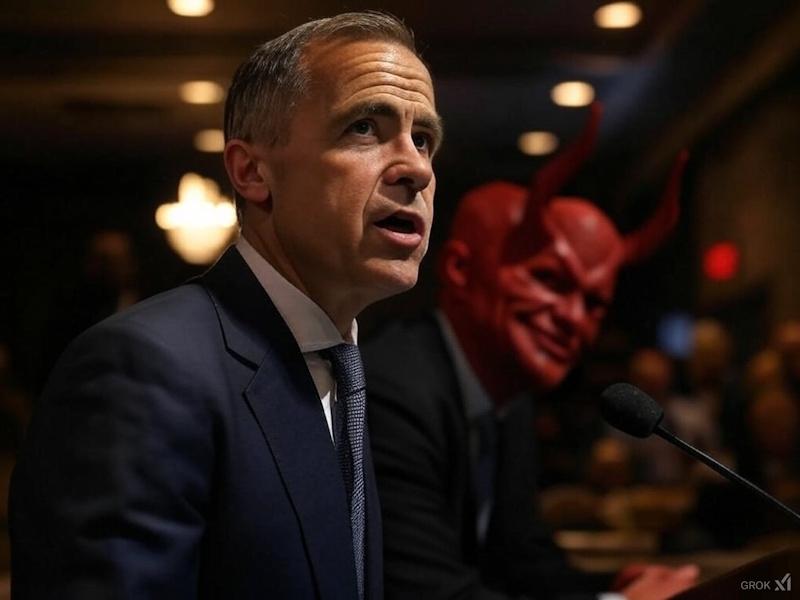
Conservative MP Michael Barrett publicly release a statement listing conflicts of interest regarding Liberal leadership candidate Mark Carney, calling for transparency.
Carney, former head of the Bank of Canada and the Bank of England, was Prime Minister Justin Trudeau’s economic adviser before throwing his name into the hat as Liberal leader — who will become Canada’s next de facto prime minister if he wins the March 9 race, despite not being an elected politician.
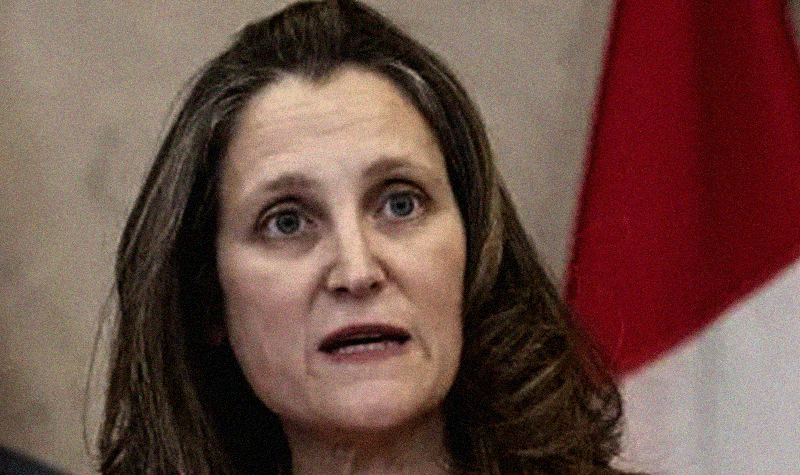
The former deputy prime minister of the Liberal government says she is the best leader for the country amid the currently fraught relationship with the United States.
Chrystia Freeland, who is running for leadership of the Liberal Party of Canada, sat down for an interview with CTV News Atlantic’s Bruce Frisko during her visit to Halifax on Monday. Freeland, who resigned from outgoing Prime Minister Justin Trudeau’s cabinet late as the finance minister last year, said it was a “hard thing to do and the right thing to do.”
“I was the one minister who had the gumption to resign,” she said. “We are at an existential moment for our country. I take the threat Donald Trump poses to our country very seriously”.
Mark Carney trouncing Liberal leadership rivals at fundraising
Federal spending on outsourcing reached a record high of $17.8-billion last year, despite the Liberal government’s vow to cut back on the use of outside help.
It’s an increase of 13.5 per cent over the previous fiscal year. Spending in the broad category of professional and special services – which includes contracted work in categories such as lawyers, architects, training and maintenance, as well as various types of consultants – has more than doubled since the Liberals formed government in 2015.
OTTAWA — Liberal leadership candidate Chrystia Freeland’s plan to fix the housing shortage would tie the number of newcomers Canada admits to housing availability.
The former finance minister made the promise in a 10-point policy document her campaign issued Monday morning. Freeland said the move would slow down population growth until housing affordability stabilizes.
Conservative Leader Pierre Poilievre has been promising for some time now to tie immigration numbers to housing starts.
With apologies to my friends in polling, I do not like polls. I am a bit surprised that, according to recent polls, the federal Conservative lead over the Liberals is shrinking, though I believe that a 27-point lead was never sustainable. What I don’t understand is what some Canadians do not get: it does not matter who becomes the new Liberal leader. They still will be Liberals with the same extremist progressive ideology, the same mismanagement of Canada’s resources and the same prioritization of the wrong things.
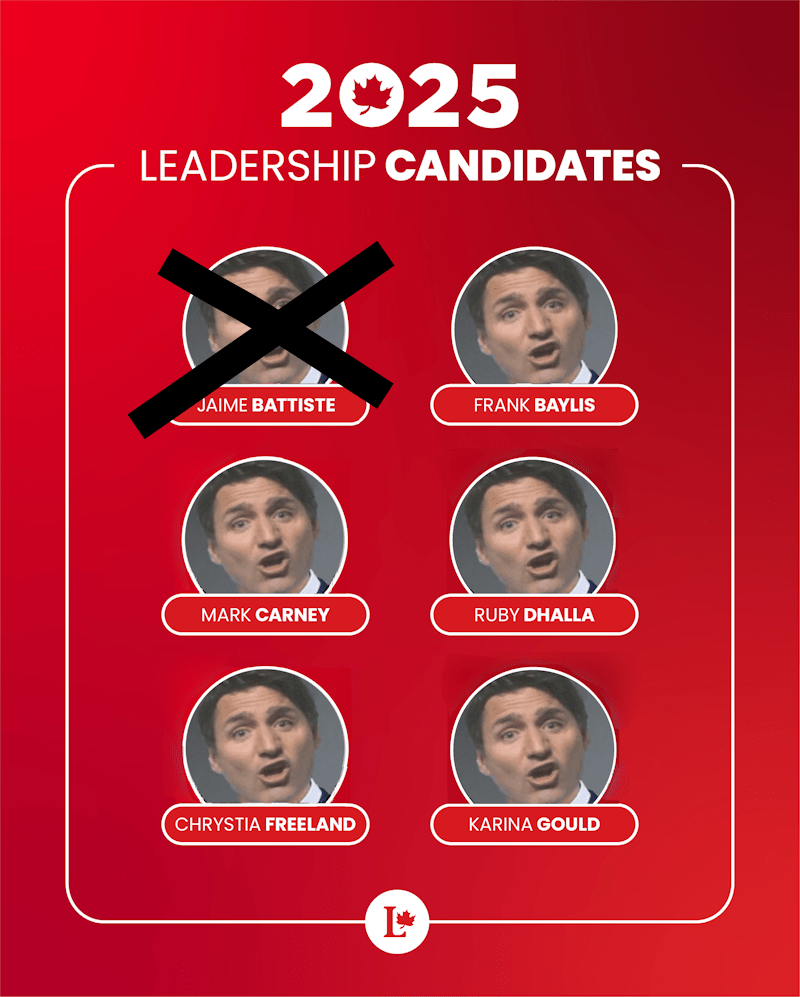
All five Liberal leadership candidates say they’ve paid the final $125,000 due Monday evening that’s required to stay in the race. Now, ahead of English and French debates in Montreal next week, the contenders are rolling out more policy proposals to sway Canadians to join their side.
On Monday morning, the Liberal Party announced former TVA-Québec anchor Pierre Jobin would moderate the French leadership debate in Montreal on Feb. 24. The party also announced former CBC News host Hannah Thibedeau would moderate the English debate that will take on Feb. 25.
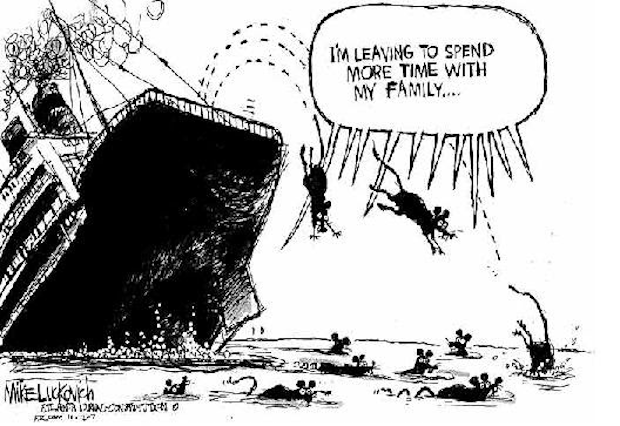
Heritage Minister Pascale St-Onge will not seek re-election, Radio-Canada has learned. However, she will shortly unveil her proposal to modernize CBC/Radio-Canada’s mandate.
According to a Liberal source, St-Onge will announce this week that she will not be a candidate in the next election. She represents the riding of Brome-Missisquoi in Quebec and was elected in 2021. St-Onge plans to complete her term as minister and MP.
The exodus continues hinting that internal polling is likely far more dire than the Carney Mania results ginned up by reliable pollsters.
Canada undercounts non-permanent residents (NPRs) in its labour market data, according to a new report from the C.D. Howe Institute.
This underrepresentation in Statistics Canada’s Labour Force Survey (LFS) distorts critical economic indicators such as unemployment rates and nominal wage growth, creating challenges for policymakers and economic analysts.