
Ottawa plans to spend big on defence. But is there a long-term vision for Canada’s military?

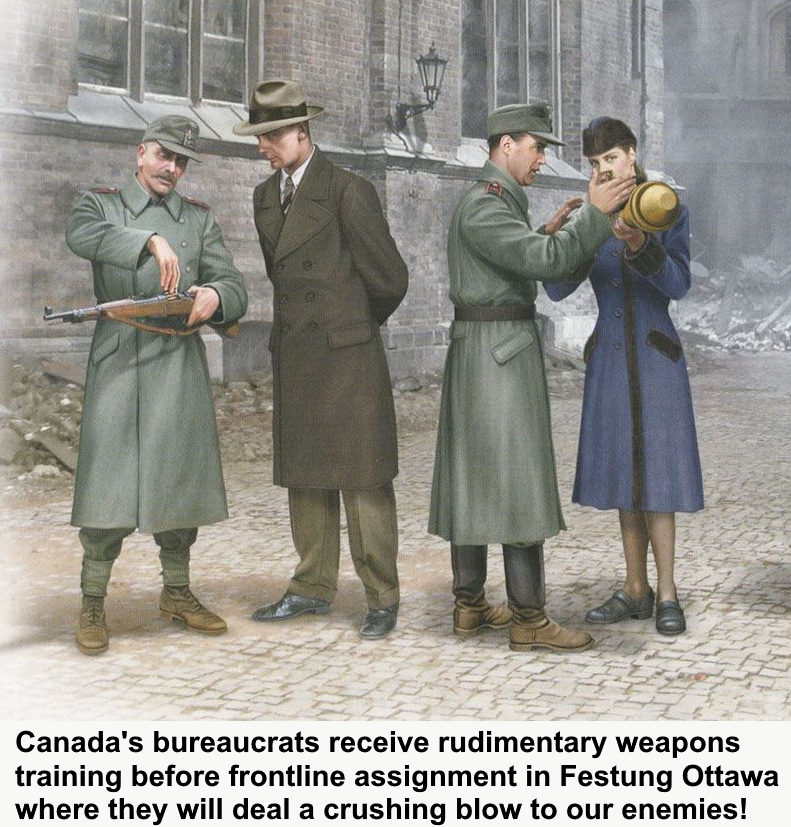
I spent many happy hours building popsicle stick bunkers. No. Not last week.

Mark Carney’s first budget has delivered the biggest increase in defence spending in decades, as the government seeks to rebuild the military at a time when the Prime Minister says Canada can no longer rely on the United States for protection.

The fiscal plan, tabled a week before Remembrance Day, includes $84-billion to the Department of National Defence over five years, believed to be the biggest short-term cash infusion for the military since the Korean War. The new spending will go to pay raises, precision-strike capabilities, upgrading aging infrastructure and cyberdefences, among other things.

Share

Tasha Kheiriddin: Liberals need to convince our kids to enlist in the military

Canada’s young people are falling behind. According to Statistics Canada, the unemployment rate for those aged 15 to 24 sits at 14.2 per cent, more than double the national average. The unemployment rate among youth attending school is 17.1 per cent, up 3.1 percentage points from last September. Among those youth who are working, many are under-employed, bouncing between short-term contracts or part-time jobs that barely cover the costs of rent or school. Add to that, AI eliminating entry level jobs and an economy braced for more tariffs, and the employment prospects for young people look increasingly bleak.

Share

Bryan Brulotte: The Canadian Armed Forces are not systemically racist

This past week, Gen. Jennie Carignan, Canada’s Chief of the Defence Staff, tearfully apologized for what she called “systemic racism and racial discrimination” in the Canadian Armed Forces (CAF). The intention was noble. Yet the sweeping assertion that the CAF is “systemically racist” demands closer scrutiny.

Share

Canadian Coast Guard told to flee if war breaks out

Canada’s Coast Guard has no plans to fight in any conflict — and has been told to simply leave if war erupts, MPs were told this week.

Blacklock’s Reporter says Deputy Commissioner Marc Mes told the Commons defence committee that despite being moved under the supervision of the Department of National Defence, the Coast Guard’s role remains strictly civilian.

Share

John Ivison: Suddenly, Canada seems serious about defence after years of military neglect

The sight of Prime Minister Mark Carney emerging from a South Korean submarine flying the Maple Leaf flag this week was symbolic of the urgency with which the prime minister appears intent on restoring the rusting Canadian Armed Forces.

Carney was in the country to attend the Asia-Pacific Co-operation summit and took the opportunity to visit the Hanwha Ocean shipbuilding facility in Geoje. The Hanwha Ocean company, with its partner Hyundai, is bidding for the multi-billion-dollar contract to build 12 subs to replace the four second-hand Victoria class boats that the Canadian government bought from the British in the 1990s.

Share

Canadian military wants mobilization plan in place to boost reserves to 400,000 personnel

Over representation of “White” hands merits a hate crime complaint.

The Canadian military has set in motion an initiative to increase the number of its part-time soldiers from the current 28,000 to 400,000 as part of an overall mobilization plan, according to a directive approved by senior leaders.

The directive, signed by Chief of the Defence Staff Gen. Jennie Carignan and defence deputy minister Stefanie Beck on May 30, 2025, outlines the need to increase the current reserve force from 23,561 to 100,000 and supplementary and other reserves from the current 4,384 to 300,000.


Impossible! Even the most optimistic estimates declare a maximum of 200K Lesbians, transvestites and foreign terrorists in Canada.

Share

Walking a fine line: Economists caution Canada on commitment to defence sector

Prime Minister Mark Carney’s promise to boost defence could deliver massive profit gains for companies but the big question is, where will the money come from?

The Carney government recently announced plans to raise Canada’s military budget to $150 billion by 2035 to meet a new NATO target of five per cent of GDP, the country’s largest increase since the Second World War.

The current budget sits at $62.7 billion after Ottawa added $9 billion this year. Some economists are skeptical about Canada reaching its target.


I wonder. Is the media walking back Carney’s promises for him?

Deadbeats are us!

Share

Canadian Armed Forces Struggles With Recruitment, Housing Accommodations: Auditor General

The Canadian Armed Forces (CAF) is struggling to recruit enough members to meet its operational requirements and does not have enough adequate housing for its members, according to two new reports by Canada’s Auditor General Karen Hogan.

Hogan’s Oct. 21 report said that on average, the CAF successfully recruited around one in every 13 applicants over the last three years.

“The armed forces also did not have sufficient basic training capacity to meet the demand if the recruitment targets had been met,” Auditor General Karen Hogan told the Public Accounts Committee on Oct. 21 while presenting her findings.

Share

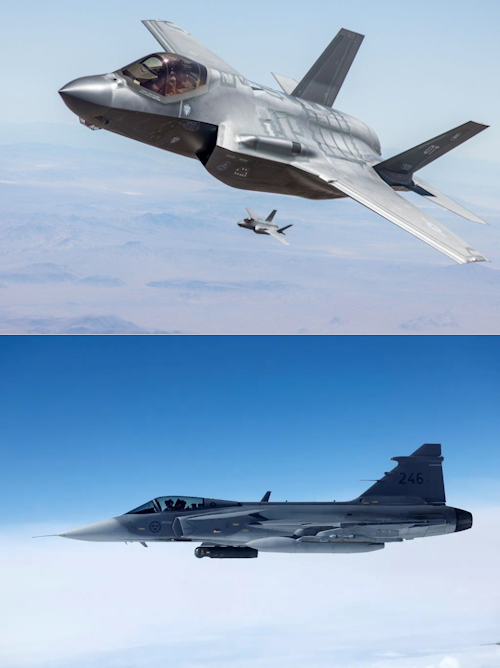
Is Canada’s F-35 review irritating the United States? McGuinty suggests it’s a ‘misnomer’

Defence Minister David McGuinty says the question of irritants in Canada-U.S. defence talks is “maybe a bit of a misnomer” and the two countries are working together on shared initiatives like integrated air missile defence systems.

“We have an integrated defence system,” McGuinty said in an interview on Rosemary Barton Live airing Sunday morning. “We are active members of NORAD. It’s the only binational command in the world.”

McGuinty was asked by host Rosemary Barton about Canada’s ongoing review of its F-35 contract with U.S.-based Lockheed Martin — something the U.S. ambassador Pete Hoekstra has called an irritant — and whether it’s been raised by Secretary of War Pete Hegseth.

Share

WHISSELL: No extremism in Canada’s military is left unchecked, right?

The problem with pretending violent extremism has just one ideological root.

As the Canadian military aims to overcome its recruitment crisis, past scandals, and rising extremism, ideological influence presents a significant threat to their efforts. If it remains unchecked, ideological influence can adversely affect the presence of extremism among ranks, as well as the ability to detect it.

Because of a stunning discovery by a Canadian journalist, discussed herein, I now believe the ability to detect and address extremism in Canada’s military is more limited than previously thought.

Let me explain why.

Share

Armed Forces, DND suing watchdog to block publication of critical report

OTTAWA — The Department of National Defence and Canadian Forces are suing an intelligence watchdog to prevent it from releasing without further redactions a review that found that some of their human intelligence source handling activities may break the law.

In a lawsuit filed in late August, both federal bodies requested a Federal Court judge quash the National Security and Intelligence Review Agency’s (NSIRA) decision to release a redacted version of a 2023 review under access to information laws.

Share

Carney’s military spending binge will leave Canadians worse off and divided

At last! Finally, we’re seeing some real nation-building by Prime Minister Mark Carney.

I’m referring, of course, to his decision to extend the national school lunch program.

This is an excellent way to ensure Canadian schoolchildren — who represent the future of our country — aren’t drifting off to sleep in class because they’re hungry. (An astounding 2.5 million Canadian children live in food-insecure households.)

The Star. Who else?

Share

Canadians skeptical of Carney’s plan to raise defence spending to 5% of GDP

A new federal study suggests Canadians are wary of Prime Minister Mark Carney’s pledge to boost defence spending to 5% of GDP by 2035, with most respondents in focus groups reacting negatively to the proposal.

Blacklock’s Reporter says according to the Privy Council report, participants questioned whether such a rise was economically feasible, especially given other financial pressures like inflation and high living costs.

“Almost all reacted negatively to this idea,” the report said.

(Incognito)

Share

Canadian Army vehicle procurement worth up to $1 billion facing serious problems

A Canadian Army procurement project worth up to $1 billion has run into serious technical problems and could be facing cancellation.

The program to develop and build the Light Armoured Vehicle Reconnaissance Surveillance System or LRSS has been underway for more than a decade.

Defence industry sources have warned that the problems affecting the new vehicle fleet could be insurmountable and the end result might be a cancellation of the project.

(Incognito)

Share