Biden’s Military Disaster: Taliban Celebrates as They Take Possession of Precision US Weapons, Armored Fighting Vehicles

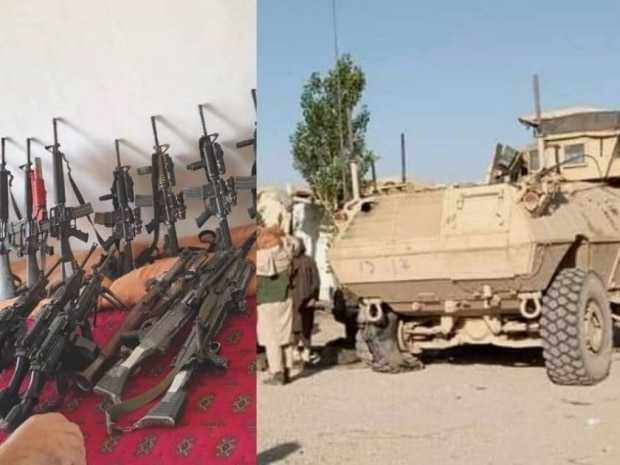
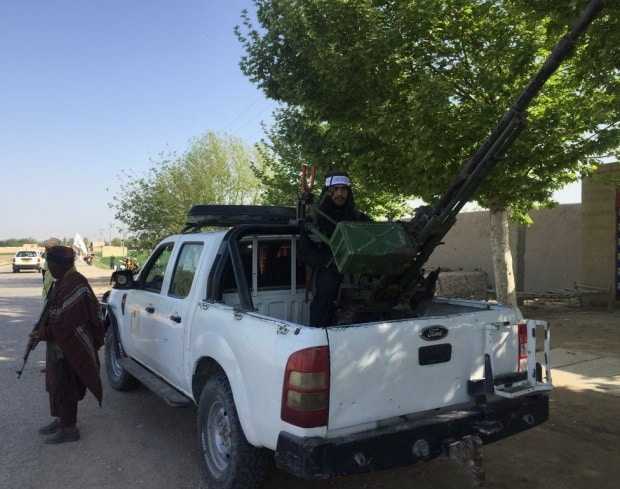
Taliban spokesman Zabiullah Mujahid announced on Twitter that Taliban fighters overran government security forces with ease this week in the Maidan Wardak Province, just west of Kabul.

His posts included several pictures of booty from the conquest, which included American-made machine guns, rifles, carbines and armored vehicles.

“The enemy fled on seeing the casualties, and a large number of tanks, heavy and light weapons and ammunition fell into the hands of the Mujahideen,” he tweeted.

Share

One for the road: German troops bringing back 65,000 beers, 340 bottles of wine from Afghanistan

German troops won’t let a single drop of booze go to waste as they withdraw from Afghanistan.

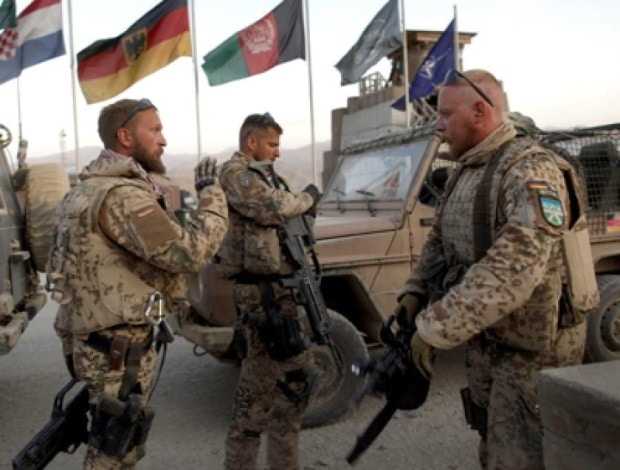
About 65,000 cans of beer and at least 340 bottles of wine are being shipped back home as German forces exit the country, according to Der Spiegel magazine.

The logistical undertaking stands in stark contrast to the fact that German troops reportedly are leaving some military equipment behind as they exit Afghanistan.

Share

Taliban Capture 7th Afghan District as Foreign Forces Pull Out

ISLAMABAD – The Taliban seized a district in southern Afghanistan Friday without facing any resistance from Afghan government security forces, bringing to seven the number of districts the insurgents have overrun since the United States and its NATO allies began withdrawing their troops from the country a month ago.

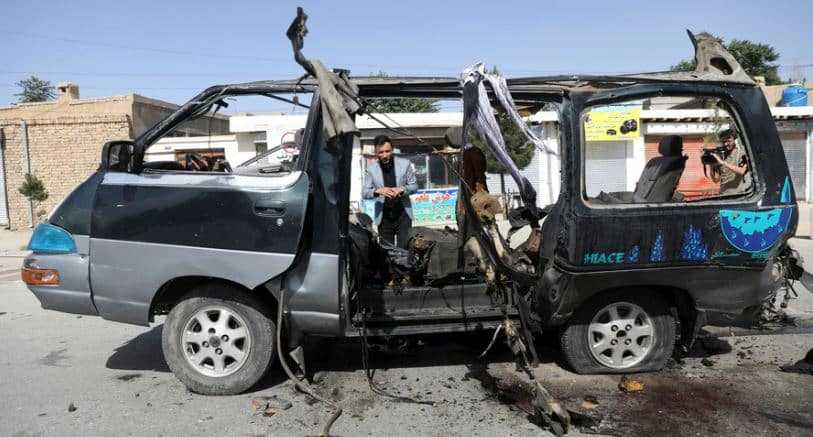
Separately, an overnight roadside bombing of a vehicle in the national capital, Kabul, killed a young female Afghan television anchor and her mother, and wounded her sister. Mina Khairi was working for the Ariana News channel for the past three years, her employer said.

Share

Biden faces another Vietnam, Hill critics warn

The U.S. military exit from Afghanistan is beginning to look “just like Vietnam,” a key lawmaker warned Tuesday as questions grow about Biden administration’s short-term strategy to ensure U.S. civilian personnel and Afghan allies aren’t slaughtered by the Taliban and the long-term prospect that the country’s pro-Western government may collapse without international support.

A heated hearing before the House Foreign Affairs Committee on Tuesday underscored the mounting chaos surrounding the withdrawal of the remaining 3,500 U.S. troops from Afghanistan, which President Biden has ordered to be completed no later than Sept. 11. Thousands more NATO and allied troops are also heading for the exits in the wake of Mr. Biden’s pullout decision.

The government will almost certainly fall but who cares?

Share

Afghanistan: Children among at least 40 killed in bomb attack on Afghanistan school

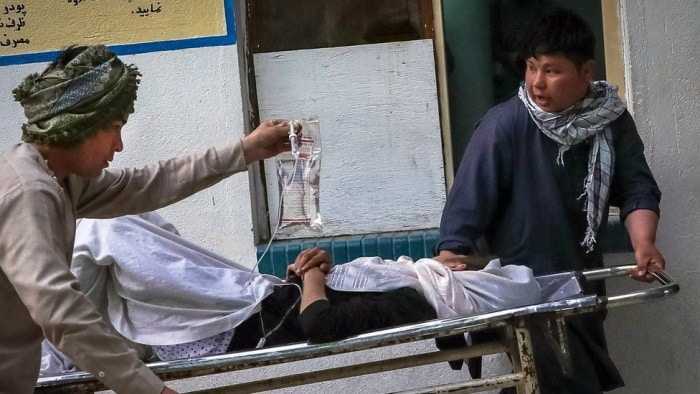
At least 40 people – most believed to be female students – have been killed after multiple blasts targeted a school in west Kabul, according to Afghan government officials.

At least 50 are also reported to have been injured by the blast, which happened in the Shia-majority neighbourhood of Dasht-e-Barchi.

Share

Afghan troops could face ‘bad possible outcomes,’ US commander says

“Your question: The Afghan army, do they stay together and remain a cohesive fighting force or do they fall apart? I think there’s a range of scenarios here, a range of outcomes, a range of possibilities,” Milley said in the AP story. “On the one hand you get some really dramatic, bad possible outcomes. On the other hand, you get a military that stays together and a government that stays together.”

The smart money is on “fall apart”

Share

Formal start of final phase of Afghan pullout by US, NATO

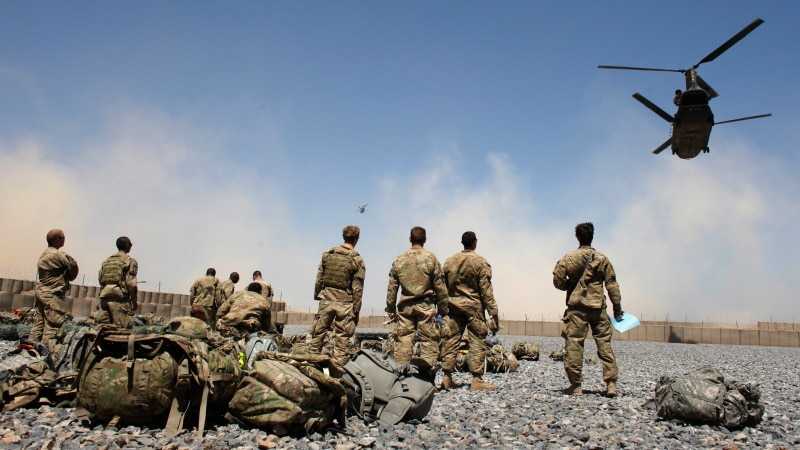
KABUL, Afghanistan (AP) — The final phase of ending America’s “forever war” in Afghanistan after 20 years formally began Saturday, with the withdrawal of the last U.S. and NATO troops by the end of summer.

President Joe Biden had set May 1 as the official start of the withdrawal of the remaining forces — about 2,500-3,500 U.S. troops and about 7,000 NATO soldiers.

Even before Saturday, the herculean task of packing up had begun.

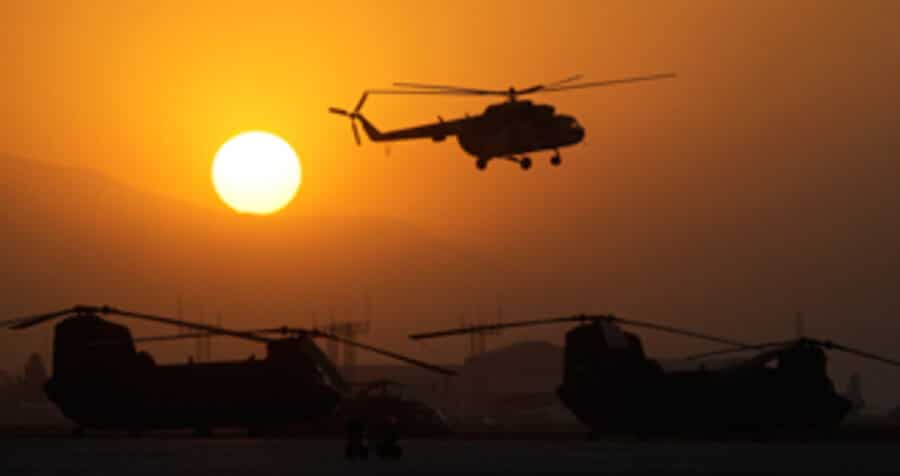
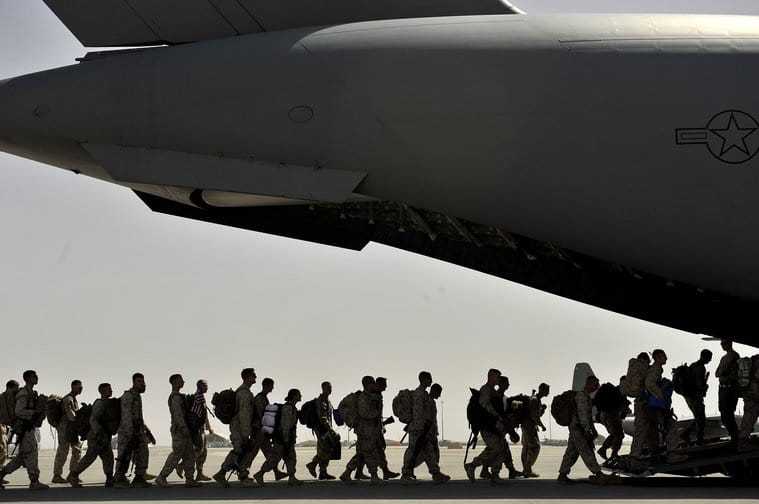
The military has been taking inventory, deciding what is shipped back to the U.S., what is handed to the Afghan security forces and what is sold as junk in Afghanistan’s markets. In recent weeks, the military has been flying out equipment on massive C-17 cargo planes.

Share

Afghanistan War: How can the West fight terrorism after leaving?

US, British and Nato combat forces are leaving Afghanistan this summer. The Taliban are growing stronger by the day while al-Qaeda and Islamic State groups are conducting ever more brazen attacks. So how can they be contained now that the West will no longer have military resources in the country?

Western intelligence officials believe they still aspire to plot international terrorist attacks from their Afghan hideouts, just as Osama Bin Laden did with 9/11.

It is a problem that is starting to vex UK policy chiefs as the deadline of 11 September for US President Joe Biden’s withdrawal draws closer. As the British chief of defence staff, General Sir Nick Carter, said recently: “This was not the outcome we had hoped for.” There is now a serious risk that the gains made in counter-terrorism over the last 20 years, at enormous cost, could be undone as Afghanistan’s future takes an uncertain turn.

Share

The Dice Are Rolling in Afghanistan

We Americans may have the watches, but they have the time.

The Biden administration has announced that it will start pulling our 2500 troops out of Afghanistan, and the withdrawal will be completed on September 11, the 20th anniversary of the terror attacks that killed nearly 3000 Americans. This decision is a rare example of bipartisan support. Both Democrats and Republicans are ready for America’s “longest war” to be over. Although our troops now are mainly engaged in military training and building institutions of civil society and liberal democracy, many Americans believe the 20-year effort to achieve those goals instead achieved little. It’s time to come home.

If they act up – bomb everything.

Share

The violent virtue-signalling of Western intervention – From Afghanistan to Libya, our puffed-up elites have caused chaos.

The violent virtue-signalling of Western intervention – From Afghanistan to Libya, our puffed-up elites have caused chaos.

Democracy was going to be delivered to Libya, they said. The good guys would be propelled to power in Syria, they told us, ridding the world once and for all of the pox of Assadite authoritarianism. Afghanistan would take its place among the league of modern nations, they trilled, its backward, brutal culture of terrorism and misogyny being replaced by a shiny new nation free of the Talbian, the burqa and heroin. And Iraq? Iraq was going to be a post-Saddam paradise. Leftist laptop bombardiers assured us it would be a paragon of multiculturalism, with trade unionists to the fore. Others said it would just finally be a normal nation, a friend to the West. We can ‘cure the world’, as Tony Blair announced in 2001, perusing the globe from the dizzy perch of a new, virtuous imperialism.

Poll: 48% of Americans Say Leaving Afghanistan is a ‘Good Idea’

Share

20 years in Afghanistan: Was it worth it?

After 20 years in the country, US and British forces are leaving Afghanistan. This month President Biden announced that the remaining 2,500-3,500 US servicemen and women would be gone by September 11th. The UK is doing the same, withdrawing its remaining 750 troops.

The date is significant. It is exactly 20 years since Al-Qaida’s 9/11 attacks on America, planned and directed from Afghanistan, that brought in the US-led Coalition that removed the Taliban from power and temporarily drove out Al-Qaeda.

The cost of this 20-year military and security engagement has been astronomically high – in lives, in livelihoods and in money. Over 2,300 US servicemen and women have been killed and more than 20,000 injured, along with more than 450 Britons and hundreds more from other nationalities.

Share

Why the media love Biden’s Afghanistan withdrawal

The President’s policy is identical to Donald Trump’s — but that’s not how CNN sees it

This week Joe Biden announced that the United States would begin withdrawing it’s military from Afghanistan in May, with the aim of leaving the country entirely by September 11th.

Biden is not the first President to announce this move. President Trump did so in 2019, and again in 2020.

Given that Biden is enacting exactly the same policy Trump wanted to pursue, you might expect the media coverage of these announcements to be similar.

Share

Afghanistan: ‘We have won the war, America has lost’, say Taliban

Driving to Taliban-controlled territory doesn’t take long. Around 30 minutes from the northern city of Mazar-e-Sharif, passing large craters left by roadside bombs, we meet our host: Haji Hekmat, the Taliban’s shadow mayor in Balkh district.

Perfumed and in a black turban, he’s a veteran member of the group, having first joined the militants in the 1990s when they ruled over the majority of the country.

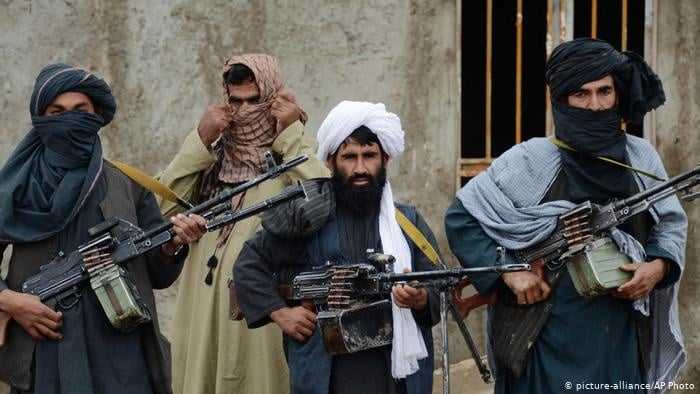
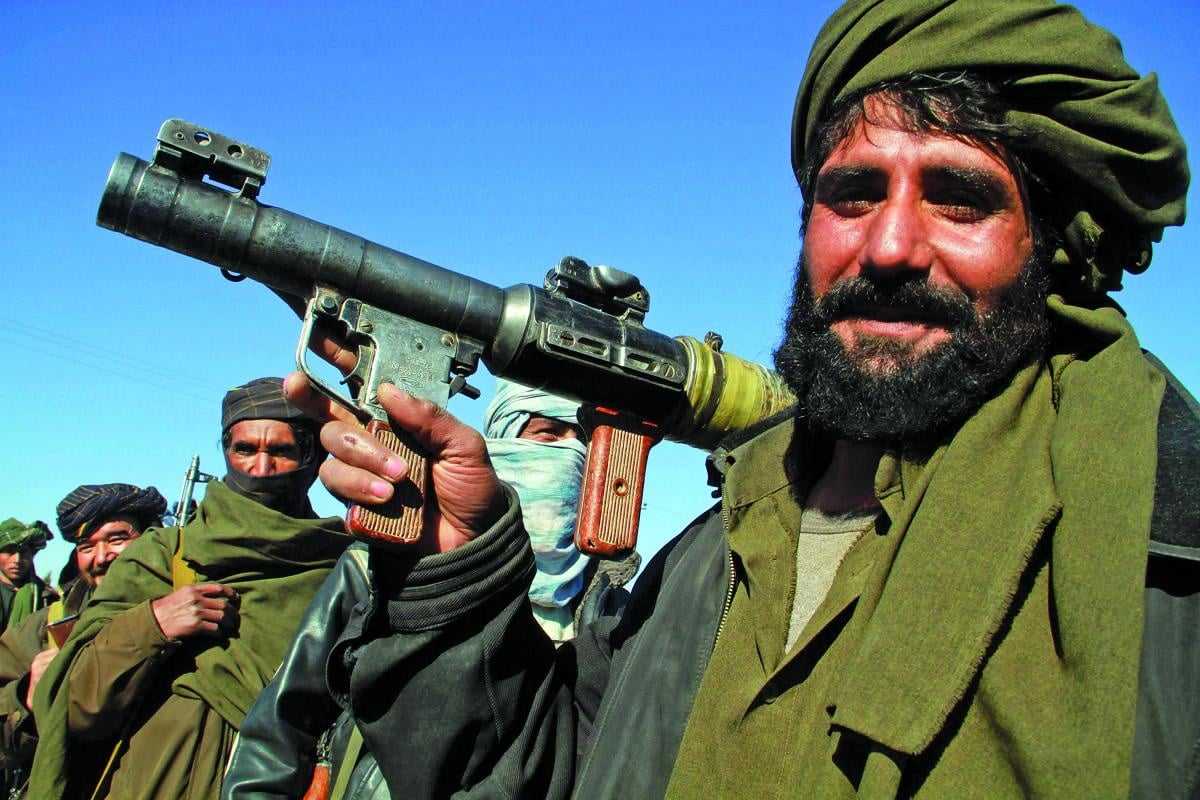
The Taliban have arranged a display of force for us. Lined up on either side of the street are heavily armed men, one carrying a rocket propelled grenade launcher, another an M4 assault rifle captured from US forces. Balkh was once one of the more stable parts of the country; now it’s become one of the most violent.

All that “Nation Building,” all that blood and treasure down the drain. Hooda thunk it in a swell place like Afghanistan?

Share

Afghans face pivotal moment as US prepares to ‘close the book’


“We need to close the book on a 20-year war,” is how a US official put it when he broke the news on Tuesday that the last US troops would be out of Afghanistan by 11 September.

Two decades on, what does this “book” say about the country that some 10,000 US-led Nato forces will soon leave behind?

It’s a dramatically different country than the shattered land and pariah state of the Taliban toppled in the US-led invasion of 2001 after the 9/11 attacks.

But this withdrawal window is decisive. It could accelerate a push towards peace, or a descent into violence that shreds the more open society which has been taking root – however slowly and unevenly – over the past two decades.

Afghanistan has been in a state of fratricidal warfare since the Taliban entered the scene, this will increase in intensity about two minutes after the troops leave.

Share