Newly Revealed BC First Nations Land Transfers Amount to Nearly 135,000 Hectares

Newly Revealed BC First Nations Land Transfers Amount to Nearly 135,000 Hectares

More than 135,000 hectares—1,350 square kilometres—of British Columbia Crown land has been identified or committed for transfer to First Nations through modern treaties and other agreements, according to provincial documents released this week. The area is roughly 12 times the size of Vancouver.

The province is also negotiating five modern treaties with the Te’mexw Treaty Association (TTA) that include approximately 1,565 hectares of Crown land in proposed treaty settlement areas.


Share

RUBENSTEIN: Who owns Ottawa? An indigenous tribe thinks they do

RUBENSTEIN: Who owns Ottawa? An indigenous tribe thinks they do

In a July 29 briefing note disclosed by Blacklock’s Reporter, Crown-Indigenous Relations Minister Rebecca Alty’s department claims it respects indigenous “rights and title” to Aboriginal ancestral lands.

This declaration has not prevented her department from continuing its court battle against an Indian tribe’s claim of ownership over Parliament Hill.

Share

B.C. NDP undermining democracy with Indigenous sovereignty

B.C. NDP undermining democracy with Indigenous sovereignty

In British Columbia’s northwest, the constitutional trappings of Canadian governance are being replaced and the public is not having a say.

Across the province, more and more First Nations governments are making claims to vast swatches of land. Some of the most consequential claims are those of the Tahltan Nation, which has identified 95,933 square kilometres of land as its own territory. That’s about 11 per cent of the entire province. The consequences will be much greater than mere land transfers.

Share

GIESBRECHT: It’s not too late to abolish the Indian Act

GIESBRECHT: It’s not too late to abolish the Indian Act

While only 1% of the Canadian population lives on Indian reserves, that tiny population is constantly in the news. From court cases that pit Aboriginal title against basic homeownership, to Indian chiefs threatening to block development — or even the upcoming Alberta independence referendum — their increasingly aggressive demands fill our courtrooms and newspapers.

(Incognito)

Share

U.S. prosecutors charge three from Akwesasne in drugs for guns probe

U.S. prosecutors charge three from Akwesasne in drugs for guns probe

U.S. Federal prosecutors announced arrests Monday in a plot to smuggle methamphetamine from Canada into the United States in exchange for guns.

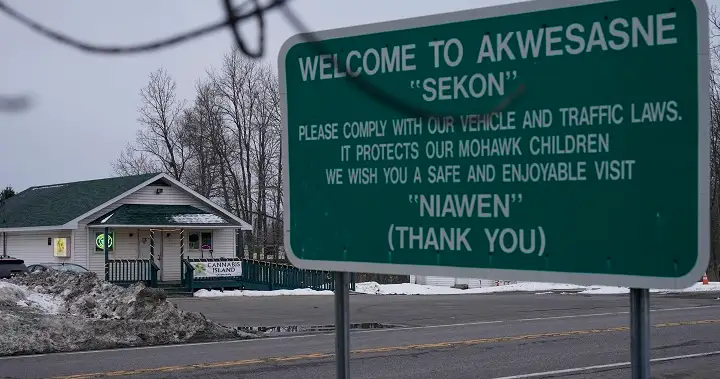
Three dual Canadian-American citizens from Akwesasne, the Mohawk territory that straddles the Canada-U.S. border between Ontario and Quebec and New York State, were arrested last Thursday, according to a press release from the United States Department of Justice.

Share

Ottawa fights $5 billion Parliament Hill land claim while affirming indigenous title rights

Ottawa fights $5 billion Parliament Hill land claim while affirming indigenous title rights

The federal government says it is committed to respecting indigenous rights and title while continuing to fight a $5-billion court claim that seeks ownership and compensation for Parliament Hill and other federal landmarks in the National Capital Region.

A briefing note prepared for Crown-Indigenous Relations Minister Rebecca Alty reveals Ottawa remains in court opposing a title claim launched by the Kitigan Zibi Anishinabeg, despite stating the government is committed to recognizing Aboriginal rights and title.

Share

Caroline Elliott: B.C.’s odious plan to give public property in Victoria to Indigenous groups

Caroline Elliott: B.C.’s odious plan to give public property in Victoria to Indigenous groups

A little more than 50 years ago, members of B.C.’s NDP government gathered in the provincial capital to introduce the British Columbia Day Act, creating a statutory holiday to celebrate the province and its history. Now, B.C.’s current NDP government is negotiating a treaty that would give parts of that same capital away.

Share

Geoffrey Moyse: Haida land deal enabled by legal subterfuge

Geoffrey Moyse: Haida land deal enabled by legal subterfuge

In a recent op-ed in the National Post, Josh Dehaas of the Canadian Constitution Foundation wrote: “Last September, many Canadians were shocked to learn through a Haida Nation news release that British Columbia and Canada had gone behind closed doors in judges’ chambers and signed an agreement that recognized Aboriginal title over all of Haida Gwaii. Without having to prove their title in court, the Haida gained constitutionally protected rights over the entire archipelago.”

Share

Jamie Sarkonak: Why the B.C. Law Society walked back claims of buried children

Jamie Sarkonak: Why the B.C. Law Society walked back claims of buried children

In 2024, a mandatory course for B.C. lawyers referred to the “discovery of an unmarked burial site containing the bodies of 215 children on the former Kamloops Indian Residential School grounds” which “(confirmed) what survivors have been saying all along.” When one lawyer proposed a correction, as no graves were ever found, the B.C. Law Society publicly disparaged him. He sued for defamation — but now, the trial has been called off.

Share

MORGAN: It’s time to defund the Assembly of First Nations

MORGAN: It’s time to defund the Assembly of First Nations

The Assembly of First Nations (AFN) recently met for their annual shindig in Ottawa, and the outcome was predictable. They offered nothing but anger, indignation, and demands. It’s an organization overrun with a sense of entitlement and suffers from a chronic oppositional disorder. It’s time that taxpayers stopped paying for it. Taxpayers funding a lobby group whose primary output is demands for more funding creates a self-reinforcing loop detached from broader Canadian fiscal reality or voter consent.

Share

CROSSON: Making residential school ‘denialism’ a crime would criminalize historical debate

CROSSON: Making residential school ‘denialism’ a crime would criminalize historical debate

Survivor accounts of residential schools vary — sometimes from the very same person. Nunavut Senator Nancy Karetak-Lindell told Nunatsiaq News in 2001 that her time at Akaitcho Hall was “a home-away-from-home” and that “it’s not like what you’re hearing about all the residential school issues today.” In the same piece, she said, “At Akaitcho, we were in a structured environment compared to where we came from. That taught us perseverance and how to discipline ourselves.” “It taught us a lot about doing things in life that we didn’t always want to do, but those things had to be done … We had to learn how to live with people from different cultures who spoke different languages and came from different parts of the NWT,” she continued, adding that those friendships helped her political career.

Share

Michael Higgins: It’s not reconciliation when law societies exaggerate anomalies as ‘graves’

Michael Higgins: It’s not reconciliation when law societies exaggerate anomalies as ‘graves’

Making criminals out of people who merely ask questions about the residential school system is not the path to reconciliation, says B.C. lawyer Jim Heller.

Goodwill and open dialogue are needed far more than trying to imprison people under a “denialism” law, according to Heller, whose defamation suit against his own law society over potential graves at the former Kamloops Indian Residential School was recently settled.

Share

Tk’emlúps te Secwépemc chief says probe into fake graves continues with no end to gravy train in sight

Tk’emlúps te Secwépemc chief says probe into fake graves continues with no end to gravy train in sight

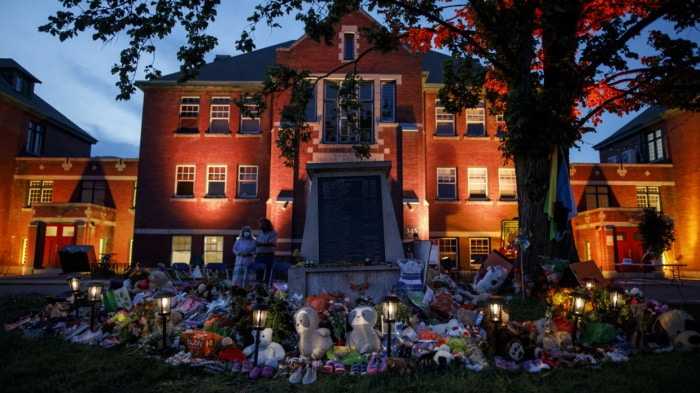
Five years after Tk’emlúps te Secwépemc sent shockwaves around the world by announcing the First Nation found more than 200 possible unmarked graves at the site of the former Kamloops Indian Residential School, the chief says the community doesn’t yet know if or when it will proceed with excavation.

Kúkpi7 (Chief) Rosanne Casimir told CBC News the nation is still in an engagement phase with dozens of communities that sent children to the institution when it was in operation from 1890 to 1978 to try to get consensus on the path forward.

“For us, it is about truth and reconciliation and being able to work with all the different communities, our neighbouring nations, our consultants and our families,” Casimir said.

Share

‘THEY SEND US MESSAGES’: Manitoba chief rejects calls to exhume residential school burial sites because the dead speak

CALGARY — A Manitoba First Nations leader has said that indigenous communities should not have to exhume suspected residential school burial sites because those who died there “send us messages” confirming their presence.

Share

First Nations Opposition to Pipeline Proposal Puts Carney Between a Rock and Hard Place

First Nations Opposition to Pipeline Proposal Puts Carney Between a Rock and Hard Place

Much of whether Prime Minister Mark Carney’s plan to fast-track economic growth through his Major Projects Office will bear fruit or remain forever aspirational will depend on how he manages negotiations with indigenous groups. The tone from and resolutions released by the Assembly of First Nations (AFN) at its recent annual gathering in Ottawa don’t bode well for the federal government.

Always.

Share