The forces of historical ignorance and vandalism have once again struck in Ontario. This time, the freshly spray-painted statue of Samuel de Champlain, inaugurated in Orillia in 1925 in honour of the 300th anniversary of his visit to the area in 1615 has been removed, even though most people apparently want it kept in place.
“Aboriginal Fatigue”
GOLDSTEIN: No accountability for record federal spending on Indigenous issues
When Federal Indigenous Services Minister Mandy Gull-Masty announced $4.6 billion in new funding to eliminate all long-term unsafe drinking water advisories on reserves, she refused to set a deadline for when that will happen.
“The deadline goal is not part of my narrative,” she told the Globe and Mail.
That’s the problem with the Liberals’ approach to Indigenous spending.
Majority of Canadians agree historic injustices against Indigenous peoples still relevant today: new survey
Canadians are more likely to reject the idea that historic injustices against Indigenous peoples are “mostly in the past,” according to a new Leger poll conducted for the Association of Canadian Studies.
“The survey is especially relevant to debates about reconciliation and suggests that many Canadians believe acknowledging past injustices should inform current policy responses,” Jack Jedwab, president and CEO of the Association, told National Post in an interview.
I don’t buy it.
MORGAN: The latest racial consultation ruling will destroy Canada’s economy — and nobody is reporting it
You may soon not be able to erect a garden shed in your backyard without getting the consent of indigenous people hundreds of kilometres away.
Sound ridiculous?
It’s no less absurd than any other consultation requirements imposed by activist judges recently.
Jamie Sarkonak: Yet another major project derailed over Indigenous spat
Earlier this month, a B.C. court decided to cancel the official go-ahead to construct a gold mine in the north of the province because a few dozen Indigenous people weren’t, in its view, adequately consulted.
It didn’t matter that the project, Seabridge Gold’s Kerr-Sulphurets-Mitchell (KSM) mine, had already undergone 15 years of planning and consultations.
MACLEOD: Open the books — First Nations governments should meet the same accountability standards as everyone else
There is an entrenched “indigenous industry” in Canada — not ordinary indigenous families, elders, workers, or children, but a professional ecosystem of federal departments, band political insiders, consultants, lawyers, lobbyists, academics, activists, non-profit administrators, media voices, and reconciliation contractors who are funded, directly or indirectly, by Ottawa’s never-ending management of First Nations poverty.
GIESBRECHT: The list of ‘status’ Indians is growing longer
Parliament is being urged by the Senate to pass Bill S-2. As amended by the Senate, this bill would, among other things, end the so-called “second generation cut-off” rule. These were changes to the Indian Act introduced in 1985 to prevent the transfer of status to a person who has at least one grandparent and one parent who does not have status — the so-called “second generation cutoff.” If passed by Parliament, S-2 is projected to add approximately 300,000 new registrants to the Indian Act status list by 2066. These amendments are estimated to result in at least $1 billion in annual benefit expenditures, driven primarily by the Non-Insured Health Benefits (NIHB) program and post-secondary funding.
Cigarette factory on Six Nation’s reserve run by non-Indigenous criminals and staffed by foreign nationals, police say
Ontario police have shut down a large contraband cigarette manufacturing plant on a First Nation’s reserve that was allegedly run by non-Indigenous criminal networks accused of exploiting indigenous lands to cover their activities.
The bootleg cigarette plant was staffed by 13 people identified as foreign nationals, police said after the raids.
Indigenous woman’s background, trauma justify house arrest for DUI crash that killed her best friend: judge
An Indigenous woman from Winnipeg who killed her best friend and roommate in a drunk driving accident three years ago will be allowed to serve her sentence at home, largely because of her racial background and “life circumstances … shaped by a history of trauma and discrimination,” a judge ruled last month.
Jayden Starr Okemow, 23, pleaded guilty to one count of driving with a blood alcohol level exceeding .08 causing the death of Hayley Linklater, but only after the Crown called the majority of its witnesses.
Jamie Sarkonak: New Brunswick’s plan to add an Indigenous tier of justice to the courts
The First Nations of New Brunswick are currently fighting for title to the entire province, but that hasn’t stopped the local legislature from offering up its courts for their use.
Last week, the N.B. Liberals tabled Bill 50, “An Act Respecting the Enforcement of First Nations Laws and the Prosecution of Offences under First Nations Laws.” It would designate New Brunswick courts as the place to enforce First Nations bylaws.
Michael Higgins: Archeologist’s ‘critical theory’ PhD thesis explains everything about Kamloops ‘graves’
Five years of national angst and anger over the “discovery” of “graves” at the former Kamloops Indian Residential School was driven by an archeological report by a self-proclaimed activist archeologist and critical theory advocate Sarah Beaulieu. Her PhD thesis, completed in 2019, glorified her social warrior/critical theory credentials.
In her thesis, Archaeology of Internment at the Morrissey WWI Camp, insight into Beaulieu’s philosophy is revealed in chapter two under the headings “Critical Theory” and “Applications of Critical Theory within Modern Conflict Archaeology.”
COGGINS: DEI and DRIPA are dividing society, not uniting it
Left-wing political parties in Canada (the Liberals and the NDP) are enamoured with acronyms. These acronyms underlie their entire social philosophy. Aside from the ever-evolving “LGBTQ++.” Here are two classic examples.
Diversity, Equity, and Inclusion (DEI)
LILLEY: Senate’s mistaken attempt to criminalize residential school denialism
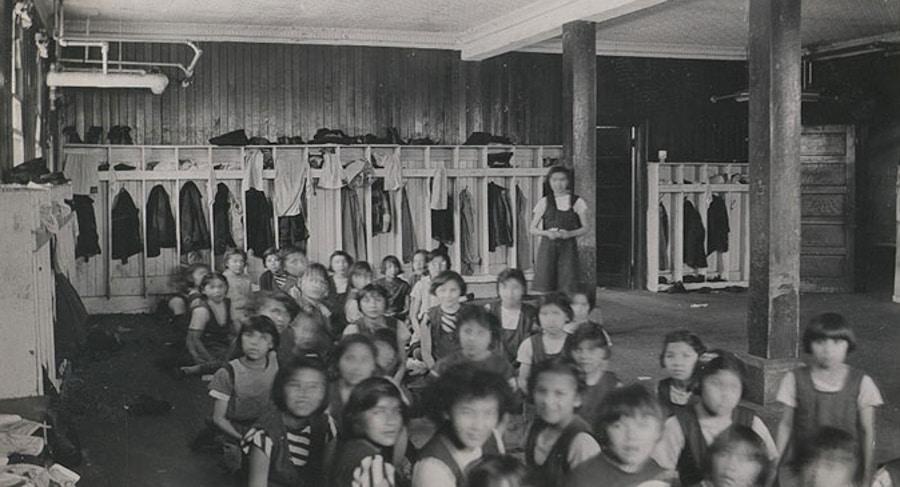
Even as Canada comes to terms with the fact that not everything we’ve been told about residential schools is true, some people want to criminalize asking questions about it. On Monday, the Senate’s human rights committee voted for an amendment making it a criminal offence to engage in what they called “residential school denialism.”
Aaron Pete: Criminalizing residential school ‘denialism’ won’t help reconciliation
Canada should take residential schools seriously. That means taking both truth and reconciliation seriously. But the Senate’s work on criminalizing “residential school denialism” raises a difficult question: when a country faces a painful historical issue, should the criminal law become the instrument used to manage public discussion?
This is not an abstract issue for me. My grandmother attended St. Mary’s Indian Residential School. Many Indigenous people have horrible stories to tell about their experiences at that school and ones across Canada. I know some of them personally. I have heard their experiences. No amount of civil discourse will erase their lived experience or convince me that their pain is not real.
Human rights panel accuses Canada of genocide against Indigenous population
MONTREAL — An international panel of human rights experts has accused Canada of committing genocide against its Indigenous population after a week of hearings in Montreal.
The Permanent Peoples’ Tribunal was mandated to look at missing and disappeared children and unmarked graves at Canada’s residential school sites, as well as the forced sterilization of Indigenous women, through the lens of international law.
The panel of seven judges said Canada historically adopted a series of policies that they deemed were crimes against humanity with genocidal intent, including the residential schools, which were in operation for over 150 years. The last residential school closed in 1996.