Trump ratchets up attacks on NATO, says U.S. no longer needs alliance

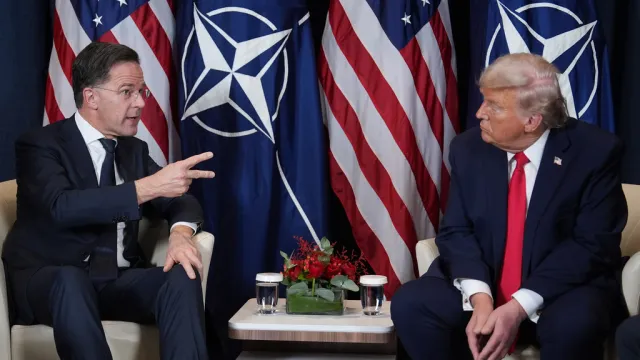
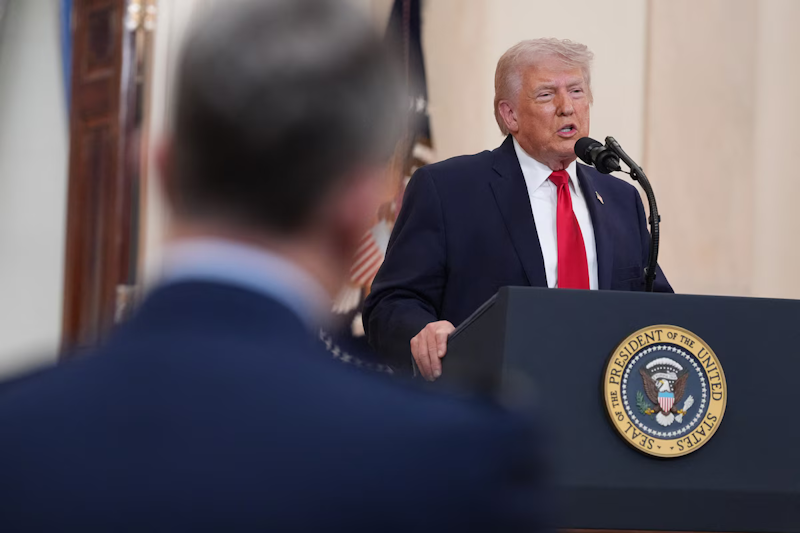
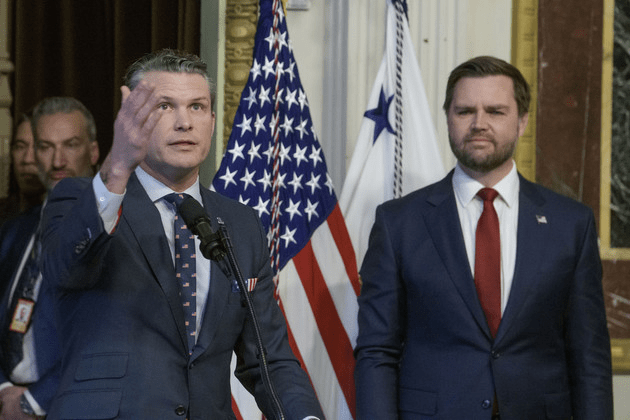
MIAMI BEACH — The United States may stop promising to defend its NATO allies should they come under attack, President Donald Trump said Friday, escalating his verbal barrage against the alliance as his frustration grows that European leaders have not significantly contributed to his war against Iran.

“NATO just wasn’t there” when he asked for help with the Iran war, Trump told a Miami Beach investment conference sponsored by the Saudi sovereign wealth fund. That, he said, was “a tremendous mistake” by the Europeans.

“We spend hundreds of billions of dollars a year on NATO, hundreds, protecting them, and we would have always been there for them, but now, based on their actions, I guess we don’t have to be,” he continued.

Share

What an Influx of 17,000 U.S. Troops Could Mean for the Iran War

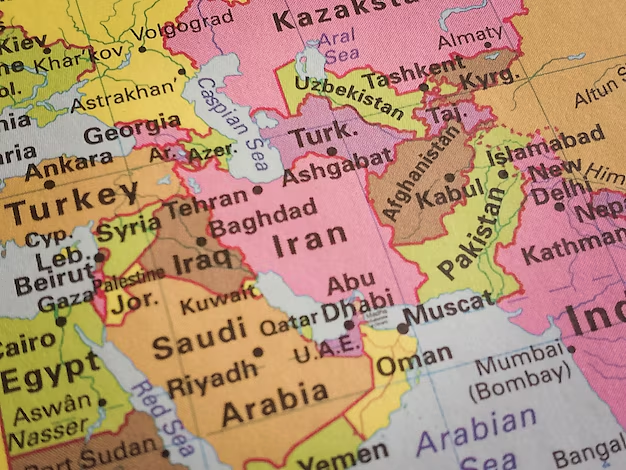
If President Trump gives the go-ahead, the U.S. could soon have more than 17,000 ground troops on Iran’s doorstep. That is far short of what would be needed for a full-scale invasion, but they could seize strategic territory on the mainland, secure Tehran’s uranium stockpiles or take an island.

The Pentagon is considering sending another 10,000 ground troops to the Middle East, even as Trump weighs peace talks with Tehran, The Wall Street Journal has reported. That would add to roughly 5,000 Marines and 2,000 paratroopers from the 82nd Airborne Division already ordered to the region. The additional troops would likely include infantry, armored vehicles and logistics support.

Share

Death’s defeat and the 82nd Airborne’s long road to war in Iran

The skinny paratrooper from Arizona froze as he felt the ground depress beneath his booted foot. “Hey, I’m treading on something squishy,” he announced, a trace of alarm in his voice. His words had an instant effect on the 12 paratroopers from the 82nd Airborne gathered around him.

“Don’t move!” they bellowed.

It was too late. In a moment of unwitting reflex, Sergeant Brandon Pilguy lifted his foot. Beneath it was a black PMN anti-personnel mine, its black cap just visible in the Afghan sands. Linked directly beneath the mine by a detonation cord dug into the soil, the Taliban had placed a 20lb Improvised Explosive Device (IED), made of homemade explosives laced with chunks of shrapnel. It did not explode.

Share

Pentagon Considers Sending 10,000 Troops to Middle East Amid Operation Epic Fury

The Pentagon is reportedly looking at sending 10,000 troops to the Middle East amid Operation Epic Fury, according to Defense Department officials with knowledge of the planning.

“The force, which would likely include infantry and armored vehicles, would be added to the roughly 5,000 Marines and the thousands of paratroopers from the 82nd Airborne Division who have already been ordered to the region,” the Wall Street Journal reported.

Share

Iran’s Fantasy of Strength: When Bazaar Tactics Collide with Reality

US President Donald J. Trump has reportedly laid out a 15-point peace plan to Iran — with conditions that, taken together, amount to Tehran’s near-total strategic capitulation.

In response, the Iranian regime has not merely rejected them; it has countered with a series of conditions so detached from reality that they raise a fundamental question: is Tehran negotiating or hallucinating?

Share

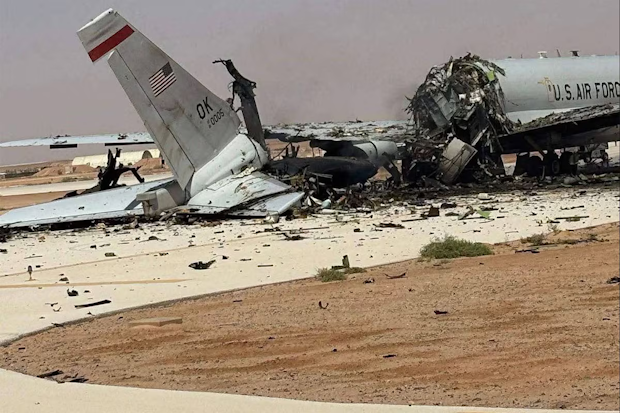
The U.S. Military Assets Damaged or Lost in the Iran War

Billions of dollars of highly sophisticated military equipment has been lost or significantly damaged since the U.S. and Israel began striking thousands of targets across Iran more than three weeks ago. The bulk of the damage on the ground has been caused by Iranian ballistic missiles and drones.

Battle damage and replacement of losses over the first three weeks of the war likely costs roughly $1.4 billion to $2.9 billion, according to Elaine McCusker, a top Pentagon budget official during the first Trump administration who has been tracking the cost of the conflict for the American Enterprise Institute. The higher estimate includes damage to a Qatari radar housed on a U.S. air base in the country.

Share

Hackers tied to Iran breach FBI director’s personal email and post private images

Iranian-linked hackers have claimed responsibility for breaching FBI Director Kash Patel’s personal email account and publishing private images and documents online, according to a Justice Department official who confirmed the intrusion and said the materials appear authentic.

The hacking group, known as Handala Hack Team, announced the breach on its website Friday, boasting that Patel had been added to its list of “successfully hacked” targets. The group has previously presented itself as a pro-Palestinian vigilante operation, though Western cybersecurity researchers assess it as a front for Iranian government-linked cyber units.

Share

The energy crisis has only just begun

For every day the war in the Middle East drags on, the crisis in energy markets deepens. The price of everything from gas and oil to jet fuel and plastics is rising sharply.

That crisis is set to get dramatically worse over the next week or two.

Energy shipments stopped in their tracks on February 28 when the war began and Iran effectively closed the Strait of Hormuz. But plenty of ships made it out to sea in those final days before the conflict began. The last of them should arrive in Japanese and Korean ports sometime over the next 8-10 days.

After that, there’s nothing coming.

Share

Iran ‘may have hired useful idiots’ for Jewish ambulance attack

Police say the instigators could have mimicked a Russian model of attack which involves paying recruits with cryptocurrency

Police investigating the arson attack on Jewish ambulances in north London are examining whether it may have been directed by Iran using proxy operatives recruited online, sources said.

Investigators believe that those behind the attack may have followed a model used by Russia, recruiting so-called “useful idiots” through online criminal networks and paying them in cryptocurrency.

Iran has made use of proxies to launch attacks across Europe, including by Chechen and Turkish gangsters, and is also suspected of deploying Iranian expatriates to conduct surveillance on dissidents in the UK.

Share

Trump scorches NATO for failing Iran loyalty test, debates bailing on alliance

President Trump blasted NATO on Thursday for its unwillingness to help with the Iran war and implied the US may no longer “be there” for its allies.

Before the Feb. 28 US-Israeli military attacks, Trump said, “we’re always gonna be there” for NATO allies.

“At least we were. I don’t know anymore, to be honest with you,” Trump said Thursday at a cabinet meeting.

Share

Canada might help oil tankers cross Strait of Hormuz if there is a ceasefire, Carney says

Prime Minister Mark Carney says Canada might join efforts to ensure freedom of navigation in the Middle East if there is a ceasefire.

Reporters asked Carney on Thursday how Ottawa might get involved in efforts to reopen shipping through the Strait of Hormuz, which Tehran has blockaded in response to the U.S. and Israel launching a war on Iran a month ago.

Carney says Canada is talking to allies about how it could help restore the movement of vessels in the strait, offering the clearest scenario yet of how it might get involved.

Share

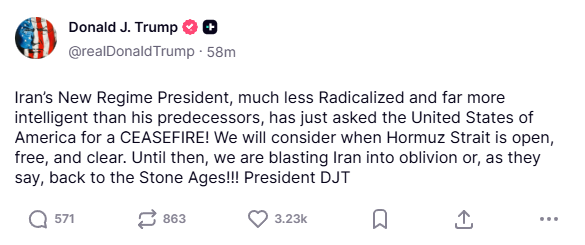
Trump extends deadline for Iran to open strait of Hormuz by 10 days

Donald Trump has extended his deadline for Iran to open the strait of Hormuz by 10 days to 6 April after saying talks are “going very well”.

The president made the statement on Thursday in a social media post, saying: “As per Iranian Government request, please let this statement serve to represent that I am pausing the period of Energy Plant destruction by 10 Days to Monday, April 6, 2026, at 8 P.M., Eastern Time,” Trump said on his Truth Social platform.

“Talks are ongoing and, despite erroneous statements to the contrary by the Fake News Media, and others, they are going very well.”

Share

British factories brace for an energy crisis worse than the 1970s

Working by candlelight 1970’s energy crunch

Europe’s fuel supplies could be squeezed within days, and governments need to act.

That is the ominous warning from Wael Sawan, the boss of Shell boss, who this week said “a ripple effect” could see the continent’s energy security hit “as we get into April”.

A growing number of governments across the world are already introducing exceptional measures to limit the amount of fuel people use as the world reels from the Middle East energy supply shock triggered by war in Iran.

Share

Who wants what and why from US-Iran peace talks?

When one side, the US, says there are ongoing, productive negotiations to end the war and the other side, Iran, says “no, there are not”, then who to believe?

What exactly is going on behind the scenes? Should we believe that peace in the Gulf is just around the corner? Or are both sides settling in for a costly, protracted war that will keep energy prices high, affecting the whole world right through the summer?

Messages are certainly being passed from the US to Iran, but indirectly, via intermediaries like Pakistan that enjoy good relations with both governments.

Share