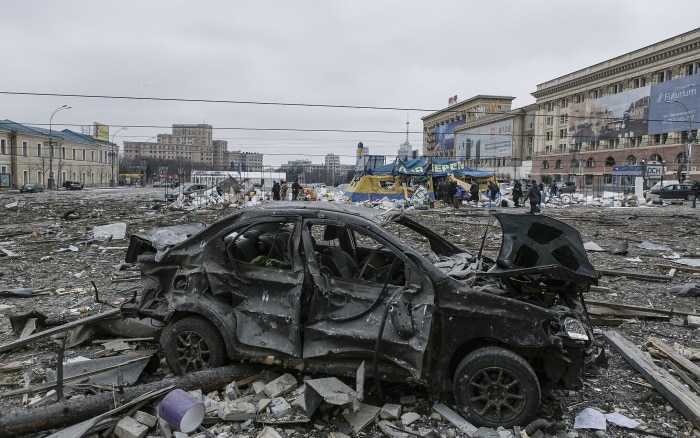
GOLDSTEIN: Heroic Zelenskyy needs intervention by NATO or Ukraine will fall

Despite Zelenskyy’s urgings, Canada, the U.S. and other members of NATO have repeatedly said they will not enter into a war with Putin and Russia.

That means that at the end of the day, they are prepared to sacrifice Ukraine to Russian aggression.

We all admire Zelenskyy’s bravery. His blunt refusal of an offer by the U.S. to evacuate him to safety declaring: “The fight is here. I need ammunition, not a ride” was Churchillian in its defiance, recalling Winston Churchill’s famous war-time speech: “We shall fight on the beaches.”

Nothing like a nuclear war to stir things up.

Share

Poll: Only 37% of Canadians are confident in Justin Trudeau leading Canada during Russia-Ukraine conflict

  • 89% of Canadians and 78% of Americans are personally concerned about Russia invading Ukraine.
  • 66% of Canadians and 62% of Americans believe the Russian invasion of Ukraine has the potential to develop into a world war.
  • In a conflict with Russia, 37% of Canadians are confident in Justin Trudeau leading Canada and 39% of Americans are confident in Joe Biden leading the United States.
Share

Concern mounting over huge Russian military convoy outside Kyiv

Concern is mounting over the movements of a huge column of Russian military vehicles outside Kyiv, amid a lack of fresh information about its position and the threat it poses.

While a US defence official suggested it appeared to have “stalled”, there was also speculation that an estimated 15,000 troops attached to it may be regrouping, and potentially waiting for logistical supplies before an assault on Kyiv.

Efforts to ascertain the status of the convoy and the threat it poses have been set back by recent cloud cover over Ukraine that has prevented Maxar Technologies – which issued the first satellite images of the convoy – from releasing new pictures.


Ukrainian city of Mariupol ‘near to humanitarian catastrophe’ after bombardment

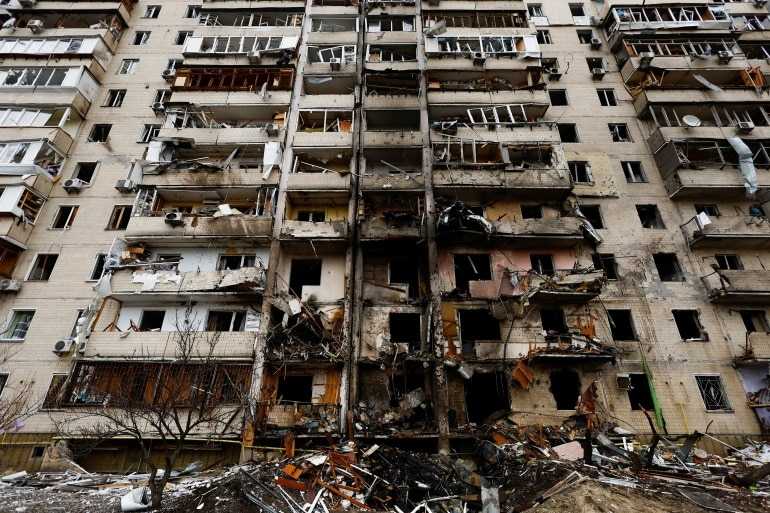
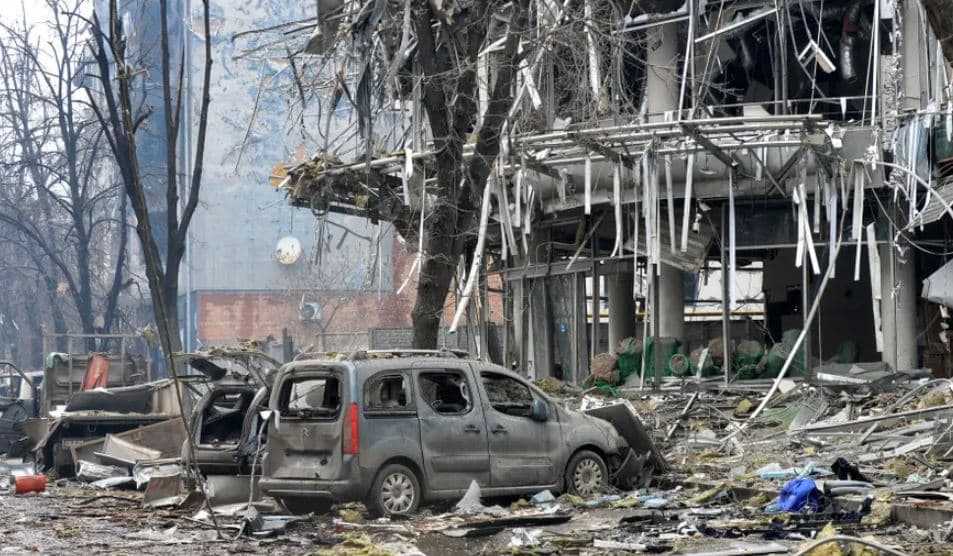
The key Ukrainian port city of Mariupol was “near to a humanitarian catastrophe” on Wednesday after more than 15 hours of continuous bombardment by Russian forces, the city’s deputy mayor told the BBC.

“The Russian army is working through all their weapons here – artillery, multiple rocket launch systems, airplanes, tactical rockets. They are trying to destroy the city,” Serhiy Orlov said.

Mr Orlov said Russian forces were several kilometres from the city on all sides and had launched strikes on key infrastructure, cutting water and power supplies to parts of the city. One densely populated residential district on the city’s left bank had been “nearly totally destroyed”, he said.

Share

‘Madman Putin’: The Globalists’ Misinformation Play

Ever since Russia’s invasion of Ukraine, the western public has been carpet-bombed with the claim that Russian president Vladimir Putin is some sort of unhinged madman. This notion is being feverishly spread by the establishment and those in its pay: the political class, the media and the commentariat, career diplomats and technocrats as well as those connected to the security and intelligence communities.

The most remarkable thing about the Mad Vlad claim is that it is obviously false.

Share

Arrogance

I have observed the national security circus now for fifty years or more. Most of it as a deep state Intelligence denizen. Not necessarily well paid for my efforts, but a career enthusiast nevertheless.

Practicing my craft in Vietnam (twice), at HQ USAF Intelligence, DIA, UN, CIA (on detail), and NSA; I have often thought about motives for and the character of policy.

Indeed, what really drives national security policy?

I sought, over the years to understand that nexus between the lion and the lamb, the policy beast and Intelligence lamb. If I have learned nothing else, I know that the US Intelligence Community is a buffet, so big now that a policy maker can have almost any plate he/she/they/them wants.

Share

How Putin has sowed the seeds of his demise – even his own people don’t back his paranoid warmongering

IT is Afghanistan that has often been called “the graveyard of empires”.

But as Vladimir Putin’s unprovoked war against Ukraine enters its second week, a possibility emerges. Will Ukraine turn out to be the graveyard of Vladimir Putin?

The Russian President has been preparing for this conflict for years, perhaps decades. Over the past 12 months, he has been building up his forces on the Ukrainian borders.

The world watched and waited, divided over whether he was mad enough to do it.

Share

Ukraine pays for Western decadent futility

The master of the Kremlin can barely control his contempt for those woke who light candles, sing hymns and display yellow-blue flags.

“Sure, we won’t do anything.” This was the admission of Claude Cheysson, François Mitterrand’s foreign minister, after the coup in Poland in December 1981. During the Cold War, everyone knew that America and the free countries could not solve every crisis. When the Soviet Union invaded Hungary in 1956 and again when the Soviets used Warsaw Pact forces against Czechoslovakia in 1968, Western leaders recognized that there was little to be done. This did not mean showing moral indifference to the sufferings of the Czechs, Slovaks and Hungarians, who today are among the truest and strongest Europeans in their own identity. Today it is the same behind the big words and the high-sounding slogans of the Western camp, more cowardly than ever, after Putin’s terrible war on Ukraine.

Outraged Western democracies are paper tigers. They will be satisfied with the usual protests and economic sanctions, for which the middle class and small and medium-sized enterprises will pay the entire price.. If the threat is indeed the one described by the European Union and the United States, military mobilization had to be necessary. But, as the French historian Jean-Francois Colosimo says in Le Figaro, “Westerners have no desire to sacrifice the life of a single soldier to defend the integrity of Ukraine”.

Share

A true Russian victory in Ukraine is now nearly impossible

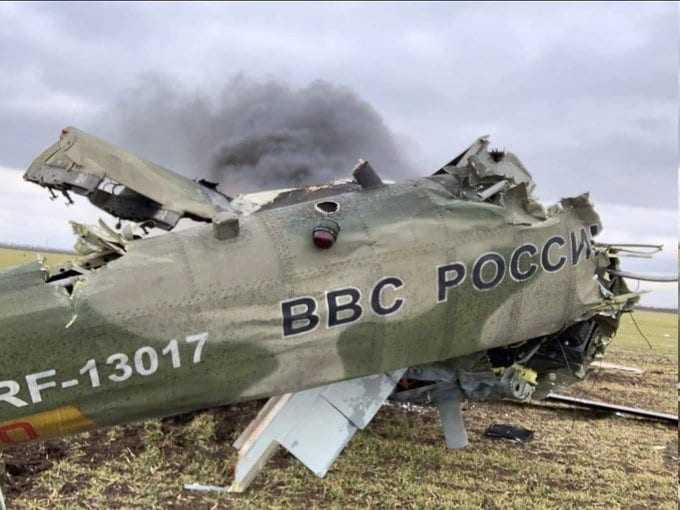
The Russian military has massed significant force within Ukraine’s borders and particularly on the northern approaches to Kyiv. But it has a big problem: Russian forces have lost their offensive momentum facing obstinate Ukrainian resistance in the form of mobile anti-tank and anti-air strike teams.

With equipment and tactics designed to confront massed opposing formations, the Russians have been unable to cope with the small, well-armed Ukrainian units attacking them from all sides.

Share

How Vladimir Putin weaponises refugees

For the last three decades, Europe’s leaders have pursued a noble strategy to prevent conflict using trade, aid and diplomacy. But their reliance on soft power has had an unintended consequence: it has left them divorced from reality.

Soft-power tools are honourable and often pragmatic methods of conflict prevention and, at times, resolution. Just look at America’s Marshall Plan to rebuild Europe after the Second World War, or the foreign aid provided today by the wealthy West to smaller and poorer nations.

Share

Ukraine Demonstrates the Need for Gun Protections

It’s better to be a warrior in a garden than a gardener in a war.

The question of upholding the right of self-defense shouldn’t be political. Even so, supporters of the Second Amendment and our right as free people to arm ourselves are constantly attacked as wild-eyed crazies and “gun nuts.” So imagine my surprise at seeing Ukraine, a country with strict gun laws, “handing out” guns to its citizens for use as protection against the Russian invasion. It’s almost as if guns in the right hands can be used for good.

Share

Terence Corcoran: Putin blows up NetZero and the green reset

There can be no greater demonstration of the massive failure — and the paralyzing contradictions and disconnect — revealed this week between two branches of the United Nations that allegedly serve to protect and assure peace and prosperity around the world. One branch is the United Nations Security Council, allegedly dedicated to international peace and security. The other UN operation is the Intergovernmental Panel on Climate Change (IPCC), which was created to ”provide policymakers with regular scientific assessments on climate change, its implications and potential future risks, as well as to put forward adaptation and mitigation options.”

Share