Peter Menzies: With Bill C-11 Now Law, What to Watch Out for to Fight Online Censorship

As of April 28, everything audio and visual on the internet is under the control of Canada’s broadcasting and telecommunications regulator and its nine political appointees.

It will be their job, as members of the Canadian Radio-television and Telecommunications Commission (CRTC), to make sure anything that meets the definition of “programming” (and I’m thinking that will include Jordan Peterson’s shows) is of “high standard.”

Share

Jamie Sarkonak: Censorious Liberal attempt to block news article shows why they want to control the internet

Recently released documents show that although the federal government is sparing in its requests to social media companies to take down comments , such requests can be abused to censor news coverage that paints the government in a bad light. This is especially concerning given the Liberals’ attempts to gain more control over the internet.

Share

Pentagon-Funded Censorship Firm Graphika Began Monitoring Covid “Disinfo” On Dec. 16, 2019 – Two Weeks Before WHO Knew Covid Existed

Graphika, Inc., a small but influential social media monitoring and censorship firm that has received nearly $7 million in grants and contracts from the US Department of Defense (DOD), began tracking online “conspiracy theories” about Covid-19 on December 16, 2019 – just four days after the first patients reported symptoms in Wuhan, China, and two weeks before the World Health Organization (WHO) was even informed about the virus outbreak.

Share

GUNTER: Canada’s disturbing censorship conversation

This was a bad week for free speech in Canada.

It has become clear that “progressive” opinion is lining up behind censorship of what Canadians can and cannot say on the Internet, including criticism of politicians and bureaucrats.

According to a story on the Ottawa-insider news site, Blacklock’s Reporter, Heritage Minister Steven Guilbeault told a podcast affiliated with the Liberal Party that the government believes federal regulators should have the authority to temporarily block or even shut down websites that say hurtful things about politicians and public servants.

Share

Chat Control: EU Presents Draft Report on Mandatory Surveillance Law

A draft report on the European Commission’s Child Sexual Abuse Regulation (CSAR), also known as Chat Control, has been published Wednesday, April 19th, for the upcoming debate in the EP’s civil liberties parliamentary committee. The document proposes to add “voluntary detection orders” and automated metadata scanning to the already invasive proposal.

“Mandatory indiscriminate searching of private correspondence and data of unsuspected citizens is still in [the proposal],” MEP Patrick Breyer (Greens-EFA), a member of the anti-censorship European Pirate Party, wrote in his assessment of the first draft report.

Share

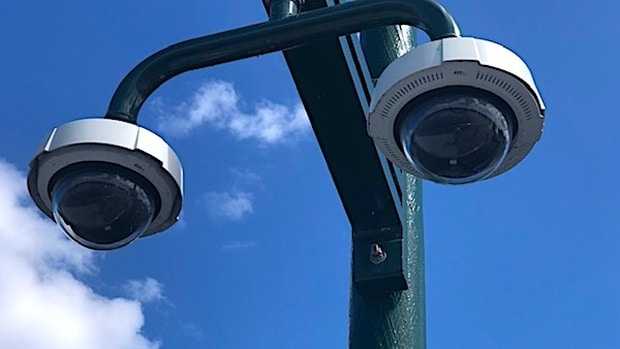
Eye in the sky

A car crash in rural Hamilton. A search for a missing elderly woman. The 2021 CFL Grey Cup. A protest during a visit from Prime Minister Justin Trudeau.

While vastly different events and incidents, they have one thing in common: A drone operated by the Hamilton Police Service (HPS) was buzzing around in the sky above and watching.

The technology is increasingly being employed by police services across Canada, including in Charlottetown, Fredericton, Toronto, Ottawa, Vancouver and Winnipeg.

Share

Cash is no longer king — and will become ‘less useable’ in future, says Bank

Cash will become less useable as high street shops increasingly reject bank notes because of the rise in digital payments, a senior Bank of England official has said.

It will become harder to spend physical money in the coming years because contactless payments are on the rise and consumers are increasingly turning to the internet for purchases, according to Sir Jon Cunliffe, a deputy governor at the central bank and a member of its rate-setting committee.

All the better to track you with …

Share

Elon Musk makes bombshell claim that US govt could access Twitter users’ private messages

Twitter CEO Elon Musk has claimed the U.S. government had access to users private messages on Twitter.

In a wide-ranging interview with Fox News’ Tucker Carlson, set to be broadcast on Monday and Tuesday night, Musk made the startling claims noting how he was shocked to learn that the government had full access to private communications on the platform.

The billionaire tycoon told Carlson how unaware of the fact until he joined the company and expressed surprise at the degree to which government agencies were able to monitor social media.

I wonder if this is true of Canada.

Share

Techno-Hell: AI Firm Scrapes 30 Billion Social Media Photos, Hands Them to Law Enforcement

One of the most notorious privacy-breaching tech companies in operation, Clearview AI, has, according to its CEO, scraped 30 billion social media photos, packaged and curated them, and passed them along to the surveillance state authorities to do with what they will (in the dark, with no oversight, naturally, as the Founders warned such authorities would if left unchecked).

Share

French to scan babies’ faces at the border after EU migration overhaul

French police will have to photograph British babies’ faces at the border unless the EU accepts the use of new passport technology.

EU officials last night confirmed that there would be “no exceptions” to the need for facial imagery under the bloc’s entry and exit system (EES), suggesting even infants will have to provide data.

At present, non-EU travellers’ passports are stamped and they are subjected to a series of questions when they cross the border into the bloc.

Share

State-Sponsored Tattletales

Massachusetts creates a system of decentralized surveillance in public schools

A phenomenon is sweeping many Massachusetts public schools: the “bias incident report.” The inner-ring Boston suburb of Newton (home of Jake Auchincloss, the congressman for the Fourth District) hosts an online portal where a person can report any cases of “hate speech, bias, or discrimination.” Another wealthy suburban district, Acton-Boxborough, lays out a protocol for the reporting and investigation of “all incidents of bias, including prejudice, bigotry, microaggressions and cultural appropriation.” Belmont, Lexington, and Wellesley are among other elite suburbs with these kinds of protocols, though their emergence is not confined to wealthy districts: Boston Public Schools has its own “equity” reporting form.

Share

Pierre Poilievre accuses Liberals of censoring debate on Bill C-11

Conservative Leader Pierre Poilievre was ordered by the Commons Speaker to remove part of a video he put out on Twitter on Thursday accusing the Liberals of trying to close down debate on the online streaming bill.

After the Liberals tabled a “closure” motion to curb debate of the bill in the Commons, Mr. Poilievre hurriedly filmed a video, saying there was an “emergency here on Parliament Hill” as the Liberals were “shutting down debate” on Bill C-11.

Share

Federal Agencies Are Still Using Our Phones as Tracking Beacons

While technically unconnected to each other, recent reports about the Secret Service and Immigration and Customs Enforcement playing fast and loose with rules regarding cellphone tracking and the FBI purchasing phone location data from commercial sources constitute an important wake-up call. They remind us that those handy mobile devices many people tote around are the most cost-effective surveillance system ever invented. We pay the bills for our own tracking beacons, delighted that in addition to tagging our whereabouts, they also let us check into social media and make the occasional voice call.

Share

RCMP phone tracking continues despite privacy concerns

The RCMP in the Lower Mainland have continued to use a tool that allows investigators to track suspects based on the location of their cellphones, despite failing to finalize a policy on how to address significant privacy issues raised about the technology.

Documents obtained through an access-to-information request that took more than 18 months show that between July, 2015, and March, 2021, the RCMP used the Stingray-type technology 112 times, with 57 per cent of those deployments being for drug investigations. The documents included copies of the RCMP’s 2017 interim policy on the use of the technology and a 2020 draft policy.

Share

MANDEL: Knock. Knock. Cops came to his home to demand breath sample

… This crazy incident could have had a much more serious ending for Colbert: what would have happened if he’d cracked open a few beers after he’d come home?

“Had this young man in Barrie been consuming alcohol (after driving), he would have failed the screening device, he would have been arrested and brought in to provide a sample,” Neuberger said. “So it’s real. This is a perfect example of how things can go wrong under this legislation.”

Share