Experts Warn of ‘Digital Enslavement’ as Amazon Pushes Palm-Scan Payment Service

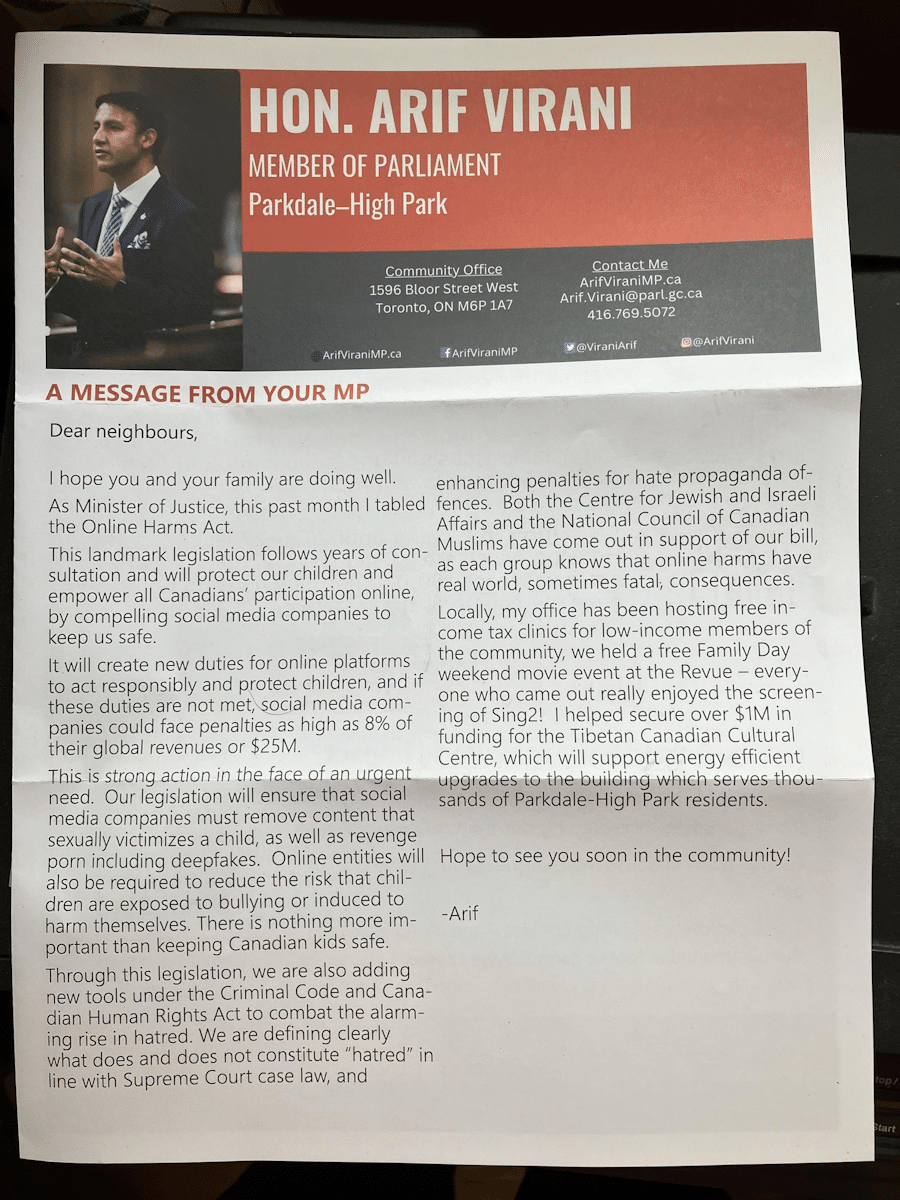
E-commerce giant Amazon has just launched new tech that makes it far easier to sign up for its palm-scanning payment service, sparking renewed concerns among privacy experts, with some warning it’s another pebble in the growing rock pile of big tech-enabled, Orwell-style digital enslavement.

Amazon announced on March 28 that it had just launched a new app that lets first-time users of its Amazon One biometric payment service sign up for it from the comfort of their home (instead of having to do it at a physical store) by taking a photo of a hand and uploading it to Amazon’s servers.

Share

Viral Videos Appear To Show FBI Agents Visiting Homes Over Social Media Posts

Two videos have gone viral on X showing FBI agents visiting people’s houses to ask questions about offensive social media posts.

The first clip shows three people who claim to be FBI agents visiting a woman called Rolla Abdeljawad at her home in Stillwater, Oklahoma.

The woman asks them to identify themselves, but they refuse to do so while being filmed, before claiming they had already shown the woman their IDs.

h/t DS

Share

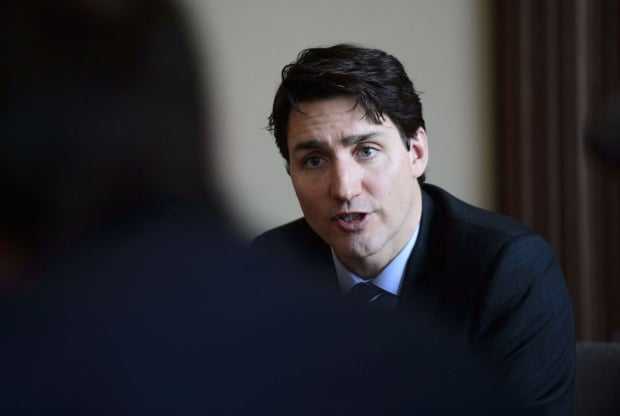
Name-calling won’t silence Justin Trudeau’s critics. Maybe it’s time for his Liberals to stop lecturing and start listening

The federal government is clearly worried about the onslaught of criticism of its newly introduced Bill C-63, the Online Harms Act. That criticism has come from all corners, including civil society groups like the Canadian Civil Liberties Association and the Canadian Constitution Foundation¸which I work for.

Academics have warned about amendments to the Criminal Code and Canadian Human Rights Act chilling speech, and about the expansive search powers for the proposed “Digital Safety Commission.” Thousands of regular citizens have written to their Members of Parliament asking them to stop and fix the bill.

Share

Anthony Furey: The Problem With Defining ‘Online Harms’

We’ve had this debate before. The free speech advocates won. But a long time has passed since Canada recognized that it’s not up to the government to police legal things people write and say online, offensive or otherwise.

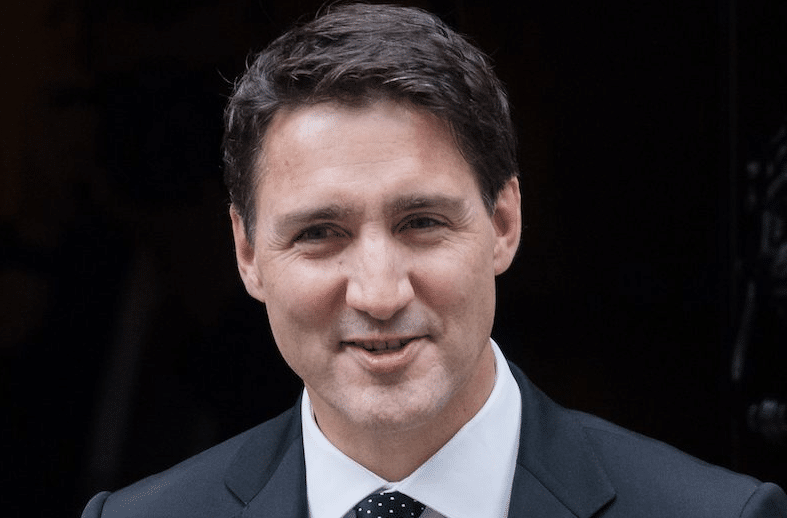
Eternal vigilance is the price of liberty, and so here we find ourselves again having to sound the alarm so that Prime Minister Justin Trudeau’s problematic Online Harms Act doesn’t become the thing to harm us.

Share

Google Has Been Ratting Out YouTube Viewers to the Feds

You really need to keep an eye on the Department of Injustice these days because you never know what they’re up to. The latest example comes to us from Forbes this week. It involves Google and a collection of YouTube videos that have attracted the attention of the feds. It’s not just the creators of the videos who are of interest, however. Forbes uncovered warrants showing that the FBI had demanded user data on everyone who watched particular videos.

Share

Scotland’s Hate Crime Act is an authoritarian monstrosity

‘Then, before you know it, you’ve committed a hate crime.’ These are the words of the ‘hate monster’, a fuzzy, orange cartoon character designed by Police Scotland. A video featuring said monster was released earlier this month, as part of an awareness-raising campaign for the new Hate Crime Act that’s coming into force in Scotland on 1 April.

Share

Sask. RCMP ‘routine’ traffic stops will include mandatory breathalyzer tests

Drivers in Saskatchewan who are pulled over by RCMP should be expected to take part in alcohol screening tests beginning April 1.

“Saskatchewan RCMP will be conducting roadside Mandatory Alcohol Screenings (MAS) on all lawful traffic stops in Saskatchewan RCMP jurisdiction on an on-going basis,” an RCMP news release said.

Regina police announced a similar initiative(opens in a new tab) for the month of March.

h/t Mauser

Share

Excessive free speech is a breeding ground for more Trumps

There was a bit of good news about the future of public discourse this week. The United States Supreme Court, even though stacked with right-wingers, sounded like it was ready to give the Biden administration the go-ahead to try to persuade social-media platforms not to put out content promoting nonsense about the presidential election, conspiracy theories about the pandemic and other assorted bilge and crackpottery.

The states of Missouri and Louisiana accused the government of stifling their speech by pressuring platforms to downgrade or drop their posts. But the justices, including conservatives Brett Kavanaugh and Amy Coney Barrett, didn’t sound like they were buying it.

The TDS is beyond cure in this one.

Share

Police Scotland hate crime training leaked

Police Scotland’s officers will investigate actors and comedians if a complaint is made under new hate crime laws.

Training, obtained by The Herald, states that material regarded as “threatening and abusive” under the Hate Crime and Public Order (Scotland) can be communicated “through public performance of a play.”

The Scottish Tories said this appeared to be at odds with the legislation and called for the force to explain.

This is Madness.

Share

Canada’s flawed online harms bill and the U.K.’s misguided legislation on extremism are parts of a troubling trend

It’s troubling how willingly some societies will forsake civil liberties in the name of a purportedly greater or more urgent cause.

Because there are very few, if any, really, in a liberal democracy which eclipse precious rights of freedom of speech, assembly and beliefs. Even what most of us might condemn as outrageous expression or heretical — hateful — ideologies.

Governments wade into the murky end of the suppressing pool at our peril. And they’re never more baleful than when cloaking themselves in virtue — by way of shielding us from what they’ve decreed to be harmful.

Share

Every scary thing Meta knows about me — and you

March 14, 2022, was an ordinary day. I snoozed my alarm at 7.15am and then again at 7.30am. I checked on a prescription at 10.25am, scanned my bank balance at 2.40pm and bought a birthday card for my father at 4.05pm.

I didn’t record these mundane actions, but Facebook did.

In fact, between December 2021 and December 2023, Meta — the company that owns Facebook, Instagram and WhatsApp — tracked me an average of 33 times a day from websites and apps that aren’t connected to my social media accounts. Even when I wasn’t looking at them, they were looking at me.

Share

Canada’s Online Harms Act is revealing itself to be staggeringly reckless

You have to understand: the Online Harms Act was supposed to be the “good” bill, the one part of the Trudeau government’s three-pronged effort to regulate the internet that was addressed to a real problem.

The Online News Act (Bill C-18) was a transparent shakedown operation, whose stated premise – by posting links to stories on news media websites, social-media platforms were not providing them with valuable free advertising but stealing their content – was but a front for its actual premise: the platforms have money, and the media want some.

Share

Scan your receipt to exit? Loblaw facing backlash as it tests receipt scanners at self-checkout

In an attempt to combat theft at its stores, Loblaw is testing receipt scanners at four of its locations, the grocery giant told CBC News.

Customers who go through self-checkout must use the device to scan their receipt’s barcode — confirming that they paid something — which opens a metal gate, letting them leave.

Share