The Snake, The FBI, And Center 16: Why The Takedown Of A ‘Most Sophisticated Cyber-Espionage Tool’ Is Important

For more than a decade, a unique bit of malicious computer code was burrowed in the deepest corners of Internet servers in more than 50 countries, secretly gathering data and even records of what a person might be typing on a keyboard. Important information was extracted and covertly sent via a network of other infected computers, hiding its tracks from easy detection, back to the code’s creators.

Called various names — Snake, Uroburos, Venomous Bear — the malware was suspected in a damaging hack of Germany’s Foreign Ministry in 2017. NATO computers were reportedly compromised. The personal computer of a journalist who worked for a U.S. news organization and reported on the Russian government was reportedly targeted.

Share

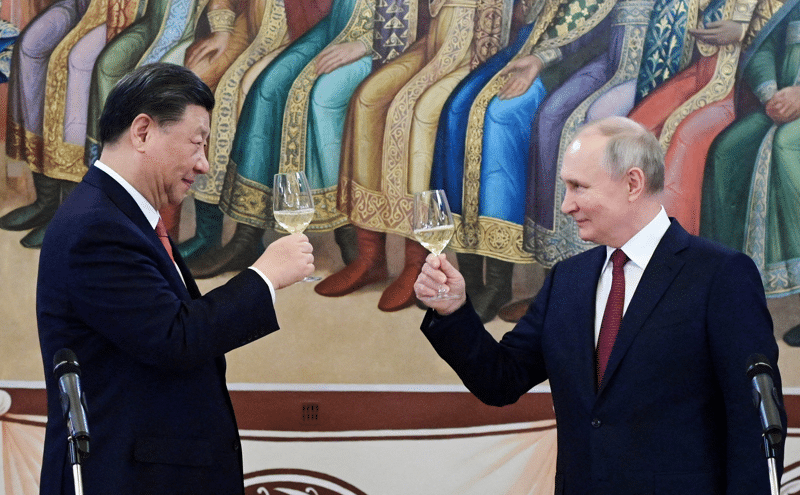
China and Russia strike deal in push for Arctic power

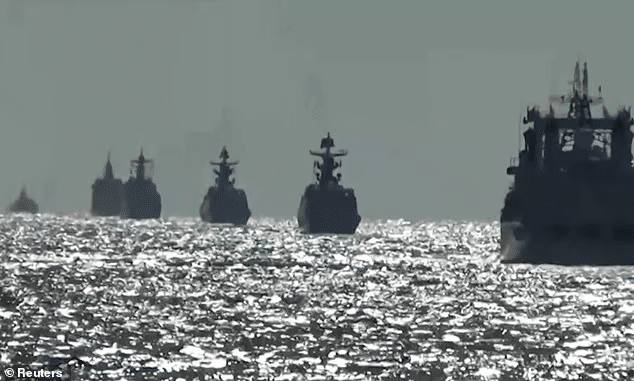
China and Russia have signed an agreement to strengthen their co-operation on maritime law enforcement in the latest example of partnership.

The memorandum follows a two-day meeting in Murmansk, northwest Russia, and comes as Beijing seeks a bigger role in Arctic affairs and Moscow builds up military outposts in the region, including deep-water ports and airfields.

Share

Russian NGO that built ties with Canadian academics, professionals took direction from Moscow’s spies, FBI alleges

A Russia-based outreach organization that has cultivated relationships with rising American, European and Canadian policy professionals and academics has secretly received financing and direction from Moscow’s spy service, U.S. prosecutors allege.

In court documents filed in Washington, U.S. authorities say that an organization known as Public Initiative Creative Diplomacy, or PICREADI, was being used by Russian intelligence to glean information about influential foreigners.

Share

‘A New World Order’? The Iran-Russia-China Axis During the Biden Administration

As Winston Churchill famously pointed out, “I never worry about action, but only about inaction”. The Biden administration’s inaction has led to the creation of a new axis of tyrannies: Russia, China and Iran, with North Korea not far behind. As the Tehran Times, which has close ties to Iran’s foreign ministry, wrote: “[T]oday we are witnessing the formation of a new world order….”

Share

Leaked Files Show China And Russia Sharing Tactics On Internet Control, Censorship

Secret handshake?

Years before Chinese leader Xi Jinping and Russian President Vladimir Putin declared a “no-limits” partnership and the Kremlin launched a wide-ranging censorship campaign following its full-scale invasion of Ukraine, Beijing and Moscow were sharing methods and tactics for monitoring dissent and controlling the Internet.

That growing cooperation between the two countries is shown in documents and recordings from closed door meetings in 2017 and 2019 between officials from the Cyberspace Administration of China (CAC), its chief Internet regulator, and Roskomnadzor, the government agency charged with policing Russia’s Internet, that were obtained by RFE/RL’s Russian Investigative Unit (known as Systema) from a source who had access to the materials. DDoSecrets, a group that publishes leaked and hacked documents, provided software to search the files.

Share

How the West rolled up a network of Russian ‘sleeper spies’

When a young Brazilian named Victor Muller Ferreira, with a master’s degree from a top American university, landed at Amsterdam’s Schiphol airport in April last year to take up an internship at the International Criminal Court in the Hague, things did not go quite according to his plan.

The Dutch authorities had been tipped off by the FBI that he was not who he claimed to be. He had been identified as Sergey Cherkasov, an officer in the GRU, Russia’s military intelligence service. They promptly put him on a flight back to Sao Paulo, where two months later he was jailed for 15 years for identity fraud.

Share

Axis vs. Allies, Then and Now

World War II was already a year old when Germany, Japan and Italy formally signed the Tripartite Pact in 1940, creating a military alliance among three nations intent on world domination. History would subsequently call them the Axis powers. It would be another year before America entered the conflict, but this Axis alliance of power sent a sharp and chilling message to Washington. There was no mistaking now that our nation, and our very civilization, was now in serious jeopardy.

In its wake, America accelerated its defense planning and just prior to the Axis pact being signed, the United States reintroduced the draft in recognition that, pact or no pact, democracy was at risk.

Share

The ‘ordinary’ family at No 35: suspected Russian spies await trial in Slovenia

Maria Mayer and Ludwig Gisch settled in Slovenia’s capital, Ljubljana, in 2017, with their two young children. People who met the couple tended to like them; the new arrivals from Latin America were friendly but never overbearing, inquisitive but never pushy.

Mayer opened an online art gallery, while Gisch ran an IT startup. They told friends that a nagging fear of street crime at home in Argentina had prompted their move to Europe. Peaceful, mountainous Slovenia offered a refreshing change of pace.

In interviews with about a dozen people who knew one or both of the couple, two words kept cropping up: “ordinary” and “nice”. Neighbours insisted the people living at No 35 were a run-of-the-mill family, and said the children could often be heard playing in the garden, shrieking in Spanish.

Share

Russian ambassador claims Canada a ‘very dangerous country’ to visit

OTTAWA – Russia’s ambassador in Ottawa claims Canada is unsafe for his compatriots to visit.

“Canada today is a very dangerous country for Russian citizens,” Oleg Stepanov said in a Russian-language interview last Friday.

“I would not recommend it for tourism, education or business.”

Now if he said Canada was a stupid country citing Trudeau as proof I would have no choice but to agree with him.

Share

Spy in British embassy was ex-RAF officer who hated Britain and loved Russia

A spy inside the British embassy was snared betraying his country by an undercover MI5 operation involving an agent posing as a Russian intelligence officer called Irina, a court has heard.

David Smith, 58, was a security guard in the British embassy in Berlin who hated the UK and kept a cartoon of Vladimir Putin holding Angela Merkel’s severed head in his work locker.

As far back as 2018, the ex-Royal Air Force officer began gathering sensitive information about British interests and is alleged to have given them to Russia in exchange for money.

Share

Russian-Iranian Axis: Biden Administration Missing in Action?

Iran is now selling surface-to-surface missiles to Russia for use in its war on Ukraine — on the cusp of a reported “major Ukrainian offensive” — in addition to the drones it has already been delivering, two senior Iranian officials and two Iranian diplomats told Reuters.

According to anonymous US and allied officials quoted by the Washington Post, Iran has secretly agreed to send “what some officials described as the first Iranian-made surface-to-surface missiles intended for use against Ukrainian cities and troop positions.”

Share

Intelligence agency calls for a ‘heightened state of vigilance’ against Russian-aligned hacks

The agency that oversees cybersecurity for the federal government called for a “heightened state of vigilance” against the threat of retaliatory cyber attacks from Russia-aligned hackers on Thursday — just hours after Ottawa promised to give Ukraine four Leopard 2 A4 main battle tanks.

The warning comes as Killnet, a group Canada and its allies list as a “Russian-aligned cybercrime group,” vows to go after countries that support Ukraine.

A spokesperson for the Communications Security Establishment (CSE) said the agency “is aware of reporting regarding an increase in Russian state-aligned hacktivist groups seeking to compromise or disrupt Ukrainian-aligned allies, in response to their continued support of the government of Ukraine.”

Share

Germany arrests second suspect in Russia espionage case

German authorities have arrested a man alleged to have passed intelligence information to Russia, German prosecutors said on Thursday.

The suspect, identified as Arthur E. in line with Germany’s privacy laws, was arrested on Sunday in Munich airport, as he arrived from the US.

German authorities were aided in their efforts by the US Federal Bureau of Investigation (FBI).

“Arthur E. took the information to Russia and handed it over to the intelligence service there,” said a statement from prosecutors.

Share