Indigenous elder tells UBC event she wishes to see academic Frances Widdowson raped

Indigenous elder tells UBC event she wishes to see academic Frances Widdowson raped

The University of British Columbia said it “does not condone” recent comments by a First Nations leader but did not indicate if it would take any action after the guest speaker at one of its events expressed her desire to see her political opponent get beaten and raped.

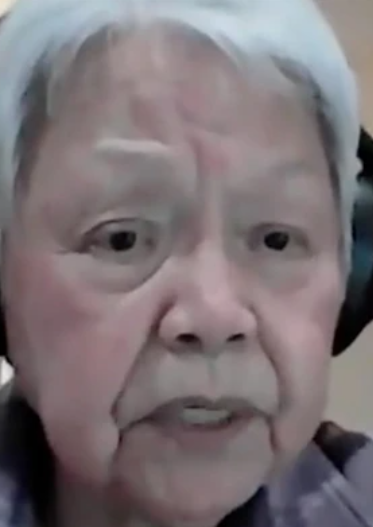
UBC’s response comes after Charlene Belleau, an elder in the Esk’etemc First Nation in B.C., appeared at a virtual event earlier this week hosted by Derek Thompson, the university’s Indigenous initiatives advisor. During the virtual talk, Belleau recalled comments she made toward Frances Widdowson, an academic focused on economics and Indigenous policy, when she had approached Widdowson in person at a campus event in late 2025.

Share

Fake Graves Nonsense Spewing Ex BC chief says she ‘wishes’ Widdowson was ‘raped’ to ‘understand’ residential school violence

Fake Graves Nonsense Spewing Ex BC chief says she ‘wishes’ Widdowson was ‘raped’ to ‘understand’ residential school violence

CALGARY — A former BC indigenous chief has said that she “wishes” Dr. Frances Widdowson would be beaten and raped so she would understand “what our people went through” with regards to the legacy of indigenous residential schools.

During a Tuesday livestream hosted by the University of British Columbia’s (UBC) Faculty of Medicine, Charlene Belleau of the Esk’etemc First Nation in BC recounted a heated confrontation she had with Widdowson at Thompson Rivers University in November 2025.

Share

Grassy Narrows First Nation denied federal funding for search at former residential school

Grassy Narrows First Nation denied federal funding for search at former residential school

A group that’s been searching for missing children and unmarked graves at the former McIntosh Indian Residential School in northwestern Ontario says it’s been denied federal funding to continue its work.

The search is being led by the Wiikwogaming Tiinahtiisiiwin project team, an initiative started by members of Grassy Narrows First Nation. The Ojibwe community is also known as Asubpeeschoseewagong Netum Anishinabek.


In case you develop dizziness, nausea, tics and or hives at this ongoing fake graves scam the CBC has made help available…

WARNING: This story contains references to the Indian residential school system. Resources can be found at the bottom of this story.

Share

Federal government pulls funding for Grassy Narrows fake grave search

Unless something changes, the former McIntosh Indian Residential School (IRS) will not be searched any further for unmarked graves.

Representatives from Grassy Narrows First Nation say they have been informed by federal officials that funding for searching for graves at the area IRS has not been approved ahead of the end of the current fiscal year, leaving those who were hopeful for the search with little to no recourse.

“This decision places at risk work that has already revealed more than a hundred unmarked burials at the site, with more graves expected to be found, and work that has provided former students, survivors, and families with critical information about children who never returned home,” the Wiikwogaming Tiinahtiisiiwin Project said via media release following the decision.

Share

Chief tells senators Kamloops residential school ‘graves’ scam search could take decades

Sacred fake graves money dance

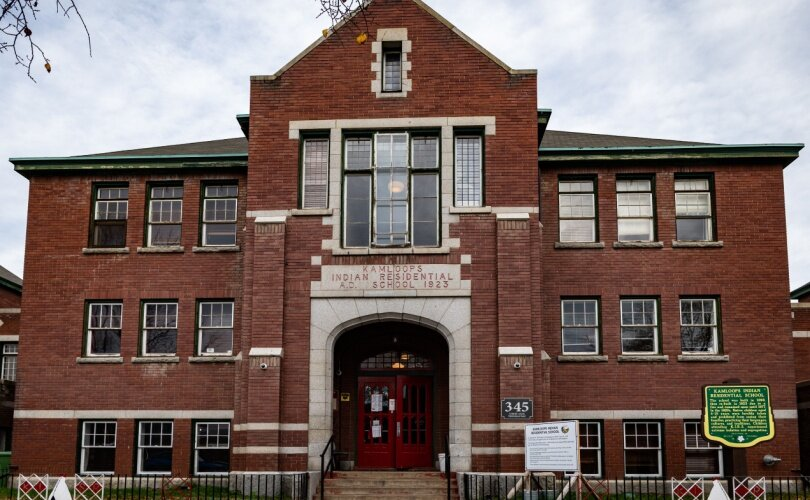
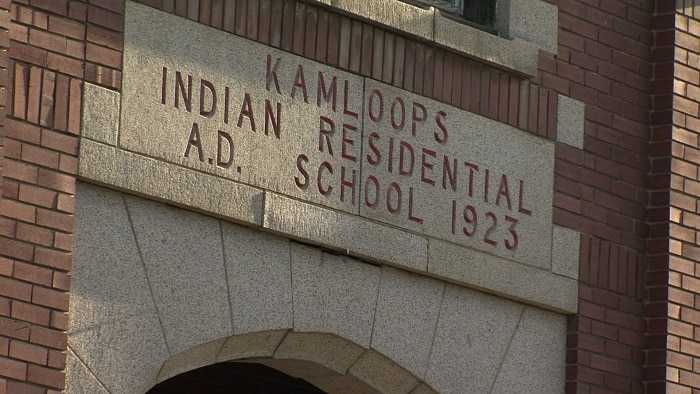
A search for alleged unmarked graves at the former Kamloops Indian Residential School site could take decades before yielding answers, the chief of the Tk’emlúps te Secwépemc First Nation told a Senate committee, while acknowledging no remains have yet been recovered nearly five years after the initial claim.

I am sick of these scammers.

Share

Memorial at Fort Calgary site may unintentionally honour killer of settlers and priests

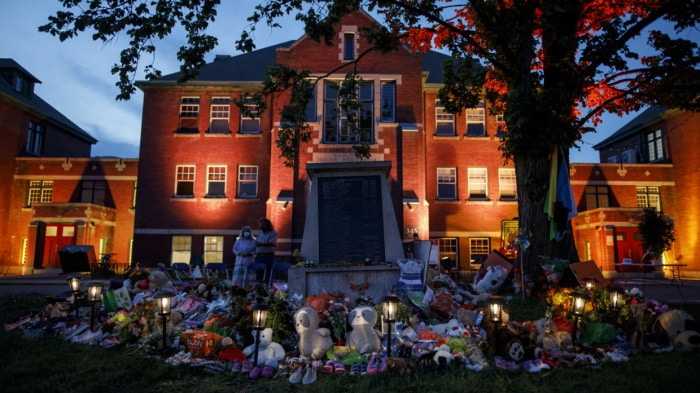
Calgarians brought 215 pairs of children’s shoes to the steps of Calgary’s municipal building after First Nation Tk̓emlúps te Secwépemc announced, in May 2021, ground-penetrating radar had detected 215 graves on the grounds of the former Kamloops Indian Residential School in Kamloops, BC.

The radar survey was conducted by anthropologist Sarah Beaulieu, who said at the time ground penetrating radar detects soil disturbances, not bodies.

Share

BLACKED OUT: Ottawa censors files on $12.1 million spent searching for alleged Kamloops residential school graves

The federal Department of Crown-Indigenous Relations has redacted nearly all details from internal reports describing how a B.C. First Nation spent millions in taxpayer funding intended to locate alleged graves of children at the former Kamloops Indian Residential School.

Blacklock’s Reporter says documents released under the Access to Information Act show the department labelled the reports “confidential,” concealing details about work undertaken by the Tk’emlups te Secwepemc First Nation after Ottawa provided $12.1 million to support searches tied to claims that 215 children were buried on the site.

Share

Bill C-9 to protect indigenous sacred sites including unmarked graves under new hate crime law

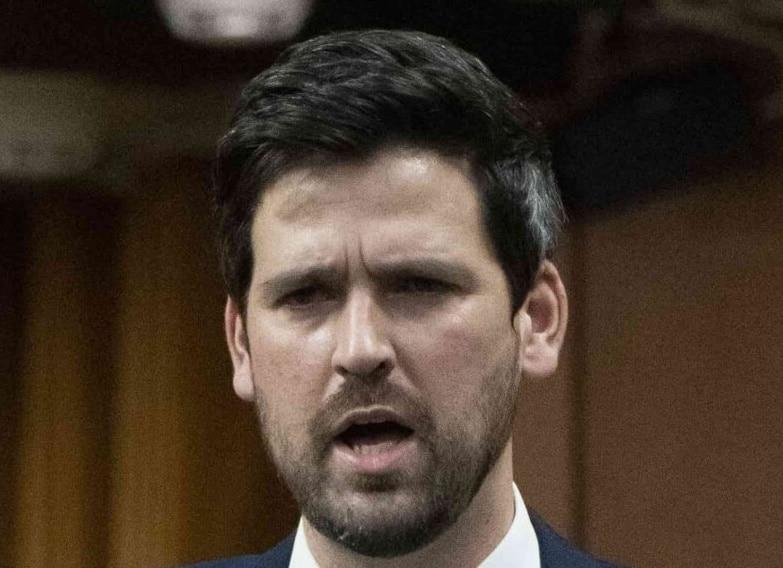
Sean Fraser – almost certainly lying if his mouth is open.

A federal hate crimes bill would extend criminal penalties to anyone accused of obstructing indigenous sacred sites — including areas identified as unmarked graves — according to an internal Department of Justice memo that was not highlighted when the legislation was introduced.

This is called covering up a crime scene.

(Incognito)

Share

Kamloops First Nation has no luck in ongoing hunt for imaginary grave sites in latest BS survey

A press release from the office of the Chief of the Tk̓emlúps te Secwépemc First Nation in Kamloops, B.C., has stated that the most recent investigation at the Kamloops Residential School site shows “signatures that resemble burials” but no confirmed graves.

The investigation, which the B.C. government pledged $12 million to in 2021, has yet to produce any concrete evidence of burials or gravesites.

h/t Mauser

Share

Kamloops residential school search for ̷p̷o̷t̷e̷n̷t̷i̷a̷l̷ non-existent unmarked graves rules out some areas: First Nation

The Tk̓emlúps te Secwépemc investigation at the former Kamloops Indian Residential School has ruled out some areas on the grounds as areas where potential unmarked graves may be, while data from multiple surveys has identified other areas that “should now be the primary focus” of the search.

It’s been almost five years since the First Nation shared that preliminary findings from a ground-penetrating radar survey found some 200 potential unmarked graves on the grounds of the former residential school.


Nothing but theft.

Share

It’s ‘Dead Wrong’ for Canada to call residential schools genocidal

In his widely-praised Davos speech, Mark Carney paid homage to a renowned 1978 essay by Czech dissident Václav Havel, “The Power of the Powerless.” In it, Havel tells the parable of a greengrocer who refuses to place a “Workers of the World unite!” poster in his window, symbolizing his personal dissent from a totalitarian regime’s extortion of rote public mantras nobody believes as a tool for mind control.

Share

No Bodies, No Accountability

In 2023, we published Grave Error, a book of essays that candidly discusses the “unmarked-graves” social panic that swept Canada four and a half years ago. In May 2021, it was announced that ground-penetrating radar (GPR) had identified the formerly unknown resting places of 215 Indigenous children who’d attended the Kamloops Indian Residential School in British Columbia. The announcement sent shock waves through Canadian society, and led to months of self-lacerating commentary about our country’s colonial sins. Journalists and politicians alike acted as though these 215 victims—children who’d presumably been dispatched by murderous Residential School staff—had been identified and unearthed. It was only once this initial period of national hysteria ended that observers noted that, outside of the GPR reports, there existed no proof of graves, bodies, or human remains. And since GPR technology cannot detect bodies, but only soil dislocations that may equally indicate tree roots, drainage ditches, rocks, or other artefacts that have nothing to do with graves, the claim that these GPR-identified soil anomalies corresponded to graves remained unproven.

Share

FLANAGAN: Learning the truth about ‘children’s graves’ and residential schools is more important than ever

When the book Grave Error was published by True North in late 2023, it became an instant bestseller. People wanted to read the book because it contained well-documented information not readily available elsewhere concerning the history of Canada’s Indian Residential Schools (IRS) and the facts surrounding recent claims about “unmarked graves.”

(Incognito)

Share

‘Journalism’ Is Totally Broken

As we gnash our teeth about the corruption of the 60 Minutes “journalists” who are whining that they can’t spread propaganda without scrutiny anymore, let’s recall that the problem is not limited to a few bad apples.

Pretty much the entire barrel is rotten. If you pick through the apples in there, you will find a few that are still edible or even good; for the most part, the lot of them should just be thrown out.

One of the biggest stories of the past few years in our neighbor to the north is the fake scandal of the state-sponsored and church-run residential schools for the native population.

Share

Feds lock away records tied to Kamloops residential school grave claims

Ottawa has sealed all progress reports connected to the federally funded search for the alleged graves of 215 children at the former Kamloops Indian Residential School, citing confidentiality to block public access to documents detailing how the money was used and what was actually found.

Blacklock’s Reporter says the Department of Crown-Indigenous Relations refused an Access to Information request for the records, saying the reports submitted by the Tk’emlups te Secwepemc First Nation were protected under the Access to Information Act as confidential third-party information.

(Incognito) h/t XC

Share