Is It National Day Of Anomalies Remembrance Already?

Northern Manitoba First Nation reports 187 anomalies found at or near site of former residential school

A First Nation community in northern Manitoba says ground-penetrating radar has found 150 anomalies at the site of a former residential school, including what are believed to be 59 unmarked graves at a nearby cemetery.

The chief of Pimicikamak Cree Nation also says 37 anomalies have been found off-site, more than a kilometre away from St. Joseph’s Residential School.

The anomalies — places where the ground has been disturbed — were found at depths of between one and two metres, Chief David Monias said Wednesday.

Share

GIESBRECHT: Okay to fly the flag after all, CBC decides… no apology, though!

CBC is telling Canadians to joyfully celebrate Canada Day 2024 

This stands in stark contrast to how they were telling Canadians to celebrate — or rather, how not to celebrate — Canada Day 2021. Canadians were told in 2021 that they must be ashamed of their past, and our “dark history” as evidenced by the “remains” of 215 children who had been “discovered” at Kamloops.

Share

Ottawa launches residential school map to help in search for fake graves

The Canadian government has launched a new interactive online map pinpointing the location of residential schools, and experts say it will help in the search for unmarked or forgotten graves of children forced to go to the institutions.

Many residential school buildings have been torn down, paved or built over since the first one opened in Canada in the 1830s and the last one closed in the mid-1990s.

The Indian Residential Schools Interactive Map will help searchers get accurate locations of former buildings.

Share

STIRLING: Before the priests and the nuns… when every child did NOT matter

With the focus on colonial oppression as an evil in contemporary society, people who are not aware of history tend to imagine that life was like the Garden of Eden in North America, before those nasty white Europeans arrived.

No. As Hobbes wrote: “Life in the state of nature is solitary, poor, nasty, brutish, and short.”

And it was cruel — especially if you were an Indigenous orphan or disabled.

Share

Terry Glavin: Kamloops First Nation puts even more distance from ‘mass grave’ claim

It’s unlikely to placate a growing constituency of skeptical researchers that has sprung up in reaction to the Trudeau Liberals’ role in inciting an eruption of national hysteria that began with incendiary claims that a “mass grave” had been discovered in a Kamloops orchard in May, 2021.

Share

Conrad Black: The media and Trudeau have yet to return to reality

Residential Schools Kenora

The controversy over the alleged surreptitious burial of 215 Indigenous children who had supposedly died at the Kamloops Indian Residential School has been extremely damaging to this country, because it has naturally inflamed the grievances of natives and incited the guilt of a huge number of Canadians, but is based on suppositions unjustified by the known facts. As with other contemporary controversies, dissent pending receipt of evidence tends to be greeted by a storm of reproach that the individual who is unconvinced of the conventional explanation for these alleged graves is not only a ”grave-denier,” like someone who denies the overwhelmingly documented horrors of the Holocaust, but is also an anti-Indigenous racist and even a closet apologist for genocide against the native peoples of Canada.

Share

STIRLING/GREEN: ‘The Knowing’ has the feel of propaganda

Canadian journalist Tanya Talaga has a new book coming out this summer called “The Knowing.”  In this CBC report about it, Talaga is quoted as saying: “We have all heard of someone who didn’t come home — this is The Knowing. It is Canada’s shame. If every Indigenous person looked for our missing family, found out what happened to them, we could change the narrative of the story of Canada. Family by family. Truth by truth.”

Okay, Tanya. Give us the list of names, besides your twice-married great-great-grandmother, Annie (nee Carpenter) Gauthier (1871-1937), who never went to a residential school.

Turns out there aren’t lists.

Share

Conrad Black comments on fake graves scandal results in walkout at WAB conference

Conrad Black is a lot of things…a Donald Trump and Richard Nixon apologist, a big fan of Henry Kissinger and Rex Murphy, and an optimist about the future of democracy in Canada.

But it was the former newspaper magnate’s outright denial of the death of Indigenous children at residential schools that caused a contingent from the CRTC and a delegation from Northern Native Broadcasting to walk out of Thursday’s Western Association of Broadcasters (WAB) conference.

Our media sucks.

Share

Incinerated children claims ‘truly laughable’

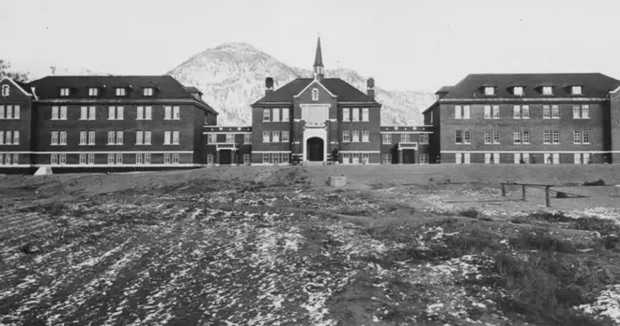
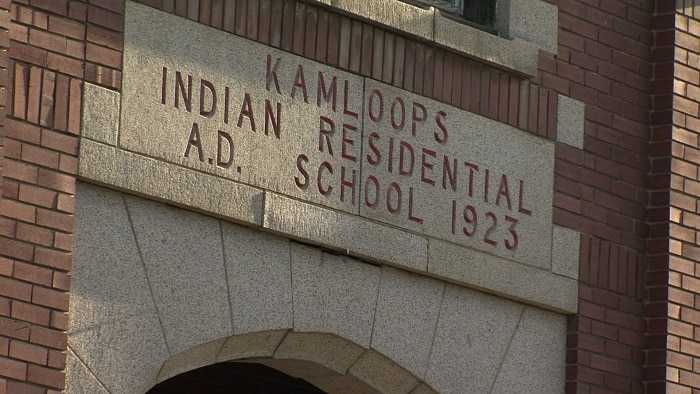
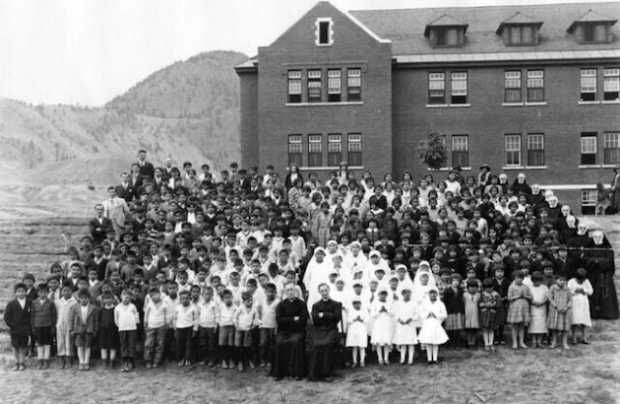
Skeptics of the “mass graves” narrative took notice of the Tk’emlúps te Secwépemc (Ttes) First Nation’s recent statement commemorating the discovery of “215 anomalies” at the former Kamloops Indian Residential School on May 27, 2021.

“Anomalies” is a noticeable departure from the proclamation the First Nation shared three years ago and in the successive years. The office of the Chief stated that thanks to a ground penetrating radar specialist, “the stark truth of the preliminary findings came to light — the confirmation of the remains of 215 children who were students of the Kamloops Indian Residential School.”

I DEMAND REPARATIONS!

Share

GIESBRECHT: Let’s get the facts on the graves, with a public enquiry

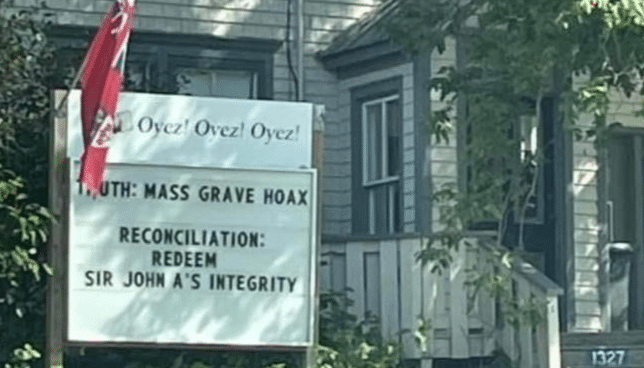
Canada needs a public inquiry into what has become known as “The Kamloops Graves Hoax.”

The May 27, 2021 claim of the Kamloops Indian band was that “human remains”  were found in the apple orchard area of the former Kamloops Indian Residential School, resulting in what has been described both as a “national hysteria” and a “moral panic”. The band subsequently extended the claim to include other even more graphic  terms, such as “bodies”, “graves” and even “mass graves.” Emotional articles and books followed.

Share

The record corrects on ‘unmarked graves’ hysteria

There is much lamenting — and much to lament — about the state of journalism in Canada. How can the truth be found, the common good served, if our networks and newspapers are in a parlous state? Who will provide the information we need when digital giants vacuum up the revenue that in the past provided for the essential-but-not-click-generating work of careful and dogged reporting?

Share

‘Terrible abuses’ — or perhaps not?

Residential Schools Kenora

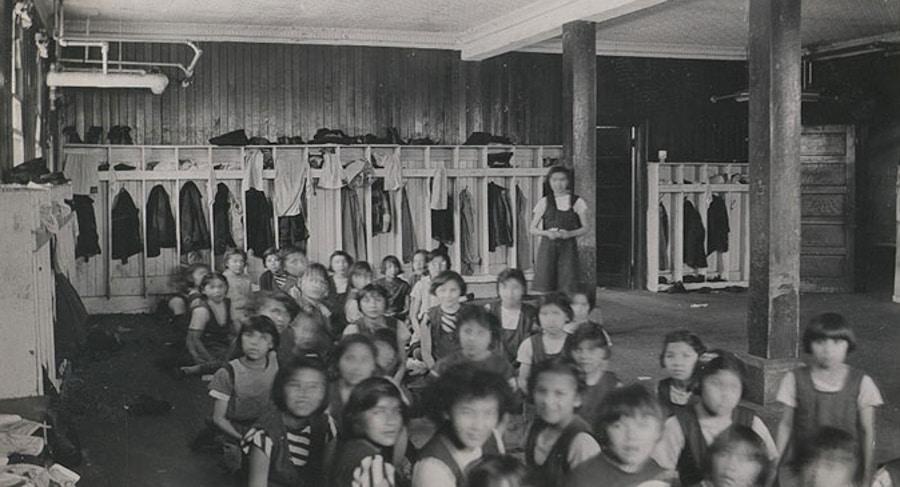
Children who attended Residential School had better health than those who did not.

MORE AND MORE, serious writers on the Indian Residential Schools issue are rejecting the label “genocidal” to describe the record of the Schools in their treatment of indigenous people. It is now less widely believed that the Schools routinely raped and murdered the children in their care and threw them into furnaces, or buried them secretly in unmarked mass graves.

On the other hand, writers often qualify their rejection of these extreme, unsupported claims by conceding that the Schools were, all the same, places of terrible abuse and unrelieved misery.

But were they in fact? Fortunately a great deal of evidence is becoming available from the study of archival records that enables us to make an objective assessment of this indictment.

Share

Cory Morgan: National Healing Can’t Happen Until the Kamloops Residential School Site Is Excavated

It’s been three years since Tk’emlúps te Secwépemc Chief Rosanne Casimir announced “the confirmation of the remains of 215 children who were students of the Kamloops Indian Residential School.”

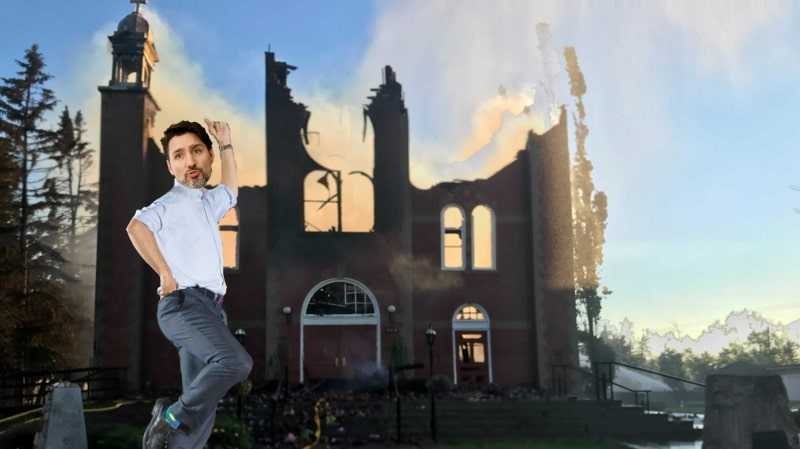
The news rocked the nation and made headlines around the world. Demonstrations erupted, and apologies were offered by the government along with hundreds of millions of dollars to investigate alleged burials of residential school children. Up to 100 churches in Canada were vandalized or burned to the ground in reaction to the news. The Canadian flag was kept at half-mast for nearly six months, and the Pope came to Canada to beg forgiveness.

Share