“Sugarcane” is “Sugarshit”

A Must-Not-See Film About a Terribly Difficult Subject

When it comes to stories that hold the potential to slide from sensitive to sensational, documentarians can take several approaches. There’s the talking-head driven journalistic approach, in which the story and its analysis are laid out, beat by beat. There’s also the more lurid approach that films about cults and crime can employ, with re-enactments and ominous musical cues.

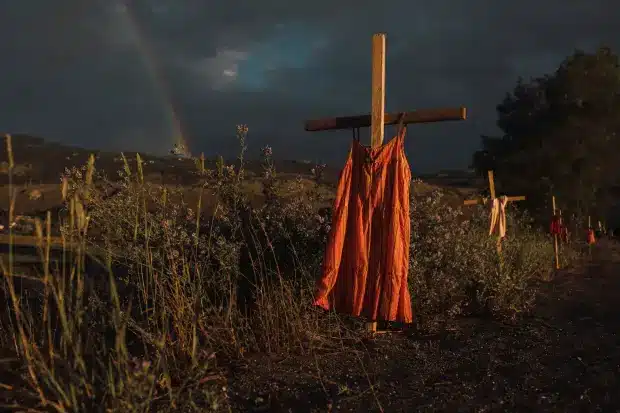
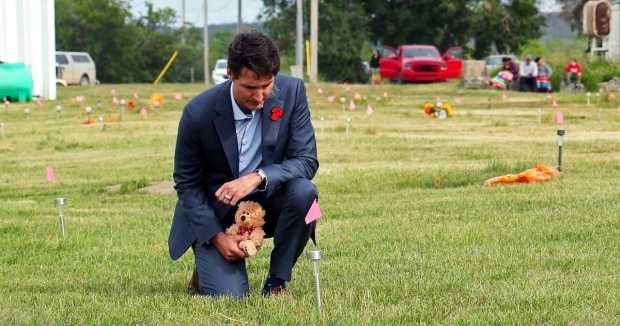
But a third way — and the one that Emily Kassie and Julian Brave NoiseCat take in “Sugarcane” (in theaters), to their great credit — is to invite the audience to dwell alongside those affected by the story, letting their experiences and emotions guide the film. This one tells a horrifying story: In 2021 and 2022 in a series of cascading discoveries, unmarked graves were found on the grounds of a number of Indigenous Canadian residential schools. On investigation, they revealed horrifying mistreatment of Indigenous communities, where parents were virtually forced to send their children to the schools as part of the government’s quest to “solve the Indian problem.”

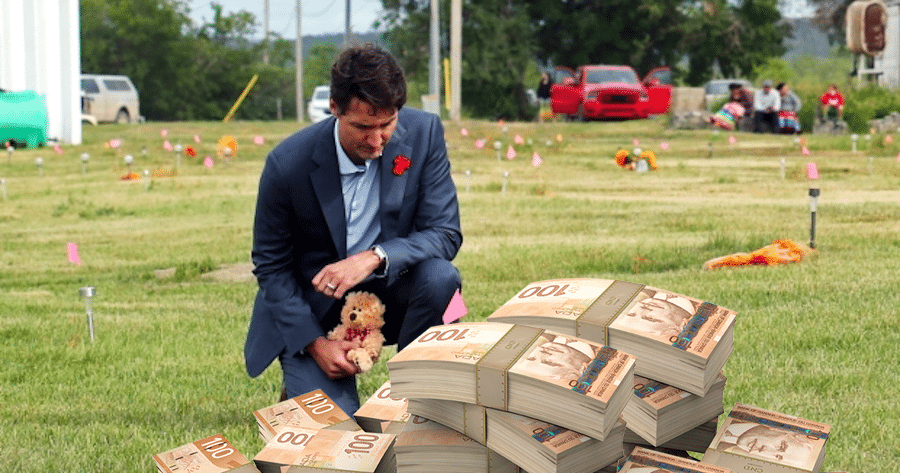
I wonder how much this cost tax payers.
Share

MORGAN: The Kamloops Residential School grave story is a hoax

Last week, Joseph Quesnel wrote a column in the Western Standard asking folks to stop referring to the alleged burial of children at the Kamloops Residential School site as a hoax.

I have nothing but respect for Joseph. He has been an excellent voice on indigenous policies in Canada and I don’t doubt he will continue to be so. In this case though, I can’t disagree more strongly with him. Perpetuating a hoax is far more damaging to indigenous Canadians than appearing insensitive in calling it out is.

Share

RUBENSTEIN: Indigenous graves… it is not racist to ask for proof

Increasingly, when it comes to Canadian indigenous grievances and adversities, truth-telling is being redefined as denialism, a term chosen because of its genocide denial allusions.

This is my take on Joseph Quesnel’s July 26th Western Standard opinion piece titled, “Those on the right shouldn’t call residential school grave issue a ‘hoax.’” It is an essay driven by hurt indigenous feelings ultimately rooted in myths and other fanciful stories transmitted by “knowledge keepers,” rather than by hard evidence and rational contemplation grounded in Western science.

Share

GIESBRECHT: Money under false pretences?

A recent article appeared in the Western Standard admonishing conservatives for using the term “hoax” when referring to the Kamloops claim — namely the MAY 27, 2021 claim — that the remains of 215 former students had been discovered on the grounds of the local residential school.

The author of the article noted that many former residential school students might be offended by the use of the term. I agree with him that innocent people should not be unnecessarily hurt by writers trying to make a point. Everyone agrees that many people were hurt by their residential school experiences. That is no hoax.

Share

RUBENSTEIN: Liberal government trapped in a fictitious Dickensian time warp of its own creation

“It was the best of times, it was the worst of times” is the opening line of Charles Dickens’ famous historical novel A Tale of Two Cities, a book that came instantly to mind after reading two June 19, House of Parliament Question Period notes prepared for Gary Anandasangaree, Canada’s Minister of Crown-Indigenous Relations.

These talking points are called Combatting Residential School Denialism, the other Indian Residential School Sites – Unmarked Burials.

Share

CLIFTON: They call me a ‘denier,’ but I’m neither ‘fringe’ nor ‘foul’

Over the last several years a new and unsavoury sub-species of Canadian has been named by some of our elites: the “denier”. A detailed example of this charge comes from Stephanie Scott, Executive Director for the National Centre for Truth and Reconciliation, who recently wrote:

“Sadly…we see increased ugliness from those who deny our truths, experiences and oral histories as reality. Deniers will write their fringe blogs and substacks and leave their foul [emphasis added] comments on social media challenging the documented experiences of Indigenous People, particularly residential school Survivors…They will say: ‘It didn’t happen,’ ‘It wasn’t that bad,’ ‘Some good came out of residential schools,’ or the most repugnant, ‘Children never died in those institutions.’”

Share

City of Calgary silent on park exhibition falsely claiming hoax of ‘indigenous children found buried’

Lying Hypocrite

The City of Calgary has erected an art exhibition at Prince’s Island Park perpetuating a false claim that the remains of hundreds of indigenous children were found at residential schools.

The false claims that bodies were found has been perpetuated by the federal government as recently as last month.

Share

The cost of a hoax

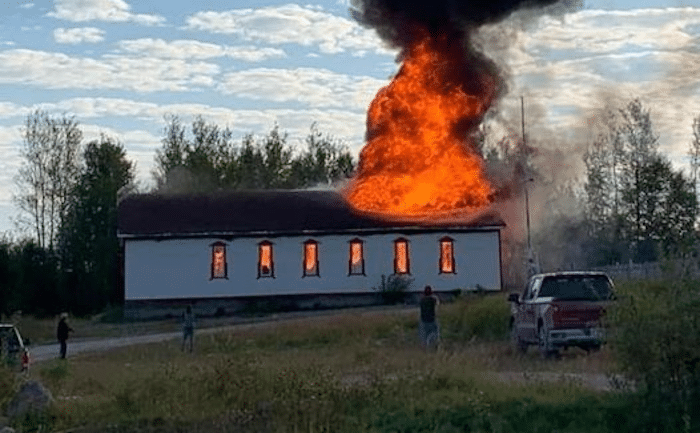
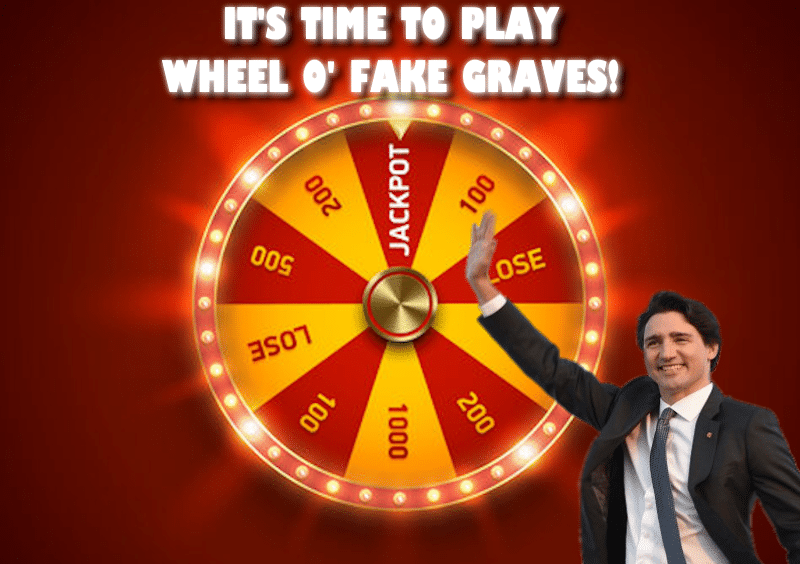
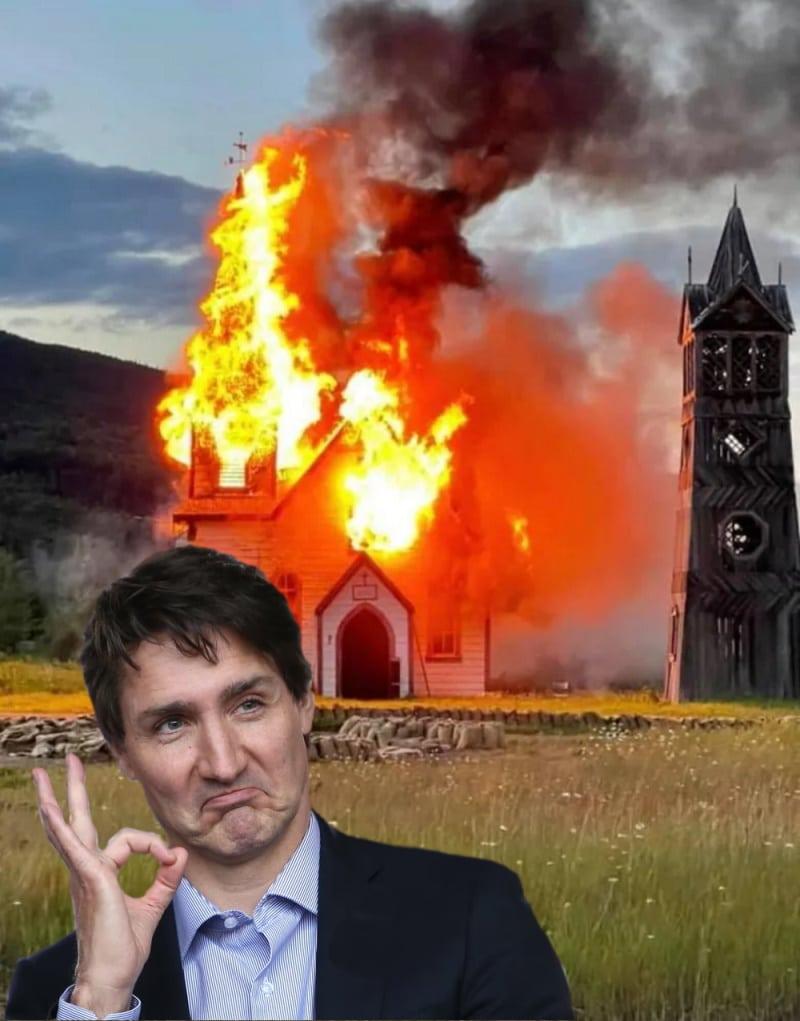
Justin Trudeau started and anti-Christian pogrom based on false claims of Aboriginal mass graves at Residential schools. Nearly 100 churches have been burned down or vandalized. No graves have been found.

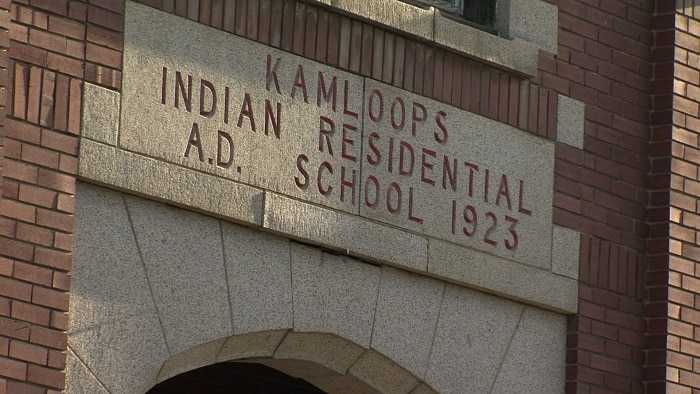
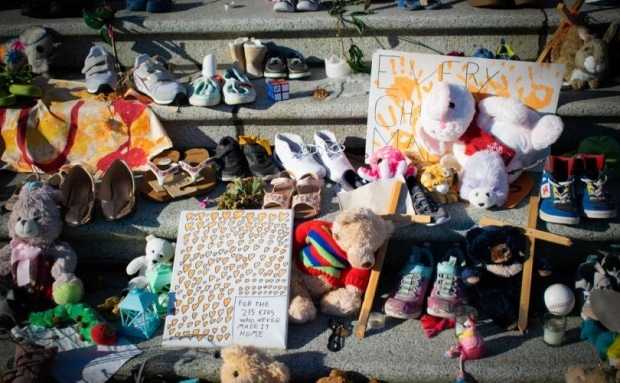
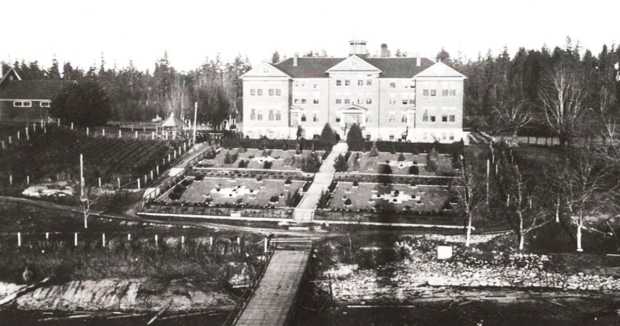
The scandal surrounding Canada’s Kamloops Indian Residential School (1890-1969, British Columbia) is an ultracautionary tale about the damage inflicted by self-interested politicians and activists, backed by a media that toes the line. The 2021 scandal sprang from the alleged discovery of 215 graves of indigenous children. They were said to have died under suspicious circumstances at the Catholic-run school and then buried in unmarked graves behind the facility. Kamloops was one of the largest schools in the residential system through which indigenous children were culturally deprogrammed and indoctrinated to mold them into “proper” Canadians.

h/t DS

Share

Manitoba Chiefs decry reduced federal funds for fake graves gravy train

OTTAWA – The Assembly of Manitoba Chiefs criticized the federal government for reducing funds to search the grounds of former residential schools, saying in a statement they are profoundly disappointed and outraged.
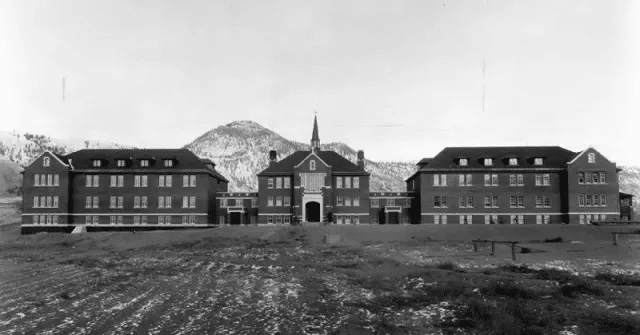
Communities could previously receive up to $3 million per year through the Residential Schools Missing Children Community Support Fund, but funding will now be capped at $500,000.

“The decision to cut back substantial funding for this critical initiative is not only disheartening but also disrespectful to the survivors and families affected by the residential school system,” said deputy grand chief Betsy Kennedy in a statement.

Share

Funding cut for fake graves search scam ‘reflects a troubling denialism,’ says chief

Funding cut for residential school searches ‘reflects a troubling denialism,’ says chief

Officials with Indigenous Services Canada told organizations and community leaders responsible for searches for missing children and unmarked burials at residential school sites Thursday their funding is being capped at $500,000 per year.

That cap is substantially less than previous operating budgets and much less than what organizations estimate is required to continue the work.

David Monias, chief of Pimicikamak Cree Nation in Manitoba, was on the Zoom call.

Share

RUBENSTEIN/McCRAE: Here we go again with more soil ‘anomalies’ containing the ‘remains’ of indigenous children

“Anomaly” was a word many people had never heard of before it was applied by ground penetrating radar (GPR) specialists to the results of their work looking for the remains of indigenous children said to have never made it home from their Indian Residential Schools.

Since mid-2021, with an announcement heard around the world from the Kamloops Indian Reserve about the burials of students in unmarked graves who attended its former Aboriginal residential school, the term has gained widespread usage as indigenous leaders and activists have routinely converted GPR “anomalies” to the actual “discovery” of the “remains” of hundreds of Indigenous children buried in unmarked graves near their former Indian Residential Schools.

Share

Sir John A. Macdonald’s Legacy Desecrated With Fake Graves Lie

A national historic site reopens with a new look at John A. Macdonald’s legacy

“The hard truths are hard to avoid now at Bellevue House.

… In the aftermath of the confirmation, in 2021, of hundreds of unmarked graves discovered on the grounds of Canada’s residential schools, the city of Kingston was forced to reckon with how to present its once favourite son. “We needed to address the elephant in the room,” Hugh Ostrun, Superintendent of National Historic Sites in Eastern and Central Ontario, says. Concerned Parks Canada staff realized it was time to do more than just fix the roof and wiring. The pandemic gave them time to take stock.”

Our heritage is reduced to Marxist libels.

Share

MacBAIN: Kamloops band still firm on unmarked graves… a rebuttal

While I fully support Brian Giesbrecht’s condemnation of CBC coverage of the “unmarked graves” issue, it is important to recognize that the Kamloops band remains firmly committed to its claim the anomalies represent “unmarked burials.”

The Catholic Register (June 27th) quotes Chief Rosanne Casimer: “Our investigators’ findings to date are consistent with the presence of unmarked burials.”

Share

RUBENSTEIN: A not-so-sacred covenant

On June 21, the Tk̓emlúps te Secwépemc First Nation, legally known as the Kamloops Indian Band, finally released the full text of a sacred covenant that was signed on March 31, Easter Sunday, with the Roman Catholic Archdiocese of Vancouver and the Diocese of Kamloops.

The original April 1 press release claimed “The Covenant … reflects our mutual acknowledgment of past wrongs, particularly the Catholic Church’s role in the Residential School System, and a shared commitment to truth, reconciliation, and the future.”

Share