
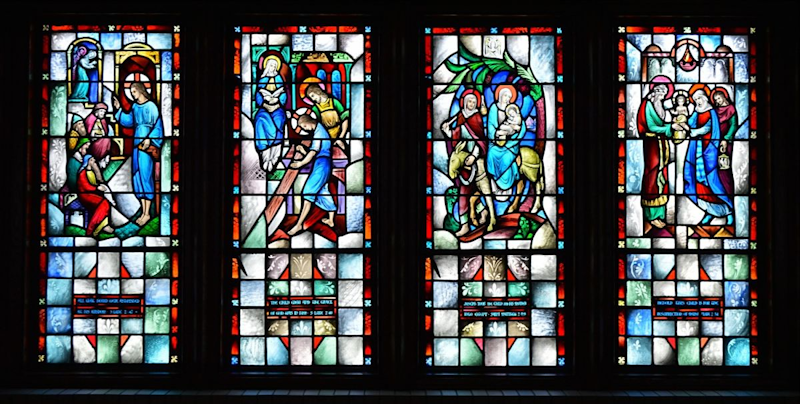
As you get older sometimes you realize how odd you are — or at least different. Take me and religion.
According to new polling by veteran sociologist Reginald Bibby, my spiritual trajectory has not been at all normal in North America.
(Incognito)
As you get older sometimes you realize how odd you are — or at least different. Take me and religion.
According to new polling by veteran sociologist Reginald Bibby, my spiritual trajectory has not been at all normal in North America.
(Incognito)
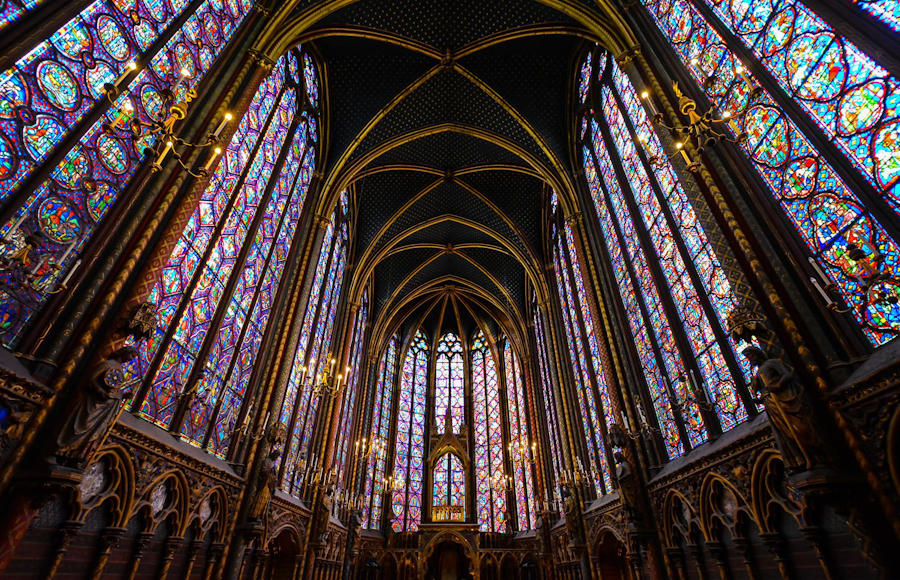
A report claiming the number of young people attending church in England and Wales had skyrocketed has been retracted, after the underlying data was found to be flawed.
The Bible Society’s “Quiet Revival” report had been widely reported on since its publication last year and became an accepted part of discourse among many Christians.
Now YouGov, which carried out the research, has told the Bible Society that an internal review of the data found that some of the respondents who completed its survey were “fraudulent”.
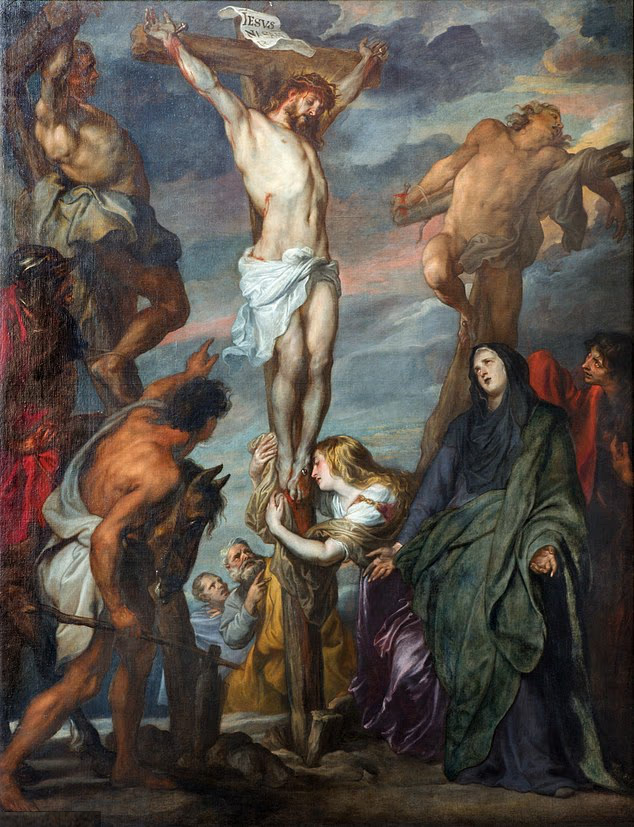
A decade-old study claiming to find evidence of the earthquake described in the Bible at the time of Jesus’s crucifixion is reigniting debate after resurfacing online.
The Gospel of Matthew says ‘the earth shook’ moments after Jesus cried out before dying on the cross, and researchers in 2012 reported evidence that could support the verse.
A team of geologists examined sediment layers near the Dead Sea, about 25 miles from where many scholars believe the crucifixion took place. Their analysis revealed signs of at least two significant earthquakes affecting the region.
h/t Pati Jo
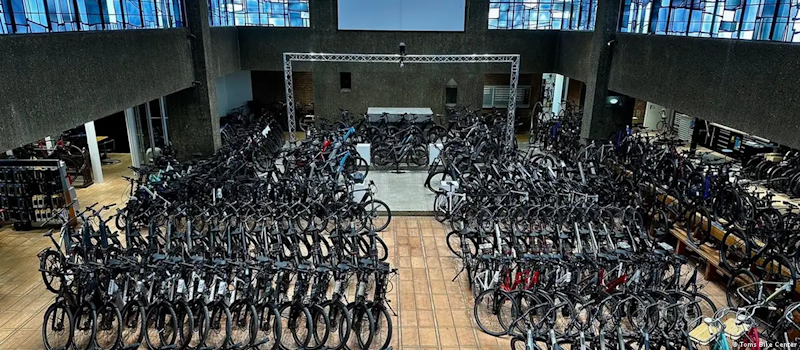
On its final day, St. Anna’s is almost full again. A choir is singing and the small organ is supporting them. But this is the last mass in the small Catholic church in Gildehaus, a district of Bad Bentheim near the German-Dutch border. In future, the building will no longer be a place of worship.
Towards the end of the service, the demise of this church becomes achingly real. Worshippers from the congregation open the altar and remove the relics. These are small relics of a saint, be they bone fragments or pieces of textile, which are always incorporated into the altar of a consecrated Catholic church.
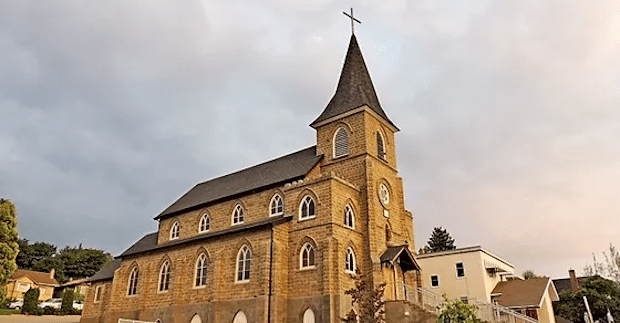
For the first time in decades, some Canadian church leaders say religious attendance is creeping back up, but the driving force comes down to one demographic: Generation Z.
“Across Canada we are seeing a movement of young people who are stepping into a building and worshipping. It is an overwhelming sense,” says Calissa Ngozi, a Toronto-based mental health educator and award-winning speaker.
St. Paul’s Bloor Street, an Anglican Church located in downtown Toronto, has seen its members of young adults ages 15 to 29 grow exponentially since the pandemic.
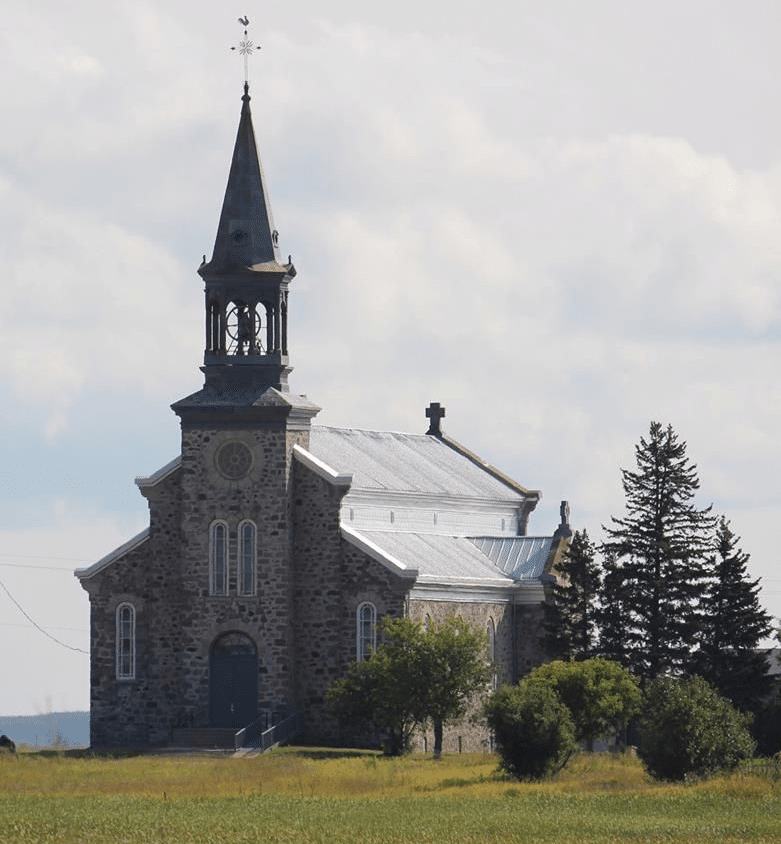
A new cross-border study comparing faith and spirituality in Canada and the United States shows that Americans remain significantly more religious and more open about their beliefs than Canadians, though some generational similarities are emerging.
(Incognito)

The Protestant Anglican Communion has witnessed the largest schism in its near five hundred-year history after a body representing between one half and 85% of its total members has broken with the Church of England.
On October 15, the Global Fellowship of Confessing Anglicans (GAFCON) announced that it has severed ties with the Archbishop of Canterbury and formed a new “Global Anglican Communion”. The decision, GAFCON said, was necessary after the Church of England “abandoned the Scriptures” through its endorsement of same-sex blessings and theological revisionism—an accusation marking the most serious rupture in Anglican unity in a century.
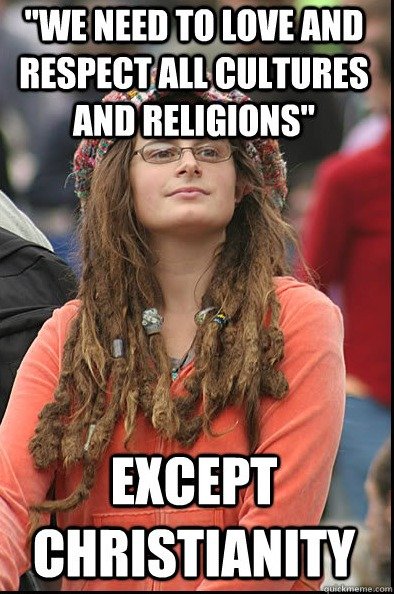
Americans are far more likely than Canadians to believe “religion has a positive influence on societal values,” according to a new poll.
The survey, conducted by Leger for the Association for Canadian Studies, found just over a third (34 per cent) of Canadians agreed with the statement, compared to 53 per cent of Americans.
It has long been acceptable to discriminate against Christians in Canada so I am not surprised.

An overwhelming majority of American adults think that the role of religion is contracting in public life, and a majority of the 80% who believe that are unhappy about the decline, according to new Pew Research Center data.
The 80% figure is the highest Pew has recorded to date that thinks faith is one the decline in public life.

A curious demographic trend in Canada is that spiritual or religious belief has persisted despite the famously steep decline in church attendance and other formal religious observances.
A new poll reveals a related dynamic from another perspective, what the researcher Jack Jedwab calls a “decoupling” of belief in God from the sense of attachment to one’s religion. You can lose one, but keep the other, and plenty of Canadians are doing it.
A decline in faith in religious institutions is certainly part of this as is the human tendency to cafeteria style belief, we pick and choose what suits us as circumstances warrant distancing us from our respective places of worship.
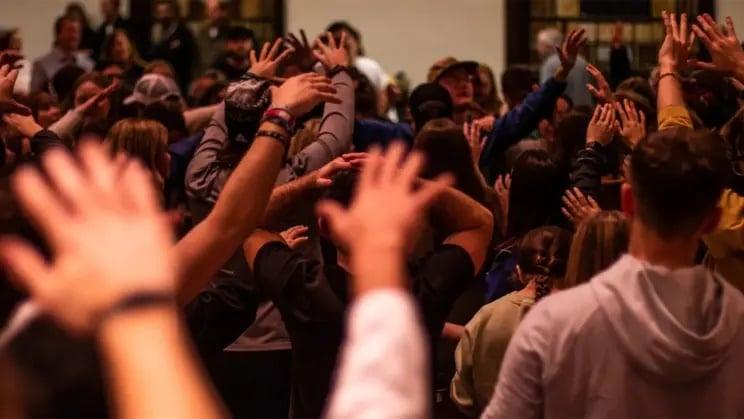
A non-stop church service at a small Kentucky Christian college is taking the US and parts of Europe by storm — with worshippers Sunday in their 11th straight day of praying.
“The Asbury Revival” began as an ordinary morning church service Feb. 8 at Asbury University in Wilmore, Ky., where there’s a certain amount of required church attendance every semester.
But after the final choir that Wednesday, students didn’t leave, according to Christianity Today.
More … The Asbury Revival Is A Reminder Of The Blessings And Dangers Of ‘Mountaintop Experiences’

Three in five (58 percent) Canadians have read or otherwise engaged with the Bible recently or at some point as an adult, finds a new online survey, adding that while most Canadians (60 percent) have a positive view of the major sacred texts, many are not engaged with those texts.
Cardus, a non-partisan Christian think tank, commissioned Angus Reid to poll over 4,000 Canadians on their faith. The respondents, from the Angus Reid Forum group, included 1,948 self-identified Christians, 211 Muslims, 202 Jews, 88 individuals from other faiths, and 1,567 persons with no religious identity.

Most Americans do not believe that Christian faiths should have to compromise their traditional beliefs to better adhere to leftist woke ideology, a recent Summit Ministries/McLaughlin and Associates survey found.
Among those who offered an opinion, a solid majority, 68 percent, said traditional Christian faiths should not be forced to “compromise their traditions and beliefs to align with liberal ideology around topics like marriage, transgenderism, and critical race theory.”
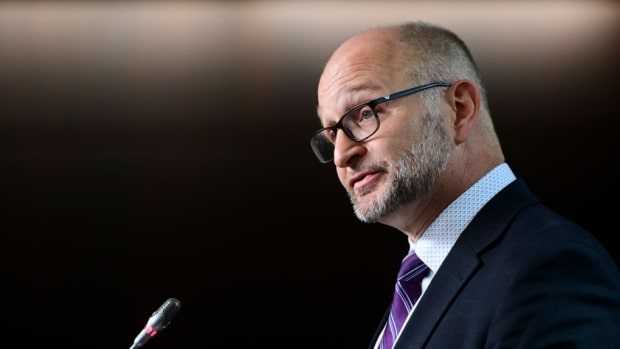
Federal Justice Minister David Lametti says the federal government is prepared to get involved in two controversial Quebec bills, including the language law passed Tuesday, especially if the bills reach the Supreme Court.
“We have, as we have said from the start, concerns about the preemptive use of the notwithstanding clause,” Lametti told press on Wednesday morning, a day after Bill 96 passed in the Quebec legislature using that clause.
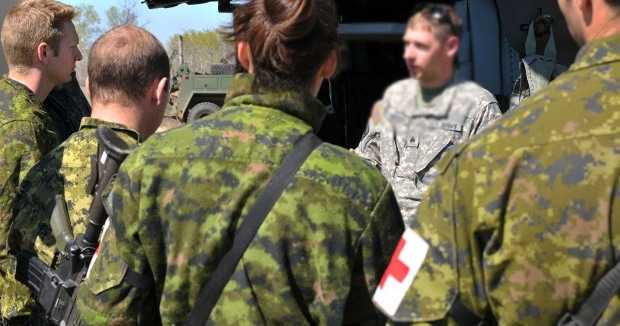
A Department of National Defence (DND) advisory panel has recommended barring individuals from the military chaplaincy whose organized religion’s beliefs do not align with the department’s equality and social justice values.
The Minister of National Defence Advisory Panel on Systemic Racism and Discrimination’s Final Report for January 2022 reads that “(i)t is necessary to recognize that for some Canadians religion can be a source of suffering and generational trauma. This is especially true for many lesbian, gay, bisexual, transgender, queer and two-spirited members of Canadian society.”
The panel’s first of four recommendations – contained beneath the heading of “Re-Defining Chaplaincy” – is blunt.
“Do not consider for employment as spiritual guides or multi-faith representatives Chaplaincy applicants affiliated with religious groups whose values are not aligned with those of the Defence Team.”
