
Why Canada risks Trump’s ire if it chooses Gripen gamesmanship over F-35 stealth

Canada Recycles to save on military expenditures – The Sherman Air Superiority Ground Attack Tank Thingy

WASHINGTON, D.C. — It’s a high-flying tale of carrots, sticks and political flip-flops.

American leaders have been urging Canada to boost its military spending and NATO contributions since the alliance’s founding, back in 1949. Some, like former U.S. president Barack Obama, have been polite about it, encouraging Ottawa that “the world needs more Canada,” while others, especially U.S. President Donald Trump, have been more blunt, referring to Canadians as “freeloaders” who are “delinquent” on military contributions.

Share

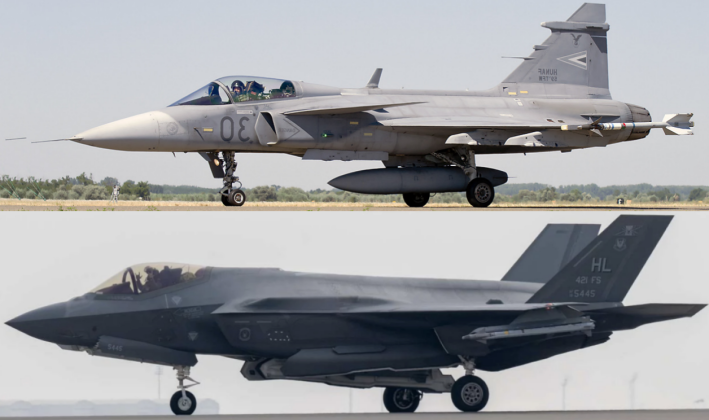
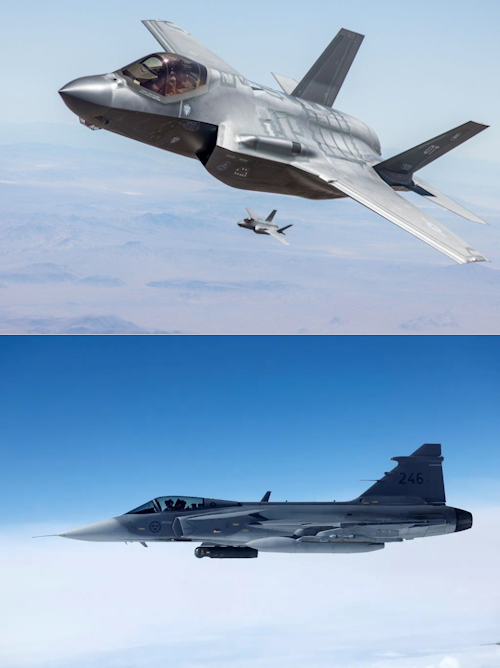
F-35 beat Gripen fighter jet ‘by a mile’ in 2021 Defence Department competition

The competition focused on each fighter jet’s capabilities in defending the North American continent and the likelihood of success in various missions against modern military forces.

The F-35 got a score of 95 per cent on military capabilities, with a total of 57.1 points out of 60.

By contrast, the Gripen-E finished with a score of 33 per cent, netting 19.8 points out of 60, according to the Department of National Defence (DND) ranking obtained by Radio-Canada.


Elbow People hardest hit.

Share

The future fighter debate

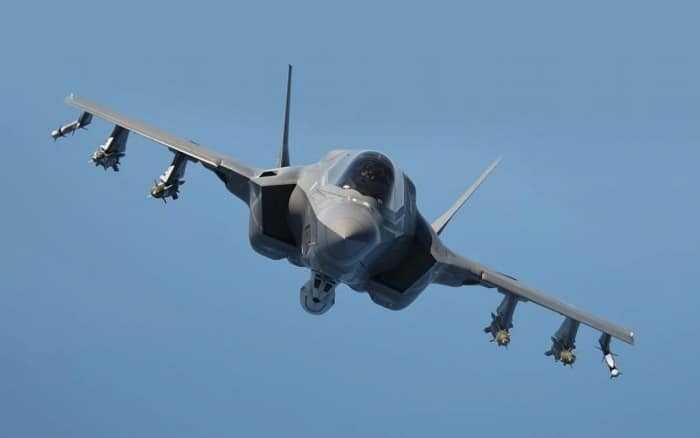
OTTAWA—For the senior brass at the Royal Canadian Air Force, there is no question whatsoever that they want the Lockheed Martin F-35 Lightning as the replacement for their aging fleet of CF-18 Hornet fighter planes.

They have wanted the F-35, and only the F-35, since this fifth-generation stealth strike fighter was first on the drawing board in 1997.

In 2010, Stephen Harper’s Conservative government announced a sole-source deal to purchase 65 F-35s for the Air Force at a cost of $9-billion for the aircraft, and a total program cost of $16-billion. However, as the F-35 experienced technical teething trouble, and the costs soared, Harper pushed the reset button on the entire controversial procurement.


Not sure Elbows Up TDS is the best mindset when evaluating fighter jets.

Share

Mark Carney has a decision to make that will cost billions. Worse, he has no good options, and time is running out

Canada‘s existing fleet of fighter jets is overdue for replacement. The CF-18s have been operating continuously since the early 1980s, longer than most of their pilots have been alive. The basic existing design of the fighter is even older than that.

They should have been replaced long ago. This was supposedly a priority for the Harper government. In theory, it was a priority for the Trudeau government, too. Now it’s a problem for the Carney government.

Share

The idea of a mixed fleet of Canadian fighter jets should not take flight

Canada is apparently considering acquiring a mixed fleet of fighter jets. But this decision is being considered without any real strategic thinking.

Economic considerations seem to be taking precedence over military imperatives, even though several experts and military leaders strongly recommend a single fleet of F-35s, which is considered more consistent with continental defence needs.

Share

McGuinty not ruling out fighter jet purchases from several companies with F-35 decision still pending

Defence Minister David McGuinty says Canada isn’t ruling out diversifying its fighter-jet purchases from more than one company in order to fulfil capability requirements.

“We’re grateful for any forthcoming offer that comes forward,” McGuinty told CTV Question Period host Vassy Kapelos in an interview airing Sunday. “If anybody walks into Canada tomorrow from a sovereign wealth fund or with a joint venture in mind or is looking to set up a company in Canada to create 10, 20, 30, 40, 50,000 jobs, game on.”

What a load of BS.

Share

Melanie Joly pushing F-35 maker for economic benefits in Canada

The federal industry minister is putting pressure on U.S.-based Lockheed Martin to provide more economic benefits in Canada if the government is to proceed with its planned purchase of 88 F-35 fighter jets.

Otherwise, Industry Minister Mélanie Joly said in a French-language interview on Radio-Canada’s Les coulisses du pouvoir, Ottawa could move forward with a smaller fleet of F-35s and the acquisition of a second fleet of Gripen-E fighter jets manufactured by Sweden’s Saab. That company has offered to assemble Gripens in Canada.

Joly made the comments as Prime Minister Mark Carney says he is still mulling the fate of the $27.7-billion fighter jet contract.


Yes you read that right. Melanie Joly.

Share

‘We are moving forward’: Top soldier says F-35 preparations continue despite government review

Chief of the Defence Staff Gen. Jennie Carignan says the Canadian military is moving ahead with its preparations for F-35 fighter jets despite an ongoing government review of the purchase.

“We’re not currently in the position where we are waiting,” Carignan told CTV Question Period host Vassy Kapelos in an exclusive interview airing Sunday. “We are working towards this acquisition.”

“Our pilots are off to the U.S. in the next few months to start training,” she added. “The infrastructure is going up. We have airfields being extended to get ready, so we are definitely not in a position where we are waiting.”

Share

U.S. warns Canada of potential negative consequences if it dumps F-35 fighter jet

The release of the Canadian military’s review of the F-35 fighter jet is expected shortly but the U.S. has already signalled this country could face serious consequences if the Liberal government decides not to proceed with the arms deal.

Defence Minister David McGuinty has committed to the public release of the review which will come by the end of the summer.

Share

National Defence considering purchase of Transformers

National Defence considering purchase of fighter drones that could fly with F-35

The Department of National Defence is looking at the possibility of complementing its incoming F-35 fleet with uncrewed combat aircraft.

Unclassified documents obtained by The Canadian Press show the department is researching various options for acquiring the emerging technology.

The documents suggest that purchasing a fleet of aerial combat drones that could fly alongside fighter jets could cost as much as $16 billion and would require hundreds of staff.


The drones should integrate well with the F-35’s were not going to buy.

Share

LILLEY: F-35 audit shows incompetence at DND and across Ottawa

The report on the cost of the F-35 from the auditor general is more about incompetence than anything else. It’s also a worrying sign given that Prime Minister Mark Carney just pledged billions in new spending for the Canadian Armed Forces.

The headline from the audit is that the original cost projection to buy 88 F-35 fighter jets was $19 billion and now it’s $27.7 billion, a 46% increase.

Share

F-35 program facing skyrocketing costs, pilot shortage and infrastructure deficit: AG report

Canada’s plan to buy 88 U.S.-built F-35 fighter jets is facing significant challenges, including skyrocketing costs, a shortage of trained pilots and a lack of critical infrastructure, according to a new report from Auditor General Karen Hogan.

The audit for the F-35 program is part of Hogan’s spring audits, released Tuesday, which also found contracts awarded to GCStrategies for the ArriveCan app and other services regularly did not follow proper processes or deliver value for money.


This sounds like the prep for exiting the purchase agreement.

Share

This pilot is honoured every year in a U.K. town. Will Canada recognize his bravery?

There is a street named after him in a British town.

A plaque at the local hospital tells the story of how the 29-year-old pilot saved many lives while sacrificing his own during the Second World War.

There are even talks of building a statue of Darlington’s “Gallant Airman” to honour his life and death.

But William Stuart McMullen, a Canadian pilot officer from Ontario, is little known in his own country.


Nope. Not today’s “Canada”.

Share

Canada’s military presence in the Arctic ‘will soon reach a “rust-out” stage’ report warns

ICE Station Trudeau

OTTAWA — The Canadian military’s infrastructure in the Arctic is “limited and deteriorating” and will soon reach a “rust-out” stage unless action is taken to stop it from getting worse, according to a new first-of-its-kind evaluation of the armed forces’ operations in the region.

The report from the Department of National Defence raises concerns about a lack of strategic direction for the military in the Arctic that could hamper future planning. It describes shortages of personnel and resources that require the Canadian Armed Forces to rely heavily on contractors for planes and over-the-snow vehicles for its largest annual exercise in the region. It also highlights how aging northern radar stations leave gaps for detecting potential threats that aren’t set to be addressed until new infrastructure is ready in the early 2030s.

Share