German farmers’ protest sparks chaos

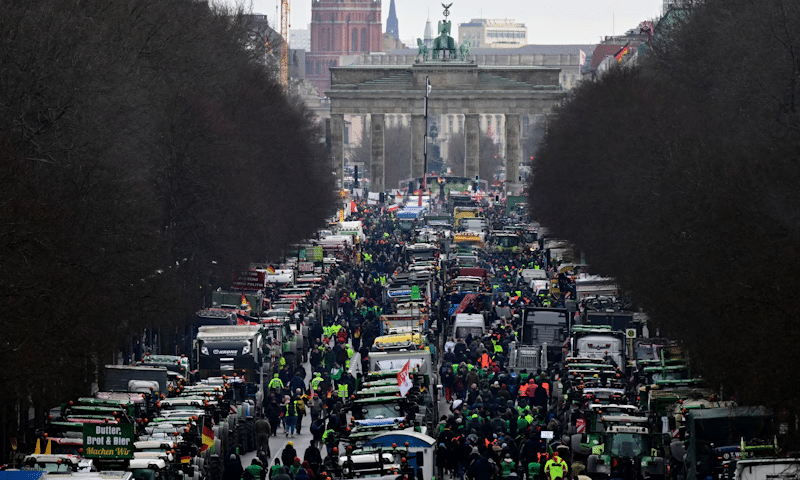
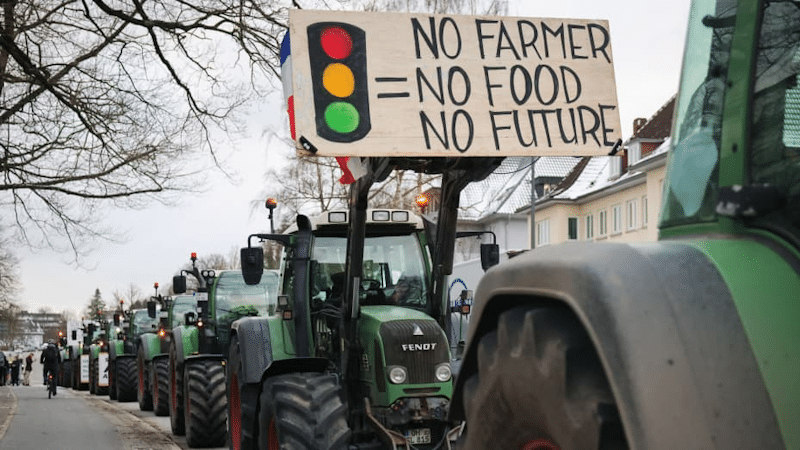
German farmers began a week of nationwide protests Monday, causing traffic jams across the country as they blocked streets and highways with thousands of tractors and trucks.

Monday’s actions were the latest in a series of protests venting anger over the coalition government’s decision to cut some diesel subsidies to farmers and transport truckers.

The cuts were due to budget shortfalls after Germany’s Constitutional Court declared Chancellor Olaf Scholz’s government could not reallocate tens of billions in coronavirus relief funds for other purposes.

Share

Don’t Even Think About Driving One Mile above the Speed Limit

Progressives in the U.K. push 20 mph speed limits, on top of congestion taxes and outright bans of new gas- or diesel-powered cars.

If you want to predict what the next steps in the progressive war on the private automobile will be in the United States, look to elite public opinion.

Electric-vehicle fanatics have pushed nine states into mandating zero-emission cars in the next few years. New York City will begin charging a congestion fee in Manhattan in May. In a new poll, commissioned by the Committee to Unleash Prosperity, Scott Rasmussen has just surveyed 1,000 members of what he calls “the elite 1 percent” of Americans, namely those who have a postgraduate degree, live in dense urban areas, and earn more than $150,000 a year. In short, they are the people who frequently wield disproportionate influence over ideas and public policy.

Share

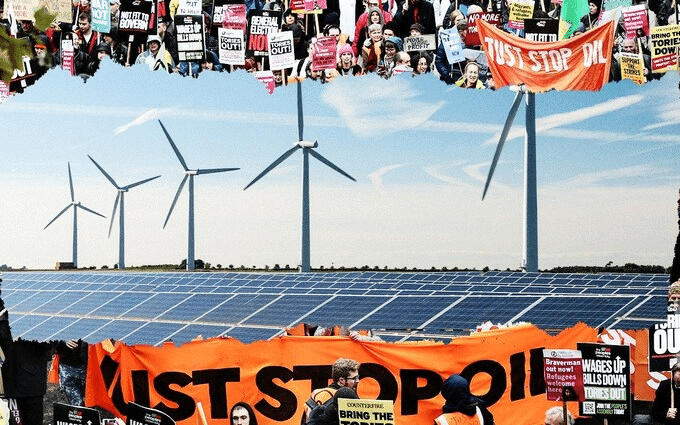
Uncontrolled Frequency: Why Intermittent Wind & Solar Are Wrecking Stable Power Grids

Designed by engineers, our electricity grids are remarkable, but finely balanced affairs, being wrecked by the chaotic delivery of wind and solar power.

There are 3 electricity essentials – that the power source and its delivery to homes and businesses be: 1) reliable; 2) secure; and 3) affordable. Wind and solar score NIL on all three counts. Wind is wholly weather-dependent and solar is both weather and sunshine dependent, despite the hype the occasional power they generate can’t be economically stored at any scale. And, adding the staggering cost of the subsidies they attract, cost multitudes more than coal, gas or nuclear power.

h/t DS

Share

Why German farmers are taking on the ruling coalition

He wanted to get away from it all. The splendid solitude of the tiny North Sea island of Hooge was a momentary refuge from the waves of political tumult buffeting his country. But when Germany’s vice chancellor Robert Habeck returned from his holiday on Thursday, a group of furious farmers prevented his ferry from docking on the mainland. Germany’s 2024 began as 2023 ended: with public confidence in the government at a low ebb.

Share

Green Energy Waste Overlooked in Climate Agenda

Where do the mountains of broken solar panels and wind turbine blades end up?

The amount of waste piling up from solar panels and wind turbine blades can be measured in tons. And the industry is just getting started.

Almost all spent solar panels in the United States end up in landfills, and many first- and second-generation panels are already tapping out, well ahead of their anticipated 30-year lifespan.

Added to that will be an estimated 9.8 million metric tons of dead panels to deal with between 2030 and 2060, according to a study published in Science Direct.

Share

New Report Highlights Green Failure in Europe and Warns America

As one digests Rupert Darwall’s latest report for the RealClear Foundation, the well-known quote from Spanish philosopher George Santayana might ring through the mind: “Those who cannot remember the past are condemned to repeat it.”
Anyone looking to combat the activists pushing a ‘net zero’ agenda here in the U.S. would be wise to read Darwall’s piece, entitled “The Folly of Climate Leadership.”

The analysis tells the story of Great Britain heeding the cries for decarbonization, starting when Parliament wrote an 80 percent decrease in emissions target into law in 2008. They raised it to 100 percent—or “net zero”—in 2019. The results have clearly been catastrophic.

Share

P.E.I. wind turbines at ‘high risk of imminent failure,’ consultant warned province in 2022

A consultant hired in 2022 to assess production problems at a wind farm owned by the P.E.I. government found severe damage, with turbine units possibly constituting a safety hazard and turbine blades at “high risk of imminent failure.”

Last month, high winds ripped two 56-metre blades off one of the turbines at the facility in Hermanville, near the northeastern tip of Prince Edward Island. For comparison, the province’s tallest building is only 39 metres tall; it’s the 10-storey Holman Grand Hotel in Charlottetown.

h/t VK

Share

Pierre Poilievre’s Conservatives have been ‘very good’ at demonizing the carbon levy, environment minister admits

OTTAWA — The federal environment minister admits Pierre Poilievre and the Conservatives have controlled the narrative on carbon pricing, but promises the Liberals will step up their communications game in 2024.

“The Conservatives have been very good at convincing some Canadians that carbon pricing is responsible for everything that’s going wrong in their lives,” Steven Guilbeault told the Star in an interview.

Guilbeault’s admission comes after a year in which debate over Ottawa’s carbon pricing program has featured prominently in Parliament, and the Tories have routinely blamed the levy for Canadians’ troubles with affordability.

I will be glad to see the back of this commie.

Share

Steven Guilbeault, ‘policy-maker of the year,’ is killing economic growth

The Ottawa-based Macdonald-Laurier Institute has named Steven Guilbeault, federal minister of environment and climate change, its 2023 policy-maker of the year. “Ruthless, reckless and damaging,” the cover of the latest issue of MLI’s Inside Policy magazine calls him, announcing its choice.

Standing out for reckless and damaging policy-making is a real achievement in a government now famous for policy disasters. Its economic policy has created crises of unaffordability and stagnation; its foreign policy was recently praised by terror group Hamas ; and its social policy has descended into a parody of wokeness, with international headlines mocking Ottawa for providing free feminine hygiene products in men’s washrooms on Parliament Hill and instructing all federally regulated workplaces to do the same — since providing them only to women would not be equitable.

Share

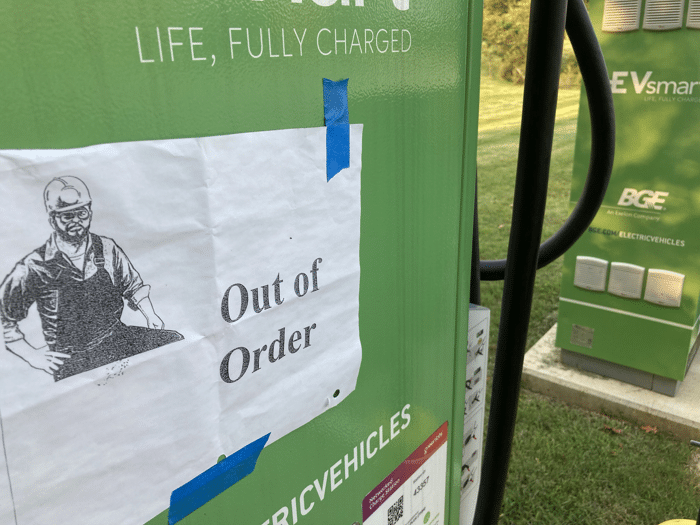
America’s plan to replace gas guzzlers with electric cars was doomed from the start

Electric vehicles were supposed to be inevitable. Two years ago President Joe Biden climbed behind the wheel of a beefy white electric Hummer to tout his plan to make half of all new cars sold electric by 2030. The following year Congress passed the Inflation Reduction Act, which created a bevy of incentives for drivers to buy electric and for automakers to invest in EVs. That set off a flurry of new projects: EV plants, battery-manufacturing facilities, and mining operations began popping up. By the end of 2022 the situation looked promising: More and more Americans were going electric, and soon everyone would be driving an EV, reducing emissions in the process.

The transition to an all-EV future seemed like a slam dunk. It would not only give the government a highly visible way to show it’s fighting the climate crisis but boost the economy through new jobs and investment. But the electric-vehicle takeover has hit some serious roadblocks.

Share

Federal government launches consultations on a national plastics registry

The federal government is looking into creating a national plastics registry that would track the lifecycle of plastic items in the economy.

Environment Minister Steven Guilbeault announced Tuesday that Ottawa has launched public consultations to gather input on how such a registry could work.

“Canadians are demanding action to tackle the plastic waste and pollution crisis, and the federal government will continue to act. The federal plastics registry is an important tool that will help track and manage plastics across the economy,” Guilbeault said in a press release.

Share

Why Europeans are rising up against Net Zero

In many ways, it is incredible they got away with it for so long. For the past decade or so, mainstream politicians across Europe have stopped promising to improve their voters’ living standards. Instead, they have boasted about their plans to limit them. They have extolled the virtues of a higher cost of living, deindustrialisation and restrictions on personal freedoms. And they expected most people wouldn’t mind or perhaps even notice – because all this was to be done in the name of ‘saving the planet’ from climate change. But in 2023, that elite green consensus came crashing down to Earth.

Share

Saskatchewan to stop collecting hated Trudeau carbon levy from natural gas and electrical heat

REGINA – The Saskatchewan government says its natural gas utility is to stop collecting the carbon levy as of Monday from residential customers.

The move comes after Prime Minister Justin Trudeau exempted those who use home heating oil from paying the levy, mostly benefiting residents in Atlantic Canada.

Saskatchewan asked for the exemption to cover all other forms of heating, but Ottawa denied the request. In response, the province said it would stop collecting the charge at the start of 2024.

Share

Canada’s heated political conflict over carbon pricing to continue into 2024

Canada’s price on pollution is supposed to help battle global warming, but as it nears its fifth anniversary, nothing in Canadian politics is hotter.

Conservative Leader Pierre Poilievre has so successfully convinced Canadians the carbon price is to blame for inflation that he even earned begrudging respect for his “axe the tax” campaign from Prime Minister Justin Trudeau.

Of course, Trudeau doesn’t agree with Poilievre’s sentiment.

Share