The carbon capture con

Carbon capture and underground storage (CCUS) tops the list of silly schemes “to reduce man-made global warming.” The idea is to capture exhaust gases from power stations or cement plants, separate the CO2 from the other gases, compress it, pump it to the chosen burial site, and force it underground into permeable rock formations. Then hope it never escapes.

An Australian mining company who should know better is hoping to appease green critics by proposing to bury the gas of life, CO2, deep in the sedimentary rocks of Australia’s Great Artesian Basin.

Share

Matthew Lau: Electric vehicle mandates mean misery all round

News of slowing demand for electric vehicles highlights the hazards of the federal government’s Soviet-style mandate that 100 per cent of new light-duty vehicles sold must be electric or plug-in hybrid by 2035 (with interim targets of 20 per cent by 2026 and 60 per cent by 2030 and steep penalties for dealers missing these targets).

Share

‘How quickly do they want to sell?’ The Liberals’ Trans Mountain drama opens on a new scene

OTTAWA — When Finance Minister Chrystia Freeland delivered her budget speech last month, she gave a nod to the workers on the Trans Mountain pipeline expansion, a $34-billion, government-owned project more than a decade in the making that, after multiple cost overruns and delays, will this month finally begin carrying Alberta oil to the West Coast.

Freeland used the opportunity to take a shot at those who, she said, think government only stands in the way of development.

Share

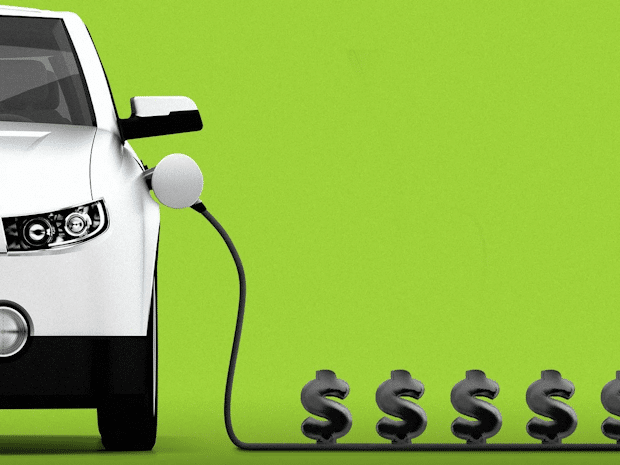
EVs are the most expensive vehicles to operate over 1,000 miles, according to iSeeCars

It’s no secret that charging an electric vehicle is often less expensive than fueling a gas car, but many don’t think about the higher purchase prices. A recent iSeeCars study showed that people tend to drive EVs much less, making their cost per mile much higher than that of internal combustion vehicles.

h/t Mauser

Share

Trudeau and Ford should attach personal fortunes to EV corporate welfare

Last week, with their latest tranche of corporate welfare for the electric vehicle (EV) sector, the Trudeau and Ford governments announced a $5.0 billion subsidy for Honda to help build an EV battery plant and ultimately manufacture EVs in Ontario. Here’s a challenge: if politicians in both governments truly believe these measures are in the public interest, they should tie their personal fortunes with the outcomes of these subsidies (a.k.a. corporate welfare).

Share

Have the wheels come off for Tesla?

There was a time when it seemed Tesla could do no wrong.

In little more than a decade, it went from technology upstart to mass-market carmaker, invested billions in its clean energy business, and saw its value rocket.

But now the company is struggling with falling car sales and intense competition from Chinese brands, as well as problems with its much-hyped Cybertruck.

Lower sales have hit its revenues, and hurt its profits. Its share price has fallen by more than a quarter since the start of the year.


Mandated EV adoption has proven both boon and bane for Tesla.

Communist style Five Year Plans like that favoured by Wacko Trudeau distorted the market attracting rent seekers rather than competitors responding to consumer demand.

Share

Greenflation and the Ideological Policies Causing It

At his press conference on May 1 following the April–May meeting of the Federal Open Market Committee, Federal Reserve Chairman Jerome Powell called it “unlikely” that the central bank would raise the short-term interest rates under its control at its next meeting in mid-June. The Federal Funds Rate is currently between 5.25 percent and 5 percent.

At the same time, Mr. Powell told reporters, “clearly, restrictive monetary policy needs more time to do its job” and Fed policymakers “didn’t see progress in the first quarter” against inflation. The Fed’s target is a 2 percent inflation rate—a goal that is a long way off.

Share

Forget Brexit – Net Zero is the real threat to the car industry

For years, ardent Remoaners have been putting all of the problems facing Britain’s car industry down to Brexit.

Car manufacturers faced ‘death by a thousand cuts’, wailed the Guardian a few months after the Leave vote. ‘Brexit will leave the UK’s car industry running out of road’, proclaimed the New European in 2018. The UK car industry had ‘dodged disaster’ in December 2020 thanks to the signing of a trade deal with Brussels, insisted Bloomberg, but still the new arrangements were said to be ‘too little, too late’.

Share