The Carbon-Offset Game Is Up

A major environmentalist group has found that the carbon offsets beloved by far-left activists are ineffective at best.

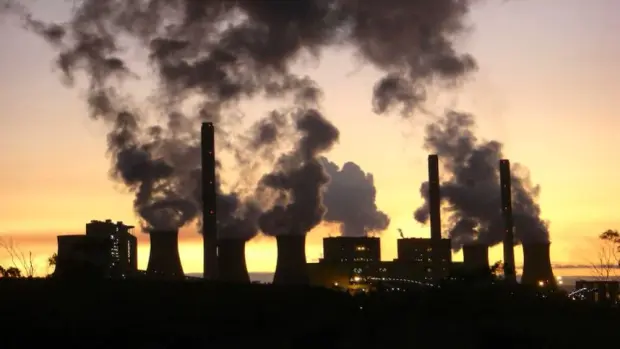
Carbon offsetting is the global-warming equivalent of the ancient religious practice of buying indulgences. Carbon offsets offer a financial mechanism to compensate for an entity’s emission of greenhouse gases by paying someone else to reduce or remove their own emissions such as by planting trees, which absorb carbon dioxide. Theoretically, this enables emissions to be canceled out, but in reality carbon offsets are plagued by corruption and ineffectiveness.

Share

Joe Biden’s new China tariffs puts Canada in a bind on electric vehicles

Earlier this week, the Biden Administration announced a sweeping set of new tariffs on Chinese imports. The tariffs target strategic sectors from steel and aluminum to green tech. Headline-grabbing among those were the 100-per-cent levies on Chinese electric vehicles. The tariffs are partly political posturing during an election year, as a prior 27.5-per-cent levy and an exclusion from national tax credits have largely kept Chinese EVs off U.S. roads. More important than the tariffs’ immediate impact, though, are the long-term strategic policy considerations underpinning them.

Share

China develops revolutionary electric car battery that can charge in 10 minutes

Justin Trudeau crying on cue.

China has developed a revolutionary car battery that can charge in just 10 minutes and power a car for hundreds of miles before it needs to be plugged in.

A report from the International Energy Agency (IEA) has hailed “remarkable” developments in chemistry that have allowed China to develop new batteries that pack far more energy than existing technologies.

The IEA highlighted EV batteries capable of travelling 250 miles without a recharge. Newer versions announced since the report was written can manage 600 miles.

Share

Is the move to electric cars running out of power?

Buoyant electric car sales are a must if we’re to hit our climate targets. But EV sales in the West are down and if governments want them to recover it may have to be at the expense of their own economies.

The numbers

Any motorway driver will know the feeling: you’re cruising along, miles of open road seemingly ahead and then from nowhere, a slowdown.

Something similar has hit the electric vehicle market in 2024. After years of soaring sales, growth appears to be stalling.

Replacing fossil-fuel-powered cars with EVs is central to the UK government’s plan to meet its climate goals – road transport accounting for 12% of planetary emissions.

The question is whether this is a blip that will soon disappear into the rear-view mirror, or is this going to prove more enduring? And if it lasts, will governments have the stomach to do what it takes to keep the net zero show on the road?

Share

William Watson: We need a ‘That’s enough, thank you!’ federal political party

I was struck by some numbers in Robert Lyman’s column in FP Comment yesterday on the costs of net-zero climate policies. The costs he talked about were impressive enough: the units they come in are years’ worth of GDP. But what impressed me almost even more was that, according to a compilation by Navius Research for the Canadian Climate Institute, there are, as Lyman wrote, no fewer than 112 federal and 364 provincial and territorial programs addressed at various aspects of climate change. That’s almost 500 in total.

Share

Newly released figures put Canada’s cost of attending climate summit at nearly $3M

Lunatic

Newly released figures have more than doubled what the government spent to attend a high-profile UN climate change summit last year.

And, according to information sourced online, COP28’s Canada pavilion featured a four-minute climate change hip-hop set by Baba Brinkman, a Canadian rapper and playwright known for rapping about science, literature and environmental issues, and is also the son of former federal fisheries minister Joyce Murray.

Share

Poilievre Calls for ‘Fuel Tax Holiday’ Between Victoria Day and Labour Day

Conservative Party Leader Pierre Poilievre is calling on the federal government to suspend all taxes on gasoline and diesel between Victoria Day on May 19 and Labour Day on Sept. 2 to help Canadians save money and retain their summer vacations amid high inflation.

Speaking to reporters in Vancouver, Mr. Poilievre said many families could be forced to cancel their summer vacation plans due to the rising cost of living, noting the record number of visits to food banks across the country.

Share

Ron DeSantis signs bill scrubbing ‘climate change’ from Florida state laws

Climate change will be a lesser priority in Florida and largely disappear from state statutes under legislation signed on Wednesday by the state’s governor, Ron DeSantis, in a move which experts say ignores the reality of Florida’s climate threats.

The legislation, which comes after Florida had its hottest year on record since 1895, also bans power-generating wind turbines offshore or near the state’s lengthy coastline.

Florida is facing rising seas, extreme heat, flooding and increasingly severe storms.

“Climate change” will eventually join repressed memory in the hysteria hall of fame.

Share

Krazy Klimate Rant From Star

Canada is slouching toward the end of the world. Climate scientists have been clear: the only real hope of avoiding climate disaster lies in dramatically ramping up the transition to clean energy by building new wind and solar farms at breakneck speed. But this isn’t happening.

The opening of the Trans Mountain Pipeline expansion this month — widely celebrated in the media — reminds us that Canada is still very much in the grip of Big Oil.

That $34 billion expansion was financed by Ottawa and it amounts to a massive public subsidy for the oil industry — at a time when we should urgently be financing renewable energy, not fossil fuels.

The renowned U.S. climatologist James Hansen famously said the oilsands were such a “dirty, carbon-intensive” oil that if they were to be fully exploited, it would be “game over” for the planet.

Wind and solar will power our electric flying cars!

Share

European Car Makers Hitting the Brakes on Electric Vehicles

Car manufacturers are slowing their transition to producing electric vehicles (EVs), because of low customer demand and production problems.

Mercedes-Benz announced to investors in March of this year that it is going back on its pledge to sell only fully electric cars by 2030. Instead, investors were told that the company plans to continue to make gasoline-powered cars well into the next decade. Fully electric cars and hybrids will account for only up to half of its sales by 2030.

Share

44,000-lb. wind turbine blade busts loose while in operation and careens to the earth—media wonders if the industry has a ‘quality’ problem

This doesn’t seem cosmic, but if a 44,000-pound chunk of fiberglass/epoxy resin that’s as big as a 747 airliner breaks off the tower of a wind turbine and comes hurtling down to earth while in operation, something is very wrong.

Apparently though, that wasn’t as obvious to the journalists in the mainstream media as it was to me.

Share

New government study: ‘Cooking emissions’ the missing piece of the climate change puzzle, will impact ‘air quality management’ policy

The smell of meat on the grill is a “pleasing aroma” or a “sweet savour” to the God of the Torah and the Holy Bible, but to the climate “scientists” at the NOAA’s Chemical Sciences Laboratory, it’s indicative of “volatile” compounds in the air, a sign of “urban air pollution” that needs regulating, and they’re calling it: “cooking emissions.”

Share

Northvolt should turn Quebec into a major EV player. So why are people so unhappy?

MONTREAL – In late September, Quebec Premier François Legault announced his government had attracted the largest private manufacturing investment in the province’s history, which he said would transform Quebec into a global player in the electric vehicle supply chain.

He lauded it as the “greenest electric battery factory in the world,” but since then, the $7-billion project has managed to anger many across the province — particularly environmentalists.

“Satisfying everyone is an impossibility, but satisfying nobody seems like a pretty mean feat to pull off,” said Moshe Lander, a senior lecturer in economics at Montreal’s Concordia University.

Share

The World Bank wants to price meat out of our diets

meat and guns

Are we moving towards a beef-free world? That certainly appears to be the direction in which the World Bank wants to go. A report published this week claims that food production generates almost a third of humanity’s carbon dioxide emissions — more than heat and electricity. The Bank’s strategy is ambitious: to halve agricultural emissions by 2030, and reduce them to Net Zero by 2050.

Share