
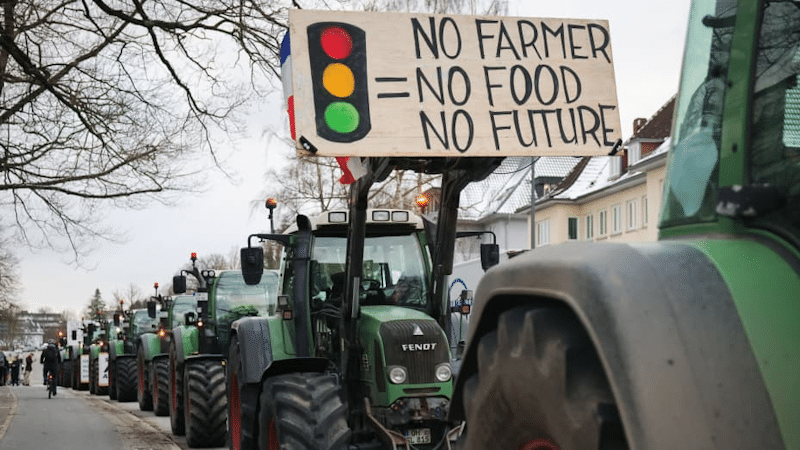
European politics are notoriously intricate, and the recent EU elections have highlighted a growing fatigue in the West towards socialist and urban-centric policies that impact agriculture and the agri-food sectors.
European politics are notoriously intricate, and the recent EU elections have highlighted a growing fatigue in the West towards socialist and urban-centric policies that impact agriculture and the agri-food sectors.

A recent scientific study has confirmed what climate realists have been highlighting for some time: Natural and climate-related disasters have been declining rather than increasing during the 21st century.
In a paper published this year in one of the world’s leading journals on environmental hazards, Italian scientists Gianluca Alimonti and Luigi Mariani analyzed the number and temporal trends of natural disasters reported since 1900.
Based on the best available data, the two scientists concluded the 21st century has seen “a decreasing trend [of natural disasters] to 2022” which is “characterized by a significant decline in number of events.”

According to exit polls for the European Parliament elections, the “green” parties have received a continent-wide kick in the teeth.
While the European Parliament grew by 15 seats, the polls on June 9 suggested representatives of the green bloc dropped from 71 to 53, making them the biggest loser.
In Europe’s leading nations, Germany and France, the predicted results were abundantly clear.

Political fantasies keep crashing into automotive reality.
It’s become common for some politicians to present a transition away from fossil fuels as similar to other historical transitions in which societies abandoned old energy sources in favor of new ones. But this time really is different. Consumers in previous societies embraced new technologies because they afforded easier and cheaper ways to sustain and enhance life. The contemporary mania is to abandon consumer preference and instead enforce a trade-down to uneconomical but politically favored methods of powering our lives. So it’s important to understand just how far the new government mandate and subsidy systems will travel away from economic sense.
This should be read by Frankie Bubbles and Junior but it won’t.
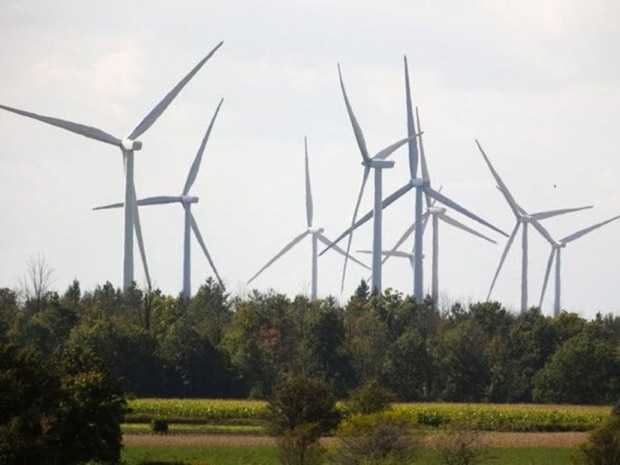
New York seems determined to challenge California for the title of green energy “leader,” regardless of what doing so costs residents. The state Department of Environmental Conservation (DEC) is reportedly “considering” (read: almost certainly will adopt) rules that will be used to justify more forced electrification and higher energy costs for New Yorkers.
The DEC intends to accomplish this using new estimates of the “social cost of carbon” (SCC). The SCC is a made-up number, calculated using simplistic models that assume a one-to-one relationship between carbon emissions and global temperature. After estimating how much carbon dioxide will get released into the atmosphere and the resulting temperature increases, the models project the resulting environmental doom and its costs: rising seas that will flood coastal cities and sink island nations, the expansion of virulent tropical diseases into colder climates, and megadroughts leading to crop losses.

For years now I’ve been saying that electric vehicles, and EV mandates, are bad for Canada.
Back in 2020, when the then-CEO of Toyota, Akio Toyoda, voiced his concerns that governments were moving too fast in their push for an all-electric car market when there were other good options available which didn’t require the same multi-billion dollar infrastructure overhaul or increase in electricity generation, I asked why we weren’t listening to a man who knows his own business.

The Trudeau government has a simple way to bolster its claim eight out of 10 Canadian households paying the federal carbon tax end up better off financially because of quarterly climate action incentive payments.

The UK should treat fossil fuel adverts in the same way as tobacco commercials and ban them, the head of the UN has said.
António Guterres, the UN secretary-general, said countries including the UK should prohibit fossil fuel adverts because of the damage to health that they cause. Campaigners said the call from such a senior figure was “extraordinary”.
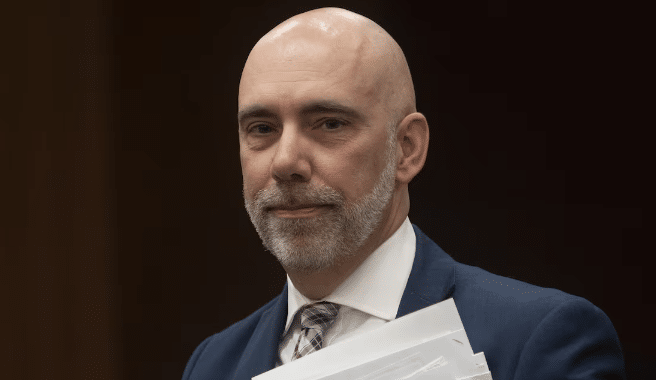
The letter seemingly backs Yves Giroux’s suggestion that the government put a gag on him to not talk about its internal numbers
OTTAWA — Environment Minister Steven Guilbeault’s office sent extensive amounts of data about the federal carbon pricing’s economic impacts to the Parliamentary Budget Officer (PBO), with an explicit directive for it to be used for “internal purposes only.”
The letter sent on May 14, which is available on the PBO’s website, shows that Deputy Minister Jean-François Tremblay responded to a query from the budget watchdog’s office on April 30 requesting additional information to update its analysis of the measure.

The world of climate science is in shock following extraordinary findings from a team of high-powered NASA scientists that suggest most of the recent global temperature increases are due to the introduction of draconian fuel shipping regulations designed to help prevent global warming. The fantasy world of Net Zero is of course full of unintended consequences, but it is claimed that the abrupt 80% cut in sulphur dioxide emissions from international shipping in 2020 has accounted for 80% of global warming since the turn of the decade. Although the extra heat is described as “transient”, the warming is extraordinary and is expected to rise during the 2020s at a rate of 0.24°C a decade, 20% higher than the claimed warming trend since 1980.

It is being called a “greenlash”.
Resistance to green policies has broken out across Europe. It was all so different in the last European elections five years ago, when young voters especially demanded action against climate change.
Soaring energy prices because of Russia’s war in Ukraine and the wider cost of living crisis have turned many Europeans against abandoning fossil fuels. And farmers across Europe have blocked roads in anger at environmental reforms.
It could spell trouble for the EU’s Green parties at the polls from 6-9 June.
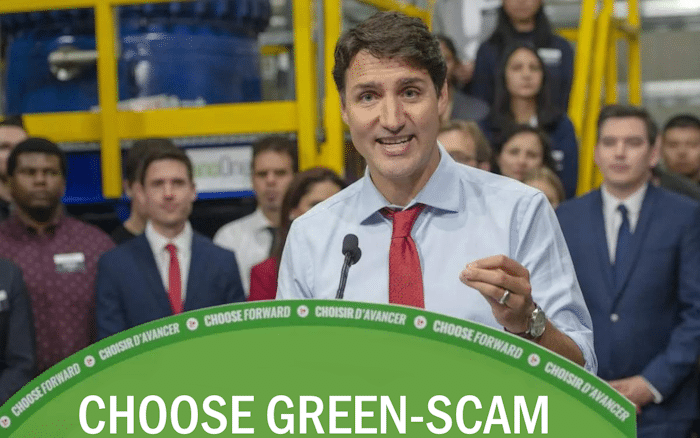
The federal auditor general has found 90 conflict of interest rule breaches and money going to dozens of ineligible projects in her review of the embattled federal green fund.
Auditor General Karen Hogan released three reports on June 4, one of which pertains to Sustainable Development Technology Canada (SDTC), a federal foundation supporting green projects with investments.
The Office of the Auditor General (OAG) says it found “significant lapses” in the governance and stewardship of public funds at SDTC.
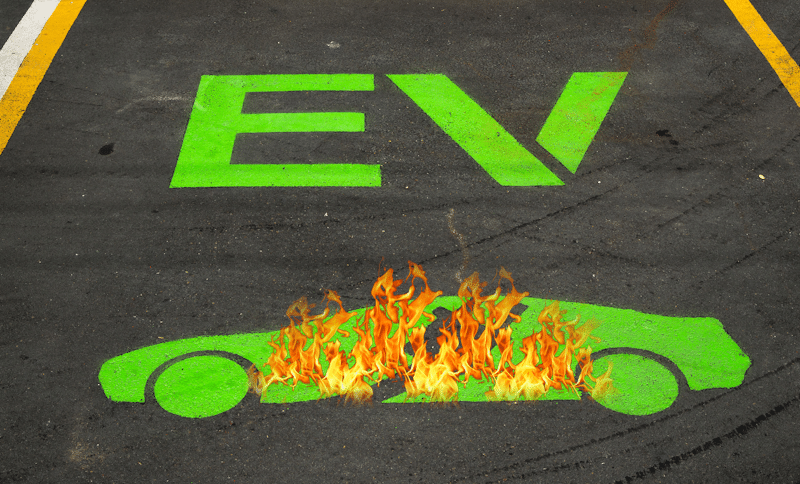 All the new electrical generation and metal mining required means EVs don’t have a hope of getting up to speed in the 11 years left
The federal government has mandated that all new light duty vehicles be electric by 2035. Achieving that goal would require vastly more electrical generation capacity and an enormous expansion of charging stations.
A Fraser Institute study published in March found that handling the higher load would require either 13 large new gas plants or the equivalent of 10 new mega-dams the size of B.C.’s $16-billion hydro Site C. Just one problem: almost all viable hydro sites have already been dammed. Plus: it took 10 years to get environmental approval for Site C and another 10 to build it. That leaves the natural gas plants. But powering EV’s with natural gas puts the kibosh on zero emissions.

Leftist outlets like The Atlantic seem to have a bad habit of yanking the most insane political ideas out of the ether to make them sound less nutty than they are. Its recent treatment of “degrowth communism” to fight climate change is no exception.
The federal budget watchdog says Ottawa is withholding its analysis of the economic impacts of the carbon tax.
“We’ve seen that, staff in my office, but we’ve been told explicitly not to disclose it and reference it,” Parliamentary Budget Officer (PBO) Yves Giroux told the House of Commons finance committee June 3.
Mr. Giroux told MPs the analysis “essentially” confirms the report that his office has published. The PBO has assessed that when the economic impacts of the carbon tax are factored in, eight out of 10 households are worse off financially.
