Automakers ask Carney to repeal zero-emission vehicle mandate

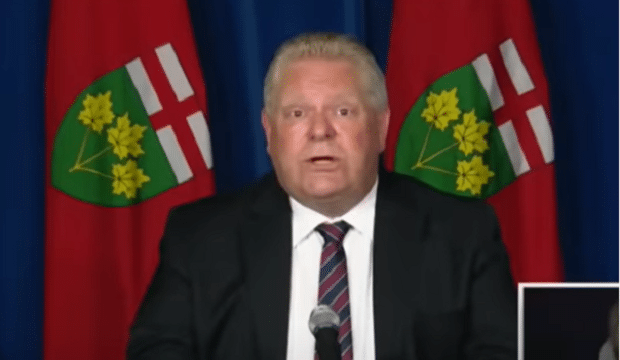
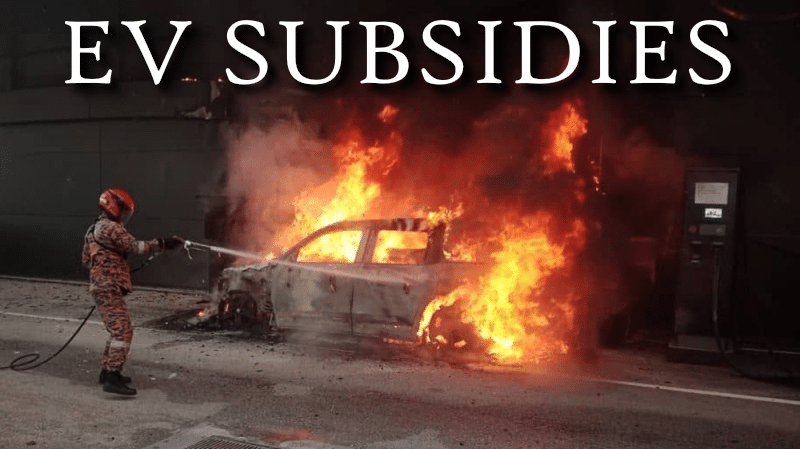
Auto sector chief executives urged Prime Minister Mark Carney Wednesday during a meeting on the Canada-U.S. trade war to repeal federal regulations that require one in five vehicles sold starting in 2026 to be zero-emission models.

The CEOs of Ford Motor Company of Canada, General Motors of Canada Co. and Stellantis Canada met with Mr. Carney in Ottawa as the Canadian and U.S. governments try to reach a trade deal by July 21 that might end Washington’s tariffs on Canadian-made automobiles, among other levies.

Share

Federal report finds no proof $300M green programs created jobs or cut emissions

A federal audit has found that two climate programs launched with a promise to create jobs and lower emissions have failed to show any results after seven years and $300 million in spending.

Blacklock’s Reporter says a report from the says officials stopped collecting key performance data for the Smart Grid Program and the Emerging Renewable Power Program, making it impossible to tell whether the programs delivered any real benefit to taxpayers.

Share

Ban on gas-powered vehicles will exacerbate a different set of socio-environmental issues

Mark Carney’s Liberal government recently stated it will continue the proposed ban on the sale of all gas-powered cars in Canada by 2035.

Unfortunately, although Ottawa has attempted to justify its ban on gas-powered vehicles by labelling EVs as a cornerstone of any socially responsible and environmentally friendly society, it is readily apparent the myriad socio-political and environmental benefits the Carney government purports to chase are not at all a necessary consequence of EVs in any capacity.

Share

Bell: ‘It’s lunacy’ — Alberta pushes Carney to drop Liberal electric vehicle fantasy

“It’s lunacy. Straight-up lunacy.”

The words come from Devin Dreeshen, the Alberta government’s point man on transportation.

He has nothing against electric vehicles, EVs for short. You want one, buy one.

He just doesn’t think the government in Ottawa should be ramming the purchase of them down people’s throats.

Share

The recycling scam laid bare in California’s leftist heartland

Our South Carolina neighborhood has green cans for garbage and blue cans for recycling. All our neighbors dutifully separate their garbage. We don’t, and we don’t for a very specific reason. What I discovered a couple of years ago is that, while different trucks drive around collecting blue and green cans on garbage day, at the end of the shift, the trucks dump all the garbage into the same landfill. It’s a scam that, according to my local representative, makes people feel good about themselves.

Share

1900 Scientists Say ‘Climate Change Not Caused By CO2’ – The Real Environment Movement Was Hijacked

Millions of people worldwide are concerned about climate change and believe there is a climate emergency. For decades we have been told by the United Nations that Carbon dioxide (CO2) emissions from human activity are causing disastrous climate change. In 2018, a UN IPCC report even warned that ‘we have 12 years to save the Earth’, thus sending millions of people worldwide into a frenzy.

Thirty-five years ago, the United Nations Environment Programme (UNEP) and the (World Meteorological Organization) WMO established the Intergovernmental Panel on Climate Change (IPCC) to provide scientific advice on the complex topic of climate change. The panel was asked to prepare, based on available scientific information, a report on all aspects relevant to climate change and its impacts and to formulate realistic response strategies. The first assessment report of the IPCC served as the basis for negotiating the United Nations Framework Convention on Climate Change (UNFCCC). Governments worldwide have signed this convention, thereby, significantly impacting the lives of the people of the world.

Share

Nearly 200 suddenly laid off at NextStar EV battery plant in Windsor: Contractor

Some workers at the NextStar Energy electric vehicle battery plant in Windsor, Ont., have been abruptly laid off, according to the contractor for which they worked.

Eric Farron, vice president of operations at Sylvan Canada, said Friday that nearly 200 of the company’s workers at the facility — 145 millwrights and ironworkers, 45 electricians, and three pipe fitters — were affected.

Farron said the firm was told to “immediately demobilize” on Thursday night, and that the workers still had a significant amount of work left to complete.

Share

JAY GOLDBERG: Put the electric vehicle mandate in park

The Chevrolet Corvette. The Subaru Outback. The Mazda Miata. All these cars vary in price, buyer demographic and sales volume. But they all were designed to have one thing in common: The combustion engine.

If the government of Prime Minister Mark Carney has its way, none of these cars will be sold as new models in Canada, at least the way they were meant to be, by 2035.

Share

Too late … Electric vehicle mandate risks being next carbon tax without ‘adjustments,’ EV industry warns

OTTAWA — The head of a national association representing the electric transportation industry says the federal government, and provinces with a zero-emission vehicle sales mandate, should make “short-term adjustments” to their programs at the risk of the policy going the way of the now-cancelled consumer carbon tax.

Electric Mobility Canada President Daniel Breton’s comments come as auto-makers and others in the industry express a fresh round of concerns about the Liberals’ sales mandate, which has set a target of reaching 100-per-cent zero-emission vehicle sales by 2035, beginning with initial targets of hitting 60 per cent by 2030 and at least 20 per cent by 2026.

Share

LYTLE: Carney in a rush to get nowhere

Having read “Value(s),” the pre-electoral, philosophical musings of Prime Minister Carney, I was keen to read his first stab at legislating. I will cut to the chase.

His ambiguous style of writing about values is reflected in his ambiguous style of writing about interprovincial trade and labour and large project promotion in Bill C-5, (An Act to enact the Free Trade and Labour Mobility in Canada Act and the Building Canada Act.)

My prediction is that nothing will be changed by this legislation and that, perhaps, is by design.

Share

We must heed the warning of Spain’s Net Zero blackouts

At 12.30pm on Monday 28 April, Spain and Portugal were plunged into blackouts. Modern life ground to a halt, thanks to one of the worst power outages in European history. Electricity was not fully restored across Spain until 10 hours later, in the early hours of Tuesday morning, with outages lasting up to 18 hours in some regions. Even when the grid came back online, it was still difficult to make phone calls or access the internet in parts of central Spain.

Share

Pressure building on Liberals to rethink electric vehicle mandate

OTTAWA — As Canada approaches a critical starting point for its electric vehicle goals, pressure is building on Prime Minister Mark Carney’s government to rethink its plan.

Starting next year, the Liberal plan to get more electric vehicles on the road will enter its first phase: mandating sales targets for car companies, which could purchase credits, including by spending on charging infrastructure, or face penalties for not complying.

Share

BARBER: Don’t trust Carney’s pipeline promises

Prime Minister Mark Carney has a bad habit of evasion when asked direct questions about building pipelines. During his first Question Period in Parliament, his response on the issue was deliberately ambiguous. A June 3, 2025, video posted by The Canadian Press showed the prime minister discussing pipelines — but not committing to approving any.

He merely suggested the possibility, quickly pivoted to a vague discussion of Canada’s long-term goal of becoming an energy superpower, and left it at that.

Share

Ottawa’s electric vehicle mandate threatens the car industry in Canada

The federal government’s electric vehicle (EV) mandate — requiring that 20 per cent of all new vehicle sales in Canada be electric by 2026 — was designed with the best intentions. It was a bold climate policy that aligned with international commitments and aimed to reshape one of Canada’s most critical economic sectors.

But we’re now speeding into a very different corner of the track.


The Star went insane and published this!

“Under current rules, an automaker that falls short of the EV sales target must buy credits at $20,000 per non-compliant unit just to keep selling gas-powered vehicles in Canada. For a company selling 300,000 vehicles a year, falling 10 per cent short could trigger a $600 million penalty. That’s not environmental policy. That’s economic punishment.”

That’s crazy dictator stuff.

Share