Joe Varner: Canada’s selfish disregard of defence is the Achilles heel of NATO’s northern security

In the face of global adversaries like Russia and China bent on hegemony and conquest, Canada’s hands-off approach to defence and security is no longer tenable. While the country itself has seemingly not woken up to this realization, its NATO and Western allies certainly have.

Share

Canada risks ‘diplomatic isolation’ if it fails to meet NATO spending target, business leaders warn

Canada is the only one of 32 member nations not to publicly release a plan to meet the target

One of the country’s leading business voices is warning that Canada faces “diplomatic isolation” if it’s not prepared to deliver a concrete plan next month to raise defence spending to meet NATO’s benchmark.

The Business Council of Canada — which has been wading more and more into the debate on national security lately — made the assessment in a letter to Prime Minister Justin Trudeau.

The letter comes as both NATO defence ministers and G7 leaders prepare to gather at separate meetings in Europe, and as leaders of the NATO alliance nations get ready for a summit in Washington, D.C. next month.

We are a Clown State.

Share

Canada now ‘the outlier’ in NATO on defence spending: U.S. ambassador

The United States’ ambassador to Canada, David Cohen, says Canada is becoming “the outlier” in NATO following a bipartisan letter from 23 American senators calling on Ottawa to meet the two per cent of GDP defence spending target.

“At the end of 2024, the way projections are looking, Canada will be the only country in NATO that is not spending at least two per cent of its GDP on defence and does not have a plan to get there,” Cohen said in an interview with The West Block host Mercedes Stephenson.

“Canada has moved within NATO from being a bit of an outlier to being the outlier in the entire alliance.”

But we have Trannies galore in the pipeline! Don’t we?

Share

Western countries are gearing up for war for the first time in decades

Western nations are taking steps to put their armed forces on a war footing for the first time in decades, according to the boss of defence-technology company QinetiQ.

Russia’s invasion of Ukraine, concerns about China’s ambitions in the Pacific, escalations in the Israel-Hamas conflict and Houthi attacks on shipping in the Red Sea have spurred Britain, the US, Australia and their allies to invest time and money in testing the readiness of air, sea and land forces, said Steve Wadey, QinetiQ’s chief executive.

Canada is 4th from the bottom in NATO expenditures.

Share

U.S. senators write to Trudeau asking him to meet 2% GDP defence spending commitment

A bipartisan group of 23 U.S. senators have written to Prime Minister Justin Trudeau urging his country to live up to its commitment to spend 2 per cent of GDP on defence amid concerns that key members of the NATO alliance are not pulling their weight.

“As we approach the 2024 NATO Summit in Washington, D.C., we are concerned and profoundly disappointed that Canada’s most recent projection indicated that it will not reach its two percent commitment this decade,” the senators wrote. “In 2029, Canada’s defence spending is estimated to rise to just 1.7 percent, five years after the agreed upon deadline of 2024 and still below the spending baseline.”

Share

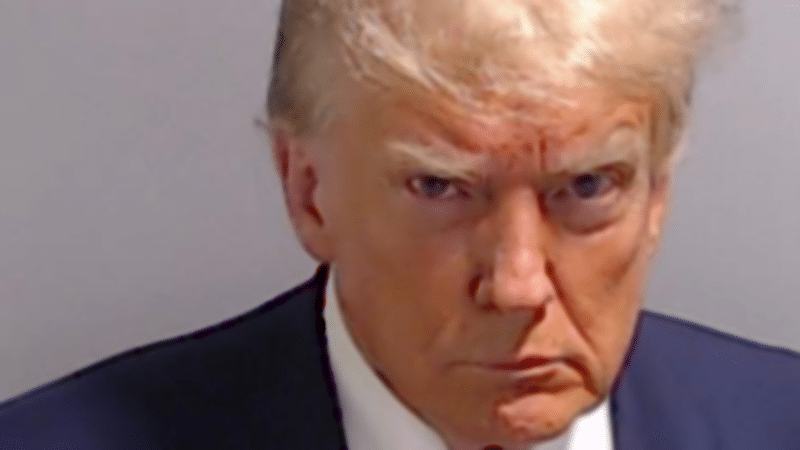
Trump considering new 3 per cent Nato defence spending target

Donald Trump is considering plans to push Nato members to increase defence spending to 3 per cent of GDP if he wins a second term in the White House, The Telegraph understands.

The former president thinks member states should be asked to contribute more to the alliance’s collective defence in light of threats from Russia and China.

He also believes the accounting rules should be changed so that spending on military assistance for Ukraine is not counted towards the target – a policy that would push several countries below the current target of 2 per cent of GDP.

Share

NATO turns seventy-five… what’s next?

NATO marks its seventy-fifth birthday today, but the alliance is in no mood for celebration.

At its foundation, and for much of its lifetime, NATO worked well. On April 4, 1949, representatives of a dozen countries signed the North Atlantic Treaty in Washington, DC “to safeguard the freedom, common heritage and civilization of their peoples, founded on the principles of democracy, individual liberty and the rule of law.” Although the Cold War was not always cold, and flared into bloodily hot conflicts in Vietnam, Cambodia and Angola among other places, there was never a face-to-face showdown between NATO and members of the Soviet Union-led Warsaw Pact, let alone a nuclear one.

Share

Russia’s neighbours urge Nato allies to bring back military service

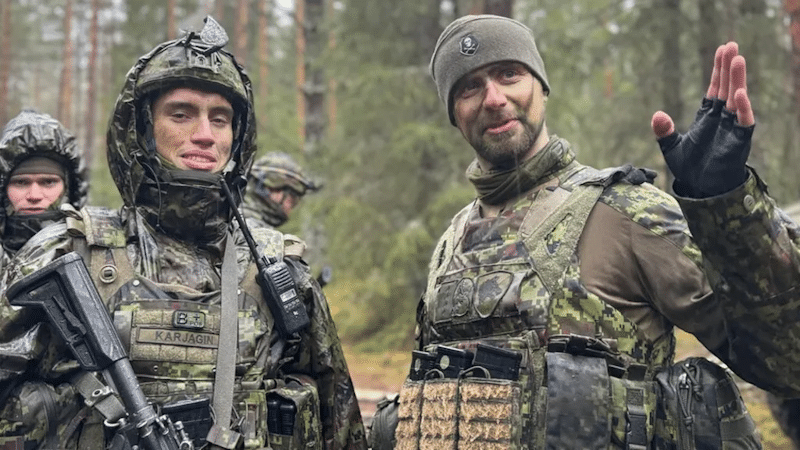
Rain drips down the glasses of new recruit Toivo Saabas, tracing the contours of the green and black face paint that completes his camouflage.

Lying on the saturated ground, and peering through the sight of his gun, the only frailty that threatens to give away his position is the plume of air he breathes out silently into the icy Estonian forest.

Then comes the deafening call to attack.

The 25-year-old springs to his feet. Forming a line with his brothers in arms, he bounds through the trees towards the Russian border.

Share

NATO at 75: Is Canada losing its grip on the world’s greatest military alliance?

Inarguably bigger and more seasoned than it was when it was born from the ashes of the Second World War, the North Atlantic Treaty Organization — the West’s great military alliance — celebrated a milestone Thursday: three-quarters of a century of keeping the peace in Europe.

NATO formally came into being with the signing of the Washington Treaty in the U.S. capital 75 years ago, when 12 western democracies — including Canada — banded together against what they saw as Soviet Russia’s expansionism in Europe.

Its creation helped to inaugurate the Cold War and, six years later, brought about the creation of the rival Warsaw Pact of communist countries, led by the Soviet Union.

Share

So, what expenditures should Canada cut to meet its NATO obligations?

A few weeks ago, when Donald Trump blathered on about letting Russia invade any NATO country not carrying its weight on military spending, he may have lacked a certain polish and decorum. Yet it’s hard to deny his logic.

A commitment is a commitment. And as most Canadians are becoming awkwardly aware, we are one of the worst laggards in the NATO club on this measure. For Canada to reach its NATO commitment of 2 per cent of GDP spent on the military it would require, roughly, $18-billion in addition to the $30-billion each year we spend on defence. (The figures are approximate and vary depending who you ask, and what you consider “military spending.”)

But how do we find an additional $18-billion? There’re not many sofa cushions to look under.


How could the author miss this?

Federal government business subsidies are huge. And mostly wasteful

Restructuring or eliminating ineffective subsidies could easily save $25 billion a year

Share

Europe: Fear of the Elephant and Its Mahout

In the recent summit in Paris of European Union leaders on Ukraine, there was an elephant in the room: The US Republican Party and its current mahout, former President Donald J. Trump.

According to those who were able to peep into the session, much of the discussion was about what the US will or won’t do in case the volatile mahout rides his elephant into the White House in November.

Trump’s musings about ending the war in Ukraine and taming Vladimir Putin without war and his quip about refusing to support a NATO member not paying its share, if attacked by Russia, took up a disproportionate part of the discussions. Then came the French President Emmanuel Macron’s bombshell about boots on the ground in Ukraine.

Share

What Sweden Adds to NATO’s Military Arsenal

I apologize. I could not help myself.

Sweden’s 21-month stay in NATO’s waiting room came to an end this week with long-awaited ratification of its May 2022 membership application by the Hungarian parliament.

Stockholm’s accession completes NATO’s expansion to 32 members, a growth prompted by Russia’s full-scale invasion of Ukraine in February 2022 and met with repeated threats from President Vladimir Putin and his top officials.

Membership for Sweden and neighboring Finland—which joined in April 2023—has transformed NATO’s security environment in northern Europe and the Arctic, adding 830 miles of frontier with Russia and drawing a NATO noose around the Baltic Sea, already referred to by some officials as a “NATO lake.”

Share

Michael Taube: If Canada Truly Believes in NATO, the Government Must Meet Its Spending Target

The North Atlantic Treaty Organization was founded in 1949. This alliance of member states, most of them based in Europe, established a collective security system to protect against possible outside threats. During the Cold War, the biggest concern was the Soviet Union and its allies. Since the Iron Curtain’s collapse, NATO has shifted its focus to political and military efforts in countries like Bosnia, Kosovo, and Afghanistan.

Share

Hungary approves Sweden joining Nato after months of delays

Hungary’s parliament has approved Sweden’s Nato accession nearly two years after the historically neutral country applied to join the western military alliance, bringing to an end months of diplomatic wrangling.

Speaking after the vote in Budapest on Monday, the Swedish prime minister, Ulf Kristersson, hailed “a historic day”. “The parliaments of all Nato member states have now voted in favour of Swedish accession to Nato. Sweden stands ready to shoulder its responsibility for Euro-Atlantic security,” he said.

Share