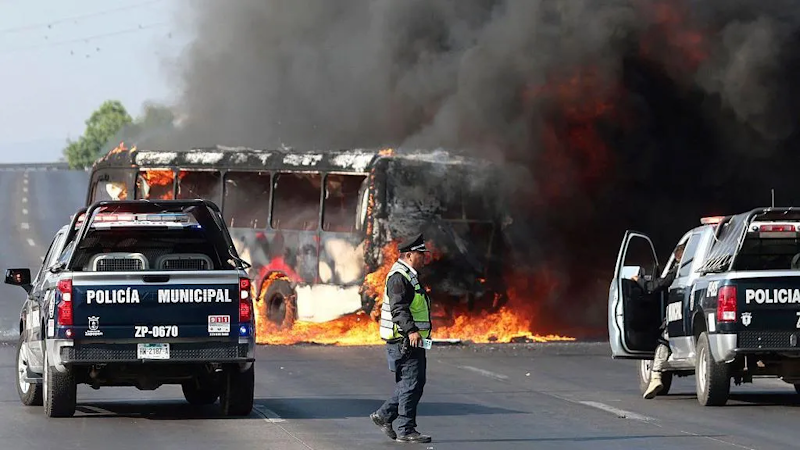
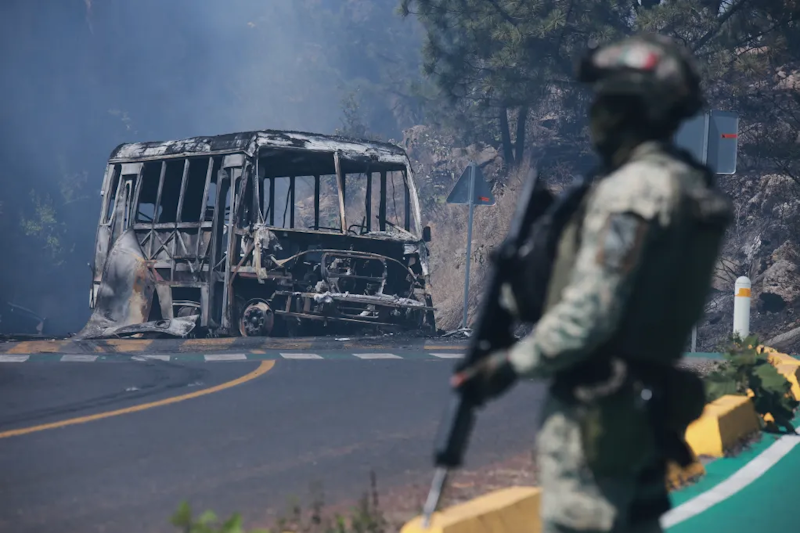
El Mencho’s death has sparked mass violence in Guadalajara, the capital of Jalisco state, but it is residents who have been the victims of the war on gangs
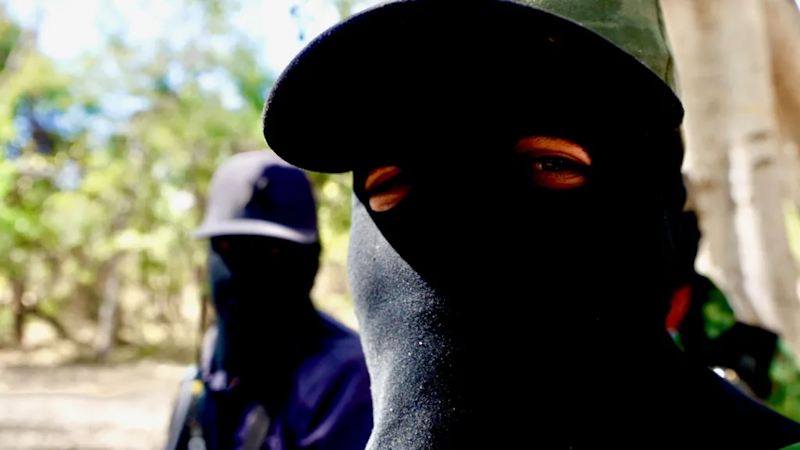
Arturo García was just finishing breakfast with his girlfriend last Sunday when he heard the screams. Armed men, their faces covered, were running through the market, spraying the stalls with petrol. They stopped cars and poured petrol over the people inside. Then they set everything alight.
“The fear is everywhere and the fear is constant,” said paramedic Héctor Torres, 53, from the front seat of the ambulance in Culiacán.
We had just come from the scene of a shooting inside a garage in the city centre.
The owner was lying dead in his office, blood spreading across the white tiled floor. As Héctor and the other paramedic, Julio César Vega, 28, entered the premises, a woman ran in wailing.
After the elimination of El Mencho by Mexican Army
Culiacán, Sinaloa (Mexico) was rocked by a violent clash between rival cartels.
"La Mayiza – Chapo Isidro, and "La Chapiza – CJNG."
Locals and tourists in Mexico have described the “heartbreaking” unrest after one of the most powerful and feared cartels in the country unleashed a wave of violence across several states.
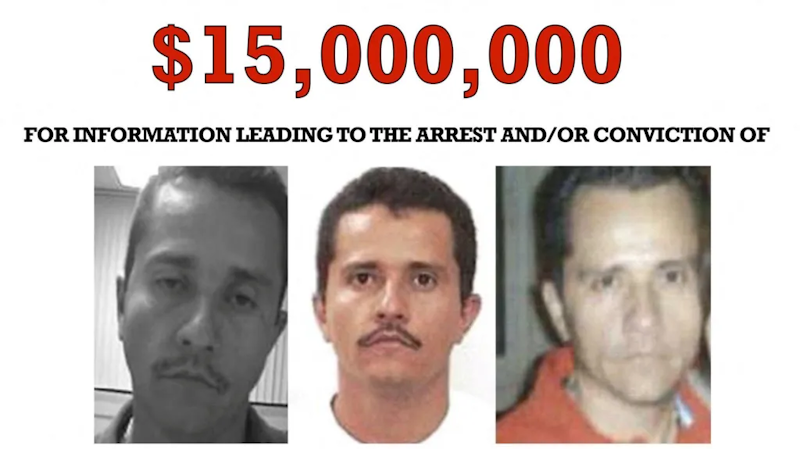
It comes after Nemesio Oseguera Cervantes, known as “El Mencho”, Mexico’s most wanted man and leader of the Jalisco New Generation (CJNG) drug cartel, was killed during a security operation to arrest him on Sunday.
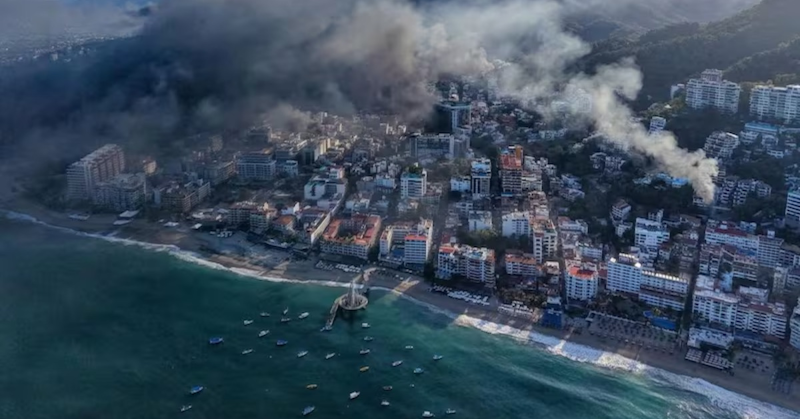
Footage recorded by locals and tourists showed burnt vehicles and plumes of smoke rising above several towns and cities, including the beach resort of Puerto Vallarta.
Footage out of Puerto Vallarta, Mexico allegedly shows Canadians looting an Oxxo convenience store.
When one is confronted with his alleged theft, he responds by accusing the man of being American.
JALISCO – On the morning of October 17, 2019, the Mexican state tried to arrest a Sinaloa Cartel boss and lost. Soldiers cornered Ovidio Guzmán — son of El Chapo — in the city of Culiacán, cradle of Mexico’s most powerful cartel. Within hours, thousands of gunmen in military-grade body armour and AK-47s flooded the streets. Buses and cars were seized and torched to block every route in and out. Family members of soldiers were taken hostage in their own homes. Barrett .50-calibre rifles were trained on government buildings. The Mexican Army, facing a city on fire, released Ovidio and retreated. President López Obrador called it a humanitarian decision. His critics said the cartel had shown it could bring the Mexican state to its knees.
VACATION TO VIOLENCE: What was meant to be a dream getaway in Puerto Vallarta is now a nightmare for hundreds of tourists.
After Mexico reportedly took out a major cartel leader, the city sees unprecedented violence — burning cars, ransacked stores, and blocked exits.
A wave of violence has broken out in Mexico after the country’s most wanted drug baron was killed in an operation seeking his arrest.
Nemesio Oseguera Cervantes, known as “El Mencho”, was the leader of the feared Jalisco New Generation (CJNG) drug cartel and died after being seriously injured in clashes between his supporters and the army on Sunday.
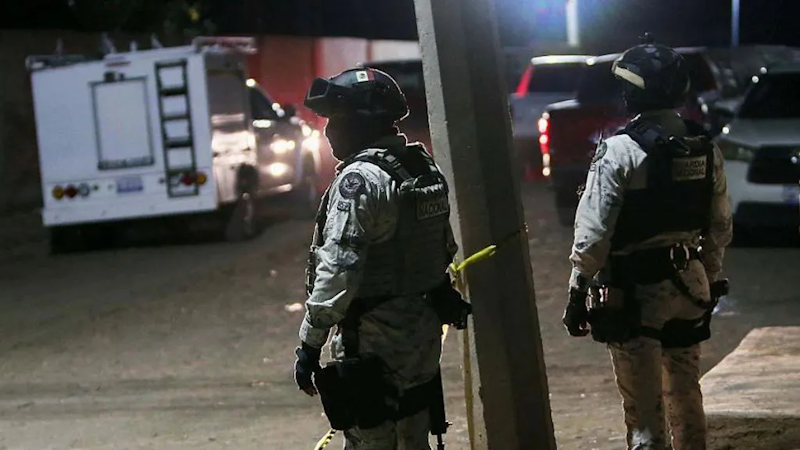
Four CJNG members were killed during the operation in the town of Tapalpa, in the central-western Jalisco state, and three army personnel were also injured, the Mexican defence ministry said.
This is funny.
💥Canadian Mainstream Media vs. Independent Media.
This is how vital platforms like "X" and independent media are, because without them, we wouldn't know what is really happening in Mexico.
BREAKING NEWS: Things in Mexico are escalating as the cartel is attacking airports, blocking roads, and even set a Costco on fire after the government killed “El Mencho” the head of the biggest cartel.
If you are in Jalisco or Puerto Vallarta it is important to shelter in place. pic.twitter.com/ikOb0g5vgv
🚨⚡️ BREAKING: Mexico’s most wanted drug lord killed — violent unrest erupts nationwide
Nemesio Oseguera Cervantes, known as El Mencho, was the leader of the Jalisco New Generation Cartel and widely regarded as one of Mexico’s most ruthless criminal figures.
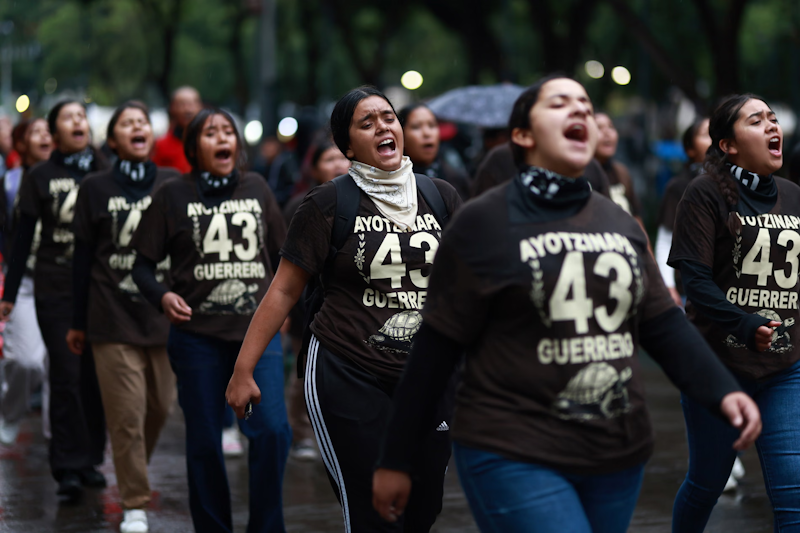
More than 130,000 people considered missing or disappeared in Mexico as drug cartels expand
It was a bright morning in August 2022 when Ángel Montenegro was taken. A 31-year-old construction worker, Montenegro had been out all night drinking with some work buddies in the city of Cuautla and was waiting for a bus back to nearby Cuernavaca where lived.
At about 10am, a white van pulled up: several men jumped out and dragged Montenegro and a co-worker inside before speeding off. Montenegro’s co-worker was released a few hundred meters down the street, but Montenegro was driven away.
As soon as she heard that her son had been taken, Montenegro’s mother, Patricia García, raced to Cuautla along with his wife, brother and some neighbors. Arriving at the bus stop, all they found were Montenegro’s cap and one of his tennis shoes.
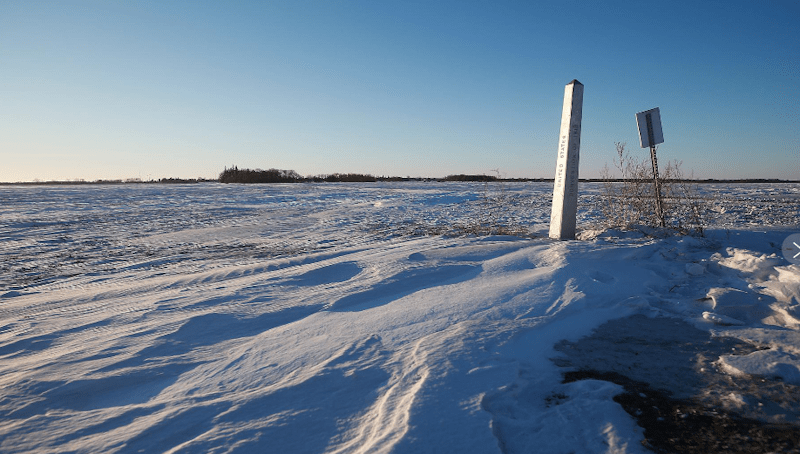
OTTAWA/WASHINGTON — U.S. federal prosecutors have unsealed an indictment alleging that a Dominican national and a U.S. citizen conspired to move foreign nationals from Mexico and Central and South America into the United States by flying them into Canada, staging them through Quebec, and then guiding them on foot and by vehicle across the Vermont border — a pattern investigators say reflects Mexican cartel-linked human-smuggling networks exploiting a “north border” pathway long viewed as secondary to the U.S.–Mexico frontier.
It was only a matter of time before something like this happened. Expect it a lot more.
Late Tuesday, the Federal Aviation Administration abruptly ordered El Paso International Airport to close for ten days.
El Paso is America’s 23rd largest city. And, in a country that treats canceled flights as human rights violations and where delayed or rerouted commercial and cargo flights can cost domestic businesses millions of dollars in direct and indirect losses, ten days sounds like an eternity.
What manner of foreign or domestic (or interstellar?) threat could cause such disruption?
WASHINGTON (AP) — The Federal Aviation Administration reopened the airspace around El Paso International Airport in Texas on Wednesday morning, just hours after it announced a 10-day closure that would have grounded all flights to and from the airport.
The Federal Aviation Administration said in a social media post that it has lifted the temporary closure of the airspace over El Paso, saying there was no threat to commercial aviation and that all flights will resume.
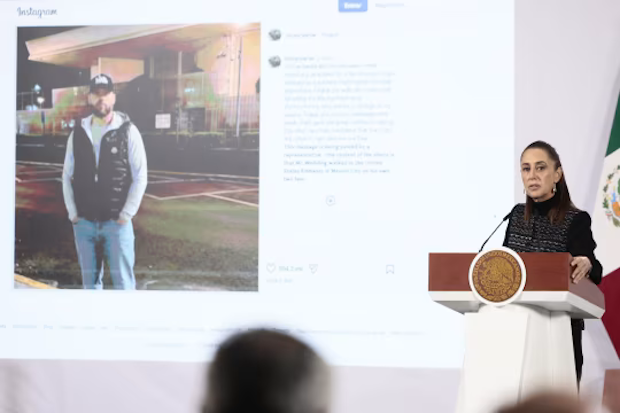
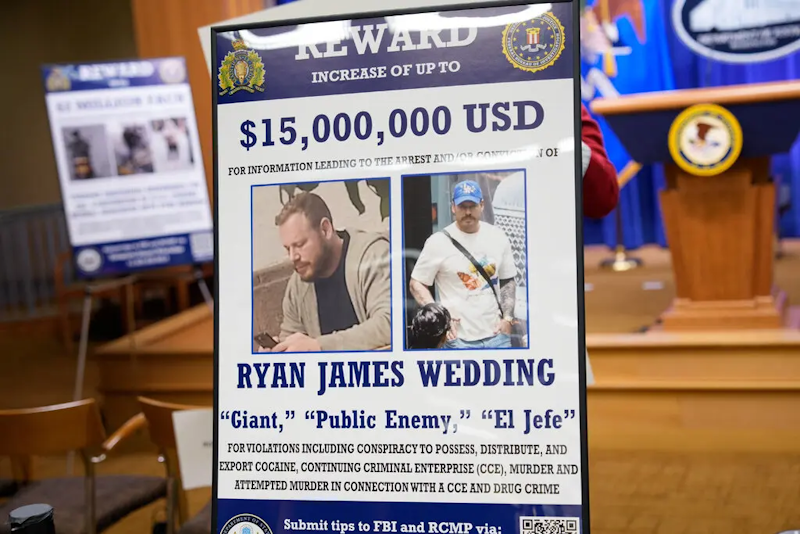
Mexican President Claudia Sheinbaum and FBI Director Kash Patel have told differing accounts about the role of U.S. agents in the arrest of former Olympian Ryan Wedding
MEXICO CITY—Ryan Wedding was on the run.
Mexican security forces were closing in on the 44-year-old Canadian—a snowboarder who once competed for Canada in the Olympics but has since landed on America’s most-wanted list for allegedly running a vast cocaine-trafficking network—said Mexican and U.S. officials familiar with the operation.
Long protected by Mexico’s Sinaloa Cartel, Wedding suddenly had no options. By the time security forces caught up with him in Mexico last week, the officials said, members of the FBI’s Hostage
Rescue Team were also involved. Weeks earlier, the Federal Bureau of Investigation’s elite, combat-trained unit participated in the capture of Venezuelan autocrat Nicolás Maduro in his heavily fortified Caracas compound.
At least 11 people were killed and another dozen injured when gunmen opened fire on locals who had gathered at a football pitch in the city of Salamanca in central Mexico on Sunday.
Witnesses said armed men arrived at the grounds in several vehicles and shot at those gathered there seemingly indiscriminately.
Many families had stayed behind to socialise after a match between local clubs. At least one woman and one child were among those killed.
The target was a drug trafficker turned F.B.I. informant who didn’t stand a chance. As he had lunch with friends at a restaurant in Medellín, Colombia, a hit man in a dark hoodie sneaked up behind him and shot him five times in the head.
The man who had ordered the hit quickly received a photograph of the body, the authorities said. He reshared it widely — boasting that he had killed “the rat.”
The man behind the killing was Ryan Wedding, a Canadian who rose to fame as an Olympic snowboarder two decades ago, only to become what the authorities describe as one of the world’s biggest drug lords. “El Jefe,” as he was known, ran a drug-trafficking empire out of Mexico and was now one of the most wanted fugitives in the world.
Is reputed Canadian dope kingpin Ryan Wedding’s time on the lam grinding to a violent finale?
Wedding, 44, has been the target of one of the largest law enforcement efforts in decades. The alleged cocaine kingpin of Canada is believed to have altered his appearance and is hiding out in Mexico under the protection of the hyper-violent Sinaloa cartel.
VANCOUVER — A British Columbia government lawsuit seeks to merge almost a decade of litigation into a single, high-stakes test of whether the province can finally seize a fortified mansion near the U.S. border that was first swept up in a 2014 fentanyl investigation, raided in 2016, and is now at the center of a new synthetic-opioid case alleging its occupants contracted with the leader of Mexico’s Sinaloa Cartel to flood narcotics into Canada.