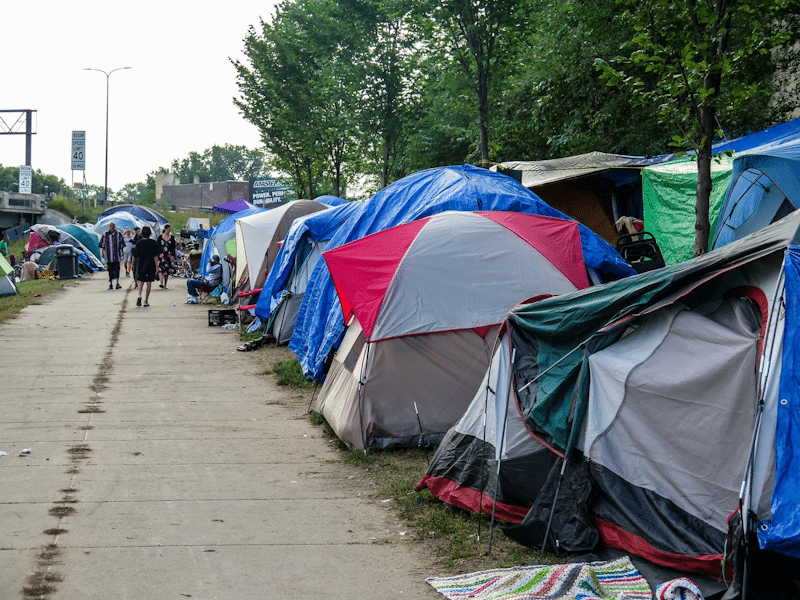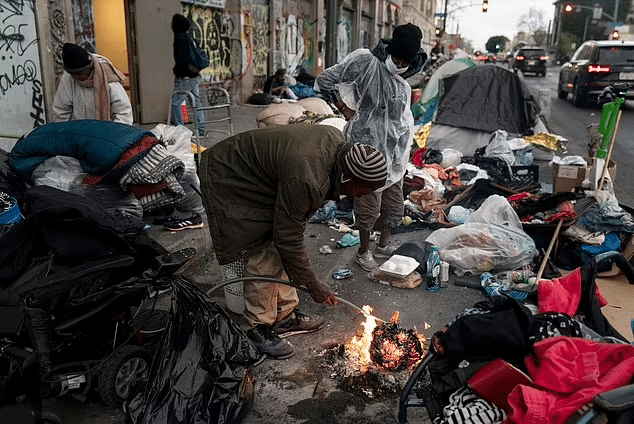
Average rent for a one-bedroom apartment in Vancouver tops $3,000 a month

Joe Pobia has been living in a bachelor suite in a Commercial Drive apartment for 10 years.

His rent was $770 a month when he moved in and, after moderate increases each year, he’s now paying $1,070. But after an eviction notice in April, which stated his suite was needed to house another resident property manager, the construction worker is now looking for a home in the most expensive place to rent in Canada.

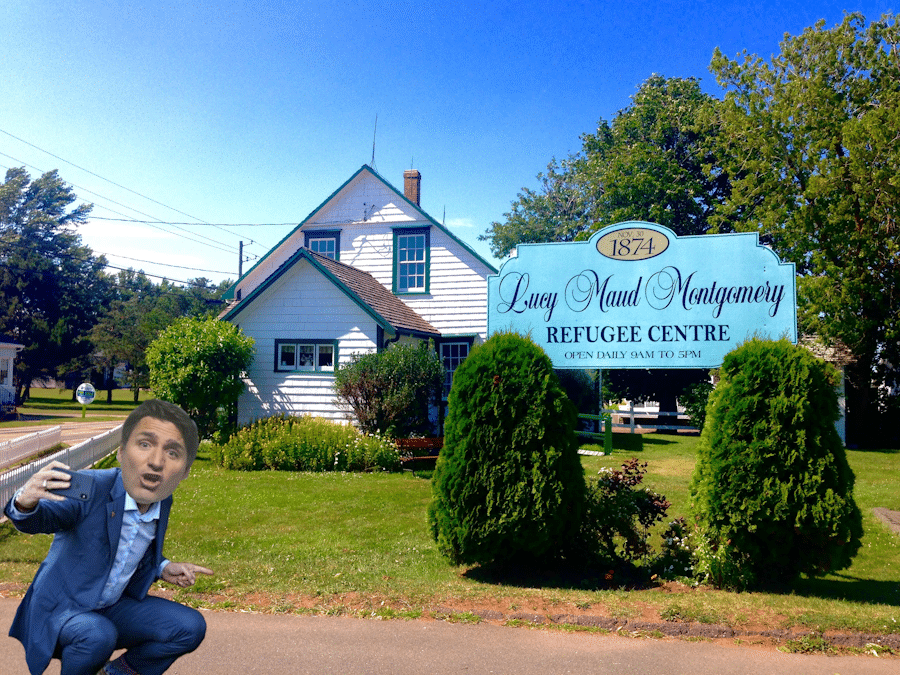
Lay the blame where it belongs, Trudeau and his crony capitalist friends.

Share

Squamish van dwellers running out of places to park as local Walmart limits long-term stays

People living in their vehicles in Squamish, B.C., are running out of places to park their cars overnight after the local Walmart announced it would no longer allow long-term parking.

The notice comes two years after the district council in Squamish, located about 64 kilometres north of Vancouver, passed a bylaw prohibiting people who live in their vehicles from spending the night parked on municipal streets.

The latest restriction means there are fewer and fewer places to sleep for people who can’t live in a home for any number of reasons.

Share

Should Canadians offer up spare rooms to help with housing crunch?

With many Canadians struggling to find a place to live with rising home prices and interest rates, governments at both provincial and municipal levels are trying new methods — but those in the industry say building more homes is the key factor to actually solving Canada’s housing crisis.

The calls to keep the focus on building more comes after Nova Scotia Municipal Housing Minister John Lohr last week announced the government was extending its contract with the national online home-sharing platform Happipad, and called on residents who may have a spare bedroom to consider opening up their home to share.

Share

Solutions in Plain Sight

California could make a major dent in its homelessness problem merely by reversing some of its most destructive policies.

Half of America’s so-called unsheltered homeless live in California. It’s not hard to understand why. Along with having the most hospitable weather on earth, California is a welcoming place for drug addicts, petty thieves, and anyone else attracted to beachside living, free government food, and no requirement to work.

Federal policy has played a part in California’s homelessness problem. The counterproductive “Housing First” rule, emanating from the Department of Housing and Urban Development during the Obama era, favors programs that prioritize “supportive housing” over activities like drug counseling or job training.

Share

22 per cent of Canadian homebuilders cancel projects amid high rates despite severe housing shortage

At a time when Canada desperately needs to build more housing — and Premier Doug Ford is opening up part of the Greenbelt to be developed — the construction industry “remains downbeat” amid high interest rates, with 22 per cent of Canadian homebuilders cancelling projects entirely in the second quarter of 2023.

The Canadian Home Builders’ Association (CHBA) released its second-quarter report last week, which saw the construction of both single- and multi-family units remain low but increase slightly in the second quarter — an improvement from the lows recorded in the fourth quarter of 2022.


Crank immigration to 11 having made no provision for housing and infrastructure to handle the tidal wave.

That was so thoughtful of our political class. Their cronies are going to make out like bandits.

Share

Canadians are being crushed by a housing crisis. Are short-term rentals to blame?

For Tianning Ning and her family, Airbnb was supposed to be a way to live in Toronto after facing the brutal reality of the city’s rental market.

The family — originally from Switzerland — was looking for a place to live for 10 months to accommodate Ning’s husband’s sabbatical at York University.

The problem? They could not break into the market due to a lack of Canadian credit history.


Short term rentals are part of the problem in certain cities but with poor data it is impossible to know to what extent.

Mass immigration is the key contributor to Canada’s housing crisis.

Share

Blamed for affordability crisis, Liberals promise to do more of nothing of any use

Blamed for affordability crisis, Liberals look to pivot on housing

OTTAWA – Chris Burke and his fiancée have been less than a year away from buying their first home for the past three years.

Saving for a down payment was the first challenge. Now, rising interest rates have kicked home ownership down the road again, stalling the couple’s plans to get married and have children.

“Any gains we make towards purchasing a house, we’re watching the goalposts move further and further away,” the 31-year-old Ottawa resident said.

Share

Canada Tests the Limits of Its Liberal Immigration Strategy

The intake of newcomers is rising rapidly and straining housing, healthcare and transportation

Canada is known for its embrace of immigrants and hasn’t experienced the same backlash that has been seen recently in countries such as the U.S. and the Netherlands. But new polling released last month from Ottawa-based Abacus Data reflects skepticism, with 61% of citizens saying the government’s plans are too ambitious because of the negative impact on housing and healthcare. The Canadian Medical Association said the country’s population-to-physician ratio ranks 29th out of 36 developed-world economies, while data from the Organization for Economic Cooperation and Development show Canada’s hospital-bed capacity is one of the lowest on a per-capita basis among rich-world economies.


Canada is known for its embrace of immigrants?

Submission to mass immigration is more like it.  Romanticized views of immigration in Canada are the domain of politicians selling snake oil nowadays.

No one signed on for an inundation of incompatible cultures or to have their own government dismiss their heritage and nation as so much racist garbage.

Multiculturalism was weaponized and the smear of racism was used as a bludgeon to smash dissent and ensure Canadians clapped like trained seals in approval whenever the topic of immigration was raised.

Ethnic disaporas possessed of little in common with Canadian values are catered to by our political class who tolerate the intolerable for votes.

Who asked that hiring decisions be made on the basis of government ordained victim status?

Who asked that being white be considered a virtual hate crime and Canada be turned into a low trust society?

Who asked for “racialized sentencing guidelines” for criminals as if the average Joe who just wants to be left alone is somehow responsible for the alleged historic oppression of predators?

No one asked for a balkanized society where foreign ethnic conflicts spill out into our streets.

Who asked for an immigration policy that does not benefit citizens?

No one asked because it was imposed upon us and its true purpose is to benefit the corporate and political classes at our expense. 

No one asked because divide and conquer works best when its victims are forbidden to talk about it until it’s too late.

This so called “embrace of immigration” is better described as a choke hold.

Share

Justin Trudeau is under fire for Ottawa’s lacklustre response to the housing crisis. Here is what’s going so wrong

Sure, it’s advertised at more than $82 billion in loans and cash. But the federal government’s national housing plan is little help to Pastor Alexander Wilson.

He and his dwindling congregation at St. Stephen’s Presbyterian Church in Scarborough want to raze their long-standing site of worship and build an apartment complex in its place. It wasn’t an easy decision, but Wilson said some in his flock have turned their minds to what they might leave behind “once they’re finished here on Earth.” Their latest plan is for 111 units, with about a third of them offering rents below market rates. They also hope future residents might join them in a new church space on the main floor.

Share

Toronto’s housing market is so expensive, families earning $100,000 are now eligible for Habitat for Humanity help

Habitat for Humanity’s threshold for providing its famous interest-free loans to struggling homeowners is just the latest example of how dire things are for prospective buyers in Canada’s most expensive cities.

For decades, the national non-profit has helped homeowners afford a place of their own through mortgages that require no down payment and aren’t tethered to Canada’s historically high interest rates. However, Habitat for Humanity does require prospective homebuyers to handle its interest-free mortgages on 30 per cent or less of their income. In Toronto, that means some families earning $100,000 are now on their watchlist.

It’s beginning to look a lot like Weimar!

Share

Toronto is facing a crushing housing shortage. Here’s how a new city committee plans to tackle it

The committee, with Coun. Gord Perks as chair and former chair and city planner Coun. Brad Bradford as vice-chair, is tasked with delivering on Chow’s campaign promise of building 25,000 rent-controlled homes over the next eight years.

And while it may be a lofty goal to get shovels in the ground within the next three year’s of Chow’s term, Perks says the city has no choice but to deliver if it wants to get ahead of the housing shortage.

Just what Toronto needs – great swaths of run down crime ridden social housing.

Share

Homeless people allegedly being shipped to London, Ont. draws ire of deputy mayor

The deputy mayor of London, Ont., is alleging that dozens of those living on the streets are being shipped to the city, many of them under false pretenses, and is urging for an end to the practice.

In a letter to his city colleagues, Shawn Lewis highlighted municipal data that shows 319 people arriving from outside the city in the first half of 2023 seeking homelessness support services have been sent back to communities “where they have a natural support network.”

I don’t understand why he doesn’t name the organizations behind this.

Share

Ont. mayor can’t afford to buy house in township she leads

Waterloo Region’s red-hot housing market hits close to home for Wilmot Township Mayor Natasha Salonen.

Despite earning around $90,000 a year between her work as mayor, regional councillor and with the local electric utility, she says she can’t afford to buy a home in the municipality she leads.

“I do live at home with my parents,” Salonen says. “Living in this region is really not attainable for a young professional who has university debt and I know I’m certainly not alone in that.”


Can’t help but notice that only when the homeless/housing crisis and the CRT/DEI tyranny began to affect “nice people” did they become pressing public issues.

In keeping with standard practice however Junior’s “separation” brought lectures from the MSM scolds demanding we show that snivelling pimp respect.

Only in this past year or so did articles appear in our media declaring it “not racist” to discuss immigration policy.

I can’t help but suspect that things are far worse than is known and we proles are being allowed to let off steam.

Even the NAZIS understood that it was not wise to stomp on everyone who made a Goering joke.

Share

Record levels of international students straining Canada’s housing supply further

Record numbers of international students coming to Canada is making the already inflated cost of housing worse, said Steve Pomeroy, a policy research consultant and senior research fellow at Carleton University’s centre for urban research.

The biggest strain on Canada’s housing market, he said, isn’t only the rising rate of permanent residents, with more than 400,000 permanent residents in 2022, and the Liberal government determined to hit 500,000 a year in the next couple of years. Those coming here seeking temporary residence, either temporary foreign workers or international students, are fuelling rental price increases.


Related … ‘Something doesn’t seem right here’: International students’ revoked college admissions cast spotlight on Ontario’s public-private partnerships

This week’s news that admission offers to 504 international students have been revoked by an Ontario college is likely to cast a spotlight once more onto partnerships between Ontario’s public and private colleges.

The students in question had been admitted months ago by Timmins-based Northern College to study at Pures College, its private partner in Toronto.

The revoking of the admission offers comes before a new rule takes effect next month that will cap international student enrolment under such partnerships.

Share