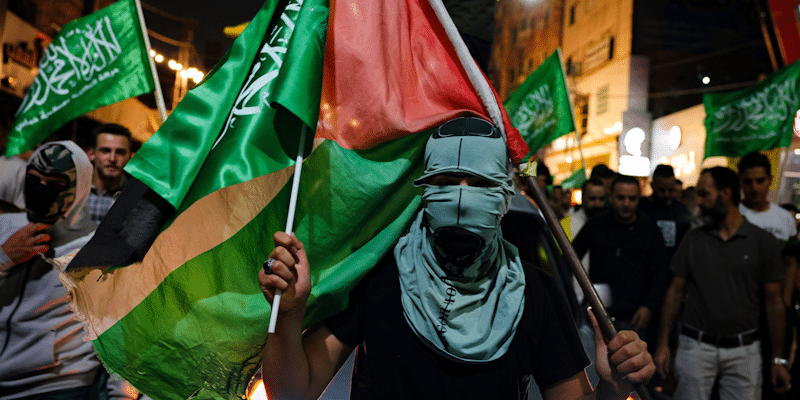
Hamas has already penetrated American society, and CAIR is the tip of the spear.
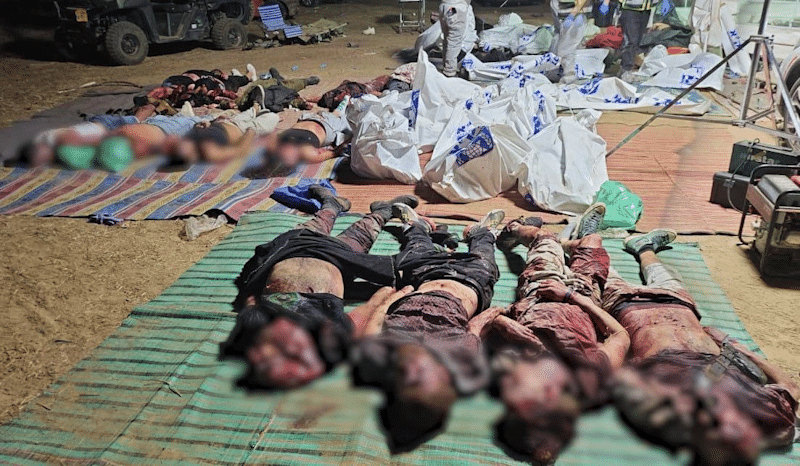
After Hamas massacred 1,400 men, women, and children in Israel last month, FBI Director Christopher Wray warned that the terror group “and its allies” could inspire attacks on Americans “here on our own soil.” He also told the Senate that the FBI is conducting “multiple, ongoing investigations” into people affiliated with the U.S.-designated terrorist group.
The old conventional wisdom was that the United States couldn’t be too pro-Israel for fear of inflaming “the Arab street.”
The new conventional wisdom will have to be that we can’t be too pro-Israel for fear of inflaming “the Western street.”
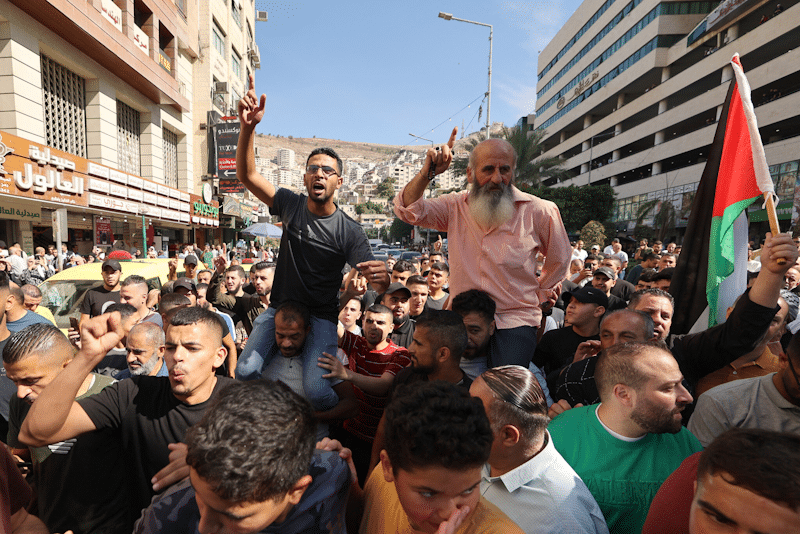
The Arab street, a hoary cliché of commentary on the Middle East for decades, was a reference to public opinion in the Arab countries, with the strong implication that if we offended it, the result would be massive anti-Western demonstrations and perhaps violence.
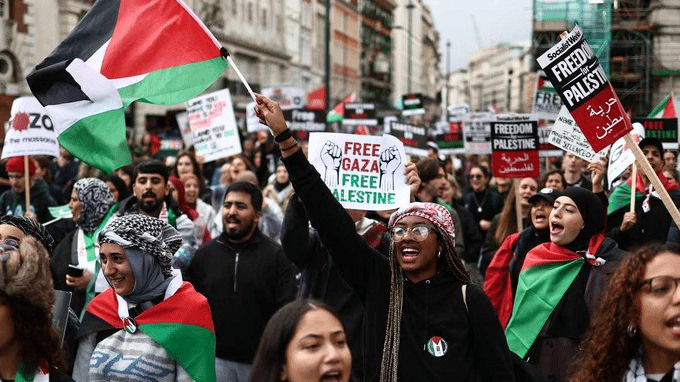
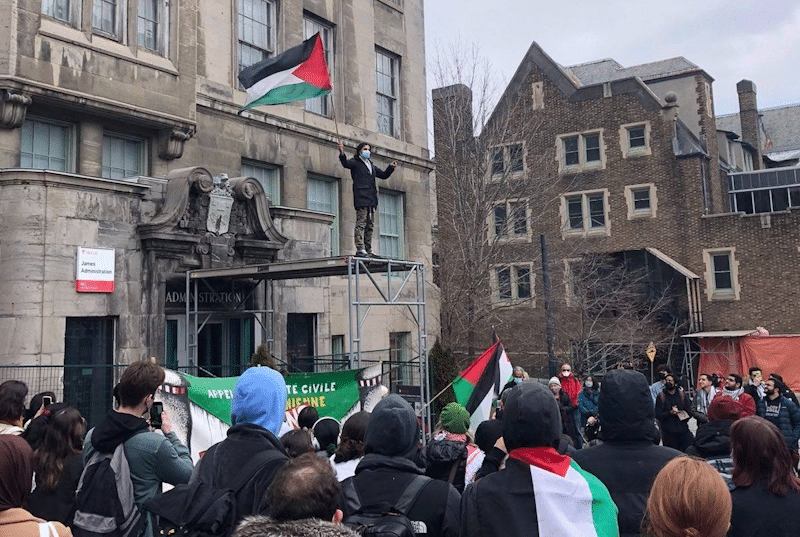
Part of the reason we are seeing division, hatred and unrest in the streets of Montreal, Toronto and other communities across Canada is due to the collective failure of Muslim leaders, in Canada and around the world, to condemn the despicable Oct. 7 terror attack by Hamas on Israeli civilians.
Most of what you have been told about the Palestine-Israel conflict is at best misleading, and much of the rest has no basis in fact. One common false claim involves the cause of the conflict. The underlying source of the conflict is not territory, human rights, or political autonomy; it is religion. The hundred-year Arab-Jewish war is a religious war.
Anti-Israel comments posted online by a SickKids anesthesiologist, who is also a University of Toronto teacher, are under investigation by the hospital.
“We consider Israel to be absolute evil. There is nothing worse than Israel. If Israel and the devil fight each other, we will stand with the devil,” reads Christian Zaarour’s Instagram post.
South African President Cyril Ramaphosa told reporters during a visit to Qatar on Wednesday evening that South Africa “put through a referral” to the International Criminal Court (ICC) “because we believe that war crimes are being committed” in Gaza.
The alleged crimes were being committed “in real time,” Ramaphosa said, citing Gaza’s biggest health care facility, the al-Shifa hospital, as an example.
Israel said that Hamas has a command center underneath the hospital, a claim the Palestinian militant group denies.
The growing civilian casualties and desperate humanitarian conditions have alarmed Arab allies, but also stirred an extraordinary level of criticism from within his own administration.
“I’m stunned by the intensity,” said Aaron David Miller, who worked as an adviser on Arab-Israeli relations during a 25 year tenure at the US State Department.
Durham College – Sahar Shehadeh, a student in the advanced biotechnology program, gives a shoutout to Hamas and wants October 7th to happen “again and again and again and again.”
These horrifying antisemites must be held accountable for their disturbing promotion of terrorism. pic.twitter.com/pwJq1hAIPD
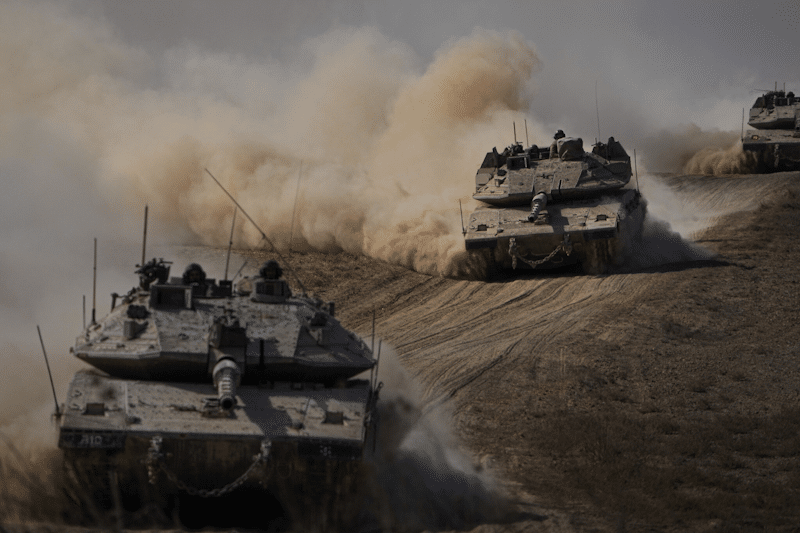
It would be unwise to draw from Israel’s battlefield successes in the early stages of its war against Hamas a straight-line projection of total victory. No plan survives contact with the enemy. But those successes have surely focused the minds of Israel’s post-war planners. What is Israel’s plan for the Gaza Strip after Hamas? Does it even have one?
The anti-Semitism that drove Hamas’s 7 October pogrom has reverberated around the world. The oldest hatred is making a grim comeback, far beyond the Middle East.
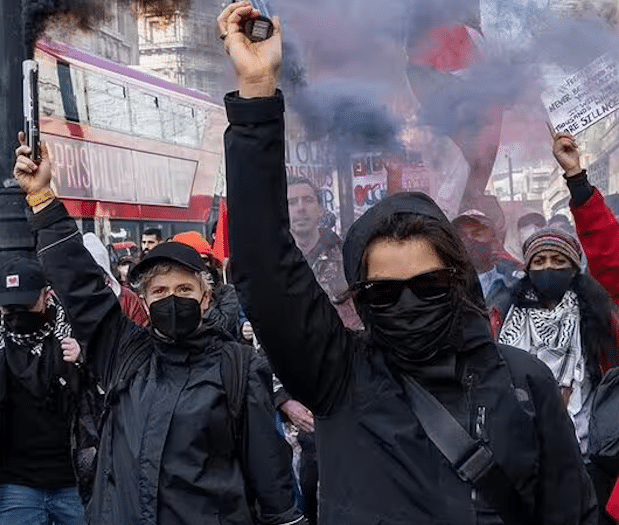
Ugly scenes of Jews being mobbed have recently blighted Australia. Last week, around 150 Jewish congregants of the Central Shule synagogue in Melbourne were forced to abandon their worship when over a hundred ‘pro-Palestine’ protesters descended on their Shabbat service. When at least 80 pro-Israel counter-protesters turned up to defend the synagogue, 30 police officers were needed to separate the two sides.
After accompanying British troops as they liberated Bergen-Belsen in April 1945, Richard Dimbleby produced one of the most viscerally horrifying — and powerful — dispatches in the BBC’s history. “I find it hard to describe adequately the horrible things that I’ve seen and heard,” he began, “but here unadorned are the facts.”
Maybe running around, smashing things and defacing monuments, including sacred ones, aren’t the effective persuasion tools that Islamists and leftists think they are?
In October, the leftists and Islamists were touting a YouGov poll in which 58% of Brits said that there definitely should be a ceasefire and 18% said that there probably should be.
Jews in American academia seem to have been surprised by the recent wave of antisemitism. I would like to ask them and other American Jews four questions.
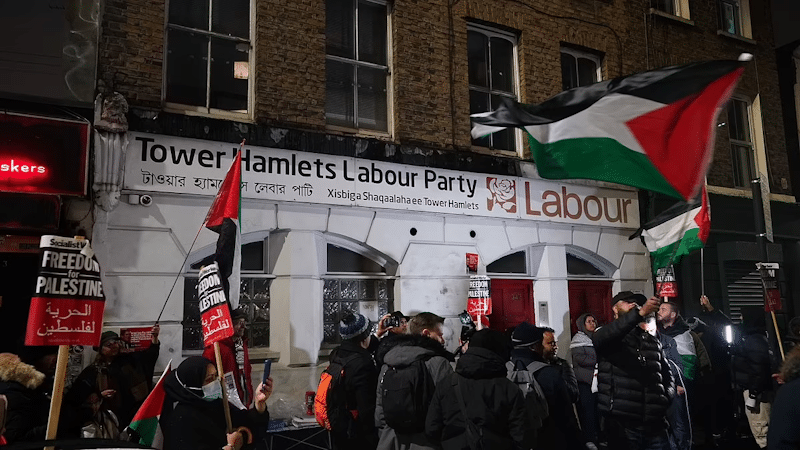
While Israel is fighting to eradicate Hamas, the shockwaves of the war in Gaza have reverberated thousands of miles away. In a surge of activism, large numbers of students on America’s college campuses have lined up behind the Palestinian terrorist group, waving the Palestinian flag and expressing antisemitism at a level never seen before in America.
The pro-Hamas activism began already days after the October 7th Palestinian terrorist attack in Israel. It has continued since then, and it seems to have taken our academic institutions by surprise. This is especially the case with Jewish-American members of the faculty, who are now struggling to understand the new reality in which they live and work.