The elite’s green fantasies are finally unravelling

The desperate scramble for fossil fuels now makes the posturing of COP26 look almost otherworldly.

As the mother of all energy crises starts to bite, with fears of energy rationing, fuel poverty and blackouts looming on the horizon, we might just be starting to see a flicker of self-awareness, the tiniest recognition of reality, coming from the UK’s green political class.

Share

Ottawa cannot admit to the terribly damaging consequences of its green policies and the urgent need to fundamentally change course

Joe Oliver: Trudeau’s growing isolation on fossil fuels

Prime Minister Justin Trudeau should be feeling isolated in his campaign against fossil fuels, especially Liquefied Natural Gas (LNG), as leaders around the world reduce their countries’ reliance on inadequate renewable energy and tone down their own rhetoric about lowering GHG emissions. But for political and ideological reasons his government cannot admit to the terribly damaging consequences of its green policies and the urgent need to fundamentally change course. To the contrary, it keeps doubling down on its climate obsession.

Share

EVs are merely a life hack that won’t save us from climate change

… Yet, the environmental harms of electric vehicles have been well documented: mining for the materials to make the batteries causes devastation to local ecosystems. Their production is also harmful to the people who live where they are built, leading to increased toxicity levels compared to traditional car manufacturing.

Even their emission reductions are modest. In provinces that use renewable energy, like Manitoba, electric cars reduce emissions by 70 per cent, but in most places in the world where electricity still mainly comes from fossil fuels, that number falls to 30 per cent.

Takeaway: EV’s are pretty much useless but we should build em anyway.

Share

German factories shut down as energy costs spiral out of control

Eurozone inflation surged to another record high in August, fuelled by soaring energy prices that are threatening to plunge the region into recession.

Annual inflation across the bloc rose to 9.1pc this month, up from 8.9pc in July, according to the latest figures from Eurostat.

Prices are rising at the fastest rate since records began in 1997, piling pressure on the European Central Bank to continue raising interest rates at its meeting next week.

Share

Energy prices soar in Britain. Can Canadians expect to pay more too?

October will bring shock for many in Britain.

At the start of the month, U.K. residents will see an 80 per cent increase in their annual household energy bills, the country’s energy regulator announced earlier this month, following a record 54 per cent spike in April. That will bring costs for the average customer to 3,549 pounds ($5,418) a year from 1,971 pounds ($3,009).

Share

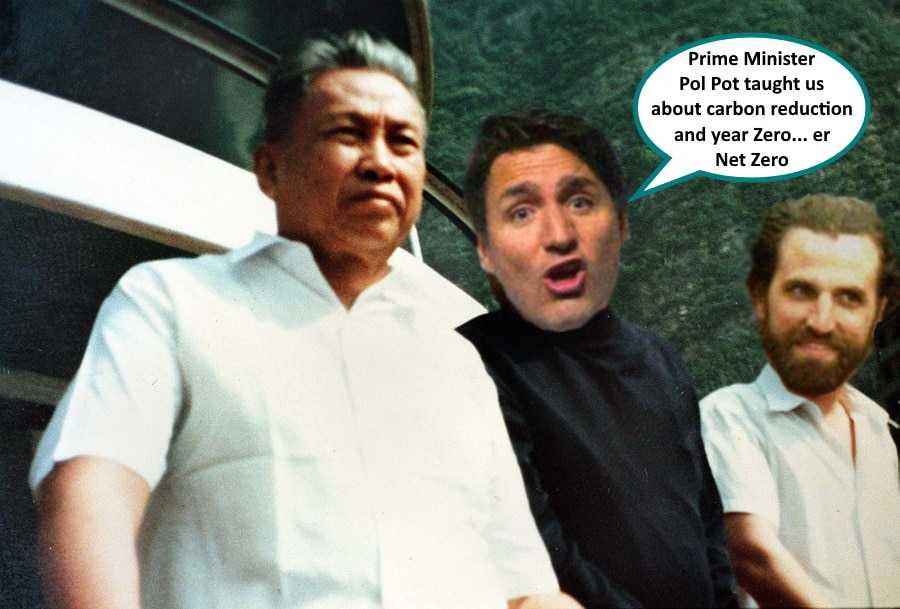
Trudeau’s ‘green’ obsession is Canada’s nightmare

Justin Trudeau’s “green” fairy tale continues. And our nation’s economy and the West’s efforts to contain Vladimir Putin both suffer from our prime minister’s dalliances with unreality.

Last week, German chancellor Olaf Scholz was in Canada. What he was hoping for was a pledge from the federal government to start shipping LNG (liquified natural gas) to his country so Germany can stop buying Russian natural gas by 2024.

Share

Philip Cross: In the war on cars, the suburbs strike back

Only the very naïve think we will soon end our dependence on autos

Canadian drivers are experiencing a double dose of frustration this summer: record gas prices combined with a return to the pre-COVID traffic congestion that for years now has been making it so hard to get around our major cities. When green governments aren’t cavalierly dismissing the exasperating inconvenience to drivers they’re actually embracing it as a strategy for getting people to switch to mass transit. Trouble is, businesses bear the brunt of congestion costs. Estimates are that up to 40 per cent of traffic consists of commercial vehicles. Businesses count on timely deliveries to keep their factories supplied and shelves stocked and to satisfy burgeoning consumer demand for home delivery. For most firms, mass transit is simply not an option. When traffic chronically snarls their only alternative is to move everything but delivery out of city centres.

Share

Derek H. Burney: Breaking through Trudeau’s obfuscation on LNG

So, let’s try to get some things straight. About the time Vladimir Putin chose to invade Ukraine, Canada decided to veto Énergie Saguenay’s proposed LNG export facility in Northern Quebec, a project intended to enable exports to Europe. One month later, the natural resources minister Jonathan Wilkinson said, “Our European friends and allies need Canada and others to step up.” He added “They are telling us they need our help in getting out of Russian oil and gas in the short term.”

Share

DOOM Foretold! Climate change will cost Canada $139 billion due to flooding, drought and other disasters, report finds

Between droughts, flooding and rainstorms, Canada’s changing climate could lead to a significant decrease in the country’s GDP over the next generation, according to a report from engineering firm GHD.

The impact of water-related risks in Canada could mean a cumulative loss of $139 billion through 2050, or 0.2 per cent of economic activity in that period, the report says. Titled “Aquanomics,” the report examines the impact of future water risks across seven countries, including Canada, the U.K., the U.S., Australia, China, the Philippines and the U.A.E.

Seems the authors of this piece may have a monetary interest in “remediation.” Has even one of the climate cult’s prophecies come to be?

Share

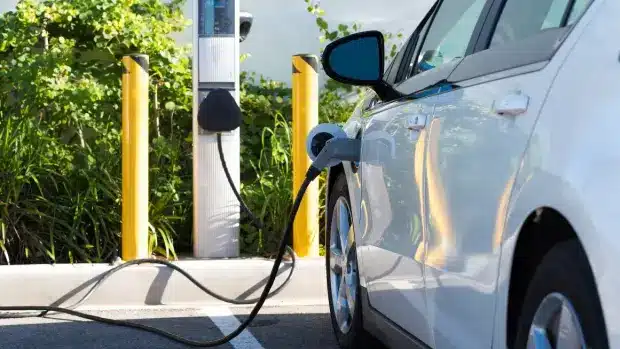
US will need to build 478 EV charging ports EVERY DAY for the next eight years at a cost of $35B to meet demand for 1.2M public ports by 2030 (And that’s not counting the 28M needed in homes!)

America would have to install 30 million electronic vehicle charging ports by 2030 if half of drivers switch to EVs by the time California’s ban on gas cars takes effect.

If half of all vehicles sold are zero-emission by 2030, the country would need 1.2 million public chargers and 28 million private chargers by that year – which a McKinsey report claims would cost more than $35 billion over eight years.

Electric vehicle sales have been climbing by double digits each year since 2016, but over half of US consumers cite battery or charging issues as their main concerns – and it’s fair to say the limited network of public charging stations is a roadblock for many buyers.

And how many reactors will need to be built because Wind & Solar will provide squat.

Share

Rex Murphy: Environmentalists biggest triumph was to aid Vladimir Putin

When Donald Trump was president, he warned Germany that leaving its economy vulnerable to Russia, by depending on Russia for natural, gas was dangerous.

Now I’m not entirely foolish. Please note the qualifier. I am aware that any sentence with Donald Trump as subject, and suggesting that on any issue, any issue at all, he knew what he was talking about and should have been listened to, will for many sensitive readers, bring on convulsions.

Share

California has weaponized transportation against its own population

In 2008, California voters approved what was supposed to be a $33 billion high-speed rail project to connect Los Angeles, Sacramento, and San Francisco. What they are actually getting is a project that may still never connect those cities but will cost at least $113 billion and won’t be completed until at least 2030.

In the meantime, California’s legislature is as determined as ever to make affordable transportation illegal, going so far as to ban gasoline-powered automobiles.

The high-speed rail project is a predictable rat’s nest of rent-seeking by politically connected contractors. Assuming it is actually ever finished, it will require constant operating subsidies and maintenance costs. This California crazy train was back in the news last week because it received one of many environmental green lights required for its completion, which will come no sooner than 2033. However, be prepared for disappointment — this project has consistently blown through every cost estimate and time projection that has been applied to it so far.

As goes California goes Justin

Share